
Properly storing your lawn mower is the secret to a long-lasting engine and a pristine lawn year after year. Whether you have a spacious garage or limited space, choosing the right environment prevents rust, protects vital engine parts, and ensures your equipment is ready for the first mow of spring.
If you take care of your tools, they will take care of you. This is especially true when it comes to your lawn mower. By 2026, lawn care technology has advanced, with many mowers featuring smart sensors and lithium-ion batteries that require extra care. Many homeowners spend hours researching which mower to buy but give almost no thought to where to store lawn mower equipment once the job is done.
Finding the right spot is about more than just keeping your yard tidy. It is about protecting your investment from the elements, moisture, and theft. Whether you are living in a suburban home with a big garage or a townhome with limited outdoor space, you have options. In this guide, we will walk through the best practices for keeping your machine in peak condition throughout every season.
Key Takeaways
- Climate Control: Storing your mower in a dry, covered area prevents rust and protects sensitive electronic components found in modern 2026 models.
- Fuel Safety: Always stabilize your fuel or drain the tank if storing for more than thirty days to avoid gumming up the carburetor.
- Space Alternatives: If a garage isn’t available, high-quality heavy-duty mower covers or specialized resin sheds are excellent secondary options.
- Maintenance First: Always clean off grass clippings and debris before storage, as these hold moisture that causes frame corrosion.
- Safety Standards: Disconnect the spark plug wire before long-term storage to prevent accidental starting, especially if you have children or pets nearby.
The Importance of a Dry Environment
The biggest enemy of any mechanical lawn tool is moisture. When we talk about where to store lawn mower units, the absolute top priority is dryness. Moisture leads to rust, which can compromise the structural integrity of your mower deck and the delicate parts of the engine. Even with the rust-resistant materials used in 2026 manufacturing, exposure to rain and snow will eventually take its toll.
Why Basements and Sheds Work
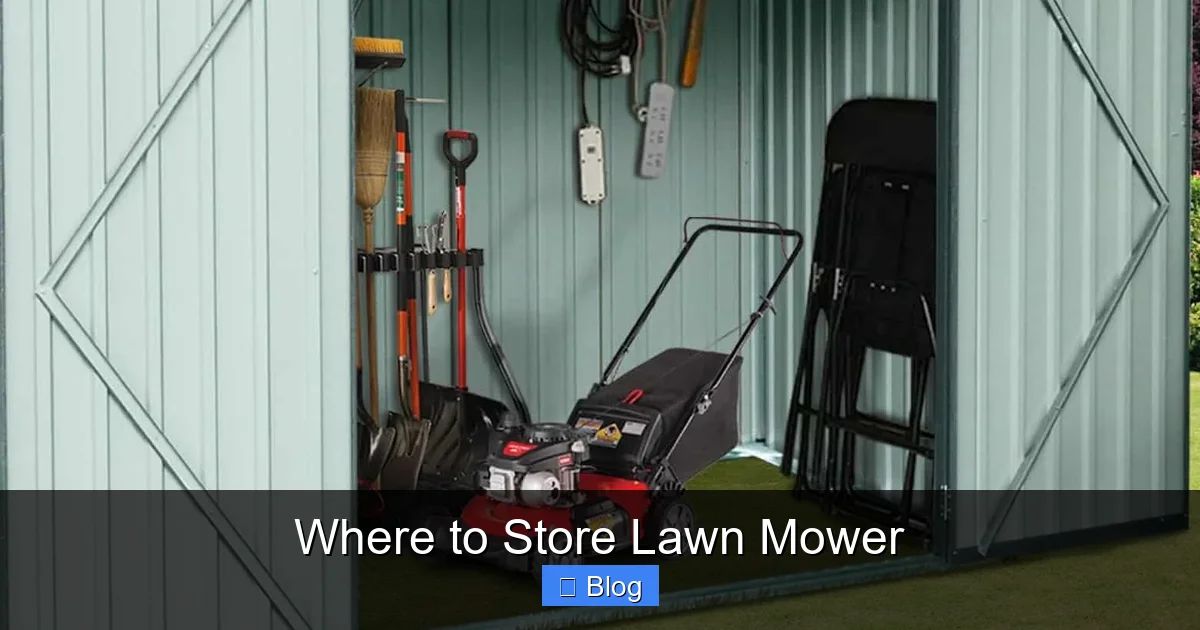
If you have access to a shed, a basement, or a garage, you are already ahead of the game. These spaces provide a roof over your head and walls to block the wind. A detached shed is often the best choice for gas-powered models because it keeps potential fuel fumes away from your living space. If you store your machine in a basement, ensure you have a way to easily move it up the stairs, or better yet, a walk-out basement design.
Dealing with Humidity
Even if your storage area is covered, humidity can still be an issue. If you live in a coastal or particularly damp region, consider adding a dehumidifier or a small ventilation fan to your shed. Keeping the air circulating prevents condensation from forming on the metal surfaces of the mower. A simple, inexpensive hygrometer can help you monitor these levels throughout the year.
Garage Storage Best Practices
For most of us, the garage is the natural “home” for our lawn equipment. It is convenient, usually secure, and close to the action. However, the garage can be a busy place. If you are wondering where to store lawn mower equipment in a crowded garage, the key is maximizing your vertical space and keeping the floor clear for easy access.
Creating Dedicated Zones
The best garage setups feature a “lawn care zone.” This is a specific area near the door where your mower, trimmer, and blower live. By keeping these items together, you save time when it is finally time to get to work. Use wall hooks for your smaller tools and designate a flat, level patch of floor space for the mower itself.
Safety and Security in the Garage
Since the garage is often accessible, safety is paramount. Always ensure that the mower is placed away from your car to prevent accidental bumps. If you have young children, consider installing a simple locking mechanism on your garage door or even a small padlock through the mower wheel if it is a model that could be easily rolled away. For 2026 tech-heavy mowers, keep the charging station for your battery located away from direct sunlight or extreme temperature fluctuations.
Outdoor Storage Solutions
Not everyone has the luxury of a garage or a basement. If your only option is the backyard, you need a plan that is both practical and durable. Knowing where to store lawn mower machines outside requires a bit more effort to ensure the equipment stays protected from the harsh rays of the sun and the drenching rain.
Choosing the Right Cover
If you must store your mower outdoors, a heavy-duty, waterproof cover is non-negotiable. Look for covers that are specifically rated for outdoor use, ideally with UV protection to keep the material from cracking over time. A breathable cover is better than a plastic tarp, as it allows moisture to escape rather than trapping it against the mower deck.
The Benefits of Resin Sheds
If you do not have a permanent structure, a small, prefabricated resin shed is a fantastic investment. These sheds are weather-resistant, easy to assemble, and perfectly sized to hide a lawn mower from view. They keep the machine completely dry and protect it from wind-blown debris. Many of the 2026 models are quite stylish and can blend into your landscape design, making them a discreet choice for where to store lawn mower equipment in a small yard.
Maintenance Before Storage
Where to store lawn mower units is important, but how they look when they go into storage matters just as much. A dirty mower is a magnet for pests and moisture. Before you tuck your mower away for the winter, or even for a long weekend, perform a quick “shut-down” routine.
Cleaning the Deck
Grass clippings are acidic and hold moisture. If you leave them stuck to the bottom of your deck, they will eat away at the metal or plastic over time. Use a scraper to remove dried grass from the underside of the deck. For some modern mowers, you can use a hose attachment to wash it out, but make sure to run the engine for a few minutes afterward to evaporate any remaining water.
Fuel and Battery Care
For gas mowers, using a fuel stabilizer is the most important step you can take. Gas goes “bad” after a few weeks, which can clog your fuel lines and carburetor. If you are storing the mower for the winter, fill the tank with stabilized fuel or drain it completely. For 2026 electric mowers, store your batteries in a temperature-controlled environment inside your house. Extreme cold is the enemy of lithium-ion battery life.
Maximizing Space for Small Homes
Living in a small house or apartment doesn’t mean you can’t have a well-kept lawn. If you have limited space, you have to get creative about where to store lawn mower equipment. Many manufacturers now produce foldable mowers that can be stored vertically.
The Vertical Advantage
Look for mower designs that allow you to stand them up on their back wheels. This takes up only a fraction of the floor space that a traditional mower requires. If your mower is designed for this, store it in a corner of your hallway, in a utility closet, or behind a door. It is the perfect solution for urban gardeners who need to keep their equipment accessible yet out of sight.
Utilizing Under-Deck Space
If you have an elevated deck or a crawl space, you might find a hidden storage spot. Just be sure that the area is not prone to flooding and that you can easily move the mower in and out. Always place the mower on a piece of plywood or rubber matting rather than directly on the dirt to prevent ground moisture from rising into the engine.
Long-Term Storage Tips for Off-Season
When the mowing season ends, it is time to put your machine into deep storage. This is where most equipment damage occurs. If you want your machine to start on the first pull next spring, you need to be strategic about where to store lawn mower hardware during the off-season.
Winterizing Your Machine
Take the time to change the oil and replace the spark plug at the end of the season. Clean the air filter and check the blade sharpness. If the blade is dull, take it off and get it sharpened now so you are ready for spring. Storing a mower with clean, fresh oil and a sharp blade is the best way to extend its lifespan by years.
The Power of Consistency
Once you find a spot that works, stay consistent. Whether it’s the back corner of the garage or a tidy resin shed, having a designated home for your equipment prevents the “lost and found” cycle that leads to neglect. When you have a clear plan for where to store lawn mower units, you are more likely to perform the maintenance that keeps them running smoothly. Treat your lawn mower like a valuable member of your home maintenance team, and it will reward you with a beautiful lawn for years to come.
By following these steps, you ensure that your mower is shielded from the elements and protected from common wear and tear. A little bit of planning goes a long way. Start this season with a dedicated storage spot and watch how much easier your yard work becomes when your tools are ready and waiting for you.
Conclusion
Finding the right answer to the question of where to store lawn mower equipment doesn’t have to be a complicated puzzle. Whether you are lucky enough to have a spacious workshop or you are cleverly folding your mower into a tight closet, the principles remain the same: keep it dry, keep it clean, and keep it safe from the elements. By applying these tips, you protect your machine, save money on costly repairs, and keep your lawn looking sharp well into the future.
Frequently Asked Questions
Can I store my gas lawn mower in the house?
It is generally not recommended to store a gas mower inside your living space or an attached garage due to the risk of gasoline fumes, which are flammable and toxic. A detached shed or a well-ventilated garage is the safest location for gas-powered equipment.
Do I need to cover my mower if it is in a shed?
While a shed offers great protection, using a breathable fabric cover can still be beneficial to keep dust, cobwebs, and pests away from the engine. Avoid plastic tarps, which can trap moisture and cause the very rust you are trying to prevent.
How do I store a robotic lawn mower for the winter?
Robotic mowers should be cleaned thoroughly, and their charging base should be disconnected from the power supply. Store the mower and the charging unit in a dry, frost-free area inside your home, such as a heated basement or garage, to preserve the battery life.
What should I do if my mower is too heavy to lift?
If you cannot lift your mower for storage, prioritize a ground-level, dry location. Use a protective floor mat or a piece of plywood to keep the mower off the concrete or dirt, which helps prevent moisture absorption through the wheels and deck.
Should I remove the battery from my electric mower during winter?
Yes, for electric mowers, it is best to remove the battery and store it in a cool, dry place inside your home. Lithium-ion batteries perform poorly in freezing temperatures, so keeping them indoors will significantly prolong their lifespan.
Is it okay to store a lawn mower on its side?
Only store a lawn mower on its side if the manufacturer specifically states it is safe to do so. In most standard mowers, tipping them on the wrong side can cause oil to leak into the carburetor or air filter, leading to starting problems later.