
The ideal time for your final mow of the season is just as the grass stops growing, typically after the first few light frosts. By maintaining a slightly shorter height during this last session, you protect your lawn from winter mold and matting while ensuring it stays strong until spring.
As the air turns crisp and the leaves begin their colorful descent in late 2026, most homeowners start thinking about putting away the gardening tools. You might be staring out your window, looking at your yard, and asking yourself: when is the last time to mow lawn before winter? It is a common question, and getting the timing right can make a world of difference for your grass health once spring returns.
Mowing too early means your grass will keep growing and look messy, but waiting too long can lead to issues like snow mold or root suffocation. Think of this final mow as tucking your lawn into bed for the winter. You want to leave it in the best possible condition so it can wake up healthy, lush, and ready for a fresh growing season in 2027.
Key Takeaways
- Watch the Growth: The best time to stop mowing is when the grass blades stop lengthening, which happens as temperatures drop below 50 degrees Fahrenheit.
- Don’t Scalp: Even for the final mow, avoid cutting off more than one-third of the blade length to prevent plant stress.
- The Ideal Height: Aim for a height of about 2 to 2.5 inches for the final pass to discourage snow mold.
- Remove Debris: Clear away leaves and sticks before the final mow to ensure air and sunlight can reach the soil.
- Equipment Care: The end of the season is the perfect time to clean your mower deck and sharpen your blades for next year.
- Late-Season Fertilization: Consider a late-fall fertilizer application after your last mow to provide essential nutrients for root development.
Understanding the Grass Growth Cycle
Why Growth Slows Down
Grass is a living organism that reacts primarily to soil temperature and sunlight duration. In the fall, as the days shorten and the ground cools, the grass stops putting energy into blade growth. Instead, it shifts its focus downward. The plant begins to store carbohydrates and energy in the root system. This is nature’s way of ensuring the plant survives the harsh winter temperatures.
The Magic Temperature Threshold
Most cool-season grasses, like Kentucky Bluegrass or Fescue, significantly slow their growth when daytime temperatures consistently fall below 50 degrees Fahrenheit. Once the nights start bringing light frosts, you are getting very close to the finish line. The goal is to perform your last mow when the grass has entered this dormant or near-dormant state, but before the ground freezes solid.
Signs Your Lawn is Ready
You will know it is time to stop when you look at the lawn and realize you haven’t had to mow it for a week or more. If the growth has virtually halted, it is safe to give it one final, deliberate trim. Waiting for this natural pause ensures you aren’t removing too much leaf tissue at once, which could shock the grass right before it enters its most vulnerable state.
The Golden Rule of Final Mowing Heights
Avoid the Short Cut
There is a dangerous myth that says you should cut your lawn as short as possible before winter to keep it neat. Please avoid this temptation! Cutting your grass too short exposes the crown of the plant to the drying wind and freezing temperatures. It also removes the protective layer that helps the plant survive winter.
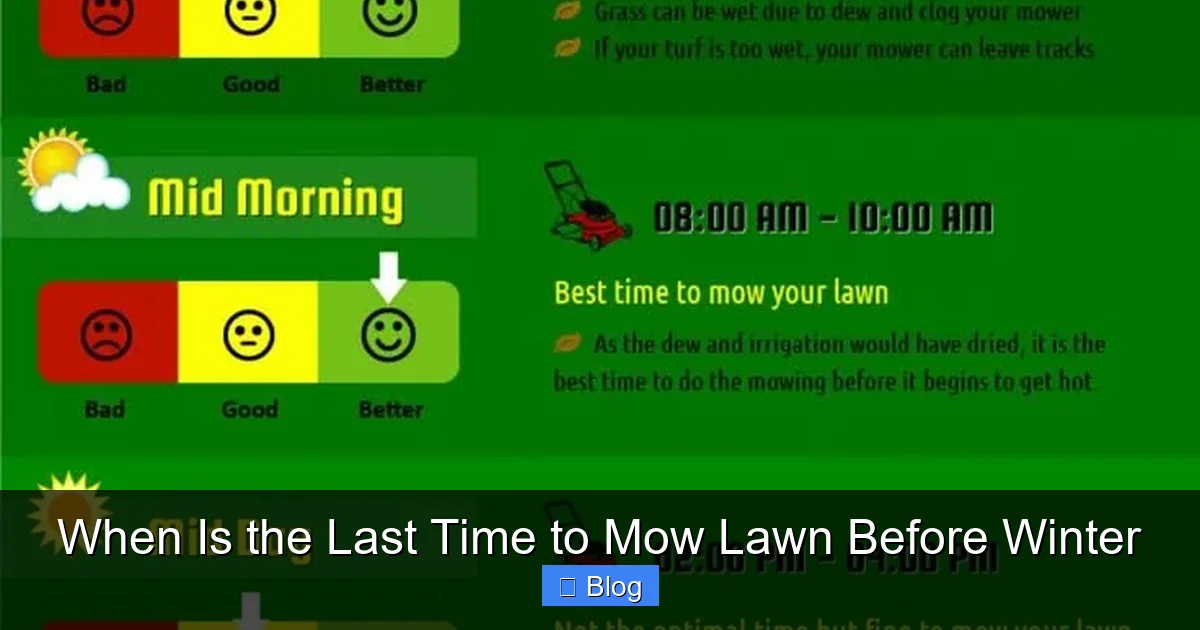
Visual guide about When Is the Last Time to Mow Lawn Before Winter
Image source: i.pinimg.com
The Sweet Spot
So, when is the last time to mow lawn before winter and at what height? You should aim for a height of about 2 to 2.5 inches. This height is short enough to prevent the grass from matting down under the weight of heavy snow, which is a major cause of snow mold. However, it is tall enough to allow the plant to retain its ability to photosynthesize during those sunny winter afternoons.
Why Matting is Your Enemy
When grass is too long, it tends to bend over under the weight of snow or ice. This creates a dense layer that traps moisture against the soil. This environment is perfect for snow mold, a fungal disease that can kill patches of your lawn. By keeping the height at that 2 to 2.5-inch range, you allow for better airflow throughout the winter months.
Preparing Your Lawn for the Final Pass
Clear the Deck of Debris
Before you even think about starting your mower engine, you must clear the area. Fall is the time for falling leaves, twigs, and branches. If you leave a thick blanket of wet leaves on your grass while the ground freezes, you are essentially suffocating the lawn. Use a rake or a leaf blower to clear the grass surface. If you have a small amount of leaf litter, you can mulch it with your mower, but don’t overdo it.
The Importance of Aeration
If your lawn soil is compacted, it will struggle during the winter. Late fall is a fantastic time for aeration. By poking holes in the soil, you allow oxygen, water, and nutrients to reach the roots much more effectively. If you aerate before your final mow, the grass will be much stronger and more resilient when the snow begins to melt in 2027.
Watering Before the Freeze
Many people forget that grass needs water right up until the ground freezes. If the autumn in 2026 has been dry, give your lawn a good, deep soak before the first deep freeze. A well-hydrated lawn is much more resistant to winter desiccation than one that is suffering from drought stress.
Equipment Maintenance for the Off-Season
Sharpen Those Blades
The final mow is the most important one to perform with sharp blades. A dull blade tears the grass rather than slicing it cleanly. These torn edges are susceptible to disease and take longer to heal, which is exactly what you don’t want when the grass is trying to store energy. Treat yourself to a sharp blade for that last cut.
Engine Care and Storage
Once you’ve finished that final mow, your lawn mower needs some love. Drain the fuel or add a fuel stabilizer to the tank to prevent the gasoline from breaking down and gumming up the carburetor. It’s also a good idea to clean the underside of the mower deck. Dried grass clippings and dirt can trap moisture and cause the metal to rust over the winter months.
Check Your Spark Plug and Air Filter
If your mower is showing signs of struggle, now is the time to replace the spark plug and air filter. It’s a cheap and easy way to ensure that your mower starts on the first pull next spring. Taking care of your equipment today prevents a headache when the busy season returns.
Post-Mowing Care: Fertilizer and Beyond
The Late-Fall Fertilizer Boost
Many lawn care experts suggest that the most important fertilization of the year happens late in the fall. After you’ve done your last mow, applying a slow-release nitrogen fertilizer can work wonders. The grass roots are still active even when the blades aren’t growing much. This nutrients will feed the roots throughout the winter, giving your lawn a massive jump-start for the spring of 2027.
Keep the Traffic Down
Once your grass has gone dormant and you’ve completed your last mow, try to stay off the lawn as much as possible. Frozen grass blades are brittle. If you walk on them when they are covered in frost or frozen, you can cause physical damage to the plant cells, leading to dead patches that won’t show up until the spring.
Winter Prep for Garden Beds
While you are thinking about your lawn, don’t forget the edges. If your lawn borders garden beds, make sure the edge is clean and well-defined. This prevents the lawn grass from creeping into your flower beds during the dormant season. A clean edge makes spring cleanup much faster and keeps your property looking tidy all winter long.
Conclusion: Setting Up for Success
Knowing when is the last time to mow lawn before winter is a matter of paying attention to the signals your grass is giving you. It isn’t a specific date on the calendar, but rather a response to the cooling temperatures of 2026. By waiting until the growth has slowed, keeping your final height around 2.5 inches, and ensuring your equipment is clean, you are setting the stage for a healthy lawn.
Think of this task as your final act of kindness for your outdoor space. When the snow finally melts in 2027, you will be rewarded with a yard that recovers quickly and glows with health. So, keep an eye on those temperatures, sharpen your blades, and enjoy those last crisp days of autumn knowing that your lawn is prepared for whatever winter brings.
Frequently Asked Questions
Does the grass die if I mow it too late in the season?
Mowing late is generally not fatal, but cutting it when the grass is frozen can damage the cellular structure of the blades. Always wait for a day when the temperatures are above freezing to perform your final cut.
Is it better to leave the clippings on the lawn for the last mow?
Yes, as long as the clippings aren’t too thick or wet. Mulched grass clippings provide a small amount of nitrogen back to the soil, which helps the lawn as it prepares for dormancy.
What if I missed the last mow and the grass is now very tall?
If the ground hasn’t frozen yet, you can still perform a gentle trim on a warm afternoon. If the ground is already frozen, it is best to leave it alone until spring to avoid damaging the dormant grass.
Can I mow when there is frost on the grass?
No, you should never mow when frost is present. The blades of grass are brittle when frozen, and mowing them will likely result in physical injury to the plant and cause unsightly brown tips.
Why do people recommend a “winterizer” fertilizer?
A winterizer fertilizer is typically high in potassium, which helps with root strength and overall stress tolerance. It helps the grass survive winter fluctuations and come back stronger in the spring.
How do I know if my mower blade is sharp enough?
Examine the tips of your grass after mowing; if they look frayed, white, or jagged, your blade is dull. A sharp blade will produce a clean, crisp cut that heals quickly.