
Timing is everything when it comes to a thriving lawn. By choosing the right time of day and monitoring seasonal growth, you can prevent disease, promote deep roots, and save yourself extra work. Follow our expert guide to master the perfect mowing schedule for your backyard.
We have all been there. You look out the window on a Saturday morning, coffee in hand, and realize your lawn has officially turned into a small jungle. It is tempting to grab the mower and head out immediately, but have you ever stopped to ask yourself, when is a good time to mow the lawn? While it might seem like a simple chore, there is actually a bit of science involved in keeping your yard looking like a professional landscape.
In 2026, lawn care technology has improved, but the fundamental needs of your grass remain the same. The health of your turf depends on timing, height, and even the sharpness of your tools. By understanding the rhythm of your garden, you can spend less time stressing over brown patches and more time enjoying your outdoor space. Let’s dive into the best practices for maintaining that perfect green carpet.
Key Takeaways
- Morning is optimal: Mid-morning, after the dew has evaporated, is the best time to mow the lawn to ensure clean cuts and healthy grass.
- Avoid the heat: Mowing during the midday sun stresses your grass and can lead to browning or heat-related damage.
- Follow the one-third rule: Never cut more than one-third of the grass blade at once, as this keeps the plant healthy and prevents scalping.
- Sharp blades matter: A dull blade tears the grass rather than slicing it, which leaves the lawn vulnerable to pests and disease.
- Seasonal adjustments: Your mowing frequency should change based on the season, with faster growth in spring requiring more frequent trims than mid-summer.
- Weather awareness: Avoid mowing while the grass is soaking wet, as it leads to uneven cuts and damages the soil structure.
The Best Time of Day to Mow
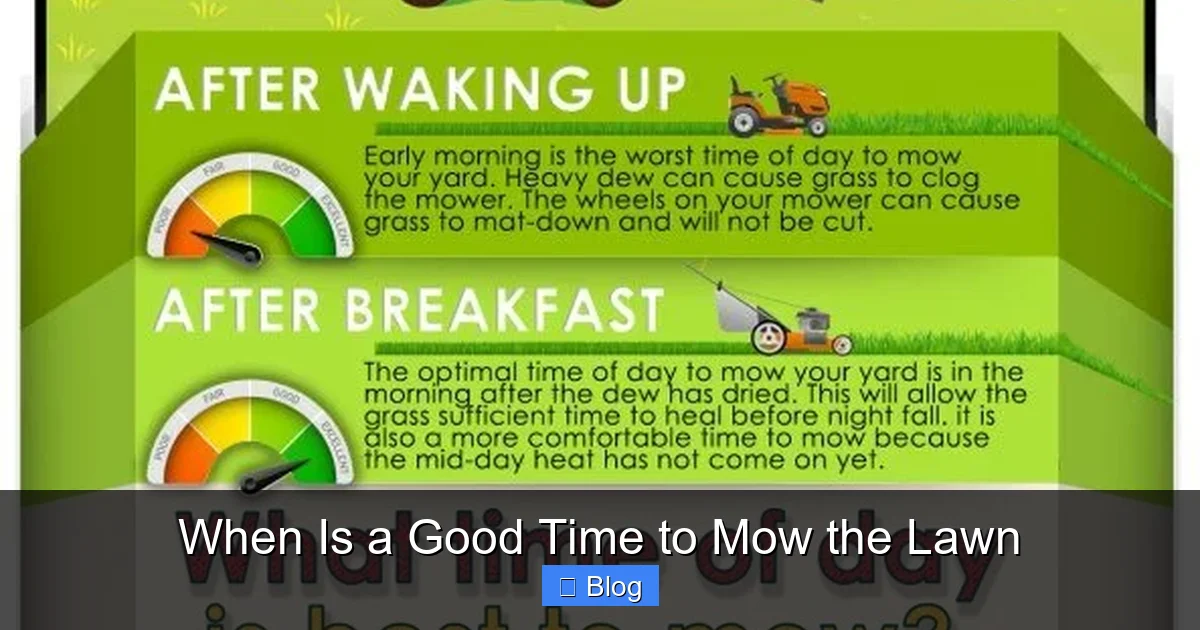
When is a good time to mow the lawn? For most homeowners, the answer lies in the window between 8:00 AM and 10:00 AM. During this time, the morning dew has usually evaporated, meaning the grass blades are standing tall and dry. Dry grass is much easier for your mower blade to slice cleanly, which results in a sharper, more professional finish.
Why Avoid the Midday Heat?
Many people wait until the heat of the afternoon, but this is a mistake. When temperatures climb toward the peak of the day, your grass is already working hard to conserve water. If you mow during the high heat, you force the plant to recover from the stress of being cut while simultaneously battling dehydration. This often leads to browning at the tips, leaving your yard looking tired rather than vibrant.
The Case for Late Afternoon
If you miss the morning window, late afternoon is your next best bet. By 4:00 PM or 5:00 PM, the intensity of the sun has started to fade. The grass has had a full day to recover from the morning heat, and it is less prone to damage from the mower. Just make sure you finish well before sunset, as mowing in the dark makes it nearly impossible to see uneven areas or potential obstacles.
Seasonal Strategies for 2026
Your lawn goes through different life stages throughout the year. Knowing when is a good time to mow the lawn depends heavily on the month. In the early spring, growth is rapid because of the rain and cooler temperatures. This is when you should be most diligent about your schedule.
Visual guide about When Is a Good Time to Mow the Lawn
Image source: school.sprinklerwarehouse.com
Spring Growth Spurts
In the spring, you might find yourself mowing every four to five days. Because the grass is growing so quickly, it is important not to let it get too long. If you let it go for two weeks and then try to cut it back, you will be left with piles of clippings that can suffocate the grass underneath.
Summer Dormancy
As we move into the hotter months of 2026, growth naturally slows down. During periods of drought or extreme heat, you might only need to mow every ten days or so. If your lawn looks brown and dry, consider raising your mower deck. Longer grass provides shade for the soil, which helps it retain moisture and protects the root system from the baking sun.
Mastering the One-Third Rule
One of the most important aspects of knowing when is a good time to mow the lawn is understanding how much you should actually take off. The Golden Rule of lawn care is the “one-third rule.” You should never remove more than one-third of the total grass blade length in a single session.
Preventing Lawn Stress
If you cut too much off, the plant goes into shock. It loses its ability to produce energy through photosynthesis, which causes the roots to die back. Weak roots make your lawn susceptible to weeds, which quickly move in to take over the empty spaces. By sticking to the one-third rule, you ensure your lawn remains dense, healthy, and resilient against heat and traffic.
What if the Grass Gets Too Long?
We all have those weeks where life gets busy and the lawn gets overgrown. If your grass has grown significantly, do not try to fix it in one go. Instead, mow it at a high setting today, wait three days, and then bring it down to your desired height. This gradual approach keeps the grass from suffering from “scalping,” where the lawn looks yellow and patchy after a heavy cut.
The Importance of Equipment Maintenance
You can pick the perfect time, but if your mower is in bad shape, your results will suffer. A dull mower blade is one of the biggest enemies of a healthy lawn. When a blade is dull, it acts more like a blunt instrument, tearing the grass rather than cutting it. This tearing creates ragged edges that turn brown and become entry points for fungal diseases.
Sharpening Your Blades
In 2026, most homeowners should sharpen their mower blades at least twice per season. If you have a large property or a lot of debris, you might need to do it more often. A sharp blade creates a clean, surgical cut that heals almost instantly, keeping your lawn looking green and lush.
Checking for Obstacles
Before you start, do a quick “walk of the yard.” Look for rocks, twigs, or children’s toys that might have landed in the grass. Hitting a stone with a high-speed mower blade can turn a simple chore into a dangerous situation or cause permanent damage to your mower. Taking thirty seconds to clear the path is always worth the effort.
Weather Conditions to Watch
We often think about the temperature, but humidity and rainfall are just as important. Asking yourself when is a good time to mow the lawn also means looking at the forecast. You should never mow when the grass is wet.
Why Wet Grass is a Problem
Mowing wet grass is bad for two reasons. First, the weight of the mower can sink into the soft, wet soil, leaving ruts that are difficult to fix. Second, wet grass clippings tend to clump together. These clumps are heavy and block the mower’s discharge chute, creating uneven layers of decaying matter on top of your healthy grass, which invites mold.
Windy Days
Believe it or not, wind can also play a role. If it is incredibly windy, your mower’s discharge chute might spray clippings back onto your sidewalk or garden beds, creating a cleanup nightmare. Aim for calm days whenever possible to ensure an even distribution of mulch back into the soil.
Sustainability and Lawn Health
If you want the best looking yard in the neighborhood, stop bagging your clippings. Leave the grass clippings on the lawn. This is often called “grasscycling.” The clippings are packed with nitrogen and other nutrients that naturally fertilize your soil as they decompose.
The Benefits of Natural Fertilizer
By leaving the clippings, you are effectively recycling your own lawn’s waste. It reduces the need for synthetic fertilizers and helps the soil retain moisture. When you mow at the right time—when the grass is dry and your blades are sharp—the clippings will be small and invisible, disappearing into the turf within a day or two.
Conclusion
Learning when is a good time to mow the lawn is a journey that changes with the seasons and the specific needs of your grass. By avoiding the heat of the day, respecting the one-third rule, and keeping your equipment in top shape, you transform a chore into a rewarding part of your week. In 2026, embrace the rhythm of your garden, and your lawn will thank you with a lush, green carpet that stands out all year long. Happy mowing!
Frequently Asked Questions
Is it okay to mow at night?
It is generally discouraged to mow at night because the dew creates wet grass, which clumps and causes uneven cuts. Furthermore, poor visibility makes it difficult to achieve a clean look and can lead to safety hazards in your yard.
How often should I sharpen my mower blades?
For the average homeowner, sharpening your mower blades at least twice per season is recommended. If you notice the tips of your grass looking frayed or brown immediately after mowing, that is a clear sign your blades are dull and need attention.
Does leaving clippings on the lawn cause thatch?
No, leaving clippings on the lawn does not cause thatch. Clippings are mostly water and decompose quickly, providing valuable nutrients back into the soil, provided you are mowing frequently enough that the clippings remain short.
Should I mow my lawn during a drought?
When the lawn is stressed by drought, you should mow less frequently and raise the deck height of your mower. Taller grass shades the soil, reducing water evaporation and helping the roots survive until the next rainfall.
What is the “one-third rule”?
The one-third rule dictates that you should never remove more than one-third of the total height of the grass blade in a single mowing session. Following this rule prevents shock to the grass and promotes a deeper, healthier root system.
What is the best height for my grass?
The ideal height depends on your specific grass type, but generally, keeping grass at 3 to 4 inches is best for health. Longer grass promotes better root growth and helps the lawn shade itself, which suppresses weeds and conserves moisture.