
Choosing the right oil for your push lawn mower is the single most important step in preventing engine failure and extending its lifespan. Most modern mowers perform best with SAE 30 or 10W-30 synthetic oil, but your specific owner’s manual always holds the final answer.
If you are looking at your lawn and wondering why your machine is acting up, you might be surprised to learn that the answer often lies in the oil reservoir. We often think of our lawn mowers as simple tools, but they are actually high-performance machines that work under intense heat and pressure.
Knowing exactly what type of oil for push lawn mower maintenance you need is the secret to a long-lasting engine that starts on the first pull every single spring. As we navigate the 2026 gardening season, technology in small engine design has continued to evolve. While the core mechanics remain similar to what we have known for years, the tolerances have tightened.
This means that using the wrong oil isn’t just a minor oversight anymore; it can lead to sludge buildup, overheating, and eventually, a costly trip to the repair shop. Whether you have a brand-new mower or an old reliable workhorse, getting the lubrication right is the best gift you can give your machine.
Key Takeaways
- Consult Your Manual: Always prioritize the manufacturer’s recommendation over general advice for your specific engine model.
- SAE 30 vs. 10W-30: Use SAE 30 for warmer weather, while 10W-30 is a versatile multi-grade oil suitable for a wider range of temperatures.
- Synthetic Benefits: Synthetic oils offer superior heat resistance and engine protection, making them a smart investment for 2026 lawn care.
- Check Levels Regularly: Never overfill or underfill your oil reservoir, as both extremes can cause catastrophic engine damage.
- Oil Changes Matter: Stick to the recommended maintenance schedule, typically every 50 hours of use or once per season.
- Avoid Automotive Oil: While some modern oils are compatible, avoid using heavy-duty automotive oils unless specified by your mower manufacturer.
Understanding the Basics of Lawn Mower Oil
At its most basic level, lawn mower oil is designed to reduce friction between moving metal parts. When your engine runs, the piston moves thousands of times per minute. Without a thin, protective film of oil, those metal components would grind against each other, creating heat and causing permanent damage.
When you ask, “what type of oil for push lawn mower units do I need,” you are really asking how to keep that protective film consistent regardless of how hot your engine gets.
Viscosity Explained
You have likely seen labels like SAE 30 or 10W-30. These numbers refer to viscosity, or the oil’s thickness. SAE stands for the Society of Automotive Engineers. The “W” stands for winter, indicating how the oil flows at lower temperatures. A lower number means the oil is thinner and flows better in the cold.
A higher number means it stays thicker at higher temperatures. For most lawn mowers, we need an oil that stays thick enough to protect the engine when it gets piping hot in the summer sun.
Single-Grade vs. Multi-Grade
Single-grade oil, like SAE 30, is the classic choice for warm-weather mowing. It is stable and does a great job protecting the engine when it is running at peak operating temperature. Multi-grade oils, like 10W-30, are formulated to be thinner when starting up and thicker as they heat up. In 2026, many homeowners prefer 10W-30 because it is more forgiving if you happen to mow on a chilly spring morning or a scorching mid-July afternoon.
Selecting the Right Oil for Your Specific Climate
Your local environment plays a massive role in your oil choice. If you live in an area with consistently hot summers, you might lean toward a heavier oil. If you live in a region where the temperature swings wildly, a multi-grade oil is almost always the smarter pick. The goal is to choose an oil that maintains a consistent viscosity despite what the thermometer says outside.
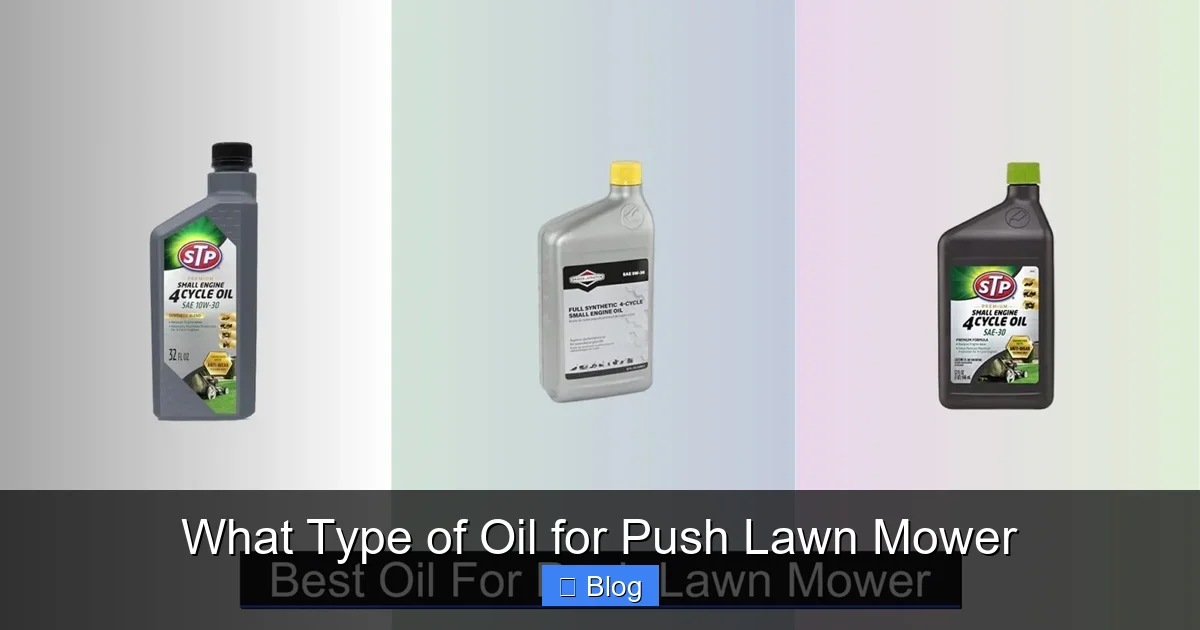
Visual guide about What Type of Oil for Push Lawn Mower
Image source: bestlawnmower.reviews
The SAE 30 Advantage
SAE 30 is the gold standard for many push mower engines. It is a straight-weight oil that is incredibly robust. If your mower is primarily used in the middle of summer when the air temperature is always above 50 degrees Fahrenheit, SAE 30 is perfect. It does not break down as easily under extreme heat as some lighter oils might. It is the simple, honest, workhorse oil that has powered mowers for generations.
Why 10W-30 is Becoming More Popular
Many modern mower manufacturers are switching their recommendations to 10W-30. Why? Because it handles a wider temperature range. If you start your yard work early in the spring, the ambient air might still be cool.
10W-30 flows more freely during that cold start, which means the oil reaches the critical internal components of your engine much faster. This reduces the “dry start” wear that happens in the first few seconds of the engine running.
Synthetic vs. Conventional: Which is Better?
When you head to the store to pick up oil, you will see bottles marked “Synthetic” and others marked “Conventional.” This is a common point of confusion for many homeowners. In 2026, the cost difference between the two has narrowed, making synthetic a very attractive option for the average lawn enthusiast.
The Case for Synthetic Oil
Synthetic oil is engineered in a laboratory to be uniform in size and shape. Because of this, it resists breaking down under extreme heat significantly better than conventional oil. If your lawn is large and your mower engine runs for an hour or more at a time, synthetic oil is your best friend. It provides superior protection against deposits and sludge. Plus, it often lasts longer, which might align better with your maintenance schedule.
Conventional Oil Limitations
Conventional oil is refined from crude oil. It is perfectly adequate for many basic mowing tasks, especially if you have a smaller yard and keep your engine clean. However, it is more susceptible to thermal breakdown.
Over the course of a hot afternoon, conventional oil can thin out more than synthetic, offering slightly less protection. It is fine if you are diligent about checking your levels and changing the oil at the proper intervals.
How to Safely Change and Maintain Your Mower Oil?
Knowing what type of oil for push lawn mower use is only half the battle. You also have to make sure you have the right amount in the tank. Think of it like taking care of a car; you wouldn’t ignore the oil light on your dashboard, so you shouldn’t ignore your mower’s needs either.
The Importance of the Dipstick
Every push mower has a dipstick attached to the oil fill cap. This is your most important tool. Before you start mowing, always check the level. If it is low, add a small amount of the recommended oil and wait a minute for it to settle. Never fill it to the very top there is a specific “fill line” for a reason. Overfilling can cause oil to leak into the air filter or cause the engine to smoke significantly.
Changing the Oil Effectively
For most push mowers, you should change the oil once every season or after every 50 hours of operation. To do this, warm up the engine for a few minutes first. Warm oil drains much faster and carries more impurities out with it. Position your mower carefully so the oil drain plug is at the lowest point, place a container underneath, and let it drain completely. Once finished, refill it with the exact type of oil your manual specifies.
Common Mistakes to Avoid
Even with the best intentions, it is easy to make mistakes. One of the most common issues we see in 2026 is using “leftover” oil from other projects. While it might be tempting to use the leftover oil from your car, be very careful. Some high-performance automotive oils contain additives that can actually interfere with the clutch or the specialized small engine components found in lawn mowers.
Avoiding Automotive Oil
Automotive oils are designed for engines with different cooling systems and different gear configurations. While an API-rated oil might technically “work” in a pinch, it isn’t formulated for the high-revving, air-cooled environment of a lawn mower. Always use oil specifically labeled for “4-Cycle Small Engines” if you want the longest life for your equipment.
The “Top-Off” Trap
Never just add oil without checking the level first. If you keep adding oil because you think it “should” be low, you will eventually overfill the crankcase. This creates high pressure inside the engine, which can blow out seals and gaskets. It is far better to have a slightly lower level that is still within the operating range than to have a crankcase that is overfilled and pressurized.
Maximizing Mower Longevity
If you treat your mower well, it will treat your lawn well. The right oil acts as the lifeblood of your machine. By choosing the correct grade and staying consistent with your maintenance, you are essentially preventing the most common causes of engine failure.
In 2026, we have access to incredible lubricants that do a great job of protecting our investment. Don’t underestimate how much difference a high-quality bottle of oil can make when the heat is on.
Keep your air filter clean, keep your blade sharp, and use the right oil. These three steps are the holy trinity of lawn mower maintenance. If you follow this advice, your push mower will be ready for duty whenever you need it, and you won’t have to spend your Saturday mornings fighting with a reluctant engine. Happy mowing!
Frequently Asked Questions
How often should I change the oil in my push mower?
Most manufacturers recommend changing the oil once every season or every 50 hours of use. If you have a brand-new mower, perform the first oil change after the first 5 hours of operation to remove any break-in metal shavings.
Can I use car oil in my lawn mower?
While you can use certain types of automotive oil if they meet the specifications listed in your manual, it is safer to use oil specifically formulated for small 4-cycle engines. Small engines run hotter and operate differently than car engines, so specialized oil provides better protection.
What happens if I overfill the oil in my mower?
Overfilling your mower with oil can cause it to leak into the air filter, create thick white smoke during operation, or even force oil into the combustion chamber. This creates excessive pressure that can damage your engine seals and lead to expensive repairs.
Is it better to use synthetic or conventional oil?
Synthetic oil is generally better because it offers superior protection against high temperatures and resists sludge buildup. While conventional oil is acceptable, synthetic oil provides a better cushion for your engine parts, especially during the intense heat of summer.
How do I know if I have the right amount of oil?
Use the dipstick provided with your mower to check the oil level on a flat, level surface. The oil level should always sit between the “Add” and “Full” marks; never go above the “Full” line.
What is the most common oil used for modern push mowers?
SAE 30 and 10W-30 are the most common oils used for push mowers. SAE 30 is typically preferred for warmer temperatures, while 10W-30 is a versatile, all-temperature choice recommended by many modern manufacturers.