Choosing the right lawn mower depends entirely on your yard size, terrain, and personal comfort. Whether you need a compact electric walk-behind or a powerful zero-turn tractor, matching the equipment to your specific property will save you time, money, and backaches this mowing season.
Walking into a garden center in 2026 feels a lot like walking into a high-tech showroom. There are sleek robots, silent batteries, and heavy-duty gas tractors lining the aisles. It is easy to feel overwhelmed when you ask yourself, what type of lawn mower do I need?
The truth is, there is no single “best” mower for everyone. The best mower is the one that fits your specific patch of grass like a glove. Choosing the wrong machine is more than just a waste of money; it turns a Saturday morning chore into a grueling workout. If you buy a small push mower for a sprawling acre, you will spend your whole weekend sweating.
If you buy a massive tractor for a tiny urban patch, you will have nowhere to store it and a hard time navigating the tight corners. Let’s break down exactly how to find your perfect match.
Key Takeaways
- Yard Size Matters: Lawns under a quarter-acre are best for walk-behinds, while larger properties require ride-on mowers to stay efficient.
- Terrain Dictates Power: If your yard has steep hills, you need a self-propelled mower or a tractor with high torque and specialized traction.
- Power Source Choice: Battery-powered models are quieter and low-maintenance, while gas remains the king of raw power for overgrown, thick grass.
- Storage Limitations: Consider the footprint of your mower; a zero-turn takes up significantly more garage space than a foldable push mower.
- Maintenance Commitment: Gas engines require oil changes and spark plug replacements, whereas electric mowers are largely “charge and go.”
- Mulching vs. Bagging: Decide how you want to handle clippings early, as not all mowers are optimized for both or side-discharge setups.
Assessing Your Lawn Size and Layout
Small Urban Lawns (Under 1/4 Acre)
If you have a modest yard, keep it simple. For these spaces, a traditional push mower or a walk-behind electric mower is perfect. You do not need the extra weight or the high maintenance of a gas engine.
Many modern 2026 electric models come with foldable handles, meaning you can tuck them away in a corner of your garage or shed. They are lightweight, quiet, and get the job done in under thirty minutes.
Medium Suburban Yards (1/4 to 1/2 Acre)
Once you hit this size, pushing a mower starts to feel like a real task. A self-propelled walk-behind mower is your best friend here. These machines use a transmission to move the wheels, so you just guide the machine while it does the heavy lifting.
You can choose between front-wheel drive, which is great for turning around flower beds, or rear-wheel drive, which provides better traction on slight slopes.
Large Lots (1/2 Acre and Above)
If your yard feels like a football field, it is time to move up to a ride-on mower. A standard lawn tractor is the most common choice, offering a comfortable seat and enough deck width to clear your grass quickly.
However, if your yard has many trees, gardens, and obstacles, a zero-turn mower will save you an incredible amount of time. Their ability to turn on a dime means you spend less time reversing and more time relaxing.
Understanding Power Sources: Gas vs. Battery
The Rise of Battery Technology
By 2026, battery power has become the gold standard for most homeowners. Modern lithium-ion batteries are no longer the weak power cells of the past. They offer consistent torque that rivals gas engines without the messy fuel mixing, oil changes, or loud exhaust.
If you already own power tools from a specific brand, buying a mower that uses the same battery system is a brilliant move. You can swap batteries from your leaf blower to your mower in seconds.
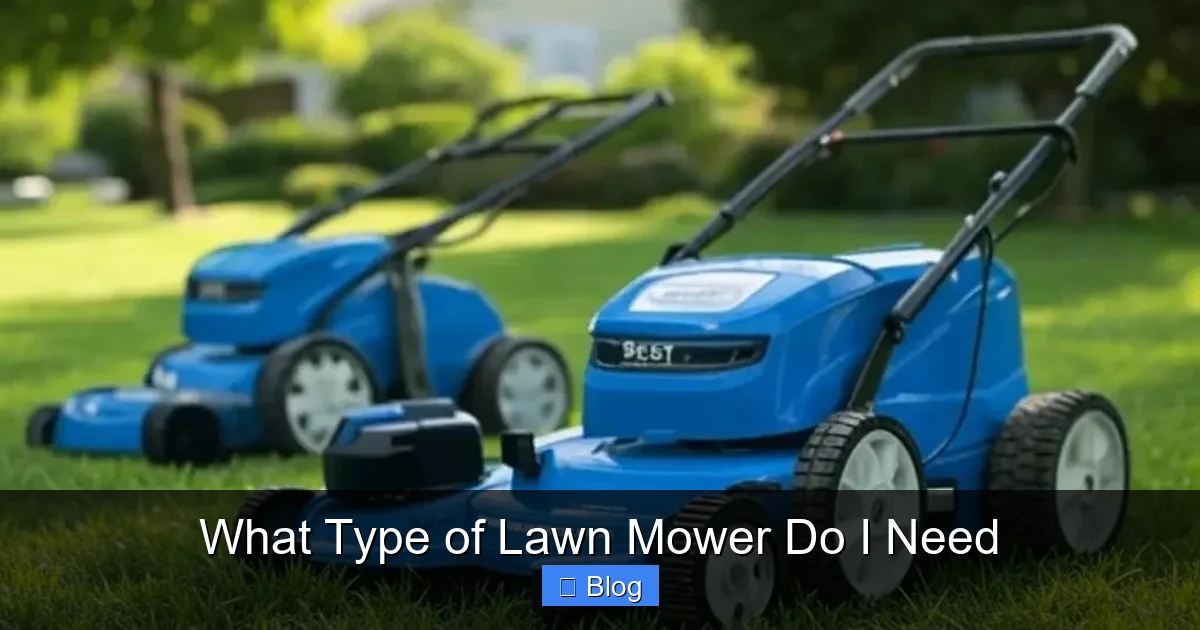
Visual guide about What Type of Lawn Mower Do I Need
Image source: grasscure.com
When Gas Still Wins
While batteries are great, gas mowers still have a place in the market. If you have a massive property where you are mowing for two hours straight, a gas mower allows for a quick refueling stop and you are back at it.
There is no waiting for a recharge. For professionals or homeowners with thick, damp, or wild pasture grass, a heavy-duty gas-powered engine provides the consistent raw power needed to prevent stalling.
Terrain and Obstacles
The Challenge of Hills and Slopes
Hills change the game entirely. If you have a steep incline, a heavy, ride-on mower can actually be dangerous due to the risk of tipping. A lighter, self-propelled walk-behind mower is often safer and provides better control.
Look for models with high-traction rear tires if you deal with hills regularly. Always mow across the slope, never up and down, to keep the machine stable.
Navigating Tight Spaces
If your lawn is filled with flower beds, pathways, and decorative trees, you need a mower with a narrow cutting deck. A wide deck might cut more grass, but it will leave you trimming by hand later.
A mower with a tight turning radius or a zero-turn capability is essential if you want to avoid hours of string-trimming later in the day.
Features That Make Mowing Easier
Mulching, Bagging, or Side Discharge
How do you want to handle your clippings? Mulching is the best way to return nutrients to your lawn, and most modern mowers are designed to chop grass into fine bits.
If your lawn grows very fast and gets thick, you might want a bagging attachment to keep it looking pristine. Most mowers offer a 3-in-1 capability, allowing you to switch between these modes easily.
Adjustable Height and Ergonomics
Never underestimate the importance of comfort. Look for handles that adjust to your height. If the mower is too low or too high, you will feel it in your lower back. Additionally, check for a “deck wash” port.
This allows you to hook up a garden hose to the underside of your mower to clean it out after use, which keeps the blades sharp and the machine running efficiently for years.
Maintenance and Storage Considerations
The Minimalist Approach
If you want to spend your weekends enjoying the lawn rather than fixing the mower, opt for an electric model. They are virtually maintenance-free compared to gas engines.
You will not need to worry about stale gas, gummed-up carburetors, or changing air filters. Simply clean the underside of the deck, wipe down the body, and store it in a dry, cool spot.
The Traditionalist Route
If you enjoy tinkering, a gas mower might be your preference. Keep a maintenance kit on hand with fresh oil, a new spark plug, and an air filter.
At the end of the season, remember to either use a fuel stabilizer or drain the tank completely. Taking care of your equipment ensures it starts up on the first pull every single spring.
Conclusion
Ultimately, the question “what type of lawn mower do I need” comes down to balancing your lawn’s physical demands with your own comfort and maintenance style.
By looking at your acreage, the amount of obstacles in your path, and how much time you want to spend on maintenance, you can narrow your search significantly.
In 2026, we are lucky to have better technology than ever before. Whether you go for the quiet convenience of a cordless electric mower or the raw, proven performance of a gas engine, the right choice will make your outdoor chores feel like a breeze.
Take your time, measure your yard, and choose the machine that makes you feel good about caring for your home. Happy mowing!
Frequently Asked Questions
How often should I change my mower blades?
You should sharpen or replace your mower blades at least once per season, or every 20-25 hours of use. Sharp blades cut grass cleanly, which keeps your lawn healthier and greener, while dull blades tear the grass and leave it prone to disease.
Is a zero-turn mower worth the extra cost?
For lawns over half an acre with many obstacles like trees and garden beds, a zero-turn is absolutely worth the investment. It can cut your mowing time in half compared to a standard lawn tractor by eliminating the need for complex reversing maneuvers.
Can I use an electric mower on wet grass?
It is generally not recommended to mow wet grass with any type of mower, including electric ones. Wet grass clogs the underside of the deck, clumping up the clippings and making it harder for the blade to get a clean cut.
How do I know what deck size I need?
As a general rule, a 20-22 inch deck is perfect for small to medium yards. If you have a large open area, look for a deck between 42 and 54 inches to cover ground faster.
Are robot mowers actually effective?
In 2026, robot mowers are highly effective for consistent, hands-off maintenance on relatively flat, simple landscapes. They are not designed for rough terrain or very tall, thick grass, but they are great for keeping a tidy yard looking manicured all week long.
What is the benefit of a self-propelled mower?
A self-propelled mower uses a transmission to move the wheels, which takes the physical strain out of pushing the machine. This is ideal if your yard has hills, deep grass, or if you prefer a lower-impact mowing experience.