
Mowing a wet lawn is a common mistake that can lead to uneven cuts, lawn diseases, and soil compaction. By waiting for the grass to dry, you ensure a healthier, more vibrant yard while protecting your mowing equipment from unnecessary wear and tear.
We have all been there. You have a busy weekend ahead, the sky looks a bit gray, but you really need to get the lawn mowed before the guests arrive. You think to yourself, “It is just a little damp, it will be fine.” However, taking that shortcut can lead to long-term headaches for your yard. Mowing a wet lawn is one of the most common maintenance blunders that even experienced homeowners make.
As we move further into the 2026 gardening season, the importance of lawn health has never been higher. Healthy, thick grass acts as a natural filter for the environment and provides a beautiful space for your family to enjoy. When you choose to mow while the grass blades are heavy with dew or post-rain moisture, you are essentially setting your lawn up for a struggle. In this guide, we will explore exactly why it is bad to mow a wet lawn and how you can optimize your yard care routine for better results.
Key Takeaways
- Turf Health: Cutting wet grass leads to uneven, jagged tears that invite fungal infections and pests.
- Soil Structure: Wet soil is prone to compaction from mower weight, which restricts root growth and air circulation.
- Equipment Longevity: Wet clippings clog mower decks, rust metal components, and put extra strain on the engine.
- Safety Hazards: Wet surfaces increase the risk of slipping or losing control of heavy mowing equipment.
- Aesthetic Quality: Mowing when wet results in clumpy, messy grass piles that suffocate the turf beneath them.
The Impact on Your Grass Blades
When you look at a blade of grass under a microscope, you can see how delicate it truly is. A lawn mower works by creating a sharp, clean cut across the top of these blades. When the grass is dry, it stands upright and rigid, which allows the mower blade to slice through it cleanly. However, when the grass is wet, it becomes heavy and soft.
Jagged Cuts and Disease
Wet grass tends to bend away from the mower blade rather than standing tall to meet it. Instead of a clean cut, the mower ends up tearing the grass. These jagged, shredded edges are not just an eyesore; they are an open invitation for trouble. A torn blade of grass takes much longer to heal than a cleanly cut one. During this healing process, the grass is highly susceptible to fungal diseases and bacterial infections. If you notice your lawn turning brown or looking patchy after a wet-weather mow, you are likely seeing the results of these infections.
The Problem with Clumping
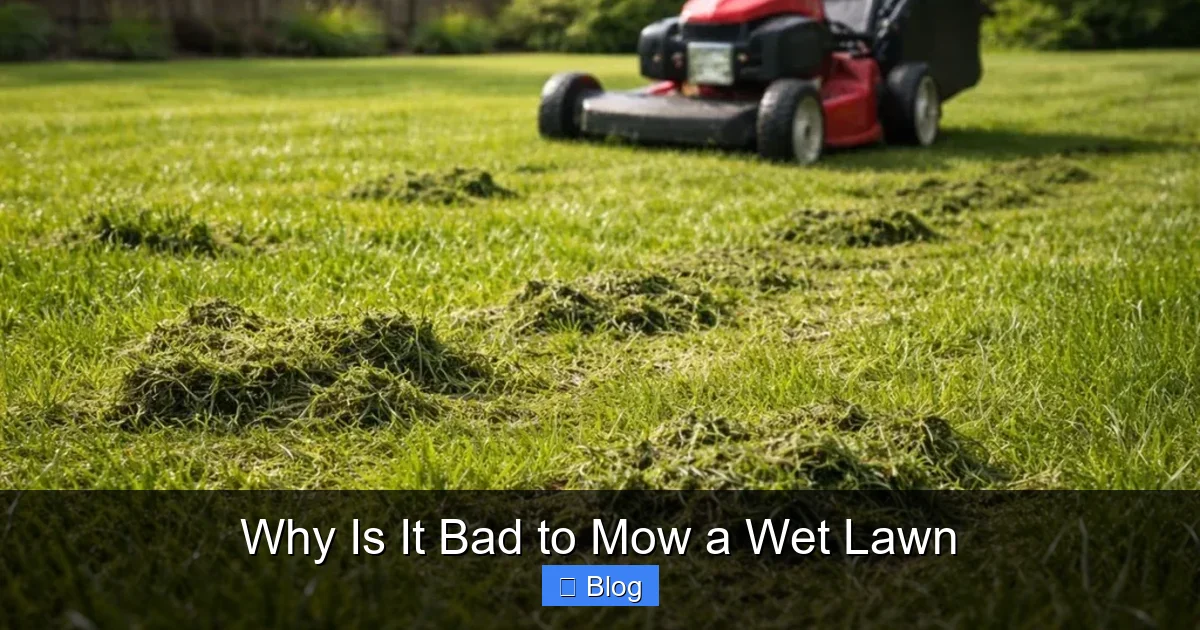
Another issue with wet mowing is the clumping effect. Dry grass clippings are light and airy, allowing them to disperse evenly across the soil surface as they exit the mower deck. Wet clippings, however, stick together like wet papier-mâché. These heavy clumps fall onto your lawn in thick mats. If left alone, these mats block sunlight and air from reaching the grass underneath, effectively suffocating it. This can lead to yellow patches and dead zones within just a few days.
Damage to Your Soil Structure
Many homeowners focus entirely on the grass blades, but the health of your lawn begins in the soil. Soil is a complex ecosystem that requires a certain structure to support strong root systems. When you operate a heavy mower on wet ground, you are putting significant pressure on the soil particles.
Compaction Issues
Wet soil is pliable and easily compressed. When you roll a heavy mower over wet grass, the weight pushes the soil particles tightly together. This process, known as soil compaction, is detrimental to lawn health. Compacted soil has very little room for air pockets, which are necessary for roots to breathe and grow. Without proper airflow, water cannot infiltrate the soil properly, leading to runoff rather than deep hydration. Over time, this makes it nearly impossible for new grass to take root and for existing grass to thrive.
Damage to the Root Zone
In addition to surface compaction, the physical act of turning a mower on wet ground can tear up the turf. Because the roots have less “grip” in saturated soil, the tires of your mower might slide or sink. This can cause ruts or complete upheaval of patches of grass. Repairing these ruts is time-consuming and often requires topdressing and reseeding, which could have been avoided by simply waiting a few hours for the sun to dry the yard.
The Toll on Your Mower
It is not just your lawn that suffers; your equipment takes a major hit when you decide to mow a wet lawn. A lawn mower is designed to handle grass, but it is not designed to handle a slurry of mud and wet clippings. If you want your equipment to last through the 2026 season and beyond, you need to protect it from moisture.
Clogging the Undercarriage
Have you ever peeked under your mower deck after cutting wet grass? It is usually a nightmare of thick, stuck-on debris. This buildup clogs the discharge chute and prevents the grass from flowing out. When the deck is clogged, the mower has to work significantly harder to keep the blades spinning, which puts unnecessary stress on the engine and drive system. It also results in a poor quality of cut, as the mower is essentially trying to chop the same grass over and over again.
Corrosion and Rust
Modern mowers are built with high-quality metals, but they are not immune to the elements. Leaving wet, acidic grass clippings stuck to the underside of your deck creates the perfect environment for rust to set in. Over time, this corrosion can eat away at the metal deck, shortening the lifespan of your machine. While you can scrape the deck clean, it is a messy, difficult job that is completely avoidable by waiting for dry conditions.
Safety Considerations for Wet Lawns
Beyond the health of your grass and the life of your equipment, your personal safety should always be the priority. Mowing a wet lawn significantly increases the likelihood of accidents, particularly if your property has any slopes or uneven terrain.
Slipping and Falling
Wet grass is incredibly slippery. If you are using a push mower, your footing is compromised with every step. A slip can result in you losing control of the mower, which is dangerous for both you and anyone nearby. Even with a riding mower, the tires may lose traction on wet hills, making the machine prone to sliding. A mower sliding down an embankment is not just a risk to your lawn—it is a serious risk to your physical well-being.
Difficulty in Maneuvering
When the ground is soft and wet, you lose the precision needed to maneuver effectively. Tight turns become slides, and even simple straight lines can become wobbly paths. By waiting for the lawn to dry, you ensure that you have complete control over your equipment, allowing you to achieve that crisp, professional look you desire for your property.
Practical Tips for 2026 Lawn Care
So, what should you do if the weather is not cooperating with your schedule? The best approach is to be patient. However, we know that life gets busy. Here are a few tips to help you manage your lawn care when the weather is unpredictable.
Wait for the Dew to Evaporate
In the early morning, your lawn is often covered in dew. Even if it has not rained for days, that morning moisture can be enough to cause issues. Try to schedule your mowing for the mid-morning or early afternoon, once the sun has had a chance to dry the blades. This is usually the best time for your lawn and your mower.
Mow More Frequently When Dry
If the forecast calls for a week of rain, try to get a mow in the day before the rain starts. By keeping your grass at an appropriate length during dry spells, you prevent the need for an emergency mow right after a storm. Aim for a regular maintenance schedule that prioritizes dry conditions.
Clean Your Mower Regularly
If you absolutely must mow when conditions are less than ideal, make sure to clean the deck of your mower immediately after finishing. Use a garden hose or a scraper to remove all clippings before they dry and harden. While this doesn’t prevent all the negative effects of wet mowing, it does protect your deck from rust and prepares your machine for the next session.
Conclusion
Taking care of a lawn is an investment of time and resources. While it is tempting to just “get it done” when the weather is damp, the long-term consequences far outweigh the short-term convenience. From the health of your grass blades and the structure of your soil to the longevity of your mower and your own safety, everything points toward waiting for the grass to be dry.
By following these best practices, you are not just maintaining your property; you are cultivating a vibrant, healthy outdoor space that will serve your family well throughout 2026 and beyond. Remember, a little patience goes a long way. The next time you see rain in the forecast, just let the grass wait—it will be much happier, and so will you.
Frequently Asked Questions
How long should I wait after it rains to mow?
Generally, you should wait at least 24 hours after a significant rain. This allows enough time for the soil to drain and the grass blades to dry completely, ensuring a clean cut.
What if I have to mow while the grass is slightly damp?
If you absolutely must mow, sharpen your mower blades beforehand to reduce tearing and mow at a higher setting. Clean the underside of the mower deck immediately after you finish to prevent buildup and rust.
Does mowing wet grass make it grow faster?
No, mowing wet grass does not stimulate faster growth; it actually stresses the plant. Because the blades are torn rather than cut, the plant diverts energy to healing the wounded tissue, which can temporarily stunt growth.
Can I use a mulching mower on a wet lawn?
Mulching mowers are the worst option for wet grass because they rely on circulating clippings within the deck. The wet grass will clump immediately, causing the mower to bog down and leaving thick, damaging piles on your lawn.
Why does my lawn look uneven after mowing in the rain?
Wet grass bends under the weight of the mower deck before the blade can reach it, causing an inconsistent height. This leads to a choppy, uneven appearance that detracts from your lawn’s overall aesthetic.
Are robotic mowers better for wet grass?
Most robotic mowers have sensors that detect moisture and automatically return to their charging stations when it rains. You should never force a robotic mower to operate in wet conditions, as it can get stuck or damage the turf.