
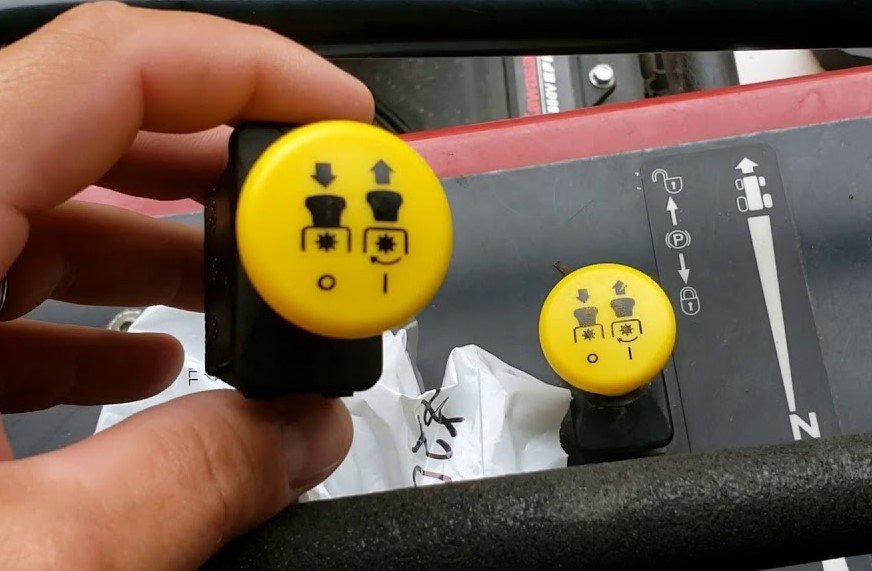
A PTO (Power Take-Off) switch is the primary control mechanism on your lawn mower that engages and disengages the cutting blades. By simply pulling or pushing a knob, you transfer engine power to the mower deck, allowing you to move safely without the blades spinning. Understanding this component is essential for both your safety and the longevity of your machine.
Key Takeaways
- Functionality: The PTO switch acts as an electrical gatekeeper that triggers the electromagnetic clutch to start your cutting blades.
- Safety First: Modern mowers utilize the PTO switch as a safety interlock, preventing the engine from starting if the blades are accidentally left engaged.
- Mechanical Link: It bridges the gap between your engine’s raw power and the rotating mower deck components.
- Troubleshooting: If your blades won’t turn on, the PTO switch is often the first place to check, though it can sometimes be a faulty clutch or wiring.
- Maintenance: Keeping the switch dry and free of debris ensures it continues to operate smoothly for years to come.
Understanding the Basics: What Is a PTO Switch on a Lawn Mower?
If you have spent any time sitting in the seat of a modern riding lawn mower, you have likely interacted with a mysterious yellow or black knob on the dashboard. Most users know it as the “blade button,” but in the mechanical world, we call it the PTO switch. If you have ever asked, “What is a PTO switch on a lawn mower?” you are not alone. It is one of the most frequently used parts of your machine, yet it is often misunderstood until it stops working.
At its core, a PTO switch is an electrical controller that manages the transfer of power from your engine to the mower deck. PTO stands for Power Take-Off. In agricultural tractors, this term refers to a spinning shaft at the back of the machine. On your residential mower, it is a bit more refined. It is essentially an “on-off” gate that tells your mower to engage the blades so you can start cutting grass, or disengage them so you can drive across your driveway safely.
How the PTO Switch Connects to Power
To understand the PTO switch, you have to picture your mower as a system of energy. Your engine creates power through combustion, which turns the crankshaft. However, you do not want your blades spinning the moment the engine roars to life. That would be incredibly dangerous. The PTO switch solves this by acting as a remote control for an electromagnetic clutch.
When you pull up on that switch, you complete an electrical circuit. This pulse of electricity travels to the clutch located on the bottom of your engine’s crankshaft. The magnet pulls a friction plate against the pulley, which then starts spinning your mower blades. It is a seamless process, but it relies entirely on the signal sent by that small switch on your dash.
The Evolution of Lawn Mower Safety
Back in the day, mowers were much simpler, but they were also much more dangerous. Many older machines used mechanical levers and belts that were clunky and prone to wearing out. Today, the electronic PTO switch has become a standard safety feature across the industry. As we head further into 2026, manufacturers have refined these switches to include even tighter integration with other safety sensors.
Safety Interlocks and Your Peace of Mind
Have you ever tried to start your mower while the blades were engaged, only to have the engine stay dead? That is the PTO switch doing its job. It serves as a vital component of the “Operator Presence System.” If the mower’s computer detects that the PTO switch is in the “On” position while you turn the key, it will disable the starter motor. This prevents the mower from lurching forward or the blades from spinning unexpectedly upon ignition.
Furthermore, if you get off the seat while the blades are running, the PTO switch works in tandem with seat sensors to kill the engine. This is why you cannot simply hop off your mower to move a garden hose while the blades are active. It is a simple but effective design that saves thousands of people from injury every single year.
Identifying and Using Your PTO Switch
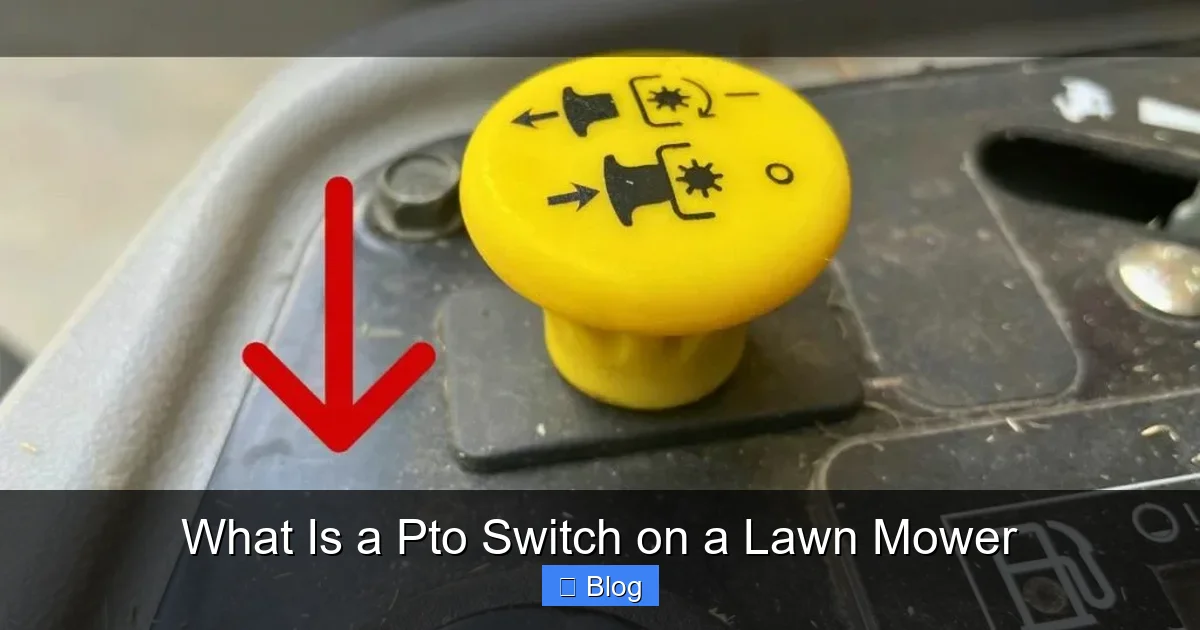
Most PTO switches are located on the operator’s console, usually to the right of the steering wheel. They are typically bright yellow to stand out, helping you identify them quickly in a situation where you need to stop the blades immediately. While they all perform the same function, there are slight variations in how they are operated.
Pull-to-Engage vs. Push-to-Engage
The vast majority of modern riding mowers use a “pull-up to engage, push-down to stop” mechanism. This design is intentional. If you were to bump into the dash accidentally, you are less likely to pull the knob up than you are to knock it down. By requiring a deliberate “pull” motion to engage the blades, the mower protects you from accidental activation.
Some premium commercial models may have a push-button style or even a toggle switch. Regardless of the form factor, the goal is the same. Always ensure that the switch is pushed all the way into the “Off” position before you attempt to start your mower for the day. If you hear a click, that is usually the internal spring mechanism snapping into place.
Troubleshooting Common PTO Switch Problems
So, what happens when you pull the knob and absolutely nothing happens? Your blades are stationary, the engine is running fine, and your yard is looking long and messy. Before you panic and buy a new mower, remember that the PTO switch is often a point of failure, but it is usually an easy fix.
Signs Your Switch Might Be Failing
If your blades engage intermittently or you have to “wiggle” the switch to get them to start, your internal contacts are likely wearing out. Just like any light switch in your home, the internal copper points inside a PTO switch can develop carbon buildup or corrosion over time. This prevents the electrical current from reaching the clutch.
Another common sign is a lack of an “audible click.” When you engage most PTO switches, you should hear or feel a distinct mechanical snap. If the switch feels “mushy” or loose, it is likely time for a replacement. Thankfully, these are standardized parts, and finding a replacement for your specific model is usually straightforward.
What Else Could It Be?
Keep in mind that if the switch is working fine, the problem might lie elsewhere. Check your mower deck belt first. If the belt has snapped or slipped off, the clutch might be spinning, but the blades won’t move. Also, look at the wire harness leading to the PTO clutch. Mowers vibrate, and sometimes wires can get pinched or disconnected near the deck. If your switch is receiving power but the clutch isn’t “clicking” into place, the issue is likely the clutch itself, not the switch.
Maintenance Tips to Keep Your PTO System Healthy
Because the PTO switch is an electrical component, its greatest enemy is moisture and dirt. If you store your mower in a damp shed or wash it with a high-pressure hose, you might accidentally introduce water into the back of the switch. This leads to terminal corrosion.
The “Keep It Dry” Rule
Try to keep the area around your console dry. If you wash your mower, consider using a leaf blower afterward to clear out the console area, especially around the switches. If you do notice corrosion on the terminals of your PTO switch, you can often clean them with a little bit of electrical contact cleaner. However, if the corrosion has eaten into the copper, it is safer to just replace the unit.
Don’t forget to check the wiring occasionally. Every few months, give your mower a quick inspection. Look under the deck to ensure no grass clippings have packed around the clutch. While the switch is up on the dash, the clutch is down in the dirt, and a clean clutch helps the switch perform its job much more efficiently.
Conclusion: The Silent Hero of Your Lawn Care
When you ask, “What is a PTO switch on a lawn mower?” the answer is more than just a piece of plastic on your dashboard. It is a sophisticated, safety-critical component that manages the raw power of your engine. By understanding how this switch works, you are better equipped to maintain your equipment and keep your lawn looking pristine without any unnecessary headaches.
The next time you pull that yellow knob, take a second to appreciate the engineering happening beneath the hood. From the electrical signal to the electromagnetic click of the clutch, that switch is the bridge that turns a noisy engine into a functional, cutting machine. Keep it clean, use it carefully, and it will keep you mowing safely for many seasons to come. If you ever run into a problem, remember to check your connections first; sometimes, the simplest fix is the best one.
Frequently Asked Questions
Is it bad to engage the PTO switch at full throttle?
While most modern mowers are designed to handle this, it is best practice to lower your engine speed to a mid-range before engaging the blades. This reduces the mechanical shock on the clutch and helps extend the life of your drive belt.
Can I bypass the PTO safety switch?
You should never bypass any safety interlock on your mower. These switches are specifically engineered to prevent life-altering injuries, and bypassing them voids your warranty and puts you at significant risk.
How do I know if my PTO switch is broken?
You can test a switch using a multimeter set to continuity. If you have no continuity across the terminals when the switch is pulled to the “On” position, the internal contacts have failed and the switch must be replaced.
Do all lawn mowers have a PTO switch?
Most riding mowers and zero-turn mowers use a PTO switch, but some entry-level manual transmission mowers may use a mechanical lever or cable system instead. Check your owner’s manual to confirm your specific model’s operation.
Why does my PTO switch click but the blades don’t turn?
If you hear the click, the switch is likely sending the signal, but the clutch may be slipping or the deck belt may be broken. Check the belt tension and ensure the mower deck is free of debris that could be preventing rotation.
Are PTO switches expensive to replace?
Compared to other mower parts like engines or transmissions, PTO switches are relatively affordable. You can typically find replacements for between $20 and $60 depending on your mower brand.