
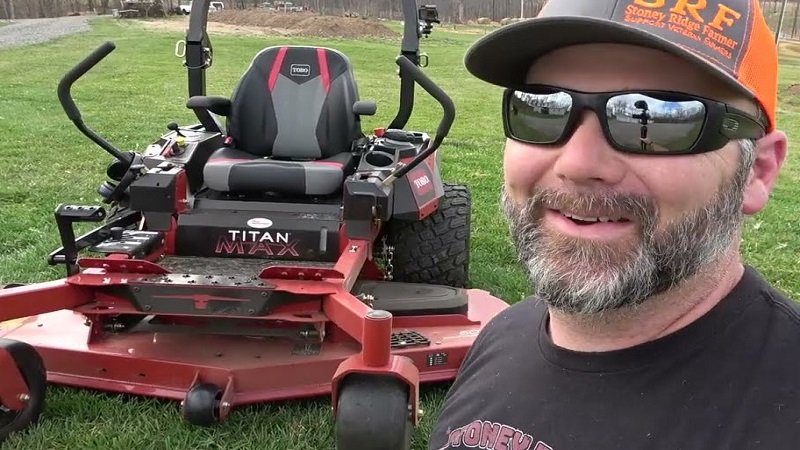
The zero turn lawn mower was invented by John Regier in the late 1960s. His innovative design solved the problem of maneuverability, allowing landscapers to turn 360 degrees on the spot and save hours of mowing time. This breakthrough forever changed the way we maintain lawns, turning a tedious chore into a precise, efficient task.
If you have ever spent a Saturday afternoon sweating over a lawn, wrestling with a bulky tractor, you know the struggle of getting around tight corners. We have all been there. You get to the edge of a flower bed, realize you have missed a patch, and then proceed to spend five minutes backing up and shifting gears just to align the blades.
It is frustrating, inefficient, and honestly, a bit exhausting. But have you ever stopped to think about who invented the zero turn lawn mower? That one brilliant idea changed everything about how we care for our outdoor spaces.
The invention of the zero turn mower did not happen in a massive corporate laboratory with white coats and high-tech computers. Instead, it was born from the practical needs of a man who simply wanted to do a better job with less effort.
It is a classic story of American ingenuity, proving that you do not need a billion-dollar budget to change the world you just need a clear vision and the drive to solve a nagging problem. In this article, we are going to dive deep into the history of the machine, the man behind it, and why it remains the undisputed king of the lawn.
Key Takeaways
- The Inventor: John Regier, a Kansas farmer and engineer, is credited with developing the first commercially viable zero turn mower.
- The Motivation: Regier wanted to create a machine that could navigate complex spaces, like around trees and fence corners, without requiring constant back-and-forth maneuvering.
- The Mechanism: The secret lies in the independent drive wheels, which allow each side of the mower to move at different speeds or in opposite directions.
- Evolution: What started as the “Hustler” mower in 1964 evolved into a global industry that now dominates both commercial and residential lawn care.
- Efficiency Gains: By eliminating the need for multi-point turns, zero turn mowers can cut mowing time by up to 50 percent compared to traditional tractor-style mowers.
- Lasting Impact: Today, the zero turn mower is the gold standard for precision landscaping and remains one of the most significant mechanical advancements in turf management.
The Birth of the Zero Turn Concept
The story begins in the early 1960s in the heart of Kansas. John Regier was a farmer and a tinkerer. Like many farmers, he was constantly looking for ways to make his work easier. He spent his days managing his farm, but he also operated a business mowing lawns.
He grew tired of how much time he wasted on traditional mowers that simply could not pivot well. He knew there had to be a way to move a machine in a tighter circle without the constant need for reversing.
The Eureka Moment
Regier began experimenting with the mechanics of steering. Traditional tractors at the time used a steering wheel and a front-wheel-steer setup, similar to a car. This meant they had a large turning radius. If you have ever tried to turn a car in a narrow driveway, you know exactly how limiting that front-wheel pivot is. Regier realized that if he wanted to spin in place, he needed to control the wheels independently.
By connecting two separate hydraulic motors to two separate drive wheels, he realized he could spin one wheel forward while keeping the other still or moving it in reverse. This was the fundamental “Eureka” moment.
It sounds simple when we look back at it with our 2026 perspective, but at the time, it was revolutionary. He essentially took the movement logic of a tank and applied it to a lawn mower. He built his first prototype in 1964, and the results were immediate and impressive.
From Idea to Reality
He called his first machine the “Hustler.” The name was fitting – it allowed the user to hustle through their work. He founded Excel Industries, which began manufacturing these machines. Initially, people were skeptical. Farmers were used to steering wheels.
They did not understand why they would want to use two levers to steer a mower. It took a while for the idea to catch on, but once people saw a zero turn mower in action, the confusion turned into curiosity, and then quickly into demand.
How the Zero Turn Mechanism Actually Works?
Understanding who invented the zero turn lawn mower is only half the fun; understanding the physics of why it works is where the appreciation really kicks in.
When you operate a zero turn, you are using a hydraulic transmission system that is quite different from your average riding mower. Instead of a single gearbox pushing two wheels at once, you have two individual hydrostatic transmissions. Each lever in your hands acts as a throttle for one specific wheel.
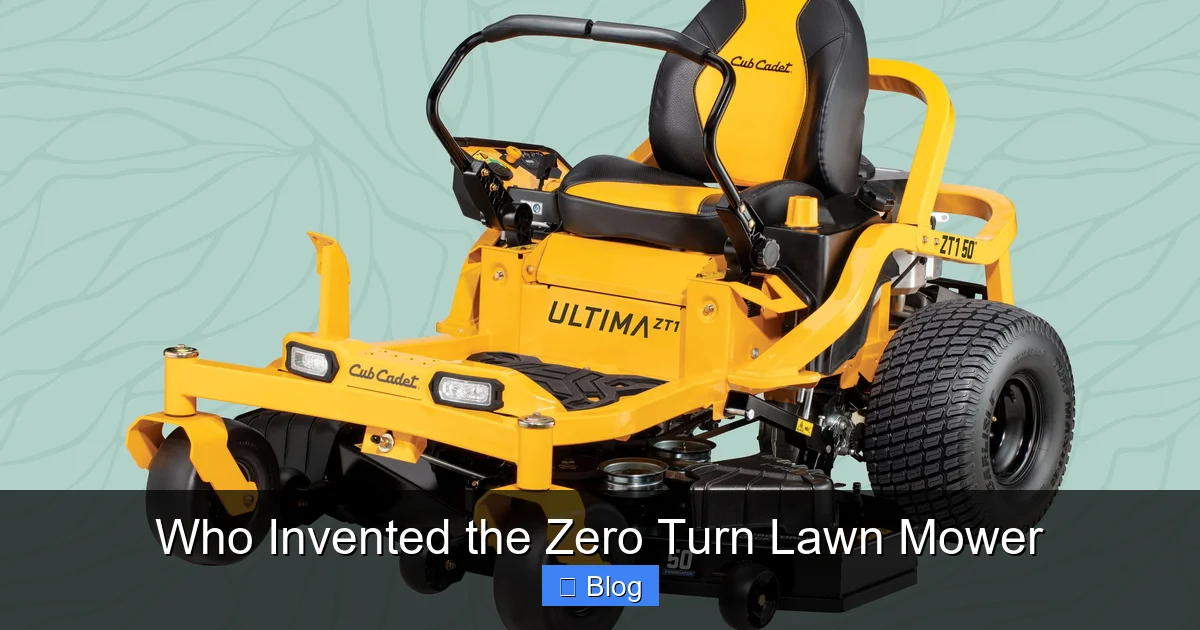
Visual guide about Who Invented the Zero Turn Lawn Mower
Image source: bhg.com
The Two-Lever Steering System
Pushing both levers forward makes the mower travel in a straight line. Pulling both levers back makes it reverse. But the magic happens when you move them unequally. Push the right lever forward and pull the left one back, and the mower will spin perfectly on its axis. This is what we call a “zero degree turning radius.”
There is no wasted space, no scuffing of the grass, and no need for those tedious three-point turns. This efficiency is why professional landscapers absolutely love them. When you are mowing a commercial property with dozens of obstacles like light poles, tree trunks, and park benches, time is money.
A zero turn mower lets the operator trim right up against the edge of an object and spin away instantly. It eliminates the need for string trimmers in many cases, which means you get to finish the job much faster. It is the ultimate tool for precision.
Why Speed and Stability Matter
Because these machines are built for agility, they are also designed for speed. A modern zero turn can travel much faster than a standard lawn tractor. Many residential models can hit speeds of seven to nine miles per hour, while professional commercial units are even faster.
Because you are sitting low and the machine is wide, it has a very low center of gravity. This makes it incredibly stable, even on slight slopes, which is a major safety benefit compared to tall, narrow garden tractors.
The Evolution of the Industry
Following Regier’s success with the Hustler in the 1960s, it didn’t take long for other manufacturers to notice. Throughout the 70s and 80s, the design was refined and licensed to other brands. Innovations like better suspension, improved blade deck designs, and more ergonomic seating helped the zero turn mower move from a niche professional tool to a backyard essential.
The Shift to Residential Use
For a long time, zero turns were seen as exclusively “commercial.” They were expensive, heavy, and overkill for a small suburban yard. However, as manufacturing processes improved, companies were able to scale down the technology. By the early 2000s, manufacturers began introducing “residential-grade” zero turns. These were smaller, lighter, and more affordable for the average homeowner.
Today, in 2026, it is common to see zero turn mowers in driveways all across the suburbs. They have become a status symbol of sorts for homeowners who value their time and take pride in their lawn stripes.
The industry has even begun integrating smart technology. Some of the newer models feature Bluetooth connectivity to track maintenance needs, while others are exploring autonomous driving features to handle the mowing for you.
Design Refinements Over the Years
Beyond just the steering, the deck technology has advanced. In the early days, the decks were basic. Now, we see heavy-duty welded decks that can take a beating from rocks and sticks. We have also seen the introduction of commercial-grade engines with advanced cooling systems and fuel-injection technology. This means your mower runs cleaner, lasts longer, and consumes less fuel than the carbureted models of the past.
Practical Tips for New Zero Turn Owners
If you have just bought your first zero turn, or are thinking about it, here are a few tips to master the machine. It does have a learning curve. Many new owners find themselves going way too fast at first or making jerky movements because they are treating the levers like a steering wheel. Take it slow in an open area for your first hour of practice.
Mastering the “Zero Turn”
The biggest mistake beginners make is over-steering. Because the response is so immediate, you only need to apply light pressure to the levers. Treat them like an extension of your hands. Keep your fingers loose. If you push the levers too far forward at once, you might spin the tires and rip up your sod. Practice a “gentle push” technique to keep the ride smooth and your grass looking pristine.
Another tip: always keep an eye on your terrain. While zero turns are stable, they are not invincible. On steep hills, it is often better to mow up and down rather than across, or use a specific technique where you turn downhill to prevent losing traction. Most manufacturers provide specific guidance on slope safety—always read your manual!
Maintenance Matters
Because zero turns are high-performance machines, they require a bit more attention than a basic push mower. Keep those blades sharp! A dull blade tears the grass rather than cutting it, which leaves the tips brown and makes your lawn look unhealthy. Also, remember to clean out the underside of the deck after every few mows to prevent grass buildup, which can hinder airflow and hurt your cut quality.
The Future of Mowing in 2026 and Beyond
As we look at the landscape of lawn care in 2026, it is clear that John Regier’s invention is far from obsolete. If anything, the zero turn mower is the platform for the next generation of outdoor technology. We are seeing a massive shift toward electric power. Many modern zero turns are now battery-powered, offering a quiet, emission-free mowing experience that is perfect for early morning chores without disturbing the neighbors.
The Rise of Electric Power
The battery-powered zero turn is a game-changer. By removing the gas engine, you remove the vibration and the high-pitched drone. It creates a much more pleasant operating environment. Furthermore, electric motors provide instant torque, which means you have more power for thick, heavy grass. As battery life continues to extend, the concern about “running out of juice” mid-lawn is becoming a thing of the past.
Automation and AI
We are also seeing the integration of obstacle-detection sensors. Imagine a zero turn that automatically slows down when it senses a pet or a child in the yard, or one that uses GPS to map your lawn and automatically optimizes the most efficient path. The core mechanics invented by Regier are being wrapped in a layer of software that makes mowing safer and more efficient than ever before.
Conclusion
So, who invented the zero turn lawn mower? John Regier, a visionary farmer from Kansas, gave the world a gift of efficiency. What started as a simple desire to stop backing up his tractor turned into a global industry that has saved countless hours for homeowners and professionals alike.
His invention is a reminder that innovation isn’t just about building the most complex thing possible; it is about building the most useful thing possible. Whether you are a professional landscaper maintaining miles of turf or a homeowner trying to finish your yard work before the game starts, you have John Regier to thank for your free time.
The zero turn mower remains a testament to the idea that with enough creativity, we can find better ways to do almost anything. As you head out to mow your lawn this weekend, take a second to appreciate those levers they represent a massive leap forward in human ingenuity.
FAQs
Who was the first person to invent the zero turn mower?
The zero turn mower was invented by John Regier in 1964. He was a Kansas-based inventor and farmer who founded Excel Industries to produce his original “Hustler” mower.
Why is it called a “zero turn” mower?
It is called a zero turn mower because it has a turning radius of zero degrees. This allows the machine to pivot 360 degrees on its own axis, effectively spinning in place.
Are zero turn mowers difficult to learn how to drive?
There is a slight learning curve because they use two levers instead of a steering wheel. Most people can get the hang of it within 30 to 60 minutes of practice in an open area.
Can you use a zero turn mower on hills?
Zero turns are quite stable due to their low center of gravity, but they require caution on slopes. Always consult your specific manufacturer’s manual for safe operating angles and techniques.
Why do pros prefer zero turn mowers?
Professionals prefer them for their speed, precision, and efficiency. They can maneuver around obstacles easily and finish jobs much faster than standard tractors, significantly increasing productivity.
Is the zero turn mower still evolving in 2026?
Yes, the industry is currently focusing on electric-powered models, improved battery technology, and the integration of AI-driven obstacle detection for greater safety and performance.