
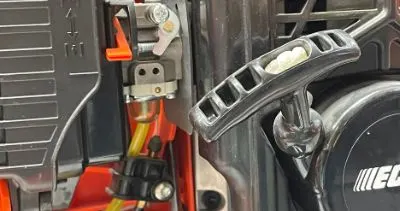
If your gas leaf blower only runs with the choke on, the engine is usually not getting the right fuel-to-air mix. A closed choke blocks some air and adds more fuel to the mixture. That extra fuel can temporarily hide a clogged carburetor, weak fuel flow, air leak, or other fuel-system problem.
Across the United States, this issue is common in two-stroke leaf blowers that use stored gasoline and oil mix. The fastest safe approach is to check the fuel, air filter, fuel lines, and carburetor in that order. Do not keep using the blower with the choke on, because it can run poorly, smoke, foul the spark plug, and damage the engine.
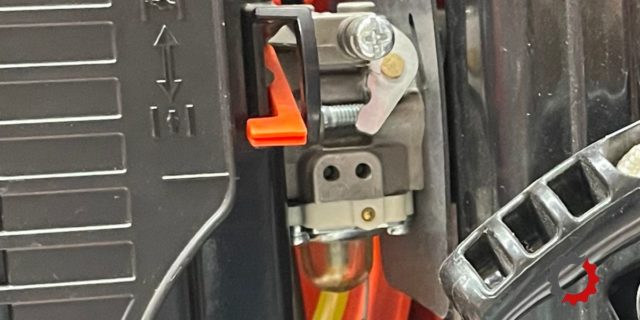
What It Means When a Leaf Blower Runs Only on Choke
A leaf blower that runs only on choke is often running too lean when the choke is open. A lean mixture has too much air or too little fuel.
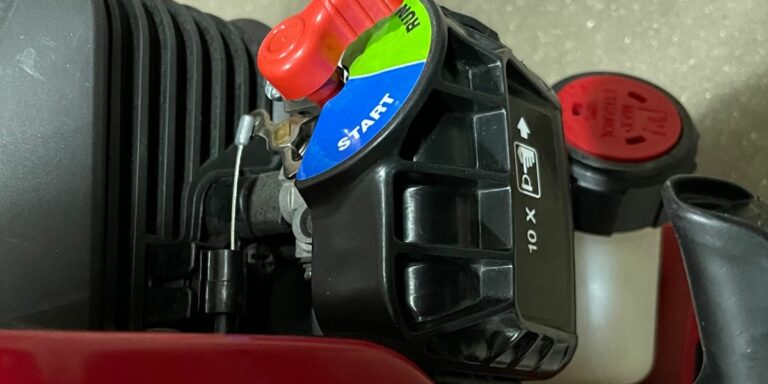
The choke helps by closing a flap in the carburetor. This reduces incoming air and creates a richer mixture. If the engine stays running only while the choke is closed or partly closed, the choke is compensating for another fault.
- Old or contaminated gasoline
- Incorrect fuel-to-oil mix
- A clogged fuel filter
- A blocked fuel line
- A restricted fuel tank vent
- A dirty carburetor jet
- A stiff or damaged carburetor diaphragm
- An air leak near the carburetor or intake
- A dirty air filter
- A choke linkage that is not opening correctly
The choke itself may not be the problem. It often reveals that the engine cannot receive enough fuel under normal operating conditions.
Choke position and engine behavior
Most gas leaf blowers use three basic control positions:
- Choke: Restricts air for a rich starting mixture.
- Run or open: Allows normal air and fuel flow.
- Stop: Shuts off the ignition or fuel system.
A cold engine may need full choke for starting. After it fires, the choke should usually move to a partial or open position. Exact steps vary by model, so use the starting procedure in the owner’s manual.
If the blower dies as soon as you open the choke, the normal fuel supply is likely too weak. If it runs poorly with the choke closed and improves when you open it, the engine may be getting too much fuel or the choke may be stuck.
Most Likely Causes of a Leaf Blower That Only Runs on Choke
The most likely cause is a restricted fuel path inside the carburetor. However, several parts can create the same symptom.
1. Old or incorrect fuel
Gasoline changes during storage. It can lose its useful properties and leave deposits in small carburetor passages. Fuel containing ethanol can also absorb moisture when stored in poor conditions.
Use the fuel type and oil ratio listed in the manual. Many two-stroke blowers require a specific gasoline-to-oil ratio, but the correct ratio is not the same for every model.
Drain suspect fuel into an approved container. Do not pour gasoline onto the ground, into a drain, or into household trash. Take old fuel to a local household hazardous-waste or fuel-recycling program if available.
2. A clogged carburetor jet
The carburetor has small passages that meter fuel. A partly blocked main jet may allow enough fuel for the richer choke setting but not enough fuel when the choke opens.
This is one of the most common explanations for the symptom. The engine may:
- Start on full choke
- Run for a few seconds
- Stall when the choke moves to run
- Restart only after the choke is applied again
Spraying cleaner into the carburetor throat may not clear an internal jet. The carburetor may need to be removed and cleaned, or replaced if its internal parts are worn.
3. A blocked fuel filter or fuel line
The fuel filter sits inside the tank on many handheld blowers. A small filter can become restricted by dirt or fuel deposits.
The fuel line may also become:
- Cracked
- Soft and swollen
- Kinked
- Loose at a fitting
- Blocked by debris
A fuel line can look fine from the outside and still collapse when the engine draws fuel. Replace fuel lines with tubing designed for small-engine gasoline use. Ordinary plastic tubing may soften or leak.
4. A blocked fuel tank vent
The fuel tank must admit air as fuel leaves the tank. If the vent is blocked, a vacuum can form inside the tank. Fuel flow then slows or stops.
A simple clue is a temporary improvement after loosening the fuel cap. Do not operate the blower with a loose cap as a permanent fix. If this test changes the symptom, inspect or replace the tank vent according to the manual.
5. A damaged carburetor diaphragm
Many handheld two-stroke blowers use a diaphragm carburetor. The diaphragm flexes as the engine runs and helps pump fuel.
A diaphragm can become stiff, warped, or cracked after long storage. When that happens, the carburetor may not draw enough fuel with the choke open.
A diaphragm problem is more likely when:
- Fresh fuel does not help
- The fuel lines look sound
- The blower has been stored for a long time
- The primer bulb does not fill normally
- The carburetor has already been cleaned
6. An air leak
An air leak lets extra air enter after the carburetor. This creates a lean mixture.
Possible leak points include:
- Carburetor mounting gaskets
- Intake manifold or boot
- Crankshaft seals
- Loose carburetor screws
- Cracked fuel-purge or intake parts
Crankshaft seal testing often requires special equipment. If the blower still runs only on choke after basic fuel checks, a repair shop should test for air leaks.
7. A dirty air filter
A dirty air filter usually reduces airflow and creates a richer mixture. It does not normally cause a blower to need choke. Still, a damaged, oil-soaked, or incorrectly installed filter can affect engine operation.
Inspect the filter. Clean or replace it only as the manufacturer directs. Do not run the blower without its filter unless the manual specifically permits a brief service test.
8. A stuck or misadjusted choke
If the choke plate does not open fully, the blower may run rich. Look at the choke lever, cable, and linkage with the engine off.
The choke plate should move smoothly from closed to open. Never place your fingers near a moving fan or hot engine. If the linkage binds, repair it before running the blower.

How to Fix a Leaf Blower That Only Runs on Choke
Work from the simple checks to the more involved repairs. Stop if you find a fuel leak, damaged wiring, or a part you cannot identify.
Step 1: Work safely
Before inspecting the blower:
- Move outdoors or to a well-ventilated area.
- Let the engine cool.
- Keep gasoline away from flames, sparks, heaters, and cigarettes.
- Wear eye protection and fuel-resistant gloves.
- Disconnect the spark plug boot before working near moving parts.
- Keep children and pets away from the work area.
Never test a gas blower inside a garage, basement, shed, or other enclosed space. Engine exhaust contains carbon monoxide, which can build up without warning.
Step 2: Confirm the starting symptom
Start the blower according to its manual. Note what happens:
- Does it start only on full choke?
- Does it die when moved to run?
- Does it continue running on partial choke?
- Does it surge or hunt?
- Does it smoke heavily?
- Does it run better after warming up?
If the engine runs normally after you open the choke, the issue may have been a cold-start procedure rather than a fault. If it dies every time, continue the checks.
Step 3: Replace questionable fuel
Drain old fuel and add fresh fuel mixed to the correct specification. Use a clean, approved fuel container.
Do not guess the oil ratio. A fuel mix that is too rich in oil can cause smoke, plug fouling, and carbon deposits. A mix with too little oil can cause severe engine wear.
If the blower has a separate four-stroke engine, do not put oil in the gasoline. Check the manual before adding fuel.
Step 4: Inspect the fuel lines and filter
Remove the fuel cap and inspect the visible fuel lines. Look for cracks, kinks, loose connections, and signs of swelling.
If the in-tank filter is dirty or restricted, replace it with the correct part. Pulling the filter from the tank can be difficult and may require a hook tool. Avoid damaging the fuel line.
Do not use compressed air to blow into a fuel line while it is connected to the tank. Fuel can spray into your eyes or onto an ignition source.
Step 5: Check the fuel tank vent
Run the blower only long enough to observe the symptom. If carefully loosening the fuel cap changes the problem, the tank vent may be blocked.
Do not treat a loose fuel cap as the repair. Fuel can spill, and vapors can ignite. Clean or replace the vent using the method in the owner’s manual.
Step 6: Inspect the air filter and choke
Remove the air filter cover. Check whether the filter is:
- Clogged with dust
- Wet with fuel
- Torn
- Collapsed
- Installed incorrectly
Then move the choke control. The choke plate should move fully between its closed and open positions.
Replace damaged parts. Washable foam filters must be cleaned and oiled only as directed. Too much filter oil can restrict airflow.
Step 7: Clean or service the carburetor
If the blower still dies when the choke opens, the carburetor is a strong suspect.
A basic carburetor service may include:
- Removing the air filter housing
- Disconnecting the fuel lines
- Removing the carburetor
- Cleaning the main jet and internal passages
- Replacing gaskets and diaphragms
- Reinstalling the carburetor
- Checking the throttle and choke linkage
Use cleaner approved for small-engine carburetors. Do not enlarge a jet with a steel wire or drill bit. Changing the jet opening can alter the fuel mixture and damage engine performance.
Some carburetors have adjustable mixture screws. Do not turn them at random. Record the original position only if the manual allows adjustment, and follow the model-specific procedure.
Step 8: Check for an intake air leak
Inspect the area between the carburetor and engine. Look for loose screws, damaged gaskets, and cracks in the intake boot.
A proper air-leak test may require a pressure-and-vacuum test. This is especially true for crankshaft seals on two-stroke engines. If the blower needs choke after carburetor service, professional testing may save time and prevent repeated parts replacement.

Quick Diagnostic Table
Use this table to match the symptom with the most likely cause. It is a starting guide, not a substitute for the model’s service manual.
| Symptom | More likely causes | Best first check |
|---|---|---|
| Starts on choke, dies when choke opens | Restricted jet, weak fuel flow, air leak | Fresh fuel and fuel filter |
| Runs on partial choke but not full run | Lean fuel mixture, clogged carburetor | Carburetor and fuel lines |
| Runs with choke closed but smokes heavily | Choke stuck, excess fuel, wrong oil mix | Choke plate and fuel mix |
| Improves when fuel cap is loosened | Blocked tank vent | Vent inspection |
| Starts, then dies after a short time | Fuel starvation, blocked vent, bad diaphragm | Tank vent and fuel supply |
| Surges at full throttle | Lean mixture, air leak, fuel restriction | Intake joints and carburetor |
| Will not start even on choke | Ignition, compression, flooding, or fuel issue | Spark, fuel, and plug condition |
The table helps separate a fuel shortage from a rich-running problem. Choke dependence points toward a lean condition, while heavy smoke, wet spark plugs, and a strong fuel smell point more toward excess fuel.
Common Mistakes to Avoid
Several quick fixes can make the problem worse.
Do not keep running it on choke
The blower may appear to work, but the engine is not operating at its normal mixture. Continued use can create excess carbon, foul the spark plug, reduce power, and increase fuel use.
Do not spray starting fluid into the intake
Starting fluid can make an engine fire briefly, but it does not repair a fuel restriction. Repeated use can wash away lubrication and create a fire risk.
Do not guess the carburetor adjustment
Turning mixture screws without a procedure can cause poor performance or an unsafe lean condition. Some modern carburetors also use limiter caps or fixed settings.
Do not use unapproved replacement parts
Incorrect fuel tubing, gaskets, filters, or diaphragms can leak or fail when exposed to gasoline. Match the part to the exact blower model.
Do not ignore fuel leaks
Stop immediately if fuel drips from the tank, carburetor, primer bulb, or fuel line. Let the blower cool, move it away from ignition sources, and repair the leak before testing it.
When to Repair the Blower or Replace It
A carburetor cleaning may make sense when the blower is otherwise in good condition and replacement parts are available. Professional repair is a better choice when the fault may involve crankshaft seals, compression, or internal engine damage.
Replacement may be more practical when:
- The blower has several unrelated faults
- The engine has low compression
- The fuel tank or crankcase is damaged
- Parts are unavailable
- Repair costs approach the price of a comparable new blower
- The machine has been stored with severe fuel damage
Do not decide based only on age. A well-maintained blower with a clogged jet may need a simple service, while a newer blower with a damaged crankshaft seal may need specialized repair.
Key Takeaways
- A leaf blower that runs only on choke usually has a lean fuel mixture.
- The choke restricts air and temporarily compensates for low fuel delivery.
- Start with fresh fuel, the correct oil mix, fuel lines, the fuel filter, and the tank vent.
- A dirty carburetor or damaged diaphragm is a common next cause.
- An air leak can create the same symptom and may require professional testing.
- Do not operate the blower indoors or continue using it on choke.
- Follow the exact owner’s manual for fuel, cleaning, adjustment, and parts.
Frequently Asked Questions
Can bad gas make a leaf blower run only on choke?
Yes. Old or contaminated gasoline can leave deposits in the carburetor and restrict fuel flow. Drain questionable fuel safely, use the correct fresh mixture, and inspect the fuel system if the symptom remains.
Why does my leaf blower start on choke but die when I move the choke off?
The engine is likely not receiving enough fuel with the choke open. Common causes include a clogged carburetor jet, blocked fuel filter, restricted fuel line, blocked tank vent, damaged diaphragm, or intake air leak.
Can a dirty air filter cause a leaf blower to need choke?
A dirty air filter usually makes the mixture richer because it reduces airflow. It may affect engine performance, but a blower that only runs on choke more often has a fuel restriction or air leak. Check the filter as part of the normal inspection.
How long should I leave the choke on?
Use the choke only for cold starting and follow the model’s manual. Once the engine starts and begins to warm, move the choke toward the run position. If the engine dies every time, troubleshoot the fuel and air system instead of leaving the choke closed.
Should I replace the carburetor or clean it?
Cleaning may work when deposits are the main problem. Replacement can be simpler when the carburetor body, throttle shaft, diaphragm, or internal passages are damaged. Compare the part cost and repair time with the value of the blower.
Why does the blower run better after it warms up?
Warm fuel and engine parts can improve vaporization and soften a marginal diaphragm. This does not prove the blower is healthy. A warm-up improvement can still indicate a restricted carburetor, weak fuel delivery, or an air leak.
Conclusion
A leaf blower that only runs on choke is usually asking for more fuel or less air than normal. Begin with fresh, correctly mixed fuel and inspect the filter, fuel lines, tank vent, choke, and carburetor. If those checks do not solve the problem, test for an intake leak or have a qualified small-engine technician inspect the blower.
The next practical step is simple: let the engine cool, drain questionable fuel safely, and check the fuel filter and lines before adjusting the carburetor.