
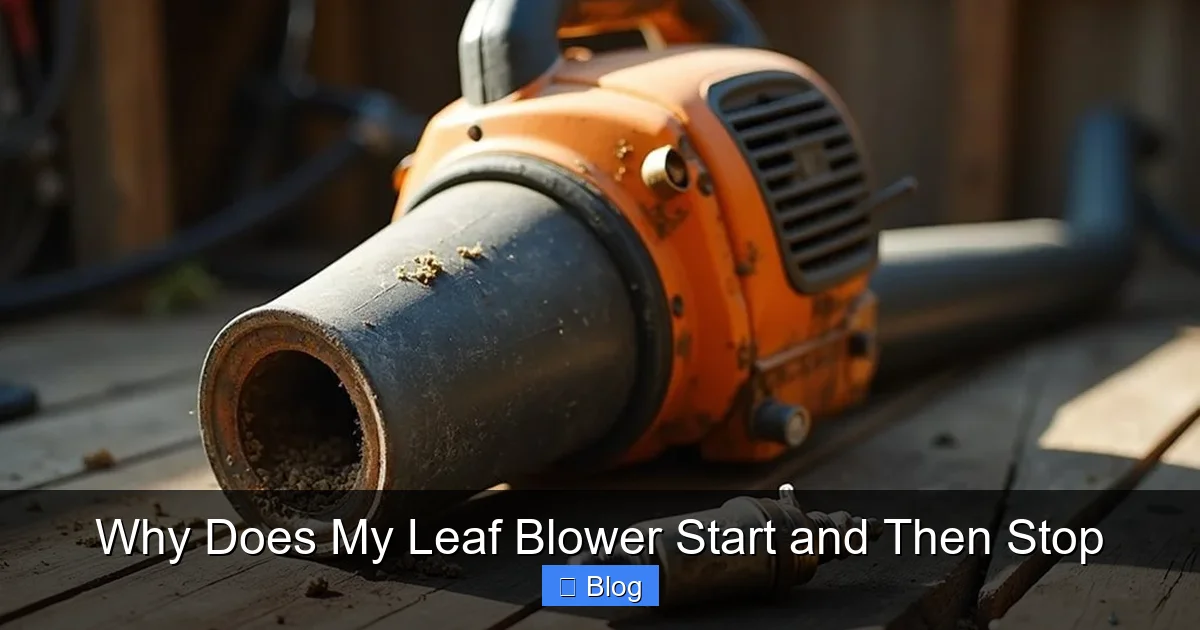
Across the United States, a leaf blower that starts and then dies is often showing a fuel, air, spark, or battery problem. The most common causes are old gasoline, a blocked air filter, a clogged fuel filter, a dirty carburetor, or a battery that cannot hold enough power under load.
Start with the simple checks. Use fresh fuel, confirm the choke is set correctly, inspect the air filter, and check the spark plug. For a battery leaf blower, fully charge the battery and clean the contacts. Do not keep pulling the starter if raw fuel leaks or you smell strong gasoline.

What Causes a Leaf Blower to Start Then Die?
A leaf blower starts when it gets enough fuel, air, and spark. It keeps running only when that balance continues. If one part fails after the first few seconds, the engine or motor stops.
The cause often depends on what happens just before it dies:
| Symptom | Likely cause |
|---|---|
| Starts with the choke, then dies when the choke opens | Restricted fuel flow or a dirty carburetor |
| Dies when you press the throttle | Weak fuel supply, blocked air filter, or carburetor issue |
| Runs for a few minutes, then dies | Blocked tank vent, overheating, or failing ignition part |
| Starts only after many pulls | Old fuel, flooding, weak spark, or poor choke use |
| Starts and dies with no sound from the motor | Battery, switch, wiring, or motor fault |
| Runs better with the fuel cap loose | Blocked fuel-tank vent |
| Runs for a short time with a new battery, then stops | Weak battery, poor battery contact, or thermal protection |
A two-cycle gas blower mixes gasoline with two-cycle oil. A four-cycle blower uses separate gasoline and engine oil. Using the wrong fuel or oil can cause hard starting, poor running, and engine damage.
Battery blowers have a different system. They do not use a carburetor, spark plug, fuel filter, or gasoline. Their main trouble points are the battery, charger, contacts, trigger, control board, and electric motor.

How to Troubleshoot a Gas Leaf Blower
Troubleshoot a gas leaf blower in a safe order. Start with fuel and controls before removing the carburetor or adjusting any screws.
1. Let the engine cool
Place the blower on a flat, open surface. Keep it away from dry leaves, fuel cans, buildings, and other flammable items.
Allow the engine and muffler to cool before inspection. Wear eye protection and gloves. Never test a running blower in a garage, shed, basement, or other enclosed space. Gas engines produce carbon monoxide, which can build up without warning.
2. Check the fuel
Old or contaminated gasoline is a common reason a leaf blower starts and dies.
For most gas blowers:
- Turn the engine off.
- Open the fuel tank away from flames and sparks.
- Check for stale fuel, water, dirt, or a sour varnish-like smell.
- Drain bad fuel into an approved fuel container.
- Refill with the fuel and oil mix listed in the owner’s manual.
Many two-cycle blowers use a specific fuel-to-oil ratio. Common ratios include 50:1, but the correct ratio depends on the model. Do not guess. Too much oil can cause smoke and carbon buildup. Too little oil can damage the engine.
Use fresh gasoline from a clean container. Gasoline with ethanol can attract moisture during storage. Follow the blower maker’s fuel advice and local disposal rules.
3. Use the choke correctly
A cold engine usually needs a richer fuel mix. The choke helps provide that mix.
A typical cold-start sequence is:
- Move the stop switch to Run.
- Press the primer bulb the number of times listed in the manual.
- Set the choke to Full Choke.
- Pull the starter until the engine tries to run.
- Move the choke to the half-choke or run position.
- Pull again until the engine starts.
- Open the choke fully once the engine runs smoothly.
The exact sequence varies by model. If you leave the choke closed after the engine starts, the blower may flood or die. If you open it too soon, the engine may start and stop because the mixture is too lean.
4. Inspect the air filter
A dirty air filter limits air flow. The engine may start on the fuel already inside the carburetor, then stall when it needs more air.
Remove the filter according to the manual. Replace a paper filter if it is dirty. Wash a foam filter only if the manual allows it, then dry it fully and apply the specified amount of filter oil if required.
Do not run the blower without its air filter. Dust can enter the engine and cause wear.
5. Check the spark plug
A worn or fouled spark plug can produce a weak spark. The blower may start briefly but fail to keep running.
Disconnect the spark-plug boot before inspection. Look for:
- Wet fuel on the plug
- Heavy black carbon
- A cracked ceramic insulator
- A damaged electrode
- A loose or corroded connection
Use the exact plug type and gap listed for the blower. Do not set the gap by eye. If the plug is wet, the engine may be flooded. Let the engine sit with the fuel valve off, if equipped, and follow the manual’s clearing procedure.
6. Check fuel flow
If fresh fuel and a clean filter do not solve the problem, inspect the fuel path.
A restricted fuel filter, cracked fuel line, or blocked tank pickup can let the engine start and then starve. A soft, cracked, or collapsed fuel line needs replacement.
Some fuel tanks use a vent. If the vent is blocked, a vacuum can form in the tank. The blower may run for a short time and then stop. If the manual permits this test, loosen the fuel cap briefly after the engine dies. If the blower runs again, the tank vent may need service. Do not operate the blower with the cap loose unless the manufacturer specifically allows it.
7. Consider the carburetor
A carburetor meters fuel into the engine. Small passages can become blocked by old fuel residue.
Signs of a dirty carburetor include:
- The blower starts only with the choke closed
- It dies when you open the choke
- It stalls when you press the throttle
- It will run only if you repeatedly press the primer
- Fresh fuel and a clean air filter make no difference
Use only a carburetor cleaner and method approved for the model. Do not force wires through small passages. Do not change adjustment screws unless the manual gives a procedure. Incorrect adjustment can create a lean mixture, excess heat, or poor engine control.
8. Check for overheating or a blocked exhaust
A blower that runs for several minutes and then dies may be overheating.
Inspect the cooling fins, starter housing, and muffler area after the engine cools. Remove leaves and dust from the outside. A blocked spark-arrestor screen can also reduce exhaust flow on models that use one.
Do not remove required guards or operate the blower with a damaged muffler. If the engine repeatedly stops when hot, a repair shop should check the ignition coil, fuel vent, carburetor, and compression.

How to Troubleshoot a Battery Leaf Blower
A battery leaf blower that starts and dies usually has a power, contact, control, or heat problem. Follow the battery maker’s instructions for charging and storage.
Check the battery charge
A battery display may show a full charge while the battery is unable to deliver enough current under load. Try a known-good, compatible battery if one is available.
Use the charger made for that battery system. Stop using the battery if it is swollen, cracked, leaking, unusually hot, or damaged after a drop.
Clean the contacts
Remove the battery before cleaning. Check the battery and blower contacts for:
- Dirt
- Grass
- Corrosion
- Moisture
- Bent terminals
- Signs of heat damage
Use a dry cloth. Do not pour cleaner into the battery slot. Do not scrape contacts with a tool that could cause a short circuit.
Check the trigger and safety lock
Many cordless blowers have a lockout switch, trigger, variable-speed control, or electronic start sequence. A damaged trigger may allow a brief start but fail to maintain the circuit.
Inspect the controls for sticking or damage. Do not bypass a safety switch. If the motor cuts out when you move the handle or trigger, stop using the blower until it is inspected.
Look for thermal shutdown
Battery tools may stop when the battery, motor, or control system becomes too hot. Let the blower cool in a dry place. Check that the air inlet and outlet are free of leaves and dust.
A motor that stops again after a short run may have a blocked cooling path, worn motor bearings, or an electronic fault. These parts often require dealer service.

Quick Diagnosis by What the Blower Does
The exact symptom can narrow the search.
It starts only with the choke on
This usually points to a lean fuel mixture. Possible causes include a dirty carburetor, blocked fuel filter, air leak, or restricted fuel line.
Do not keep running the blower with the choke closed. That masks the fault and can increase fuel use and carbon buildup.
It dies when you press the throttle
The engine needs more fuel when speed rises. If it dies during acceleration, inspect the air filter, fuel filter, fuel lines, and carburetor.
A damaged intake gasket can also allow extra air into the engine. That repair may require carburetor removal.
It starts, runs for 30 seconds, then dies
A blocked fuel-tank vent is a strong possibility. Fuel starvation, a dirty carburetor, and a failing ignition component can cause the same symptom.
Time the failure. If it stops after nearly the same run time each time, heat or tank venting becomes more likely.
It dies when turned on its side
Fuel can move away from the pickup tube or enter the air filter when the blower is tilted. Check the operating position listed in the manual.
Do not use a blower at an angle that the manufacturer forbids. Fuel leaks and unstable handling can create fire and injury risks.
It starts after sitting but dies when warm
A failing ignition coil, blocked vent, or heat-sensitive fuel problem may cause this pattern. Avoid replacing parts at random. A technician can test spark when the engine is cold and again after it stops.

Common Mistakes to Avoid
Several quick fixes can make the problem worse.
- Do not use starting fluid as a routine fix. It can hide a fuel problem and may damage some small engines.
- Do not mix fuel by guesswork. Check the manual for the correct fuel and oil ratio.
- Do not clean a spark plug with unsafe tools. Replace it if the electrode or insulator is damaged.
- Do not adjust the carburetor without model-specific instructions. Small changes can greatly affect engine operation.
- Do not test a gas blower indoors. Carbon monoxide is dangerous and has no reliable smell.
- Do not bypass battery safety controls. A short circuit or damaged lithium-ion battery can create a fire risk.
- Do not keep using a blower that leaks fuel. Move it outdoors, keep it away from ignition sources, and arrange proper repair.
- Do not spray water into the motor or battery compartment. Moisture can damage electrical parts.

When to Repair or Replace the Leaf Blower
Repair is often reasonable when the fault is a filter, spark plug, fuel line, primer bulb, or battery contact. These parts are usually accessible and have clear replacement procedures.
Professional service is the safer choice when the problem involves compression, internal engine damage, a carburetor that requires major disassembly, an ignition fault, a damaged lithium-ion battery, or a control board.
Replacement may make more sense when the blower is old, has several faults, or needs a major engine repair. Compare the repair cost with the price of a similar new blower and the value of your current tool. A local repair shop can provide a diagnosis before you buy parts.

How to Prevent the Problem
Good storage helps prevent most start-and-die problems.
- Use fresh fuel and keep it in an approved container.
- Follow the manufacturer’s guidance for ethanol fuel and fuel stabilizer.
- Empty the fuel system before long-term storage if the manual recommends it.
- Clean the air filter at the service interval.
- Inspect fuel lines and the primer bulb for cracks.
- Keep cooling vents clear.
- Store batteries in a cool, dry place within the temperature range stated by the manufacturer.
- Remove the battery from the tool during storage.
- Keep the blower dry and protect it from dust.
- Follow the owner’s manual for spark-plug, fuel-filter, and spark-arrestor service.
Preventive care does not remove every failure. It does reduce the chance that stale fuel, dust, heat, or poor storage will cause one.

Frequently Asked Questions
Why does my leaf blower start and die when I give it gas?
The engine may not be receiving enough fuel during acceleration. Check the air filter, fuel filter, fuel line, and carburetor. Incorrect choke use can cause the same symptom.
Why will my leaf blower only run with the choke on?
The engine may have a lean fuel mixture. A dirty carburetor is common, but an air leak or blocked fuel passage can also be responsible. Use the choke only for starting and warm-up, not as a permanent repair.
Can bad gas make a leaf blower start and die?
Yes. Old gasoline can leave deposits in the carburetor and reduce fuel quality. Drain contaminated fuel safely and refill with the fuel type and oil mix listed in the manual.
Why does my battery leaf blower stop after a few seconds?
The battery may be weak, too hot, poorly connected, or incompatible. Clean the contacts, try a fully charged approved battery, and let the tool cool. If it still stops, the trigger, motor, or control system may need service.
Should I replace the carburetor or clean it?
That depends on the model and the condition of the part. Cleaning may work when deposits are light. Replacement can be more practical when seals, diaphragms, or passages are damaged. Use model-specific parts and instructions.
Is it safe to run a leaf blower with the fuel cap loose?
Only use that as a brief diagnostic step if the owner’s manual allows it. Do not operate the blower normally with a loose or missing cap. Fuel can spill, and vapors can ignite.
Conclusion
A leaf blower that starts then dies usually has a restricted fuel supply, stale fuel, incorrect choke use, a dirty air filter, or a carburetor problem. Battery models more often point to a weak battery, dirty contacts, overheating, or an electrical fault.
Begin with fresh fuel or a charged battery. Then check the choke, air filter, spark plug, fuel path, and cooling openings. Stop and seek qualified service if you find a fuel leak, damaged battery, repeated overheating, electrical damage, or an engine that still stalls after basic checks.
