
Leaf blower speed is usually adjusted with a variable-speed trigger, a speed dial, a mode button, or a cruise-control lever. Start at low speed, point the nozzle at the ground, and increase power only until the leaves or debris move. The right setting clears the area without scattering mulch, damaging plants, or creating excess dust.
This guide applies to common gas, corded-electric, and battery-powered leaf blowers sold in the United States. Controls differ by brand and model, so the owner’s manual remains the final authority.
What “leaf blower speed” means
Leaf blowers have two related performance measures:
- Air speed: How fast air leaves the nozzle, often listed in miles per hour (MPH).
- Air volume: How much air the blower moves, often listed in cubic feet per minute (CFM).
A high air-speed setting can move compact or wet leaves. A high air-volume setting can move a wider area of dry leaves. The number printed on a blower is a maximum rating. It does not mean you should use full power for every task.
The blower’s motor speed may change as you adjust the control. On most consumer models, you do not set motor revolutions per minute directly. Instead, you control airflow through the trigger or electronic speed system.
How to adjust leaf blower speed
Use this sequence for most handheld leaf blowers.
1. Inspect the blower before starting
Turn the blower off before checking it. Inspect the tube, air intake, battery, power cord, fuel system, and controls.
Remove leaves or debris from the air intake only when the blower is stopped. Never place fingers or tools near a moving fan.
For a gas blower, check the fuel level and use the fuel mix listed in the manual. For a corded model, use a suitable outdoor-rated extension cord and inspect it for cuts or damage.
2. Find the speed control
Look for one or more of these controls:
- Variable-speed trigger: A trigger that gives more power when squeezed harder.
- Speed dial: A wheel or dial marked with low-to-high settings.
- Cruise-control lever: A lock that holds the trigger at a chosen speed.
- Power or mode button: A control that selects low, medium, high, turbo, or eco mode.
- Boost button: A temporary high-power setting on some battery models.
The control may be on the handle, below the trigger, or near the battery. Do not force a switch or dial that feels stuck.
3. Start at the lowest useful setting
Point the nozzle away from people, pets, windows, vehicles, and loose objects. Start the blower at its lowest setting.
Use low power for:
- Dry leaves on grass
- Light debris on patios
- Dust near garden beds
- Cleaning a garage or shed
- Moving leaves away from delicate plants
Low speed gives you better control. It also helps reduce noise, battery use, dust, and the chance of moving stones or mulch.
4. Increase speed in small steps
Raise the speed until the material begins to move in the direction you want. Keep the nozzle several inches above the surface rather than pressing it into leaves.
If the debris does not move, increase power gradually. Do not begin with turbo mode unless the material is heavy, wet, or packed tightly.
A good setting is the lowest speed that completes the job. More power is not always faster. Full power can spread leaves across a larger area and make cleanup take longer.
5. Use the correct nozzle position
Hold the nozzle at a shallow angle to the ground. Aiming straight down can trap air and scatter debris in every direction.
For a long row of leaves, sweep the nozzle from side to side. Work with the wind when possible. Move debris toward a single pile instead of blowing it back and forth.
6. Lock the speed only when useful
If the blower has cruise control, use it for long, steady work. Set the trigger to the desired speed, then engage the lock according to the manual.
Release cruise control before walking near people, changing direction, crossing a path, or moving over loose gravel. A locked trigger can keep the blower running when you need fast control.
7. Reduce speed before stopping
Move the control back to low before releasing the trigger or turning off the blower. This reduces sudden movement and gives you a controlled stop.
For a battery model, remove the battery before clearing a blockage or performing maintenance. For a corded model, unplug it before inspection. For a gas model, shut it off and let hot parts cool.
Which leaf blower speed should you use?
The best speed depends on the surface, material, moisture, and nearby objects. Use this table as a starting point, then adjust by observation.
| Task | Suggested setting | Reason |
|---|---|---|
| Dry leaves on lawn | Low to medium | Moves leaves while limiting grass and dust disturbance |
| Wet leaves | Medium to high | Moisture adds weight and makes leaves stick together |
| Leaves on pavement | Low to medium | Hard surfaces need less power than grass |
| Pine needles | Medium | Needles can catch in grass and cracks |
| Small twigs | Medium to high | More force may be needed to start movement |
| Gravel driveway | Low | Helps prevent stones from becoming projectiles |
| Mulch beds | Low | Reduces the chance of blowing away mulch |
| Garage or workshop dust | Low | Limits airborne dust |
| Large leaf piles | Medium, then high if needed | Gradual power gives better control |
| Clearing light snow | Low to medium | Use only if the manual permits it and conditions are safe |
The table is a practical starting point, not a replacement for the instructions for your model. Some blowers have different power ranges, and turbo settings can behave differently across brands.
Speed for grass and lawns
Start at low speed on grass. A strong air stream can lift dry soil, grass clippings, and small stones. Use a higher setting only when leaves are wet or packed together.
Keep the nozzle angled across the lawn. Avoid holding it in one place, especially on dry or thin grass.
Speed for patios, sidewalks, and driveways
Hard surfaces usually need less power than lawns. Begin at low or medium speed and watch for gravel, sand, and small objects.
If the surface contains loose stones, wear eye protection and keep other people away. A blower can turn small debris into a fast-moving projectile.
Speed around mulch and plants
Use low speed around flower beds, mulch, seedlings, and potted plants. Direct the air away from plant stems and exposed soil.
If mulch starts to move, lower the speed or raise the nozzle. A slower pass often works better than a fast blast.
Speed for wet leaves
Wet leaves are heavier and often form a mat. Begin at medium speed and increase power only when needed.
Move the nozzle closer to the leaf layer, but do not press it into the pile. For thick or soaked leaves, a rake may be more effective and may create less dust and noise.

How to adjust speed on different leaf blower types
The adjustment method depends on the power source and control design.
Battery-powered leaf blowers
Most battery blowers use an electronic trigger, speed dial, or mode button. Some include eco, low, high, and turbo settings.
Use low or eco mode for light work. Use high mode for wet leaves or larger piles. Save turbo for short periods because it can drain the battery faster and may increase heat in the motor or battery system.
If power drops suddenly, check the battery charge and temperature. Some battery systems reduce output when the battery is very cold, very hot, or nearly empty.
Corded-electric leaf blowers
Corded models often use a trigger and a speed dial. Their motor can provide steady power, but the extension cord can limit movement.
Keep the cord behind you and away from the nozzle. Use only a cord approved for outdoor use and suitable for the blower’s electrical load. The manufacturer’s manual may specify cord length and wire gauge.
If the blower loses power, stop and check the outlet, ground-fault protection, extension cord, and plug. Do not keep using a cord that is hot, damaged, or loose.
Gas-powered leaf blowers
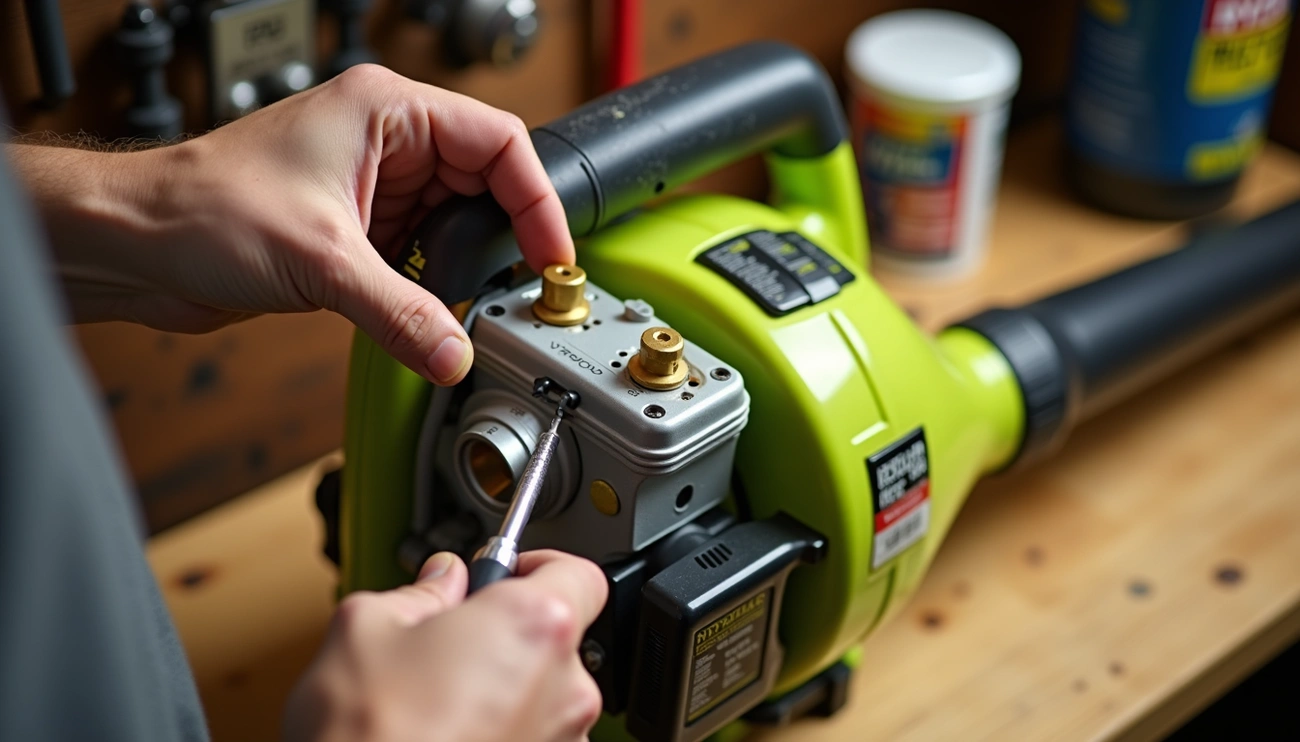
Gas blowers may use a throttle trigger, throttle lock, cruise control, or a combination of controls. Some models also have separate controls for starting and engine operation.
Allow the engine to warm up only as directed by the manual. Use the throttle to set the working speed, not the choke. The choke is a starting control and should not remain engaged during normal operation unless the manufacturer says otherwise.
If the engine surges or will not respond to the throttle, stop using it and inspect the air filter, fuel, spark plug, and fuel type as described in the manual.
Why your leaf blower speed may not change
If squeezing the trigger does not increase power, follow these checks in order.
The speed control is locked
A cruise-control lever may hold the blower at one setting. Release the lock and test the trigger again.
Some models have a separate turbo or boost button. A trigger alone may not reach maximum output unless the correct mode is selected.
The battery is low or too hot
A nearly empty battery may limit motor output. Let a hot battery cool in a dry place, then recharge it with the approved charger.
Do not use a swollen, cracked, leaking, or unusually hot battery. Follow the battery maker’s instructions for storage and disposal.
The air intake or tube is blocked
A clogged intake can reduce airflow and make the motor sound strained. Turn the blower off, disconnect its power source, and clear the blockage as directed in the manual.
Do not operate the blower without parts that the manufacturer requires for safe use.
The extension cord is unsuitable
A long or undersized cord can cause voltage drop. The blower may run weakly, stop, or overheat.
Use the cord type and size listed in the manual. If the plug, cord, or outlet becomes hot, stop using the blower and have the problem checked.
The fuel system or air filter needs service
On a gas model, old fuel, a dirty air filter, or a fouled spark plug can prevent proper throttle response. Perform only the maintenance listed in the manual.
If the engine continues to surge, stall, smoke, or leak fuel, stop and seek qualified small-engine service.
The control or motor has failed
A trigger that feels loose, sticks, or does not return is a safety concern. Do not bypass the control or open the motor housing unless the manufacturer permits that repair.
Contact the manufacturer or a qualified repair service when basic checks do not solve the problem.
How to control dust and debris while using higher speed
High speed can create a cloud of dust, especially on dry soil, gravel, and old leaf piles. Wear safety glasses and hearing protection, and use respiratory protection when the conditions and product instructions call for it.
Avoid blowing dust toward homes, open windows, roads, neighbors, or air intakes. Do not blow debris near people, pets, cars, or fragile surfaces.
The U.S. Consumer Product Safety Commission advises users to wear eye and hearing protection and keep bystanders away from outdoor power equipment. Local rules may also restrict leaf blower noise, operating hours, or emissions. Check your city, county, or state requirements before use.
Never use a leaf blower to move hazardous materials such as asbestos-containing dust, chemical powders, animal waste, or unknown debris. Use the cleanup method recommended for that material.

Common mistakes when adjusting leaf blower speed
Starting at full power
Full power often scatters leaves instead of gathering them. Start low and increase speed as needed.
Holding the nozzle too close
A close nozzle can disturb soil, mulch, and gravel. Raise it slightly and use a shallow angle.
Using the highest setting for every surface
Grass, patios, mulch, and gravel need different treatment. Match the power to the surface.
Blowing leaves into the street
Leaves can block drains, create hazards, or enter traffic. Direct debris to a permitted collection area or compost pile.
Ignoring wind direction
Strong wind can carry leaves and dust back toward you. Work with the wind when possible, or choose a calmer time.
Clearing a clog while the blower is live
The fan can move even when the machine sounds quiet. Stop the blower and disconnect its power source before clearing it.
Treating maximum MPH as the only performance measure
Air speed and air volume affect different jobs. A blower with a lower advertised MPH may still move a large area well if it produces strong airflow.
Leaf blower speed safety checklist
Before use:
- Read the model’s owner’s manual.
- Check the tube, intake, trigger, battery, cord, or fuel system.
- Put on eye and hearing protection.
- Wear sturdy shoes and avoid loose clothing.
- Keep children, pets, and bystanders away.
- Check local noise and operating rules.
During use:
- Start at the lowest useful speed.
- Keep the nozzle pointed away from people and windows.
- Watch for stones, sticks, and other projectiles.
- Do not use a gas blower in an enclosed building.
- Keep the cord behind you when using a corded blower.
- Stop if the blower vibrates heavily, smells of burning, or behaves unusually.
After use:
- Turn the blower off before setting it down.
- Disconnect the battery or power cord before maintenance.
- Let a gas engine cool before refueling or storage.
- Clear the intake and tube only when the blower is stopped.
- Store batteries and fuel as directed by their manufacturers.

Key takeaways
- Adjust leaf blower speed with the variable trigger, dial, mode button, or cruise control.
- Start on low power and increase it in small steps.
- Use high speed for heavy or wet debris, not as the default setting.
- Use low speed near mulch, plants, gravel, dust, and loose soil.
- Air speed and air volume are different measurements.
- Stop the blower and disconnect its power source before clearing a blockage.
- If the trigger, motor, battery, cord, or fuel system does not work correctly, stop and follow the manual or seek repair help.
Frequently asked questions
Can I adjust the RPM on a leaf blower?
Usually, no. Most consumer leaf blowers let you control airflow through a trigger, dial, or electronic mode. The engine or motor speed changes in response to that control. Do not alter a gas engine’s governor unless the manufacturer specifically authorizes the procedure.
Should I use high speed to move wet leaves?
Use medium speed first, then increase it if needed. Wet leaves may need more force, but maximum power can spread them and create a mess. A rake may work better for thick, soaked piles.
Why does my leaf blower lose power when I squeeze the trigger?
Common causes include a low battery, a blocked intake, an unsuitable extension cord, a dirty air filter, old fuel, or a damaged control. Stop if the unit overheats, smells of burning, leaks fuel, or makes unusual noise.
Is a higher MPH leaf blower always better?
No. MPH measures air speed, while CFM measures air volume. High air speed can help start heavy debris moving, while high air volume can clear a wider area. The best choice depends on the job and surface.
Can I use a leaf blower to clear snow?
Only if the owner’s manual allows it and the snow is light and dry. Keep water away from electrical parts, and do not use a gas blower inside a building. Wet or deep snow may require a different tool.
What should I do if my blower scatters leaves everywhere?
Lower the speed, raise the nozzle, and aim at a shallow angle. Work in short passes toward one pile. Wind direction and nozzle distance also affect control.
Final answer
To adjust leaf blower speed, locate the variable trigger, speed dial, mode button, or cruise-control lever. Begin at low power, aim the nozzle at a shallow angle, and increase speed only until the debris moves. Use the lowest effective setting for better control, less dust, lower noise, and longer battery life.
If the speed will not change, check the control lock, battery or cord, intake, tube, fuel system, and air filter. Stop using the blower when a control sticks, the unit overheats, or the motor behaves abnormally.
Reference material
- U.S. Consumer Product Safety Commission: Outdoor Power Equipment Safety
- Occupational Safety and Health Administration: Noise and Hearing Conservation
- U.S. Environmental Protection Agency: Small Engine and Equipment Regulations
- The owner’s manual for the specific leaf blower model should be used for control locations, fuel, battery, cord, maintenance, and operating limits.