
For most gas-powered leaf blowers in the United States, use fresh regular unleaded gasoline with a minimum octane rating listed in the owner’s manual. The fuel type depends on the engine:
- Two-stroke leaf blower: Use gasoline mixed with the correct amount of two-stroke oil.
- Four-stroke leaf blower: Use gasoline by itself in the fuel tank and add engine oil to the separate oil reservoir.
- Battery or corded blower: Do not use gasoline.
In the U.S., many manufacturers allow gasoline containing up to 10% ethanol, often labeled E10. Do not use diesel, E85, straight gasoline in a two-stroke engine, or gasoline mixed with the wrong oil ratio.
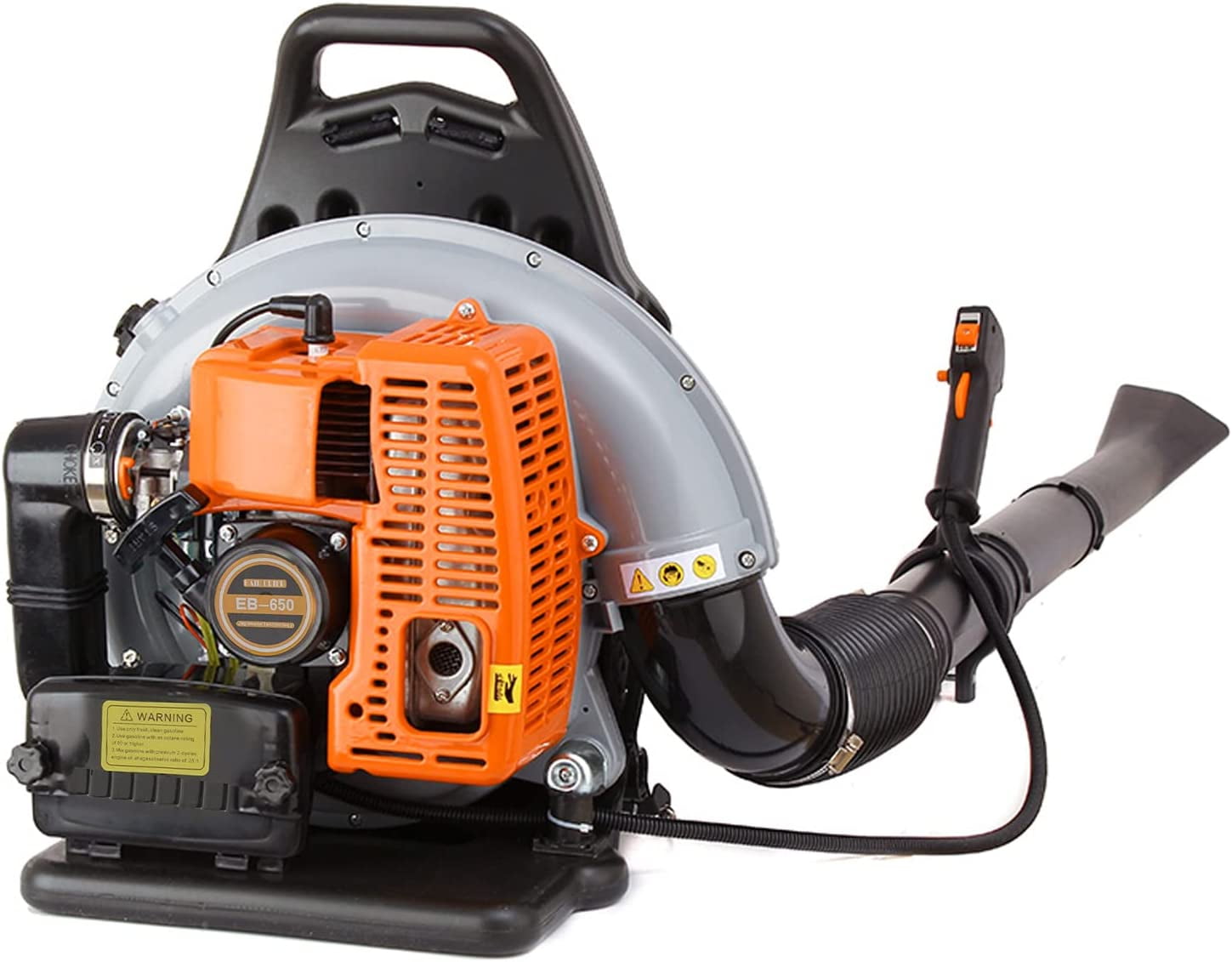
How to identify the right fuel for your leaf blower
The fastest way to choose the correct gas is to identify whether the blower has a two-stroke or four-stroke engine. Check the owner’s manual first. If the manual is missing, look for the markings below.
| Engine type | Fuel used in the gas tank | Oil requirement |
|---|---|---|
| Two-stroke | Gasoline mixed with two-stroke oil | Oil must be mixed into the fuel |
| Four-stroke | Straight gasoline | Engine oil goes in a separate oil-fill port |
| Electric or battery | No gasoline | No fuel or engine oil |
A two-stroke engine completes its power cycle with two piston strokes. It does not have a separate engine-oil reservoir, so the oil must be mixed with the gasoline.
A four-stroke engine has a separate crankcase for engine oil. Putting two-stroke oil into its gas tank can cause smoke, poor running, and engine damage.
Signs of a two-stroke leaf blower
Your blower is likely a two-stroke model if:
- The manual specifies a fuel-to-oil ratio such as 50:1 or 40:1.
- The fuel cap or tank label refers to a gas-and-oil mixture.
- The blower has only one fuel tank and no engine-oil dipstick.
- The manufacturer sells or recommends premixed two-stroke fuel.
Signs of a four-stroke leaf blower
Your blower may use a four-stroke engine if:
- It has a separate oil-fill cap or dipstick.
- The manual tells you to use gasoline without mixing oil.
- The engine has separate fuel and crankcase-oil systems.
- The model description says “four-cycle” or “four-stroke.”
Do not guess when the labels are unclear. Find the model number and check the manufacturer’s manual. A wrong fuel mixture can lead to hard starting, carbon buildup, overheating, or expensive repairs.
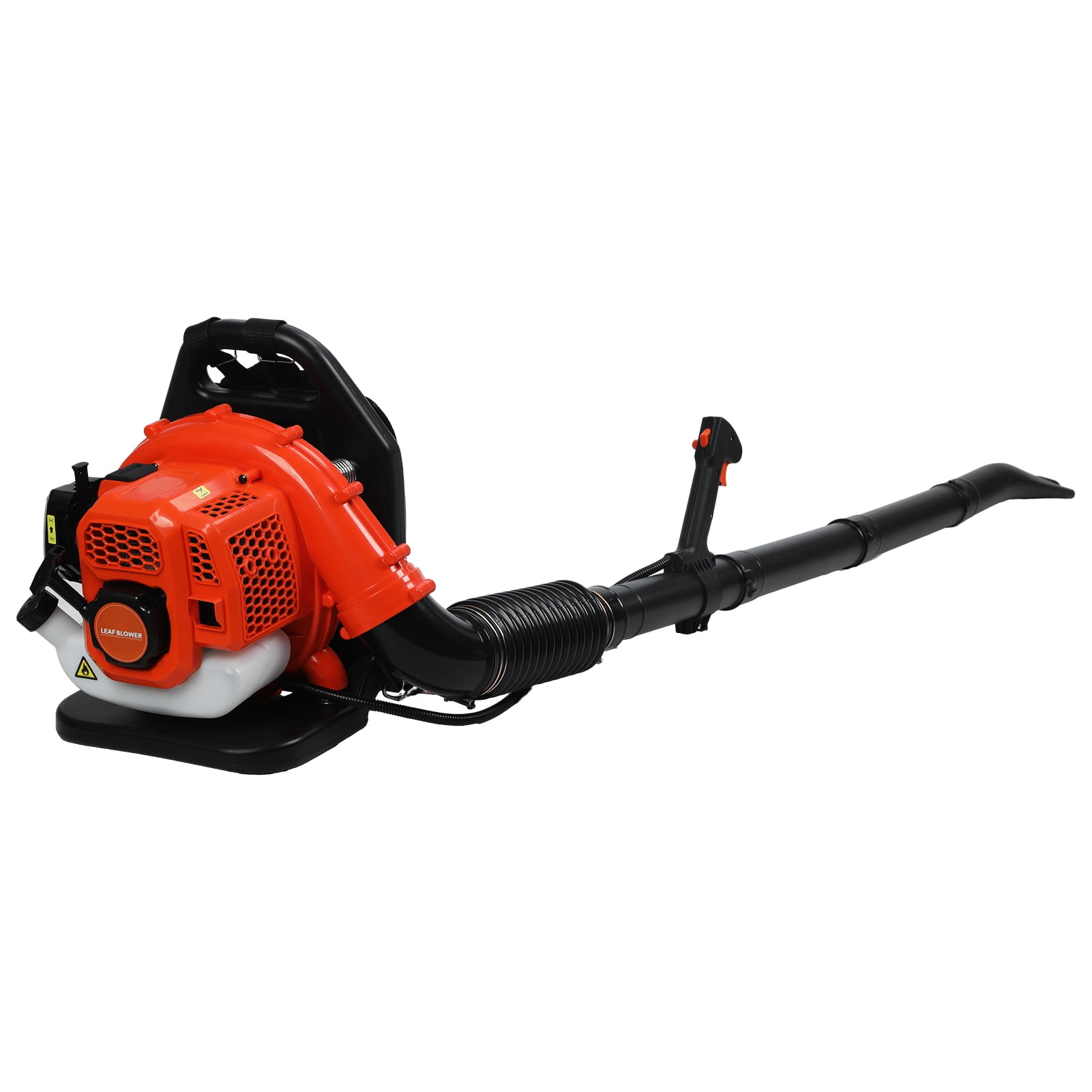
What gas should you use in a two-stroke leaf blower?
Use fresh unleaded gasoline mixed with high-quality air-cooled two-stroke oil at the ratio specified by the manufacturer. Many modern blowers use a 50:1 ratio, but some models require 40:1 or another mixture.
The fuel grade usually matters less than the correct oil ratio, fresh fuel, and clean storage. Use the octane rating stated in the manual. If the manual does not specify a higher rating, regular unleaded gasoline is commonly suitable.
Common two-stroke fuel ratios
| Fuel ratio | Gasoline | Two-stroke oil |
|---|---|---|
| 50:1 | 1 U.S. gallon | 2.6 U.S. fluid ounces |
| 40:1 | 1 U.S. gallon | 3.2 U.S. fluid ounces |
| 32:1 | 1 U.S. gallon | 4.0 U.S. fluid ounces |
These amounts are approximate. Use the ratio printed in your owner’s manual or on the oil bottle.
For a 50:1 mixture:
- 1 gallon of gasoline needs about 2.6 fluid ounces of oil.
- 2 gallons need about 5.1 fluid ounces.
- 1 liter of gasoline needs about 20 milliliters of oil.
Do not use motor oil, marine two-stroke oil, or four-stroke engine oil unless the blower manufacturer specifically approves it. Most handheld blowers use oil designed for air-cooled two-stroke engines.
How to mix two-stroke fuel
- Use an approved fuel container.
- Add the correct amount of two-stroke oil.
- Add fresh gasoline.
- Close the container and shake it gently.
- Mark the container with the fuel ratio and date.
- Pour the mixture into the blower’s tank.
Adding oil to the container before gasoline helps the fuel mix more evenly. Do not mix fuel inside the leaf blower’s tank unless the manual specifically permits that method.
Never estimate the oil by eye. Too little oil can reduce engine lubrication. Too much oil can cause heavy smoke, fouled spark plugs, carbon deposits, and poor performance.
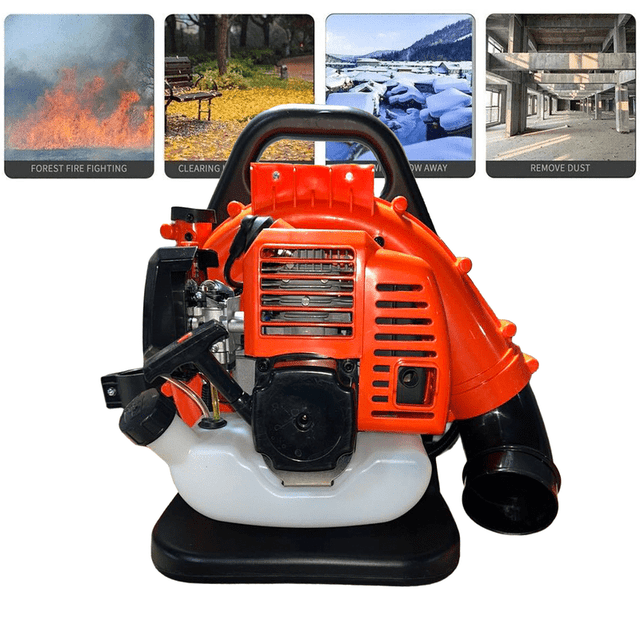
What gas should you use in a four-stroke leaf blower?
Use straight unleaded gasoline in the fuel tank of a four-stroke leaf blower. Do not add two-stroke oil to the gasoline unless the manufacturer’s instructions specifically say otherwise.
A four-stroke blower needs two separate fluids:
- Gasoline in the fuel tank.
- The specified four-stroke engine oil in the crankcase.
Check the oil level before use. Running a four-stroke engine with low oil can cause severe damage even when the fuel is correct.
Use the gasoline grade and ethanol limit listed in the manual. Many small engines are designed to run on regular unleaded gasoline with no more than 10% ethanol, known as E10. Some engines may allow a different fuel specification, so the manual remains the final authority.
Do not fill the fuel tank with:
- Diesel fuel
- Kerosene
- E85 or flex-fuel gasoline
- Gasoline mixed with two-stroke oil
- Old fuel containing water or sediment
If you accidentally mix oil into a four-stroke blower’s gas tank, do not start the engine. Drain the tank safely and follow the manufacturer’s instructions or ask a qualified small-engine repair shop for help.
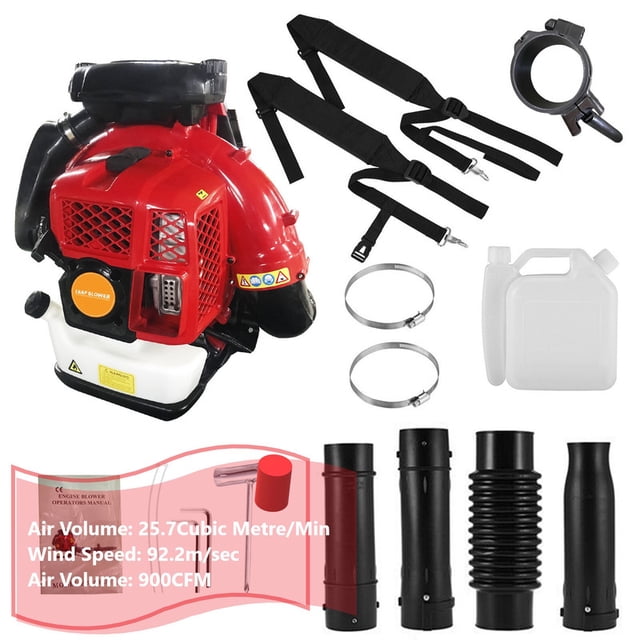
Is E10 gasoline safe for a leaf blower?
E10 gasoline is commonly approved for many modern gas-powered leaf blowers, but you should confirm the limit in the owner’s manual. E10 contains up to 10% ethanol and is widely sold at U.S. gas stations.
Ethanol can absorb moisture from the air. Over time, this may contribute to fuel separation, corrosion, fuel-line damage, or carburetor problems, especially when the blower sits unused for long periods.
Follow these practices when using E10:
- Buy only the amount you expect to use within the manufacturer’s recommended storage period.
- Keep the fuel container tightly sealed.
- Store fuel in an approved container.
- Add a fuel stabilizer made for gasoline engines when recommended.
- Do not leave fuel in the blower for long-term storage unless the manual permits it.
Can you use ethanol-free gasoline?
Ethanol-free gasoline can be a useful choice for seasonal equipment because it avoids ethanol-related moisture concerns. It is not automatically required, however. The blower’s manual may allow E10 and may not require ethanol-free fuel.
Ethanol-free fuel can also cost more and may not be available at every U.S. gas station. The key factors are the correct fuel specification, freshness, proper storage, and the correct oil mixture for a two-stroke engine.
Can you use E15 or E85?
Do not use E85 in a typical leaf blower. E85 contains a much higher percentage of ethanol and is intended for compatible flex-fuel vehicles and equipment.
The U.S. Environmental Protection Agency warns that E15 is not approved for use in many small gasoline engines, including certain lawn and garden tools. Unless the manufacturer clearly approves E15 for your exact blower, use E10 or ethanol-free gasoline instead.

How long does leaf blower gas last?
Fresh gasoline does not last forever. Its useful storage life depends on the fuel type, container, temperature, moisture exposure, and whether you add stabilizer.
As a practical rule, buy only enough fuel for the near term. For longer storage, follow the blower manual. The manufacturer may tell you to either:
- Drain the fuel tank and run the engine until the carburetor is empty, or
- Add stabilizer, run the engine so treated fuel reaches the fuel system, and store the blower with fuel inside.
Do not combine these methods unless the manual supports it.
Fuel that has gone bad may look or smell different. Common signs include:
- A sour or varnish-like odor
- Darkened or cloudy gasoline
- Sediment or water in the container
- Hard starting
- Stalling after the engine warms up
- Poor acceleration
- Surging or uneven operation
Do not pour old gasoline onto the ground or into a drain. Contact your local household hazardous-waste program or recycling center for disposal guidance.

How to choose and mix leaf blower fuel safely
Fuel is highly flammable. Mix and store it outdoors or in a well-ventilated area, away from flames, cigarettes, pilot lights, hot surfaces, and electrical sparks.
Use these safety steps:
- Turn off the blower and let the engine cool before refueling.
- Place the blower on a stable, level surface.
- Use an approved gasoline container.
- Keep the container closed when you are not pouring.
- Wipe up spills before starting the engine.
- Move at least several feet away from the fueling area before starting.
- Never smoke while handling gasoline.
- Keep fuel away from children and pets.
- Do not store gasoline in glass, open buckets, or unapproved plastic containers.
- Follow local fire-code and disposal rules.
Never refuel a hot engine. Gasoline vapors can ignite when they reach a spark or hot engine part.
If gasoline gets on your skin, wash the area with soap and water. If it gets in your eyes, flush with clean water and seek medical advice if irritation continues. For a large spill, leave the area and contact the appropriate local emergency or environmental service.

What happens if you use the wrong gas in a leaf blower?
The result depends on the mistake and how long the engine ran.
| Mistake | Likely result | Recommended action |
|---|---|---|
| Straight gasoline in a two-stroke blower | Poor lubrication and possible engine damage | Stop the engine and drain the fuel |
| Too little oil in a two-stroke mix | Overheating or piston damage | Do not continue running it |
| Too much oil in a two-stroke mix | Smoke, fouled plug, poor performance | Drain and remix correctly |
| Two-stroke mix in a four-stroke blower | Smoke and poor running | Do not run; drain the tank |
| Diesel in a gasoline blower | No start or serious fuel-system problems | Do not start; have the system drained |
| E85 in a non-flex-fuel blower | Poor running and possible fuel-system damage | Drain the fuel and follow the manual |
| Old or contaminated fuel | Hard starting, stalling, clogged carburetor | Drain and replace with fresh fuel |
If you notice the mistake before starting the blower, do not turn the engine over. Drain the tank according to the manual.
If the blower ran briefly, shut it off. Do not keep restarting it to “use up” the wrong fuel. A repair shop may need to drain the tank, flush the fuel system, replace the spark plug, or inspect the engine.

Common mistakes when fueling a leaf blower
The most common fuel problems come from using the right type of gasoline in the wrong way.
Mixing the wrong ratio
A 50:1 mixture is not interchangeable with a 40:1 mixture. Measure both the gasoline and oil accurately.
Using old gas
Gasoline left in a container or tank for too long can lose quality. This is especially common when a blower sits through the winter.
Filling a two-stroke blower with straight gas
A two-stroke engine depends on oil in the fuel for lubrication. Straight gasoline can cause severe wear.
Assuming every blower uses 50:1 fuel
Many do, but not all. Always check the model-specific manual.
Storing fuel in the blower all season
Long-term storage can leave deposits in the carburetor and fuel lines. Use the manufacturer’s storage procedure.
Confusing fuel stabilizer with two-stroke oil
Fuel stabilizer helps slow fuel deterioration. It does not replace two-stroke oil and does not provide the lubrication required by a two-stroke engine.

Quick fuel decision guide
Use this guide before filling the tank:
- The manual says 50:1: Mix gasoline and air-cooled two-stroke oil at 50:1.
- The manual says 40:1: Use the 40:1 ratio, not 50:1.
- The blower has a separate oil reservoir: Use straight gasoline and the specified engine oil.
- The manual allows E10: Regular E10 gasoline is generally acceptable.
- The manual does not state the ethanol limit: Contact the manufacturer before using fuel above E10.
- You cannot identify the engine type: Do not add fuel until you confirm it.
- The fuel is old, cloudy, or contaminated: Dispose of it properly and use fresh fuel.
- You plan to store the blower: Follow the manual’s drain-and-store or stabilized-fuel procedure.

Frequently asked questions
Can I use regular 87-octane gas in a leaf blower?
Usually, regular unleaded gasoline is suitable when the manufacturer specifies regular fuel or does not require a higher octane rating. Check the manual before using a different grade. Higher octane does not correct a wrong oil ratio or bad fuel.
Can I use premium gas in a leaf blower?
Premium gasoline may work if it meets the manufacturer’s fuel requirements, but it is not automatically better. Use the octane rating and ethanol limit listed in the manual. Premium fuel will not protect a two-stroke engine from an incorrect oil mixture.
Can I use premixed fuel in a two-stroke leaf blower?
Yes, commercially premixed two-stroke fuel can be used when its oil ratio and fuel specifications match the blower. Confirm that the premix is intended for air-cooled equipment and that the ratio matches the manual.
How much gas should I put in a leaf blower?
Fill the tank only to the level shown in the manual or below the tank’s marked fill line. Leave room for fuel expansion. Do not overfill, and wipe away any spilled gasoline before starting the blower.
Can I leave mixed gas in my leaf blower?
Only if the manufacturer’s storage instructions allow it and the fuel is fresh and properly stabilized. For seasonal storage, follow the manual closely. Some manufacturers recommend draining the fuel system, while others recommend stabilized fuel.
What should I do if my leaf blower will not start after refueling?
First, stop and verify the fuel type and mixture. Check that the fuel is fresh, the fuel cap is venting correctly, the choke and primer are used as directed, and the spark plug is not fouled. If the blower contains the wrong fuel or still will not start, have a qualified technician inspect it.
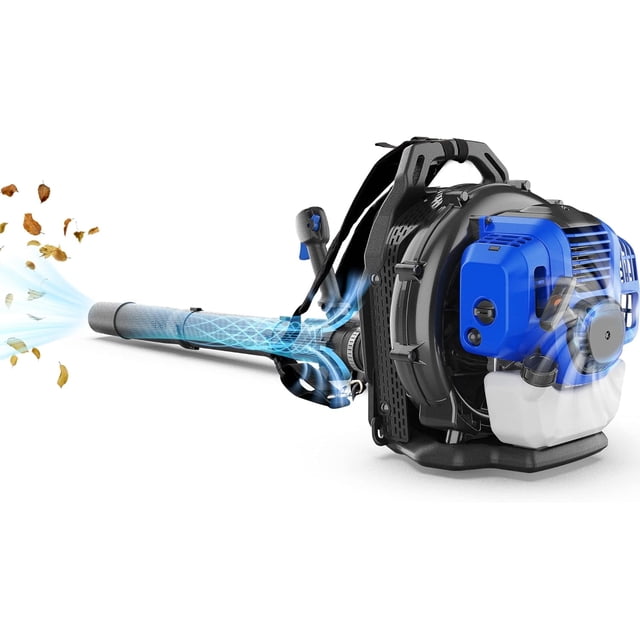
Final answer: the best gas for a leaf blower
For a typical gas-powered leaf blower in the United States, use fresh unleaded gasoline that meets the manual’s octane and ethanol requirements.
Use it this way:
- Two-stroke blower: Mix gasoline with the specified air-cooled two-stroke oil ratio, often 50:1.
- Four-stroke blower: Use straight gasoline and keep the separate engine-oil reservoir filled.
- Ethanol: E10 is commonly approved; avoid E85 unless the manual specifically allows it.
- Storage: Use fresh fuel, a suitable stabilizer when recommended, and the manufacturer’s storage method.
The model-specific owner’s manual is the final authority. If the fuel type or ratio is unclear, confirm it before starting the engine.