
Introduction
If your leaf blower is losing power, the cause is often a blocked air path, a dirty filter, old fuel, a weak battery, or a worn part. Start with simple checks: clear the tube, clean the intake, check the fuel or battery, and inspect the filter. Never service a running blower.
This guide applies to leaf blowers used in the United States, including gas, corded electric, and battery models. Always follow the owner’s manual for your exact model. Parts, fuel rules, battery systems, and repair steps can differ by brand and state.

What a Loss of Power Looks Like
A power problem can affect the engine, motor, or air stream. The symptom helps you find the cause.
| What you notice | Most likely causes |
|---|---|
| Weak air comes from the tube | Clogged tube, blocked intake, dirty fan, low battery, weak motor |
| Gas engine starts but dies when you pull the trigger | Old fuel, blocked fuel flow, dirty carburetor, dirty air filter |
| Engine runs but sounds slow | Air filter, fuel, spark plug, governor, or engine problem |
| Battery blower slows after a few minutes | Low charge, cold battery, hot battery, worn battery, blocked intake |
| Blower works with no tube but loses power with the tube | Blocked or damaged tube, wrong tube assembly, debris inside the outlet |
| Corded blower slows under load | Long or damaged extension cord, low voltage, motor fault |
| Blower surges up and down | Fuel delivery problem, dirty carburetor, air leak, or electronic fault |
| Blower vibrates and has poor airflow | Damaged fan, loose part, or debris near the impeller |
A leaf blower needs two things to make strong airflow: power from the engine or motor and a clear path for air. A blockage can make a healthy blower seem weak. A power fault can make the air stream weak even when the tube is clear.
Airflow loss versus engine or motor loss
First, ask whether the blower is running badly or only moving less air.
- If the gas engine races but the air stream is weak, inspect the tube, intake, fan, and outlet.
- If the engine bogs down when you press the trigger, inspect fuel, air, spark, and the carburetor.
- If a battery blower runs well at first and then slows, check the battery charge, temperature, and air intake.
- If a corded blower slows when you use a long cord, check the cord and outlet before opening the machine.
This simple split prevents wasted work. Do not adjust the carburetor when the real problem is a blocked tube.

Common Reasons a Leaf Blower Loses Power
1. The blower tube or intake is blocked
Leaves, mulch, grass, and small stones can lodge in the tube or intake. A partial blockage may still let the blower run, but airflow will drop.
Turn off the blower and disconnect its power source. Remove the battery, unplug the cord, or stop the engine and let it cool. Check the tube, intake screen, outlet, and fan area for debris.
Do not reach into the fan with your hand. Use a soft brush or a tool named in the owner’s manual. Replace a cracked tube because a damaged tube can reduce air pressure and create a safety risk.
2. The air filter is dirty
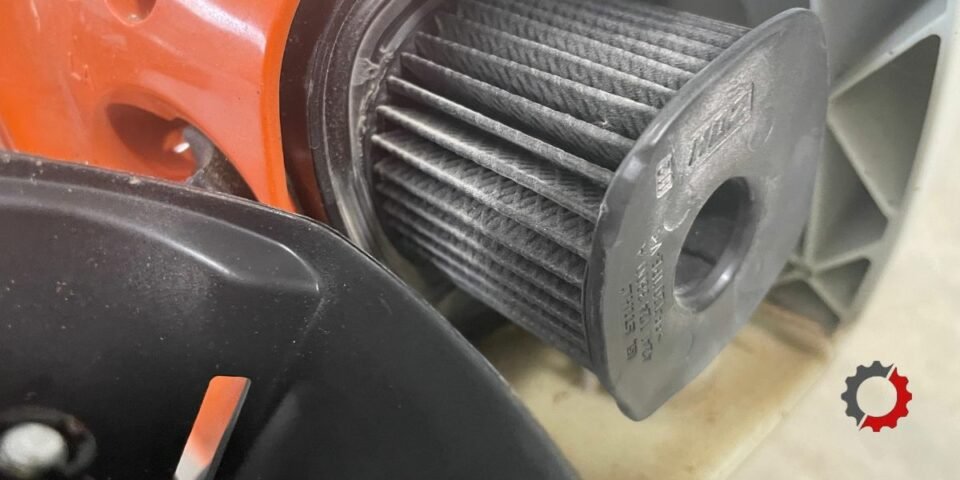
Gas blowers need clean air for the engine to burn fuel. A dirty filter restricts air. The engine may start, idle, and then lose power when you squeeze the trigger.
Remove and inspect the filter as the manual directs. Foam filters may need washing and oiling with the correct filter oil. Paper filters usually need replacement rather than washing.
Do not run a gas blower without its air filter unless the manual gives a specific service instruction. Dirt can enter the engine and cause wear.
3. The fuel is old or contaminated
Gasoline changes during storage. Water, dirt, or stale fuel can reduce engine power and clog small fuel passages. This is common after a blower sits through a long winter.
Use fresh fuel that matches the manual. Many small engines require regular unleaded gasoline with a stated ethanol limit. Never guess the fuel mix for a two-stroke engine. Some models need gas mixed with two-stroke oil, while others use separate oil systems.
Do not pour fuel into a hot engine. Work outdoors, away from flames and sparks. Store fuel only in an approved container.
4. The spark plug is dirty or worn
A gas engine needs a strong spark at the right time. A fouled, worn, cracked, or incorrectly gapped spark plug can cause weak acceleration, misfires, or stalling.
Inspect the plug only after the engine is cool and the ignition lead is disconnected. The correct plug type and gap vary by model. Use the value in the owner’s manual, not a general chart.
Replace a damaged plug. If the plug becomes wet or black again soon after replacement, the engine may have a fuel, air, or ignition problem.
5. The carburetor or fuel system is restricted
A gas blower may start but fail under load when the carburetor has a blocked jet or the fuel line has a restriction. A clogged fuel filter can cause the same symptom.
Look for cracked fuel lines, a damaged primer bulb, or a fuel cap vent that does not work. Do not spray random cleaners into the carburetor. Some cleaners can damage seals, and some repairs need precise adjustment.
Carburetor work is a good point to use a qualified small-engine repair shop, especially when the model has emission controls or tamper-resistant settings.
6. The battery is low, cold, hot, or worn
Battery blowers can reduce output when the battery charge is low. Some battery management systems also limit power when the pack is too hot or too cold.
Charge the battery with the approved charger. Let a hot pack cool at room temperature. Do not use a battery that is swollen, cracked, leaking, or unusually hot. Place it out of service and follow the manufacturer’s battery disposal or service instructions.
If a fully charged battery gives much less run time than it once did, the battery may have lost capacity. Test the blower with a known-good, compatible battery if one is available.
7. The battery contacts are dirty
Poor contact can cause low power, cutting out, or intermittent operation. Remove the battery before checking the contacts.
Keep the contacts dry and clean. Do not scrape them with a metal tool. If the contacts look burned, melted, loose, or corroded, stop using the blower and contact the manufacturer or a repair shop.
8. A cord or outlet is limiting a corded blower
Corded blowers need the correct voltage and enough current. A damaged extension cord, loose plug, poor outlet, or very long cord can cause voltage drop and heat.
Use the cord type and length listed in the manual. Outdoor cords should be rated for outdoor use and inspected before each use. Do not use a cord with cuts, crushed sections, exposed wire, or hot plugs.
If a cord or plug becomes hot, unplug the blower and stop using it. Do not bypass a ground pin or use damaged electrical parts.
9. The fan or impeller is damaged
The fan, also called an impeller on some models, moves air through the blower. A cracked blade, bent part, or loose fan can reduce airflow and cause vibration.
Turn the blower off and disconnect its power source before inspection. Do not operate the blower if it vibrates heavily, makes grinding sounds, or has a damaged housing.
Fan repairs often require special parts and tools. Replace the part with one approved for the model. Do not reshape or glue a damaged fan.

How to Troubleshoot a Leaf Blower Losing Power
Use this order. It starts with safe checks that solve many problems without opening the engine or motor.
Step 1: Stop the blower and remove its power source
Let the machine cool. Remove the battery, unplug the cord, or disconnect the spark plug lead as directed by the manual.
Wear safety glasses when clearing debris. Use gloves for sharp leaves, wire, or damaged plastic. Never test a gas blower indoors because engine exhaust contains carbon monoxide.
Step 2: Check the tube and air intake
Look through the tube. Check the intake screen and fan housing for leaves or packed dirt.
Clear only loose debris that you can reach safely. Do not force a stick into the fan. Refit every tube section before testing because some blowers use a safety switch that prevents operation when the tube is not installed.
A successful check: The tube is clear, the intake is open, and the blower no longer vibrates or sounds strained.
Step 3: Check the filter
On a gas model, remove the air filter and inspect it in good light. Replace or clean it according to the manual.
On a battery or corded model, check the motor air vents. Brush off dust from the outside. Do not spray water into the motor housing.
A successful check: The engine responds better when you press the trigger, or the electric motor runs at its normal sound and speed.
Step 4: Check fuel, oil, and the spark plug on gas models
Confirm that the fuel is fresh and correct for the engine. Check the fuel level and oil level if the blower has a separate oil system.
Inspect the spark plug. Replace it if it is damaged or badly fouled. Do not keep pulling the starter if the engine is flooded. Follow the manual’s clear-flood procedure.
Step 5: Check the battery or power cord
For a battery blower, confirm that the pack is fully charged and locked into place. Check the battery temperature and contacts.
For a corded blower, inspect the cord, plug, outlet, and reset device. Try a different approved outlet only if the cord and blower are safe to use. Do not use a household cord that is not rated for outdoor equipment.
Step 6: Test the blower briefly
Test outdoors, away from people, pets, windows, and loose objects. Start at low speed if the model allows it.
Listen for changes. A smooth sound with weak air points toward an airflow problem. A rough, surging, or bogging engine points toward fuel, air, ignition, or engine service.
Step 7: Stop if the basic checks do not work
A blower that still loses power may have a restricted carburetor, failed ignition part, worn battery, damaged fan, bad motor controller, or internal engine damage.
Do not keep using a machine that overheats, smokes, sparks, leaks fuel, smells like burning plastic, or vibrates hard. A qualified repair technician can test fuel pressure, ignition, battery health, motor current, and internal parts.

Troubleshooting by Leaf Blower Type
Gas leaf blowers
Gas blowers need clean fuel, clean air, correct spark, and a clear exhaust path. Start with the tube, air filter, fuel, and spark plug.
If the blower loses power only at full throttle, a dirty carburetor or fuel restriction is likely. If it loses power as it warms up, a blocked fuel vent, ignition fault, or heat-related engine issue may be involved.
Never remove or modify an emissions control part. In the United States, small off-road engines are subject to federal emissions rules, and state requirements may also apply. Use the repair method and parts approved for the model.
Battery leaf blowers
Battery models need a charged, compatible battery and open cooling vents. A battery that works in another tool may not be approved for every product in a brand’s system.
A weak battery can make the blower slow under load. Test with a compatible battery of the correct voltage if possible. If the second battery works normally, the first battery or charger may be the problem.
Do not open a lithium-ion battery pack. Internal cells can cause fire or serious injury if damaged.
Corded electric leaf blowers
Corded models need a sound outlet and a suitable outdoor extension cord. The longer and thinner the cord, the greater the risk of voltage drop and heat.
If the blower works normally on a short, approved cord but slows on a long cord, the cord setup is likely the issue. If it remains weak with the proper cord, the motor, switch, or control system may need service.
Use a ground-fault circuit interrupter, or GFCI, where required by the equipment instructions or local electrical rules. A GFCI helps reduce shock risk, but it does not make a damaged blower safe.
When to Repair or Replace the Blower
Repair is often sensible when the problem is a filter, spark plug, fuel line, tube, cord, or battery. These parts are usually easier to inspect and replace than an engine or motor assembly.
Professional service makes more sense when the blower has internal engine damage, a failed electronic controller, a damaged battery pack, repeated overheating, or a cracked fan housing.
Use this simple decision guide:
- Clean and continue: Clear blockage, clean the intake, and replace a routine filter.
- Replace a part: Use a correct tube, spark plug, cord, fuel line, or battery approved for the model.
- Get service: Seek help for carburetor faults, internal electrical faults, heavy vibration, or repeated stalling.
- Stop using it: Do so for fuel leaks, smoke, sparks, exposed wires, a swollen battery, or severe heat.
The owner’s manual is the best source for part numbers, fuel type, filter care, cord size, battery compatibility, and warranty limits. Manufacturer support pages may also provide model-specific service instructions.

How to Prevent Power Loss
A few basic habits help keep a leaf blower at full output:
- Clear the intake and tube after each use.
- Store the blower in a dry place.
- Follow the manual’s air-filter service schedule.
- Use fresh fuel and the correct oil mix on gas models.
- Remove fuel before long-term storage when the manual recommends it.
- Charge and store batteries as the battery maker directs.
- Keep battery contacts dry and clean.
- Inspect cords, plugs, tubes, and housings before use.
- Keep cooling vents free of dust.
- Use eye and hearing protection during operation.
Do not wash a blower unless the manual allows it. Water can enter switches, motors, bearings, and battery compartments. Do not use compressed air where it can drive dirt deeper into a motor or damage seals.
Frequently Asked Questions
Why does my leaf blower start but have no power?
A gas blower may have stale fuel, a dirty air filter, a fouled spark plug, or a restricted carburetor. An electric blower may have a low battery, blocked intake, damaged cord, or motor fault. Check the tube and intake first, then inspect the power source.
Why does my leaf blower lose power when I pull the trigger?
This often means the engine cannot receive enough fuel or air under load. On gas models, inspect the air filter, fuel, fuel filter, fuel line, spark plug, and carburetor. On electric models, check the battery charge, battery temperature, contacts, cord, and vents.
Can a dirty spark plug make a leaf blower lose power?
Yes. A dirty or worn spark plug can cause misfires, slow acceleration, and stalling. Use the plug type and gap listed in the owner’s manual.
Why is my battery leaf blower weak even after charging?
The battery may be worn, too hot, too cold, incompatible, or unable to deliver enough current. The intake may also be blocked. Let the battery reach room temperature, check the vents, and test with a compatible known-good battery if available.
How often should I service a leaf blower?
Use the service schedule in the owner’s manual. Basic checks should happen before each use. Filter, spark plug, fuel, and battery care depend on the model, hours of use, storage time, and operating conditions.
Is it safe to use a leaf blower that smells hot?
Stop using it if the smell is strong, new, or linked to smoke, sparks, a hot cord, melted plastic, or a hot battery. Let the blower cool and inspect it. Have it serviced if the cause is not clear.
Conclusion
A leaf blower that loses power usually has a clear and fixable cause. Check the airflow path first, then the filter and power source. Gas models need clean fuel, air, and spark; battery models need a healthy battery and open vents; corded models need a safe, suitable power connection.
If cleaning and basic checks do not restore power, stop using the blower when it overheats, smokes, leaks, sparks, or vibrates. Use the owner’s manual or a qualified repair shop for deeper faults.