
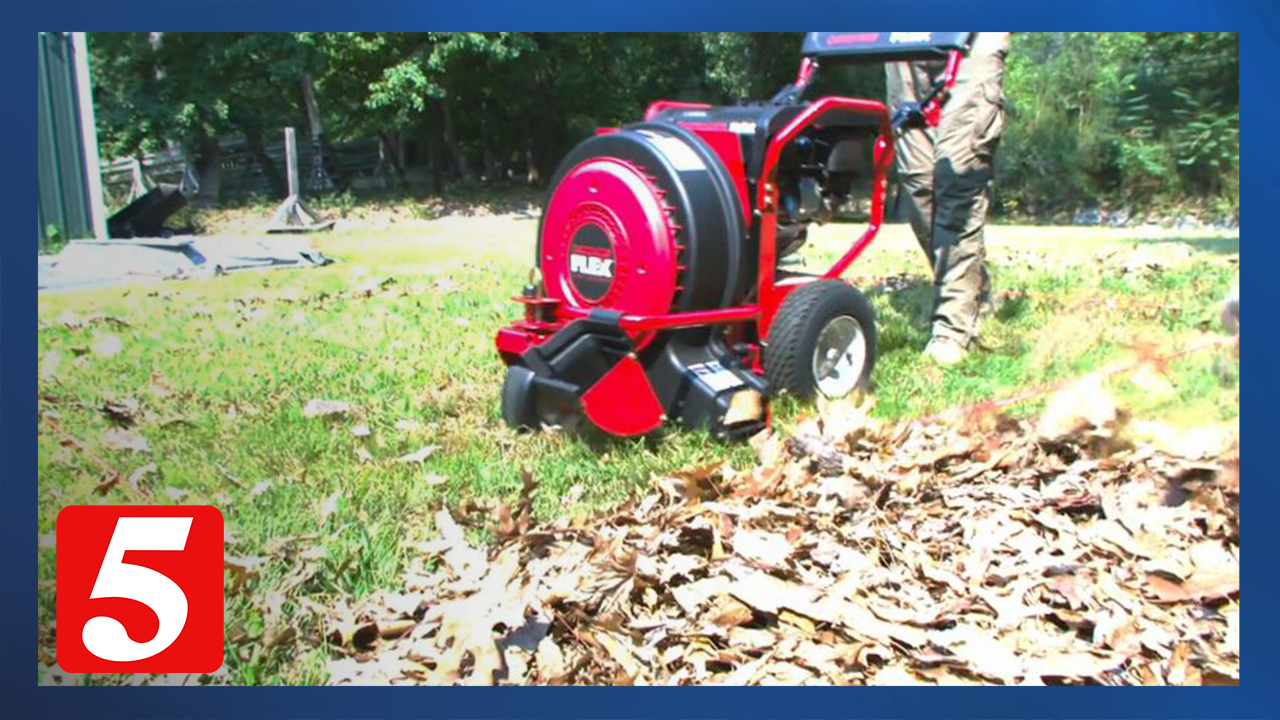
A leaf blower does not truly “pick up” leaves unless it has a vacuum mode and collection bag. In most U.S. yards, you use the blower to move leaves into a small pile, then rake, scoop, tarp, or vacuum them up. The best results come from working with the wind, using short controlled bursts, and avoiding wet leaves that stick to grass and pavement.
This guide explains how to pick up leaves with a leaf blower, how to choose the right technique for grass, driveways, patios, and garden beds, and how to avoid common safety and cleanup mistakes. Local rules can limit gasoline-powered blowers, operating hours, or allowable noise, so check your city, county, or homeowners association rules before you begin.

What You Need Before You Start
Gather the right tools before blowing. At minimum, you need a leaf blower, eye protection, sturdy shoes, and a way to collect the final leaf pile. A tarp, rake, lawn bags, compost bin, or blower vacuum can all work.
Basic equipment
- Leaf blower with a charged battery, fuel, or a safe outdoor-rated power connection
- Safety glasses or goggles
- Hearing protection, especially with gas-powered models
- Closed-toe shoes with good grip
- Leaf rake for tight corners and garden beds
- Tarp, lawn bags, or a yard-waste container
- Work gloves
- Dust mask if the area is dry and dusty
- Long pants and a long-sleeved shirt when working around brush or debris
Inspect the blower before use. Check that the tube is secure, the intake and outlet are clear, and the battery or fuel system is in good condition. For corded models, inspect the cord for cuts and use an outdoor-rated extension cord if the owner’s manual allows one.
A blower is designed to move air, not lift heavy objects. Remove stones, sticks, toys, glass, and other loose items from the work area. High-speed air can send them toward people, vehicles, windows, or siding.

How to Pick Up Leaves With a Leaf Blower
The most efficient method is to create one or more controlled piles, then collect the leaves with a tarp, rake, bag, or vacuum attachment. Do not begin by blowing randomly across the yard. Plan where each pile will go first.
1. Check the weather and leaf condition
Choose a dry day with light wind when possible. Slightly dry leaves move well and are easier to gather. Wet leaves are heavy and often cling to grass, soil, pavement, and one another.
If leaves are soaked, wait for them to dry. If you must clear them at once, use a rake for wet areas and reserve the blower for hard surfaces. A powerful blower may move wet leaves, but the work will take longer and may leave a muddy layer behind.
Wind direction matters. Stand so the natural wind helps carry leaves toward the planned pile. Avoid blowing directly against a strong wind because leaves will scatter and return.
2. Choose a collection point
Pick a spot that keeps leaves away from:
- Storm drains
- Street gutters
- Driveways and sidewalks
- HVAC equipment
- Pools and ponds
- Neighboring properties
- Open doors and windows
– Areas where vehicles must pass
Place the collection point on a hard, level surface when possible. A driveway or patio makes it easier to gather leaves, but keep the pile far enough away to prevent scratches from sticks and stones.
For composting or yard-waste pickup, check your local rules. Many U.S. communities require leaves to be placed in approved paper bags, cans, or designated piles. Some prohibit blowing leaves into streets or storm drains.
3. Start at the outside edge
Begin at the farthest edge of the area and work toward the pile. This prevents you from blowing leaves back over ground you already cleared.
Hold the blower tube low, but do not press it into the grass. A position about 2 to 6 inches above the surface often gives good control. The correct height depends on the blower, surface, leaf type, and wind.
Use a low or medium power setting first. High power can scatter leaves in several directions, strip mulch from beds, disturb gravel, or damage tender plants.
4. Use a sweeping motion
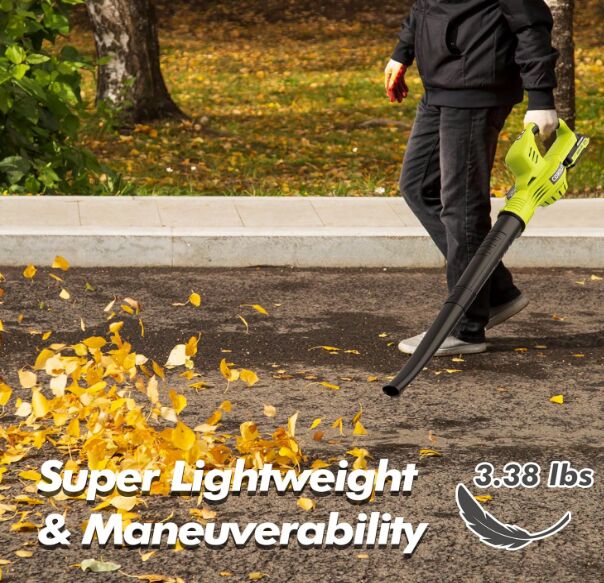
Point the nozzle slightly downward and sweep from side to side. Think of the air stream as a wide broom. Move your body with the blower rather than twisting your back repeatedly.
Work in narrow strips. Push leaves a short distance at a time, then pause and let the pile settle. Long blasts often create a cloud of leaves that spreads farther than expected.
For grass, direct the air just above the leaf layer. For concrete or asphalt, angle the air more parallel to the surface. This helps move leaves without driving dust and grit into the air.
5. Work around obstacles
Use shorter bursts near fences, walls, cars, windows, and garden beds. Blow away from buildings rather than toward them.
When clearing leaves from a lawn, avoid aiming the nozzle directly at exposed soil. Strong airflow can move loose topsoil and mulch. Around shrubs, use low power and keep the nozzle farther away. Hand removal may be safer for delicate plants.
For corners, use a rake or a narrow blower tube. A blower can push leaves into a corner but may not pull them back out without scattering them.
6. Build a compact pile
Keep pushing leaves toward the same collection area. If the pile becomes too wide, stop and gather it before adding more. A small, dense pile is much easier to bag or place on a tarp than a broad, loose layer.
If the pile is on a tarp, position the tarp before blowing. Leave enough tarp around the edges to form handles. Once the leaves are gathered, two people can lift the tarp, or one person can pull it slowly across the ground.
Do not overfill bags. Heavy leaf bags can tear, and lifting them may strain your back. Use smaller loads when leaves are wet or contain sticks.
7. Collect and dispose of the leaves
You have several options:
- Tarp: Best for large, dry piles. Pull or carry the tarp to the compost or yard-waste area.
- Rake and bags: Useful when leaves are mixed with sticks or when the surface is uneven.
- Lawn sweeper: Helpful for larger lawns after leaves are moved into rows.
- Blower vacuum: Suitable when the blower has a documented vacuum and collection function.
- Mulching mower: Useful for dry leaves on a lawn when the mower manual permits leaf mulching.
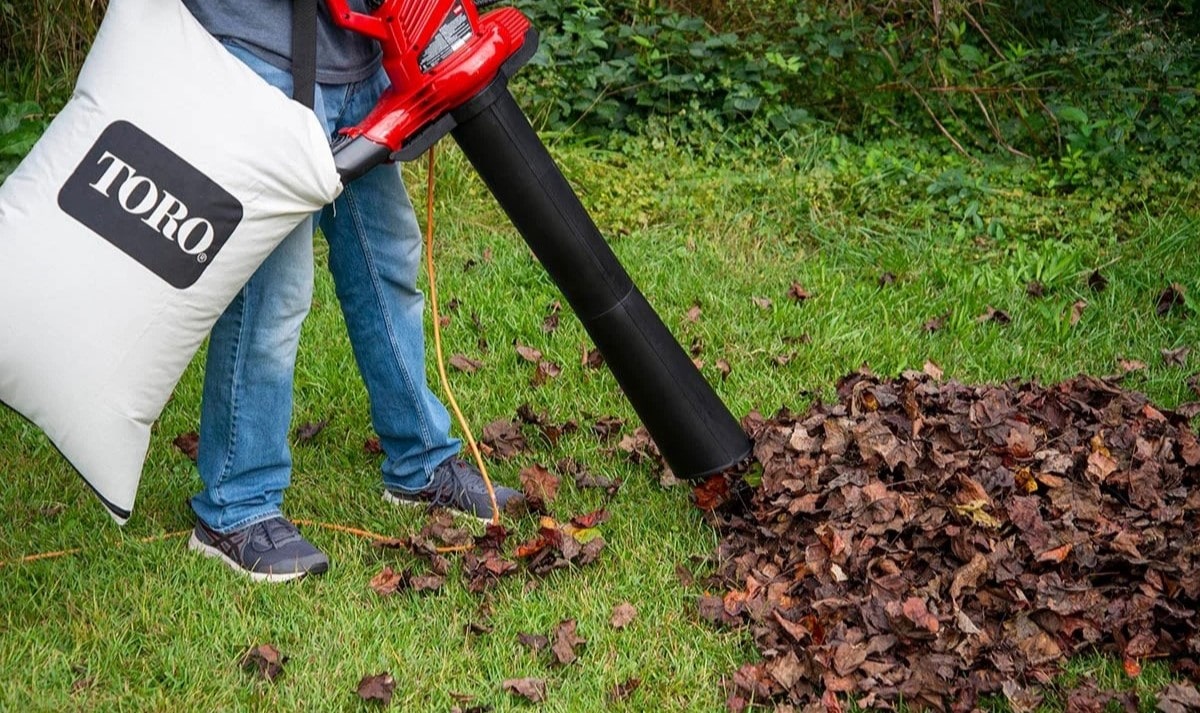
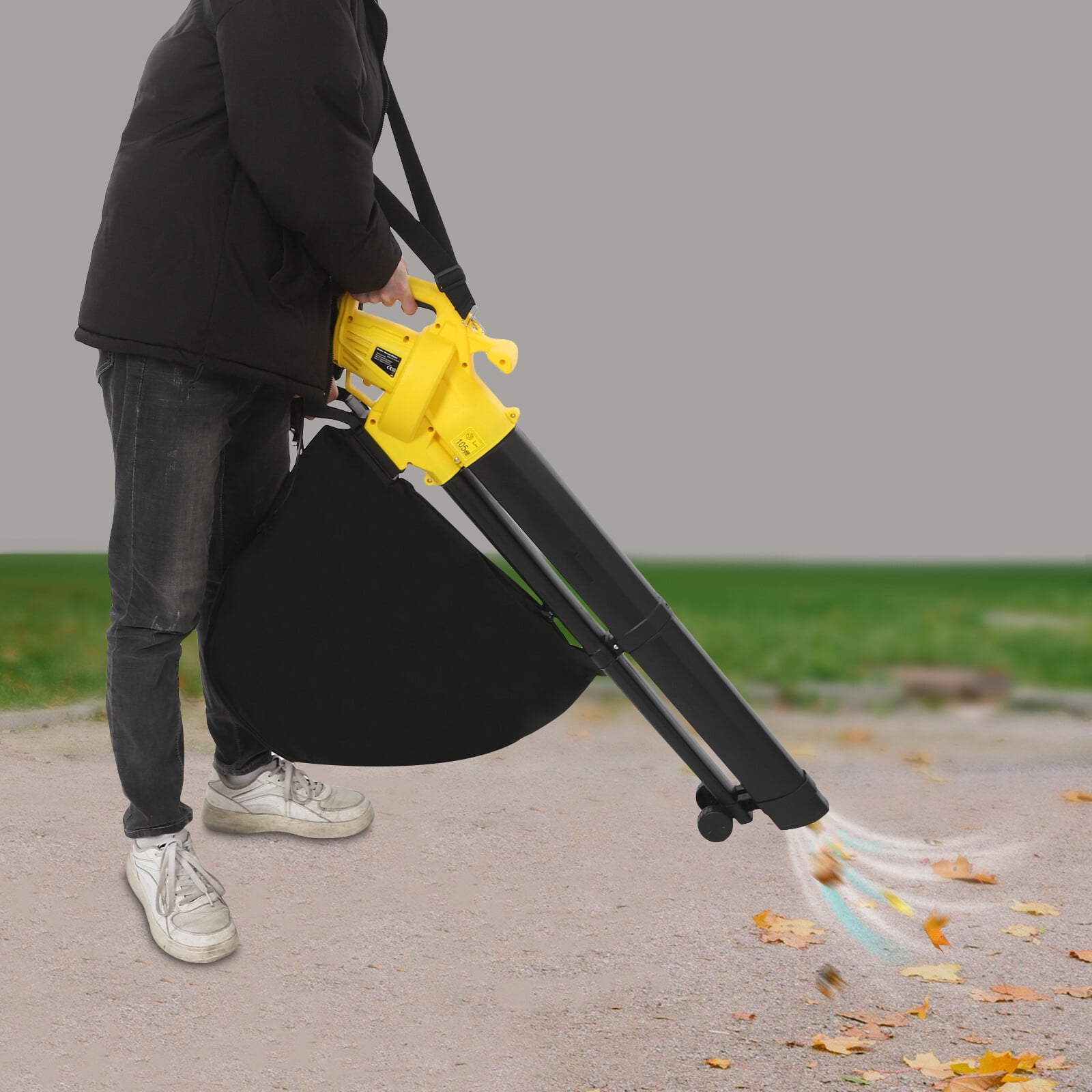
A blower vacuum is not the same as a standard blower. Vacuum mode pulls leaves through an intake, often shreds them, and stores them in a bag. Never place hands near the intake, and switch off or disconnect the machine before clearing a clog.
8. Make a final pass
Walk the area after the main cleanup. Use low power around steps, doorways, plants, and parked vehicles. Check gutters and corners by hand if needed.
Leave a thin layer of leaves in garden beds only if it is appropriate for the plants and does not cover stems or block drainage. Thick leaf mats on turf can reduce light and trap moisture, so remove most leaves from actively growing grass.

The Best Technique for Different Surfaces
The right technique changes with the surface. Grass needs a gentle, low-angle air stream, while pavement can handle a more direct sweep.
| Surface | Recommended technique | Main caution |
|---|---|---|
| Lawn | Use low or medium power and blow in narrow strips | Do not remove soil, seed, or mulch |
| Driveway | Use a low, parallel sweep across the surface | Avoid sending grit toward cars or windows |
| Patio | Start with low power near furniture and doors | Dust may become airborne |
| Gravel | Use the lowest useful setting and a higher nozzle position | Strong airflow can move stones |
| Garden bed | Use short bursts or rake by hand | Protect mulch, roots, and plants |
| Gutters | Use only an approved gutter attachment and stable access | Do not climb on an unsafe ladder |
| Deck | Blow along the boards, not into gaps | Debris can collect below the deck |
| Artificial turf | Use moderate power and keep the nozzle moving | Strong airflow may disturb infill |
On gravel, test a small area first. If stones move, raise the nozzle and reduce the power. On mulch, direct the air across the top rather than straight down.
For leaves stuck to grass, rake lightly first. The rake breaks the layer apart, and the blower can then move the loose leaves. This is often faster than using maximum blower power.

How to Use a Leaf Blower Vacuum
Use vacuum mode when you want the machine to collect leaves instead of pushing them into a pile. Vacuum mode works best with dry leaves and small amounts of light debris.
Before switching modes, turn off the blower and follow the owner’s manual. Some machines require a different tube, impeller cover, or collection bag. Never improvise a vacuum setup.
Keep the intake above the ground. Do not vacuum rocks, gravel, large sticks, metal, glass, or other hard objects. These items can damage the impeller or become dangerous projectiles if the machine is switched back to blower mode.
Empty the collection bag before it becomes too heavy. Shredded leaves take up less space, but they can still become heavy when damp. Wear gloves when handling the bag, especially if the leaves may contain insects, animal waste, sharp twigs, or mold.
A vacuum attachment is convenient for small yards and patios. For large areas, a tarp or lawn sweeper may be faster because repeatedly emptying a small collection bag can slow the job.

How to Pick Up Wet Leaves
Wet leaves are harder to move because water adds weight and makes them stick together. The simplest solution is to wait for a dry period. Even a few hours of sun and wind can improve the job.
When waiting is not possible:
- Rake wet leaves into smaller rows.
- Let the rows drain or dry briefly.
- Use the blower on medium power.
- Keep the nozzle close to the leaf surface, but not against it.
- Collect the leaves in smaller loads.
Avoid making one large wet pile. It can become very heavy, slippery, and difficult to lift. Wet leaves also break down quickly, so place them in the correct compost or yard-waste area soon after collection.
Common Leaf-Blower Problems and Fixes
Leaves scatter in every direction
Lower the power and move the nozzle closer to the leaf layer. Work in smaller sections and blow with the wind. A wide-open area and high power can create turbulence that scatters light leaves.
Leaves will not move
Check whether they are wet, packed down, or trapped in grass. Rake them loose first. Remove sticks and other heavy debris. If the blower still struggles, use a rake or lawn sweeper instead of forcing the machine.
Dust fills the air
Stop and wait for the dust to settle. Reduce the power, wear eye protection, and avoid blowing on very dry soil. A dust mask may help, but it does not make unsafe conditions safe. Do not blow dust toward people, homes, open windows, or air intakes.
The blower overheats or loses power
Stop using it and inspect the air intake, battery, fuel, and extension cord as directed by the manual. A clogged intake can reduce cooling. Do not continue running a hot machine or bypass a safety feature.
For a battery model, allow the battery and blower to cool before charging or restarting. Use only the charger and battery type approved for that tool.
Leaves keep returning
You may be working against the wind, blowing toward an open boundary, or making the pile too far away. Move the collection point closer and create a temporary barrier with a tarp, fence, or row of bags. Never block public paths or driveways.
Safety Rules for Using a Leaf Blower
Wear eye protection because leaves can hide stones, sticks, and other debris. Use hearing protection when the blower is loud or when you will operate it for a long time. Keep children, pets, and bystanders away from the work area.
Never point a blower at a person, animal, road, vehicle, window, or open doorway. Do not use a blower indoors, in a garage, or in another enclosed space. Gas-powered blowers produce carbon monoxide, which can build up quickly in enclosed areas.
For gas models, refuel only when the engine is cool and away from flames, sparks, and smoking materials. Follow the fuel and storage directions in the owner’s manual.
For electric models, keep connections dry. Do not use damaged cords, wet plugs, or makeshift repairs. Disconnect the power before clearing a blockage or changing attachments.
Noise rules vary across the United States. Some cities and counties restrict gas-powered equipment, set operating hours, or apply sound limits. Check local government guidance before using a gas blower, especially in a dense neighborhood.
Mistakes to Avoid
- Blowing leaves into the street or a storm drain
- Using maximum power for the entire job
- Blowing directly at mulch, bare soil, or fragile plants
- Working without eye protection
- Trying to move wet leaves with a small blower
- Vacuuming rocks, gravel, or large sticks
- Letting children operate the blower
- Using a gas blower inside a garage
- Overfilling bags with heavy leaves
- Ignoring local noise or yard-waste rules
- Leaving leaves on sidewalks where they can become slippery
- Clearing a clog while the machine is still connected or running
The biggest efficiency mistake is treating the blower like a leaf vacuum. A standard blower moves leaves. It does not collect them. Plan the final collection step before you start.

Frequently Asked Questions
Can a leaf blower pick up leaves?
A standard leaf blower cannot pick up or store leaves. It moves them with air. A blower vacuum can collect leaves through an intake and place them in a bag, provided the machine is designed for that function.
Should I blow leaves before or after mowing?
For dry leaves on a lawn, mowing with a suitable mulching setup may reduce leaf volume. Blow or rake leaves first if they are thick, wet, mixed with sticks, or covering areas the mower should not enter. Follow the mower manufacturer’s instructions.
What is the fastest way to collect leaves after blowing?
For a large, dry pile, place a tarp under or beside the pile and pull it to the disposal area. For small areas, use a rake and lawn bags. A blower vacuum works well when the leaves are dry and the collection bag is large enough for the job.
Can I blow leaves onto my lawn and leave them there?
A light layer may break down or be mulched into the grass. A thick layer can block light and air, which may harm turf. Remove most leaves from actively growing grass and place them in compost or an approved yard-waste collection system.
Is it safe to blow leaves into the street?
Usually, no. Leaves in streets can block drainage, create slippery conditions, and become a hazard for cars, bicycles, and pedestrians. Many local governments prohibit this practice. Keep leaves on your property and follow local disposal rules.
Why does my leaf blower move dust instead of leaves?
The power may be too high, the soil may be very dry, or the nozzle may be aimed too close to the ground. Lower the speed, raise the nozzle slightly, and work when the surface is less dusty. Wear eye protection and keep people away from the dust cloud.
Final Takeaway
To pick up leaves with a leaf blower, use the blower to move leaves into a planned pile, then collect them with a tarp, rake, bags, lawn sweeper, or vacuum attachment. Work on dry days, blow with the wind, use controlled passes, and reduce power near plants, gravel, buildings, and vehicles.
Before starting, clear hard objects from the area, wear eye and hearing protection, and check U.S. local rules for noise and yard-waste disposal. If the leaves are wet or packed into grass, loosen them with a rake first. A calm, planned method is usually faster than using maximum power.
1 thought on “How To Pick Up Leaves With Leaf Blower: Easy Yard Cleanup”