
No. Not all leaf blowers are 2-stroke. In the United States, leaf blowers may use a 2-stroke gas engine, a 4-stroke gas engine, a battery motor, or a corded electric motor.
Two-stroke gas blowers are common because they are light, compact, and powerful for their size. However, many homeowners now use battery-powered blowers because they start easily and do not need fuel mixing. A few gas models use 4-stroke engines, which run on regular gasoline and keep engine oil in a separate crankcase.
The short answer
A leaf blower can have one of four power systems:
| Leaf blower type | Fuel or power source | Needs fuel mixing? | Main benefit |
|---|---|---|---|
| 2-stroke gas | Gasoline and 2-stroke oil | Usually yes | Light weight and high power |
| 4-stroke gas | Gasoline and separate engine oil | No | Quieter running and lower fuel use in some designs |
| Battery electric | Rechargeable battery | No | Easy starting and low maintenance |
| Corded electric | Household electricity | No | Continuous runtime and low operating cost |
The engine type is usually printed on the product label, owner’s manual, or fuel cap. Do not guess from the blower’s sound or appearance.
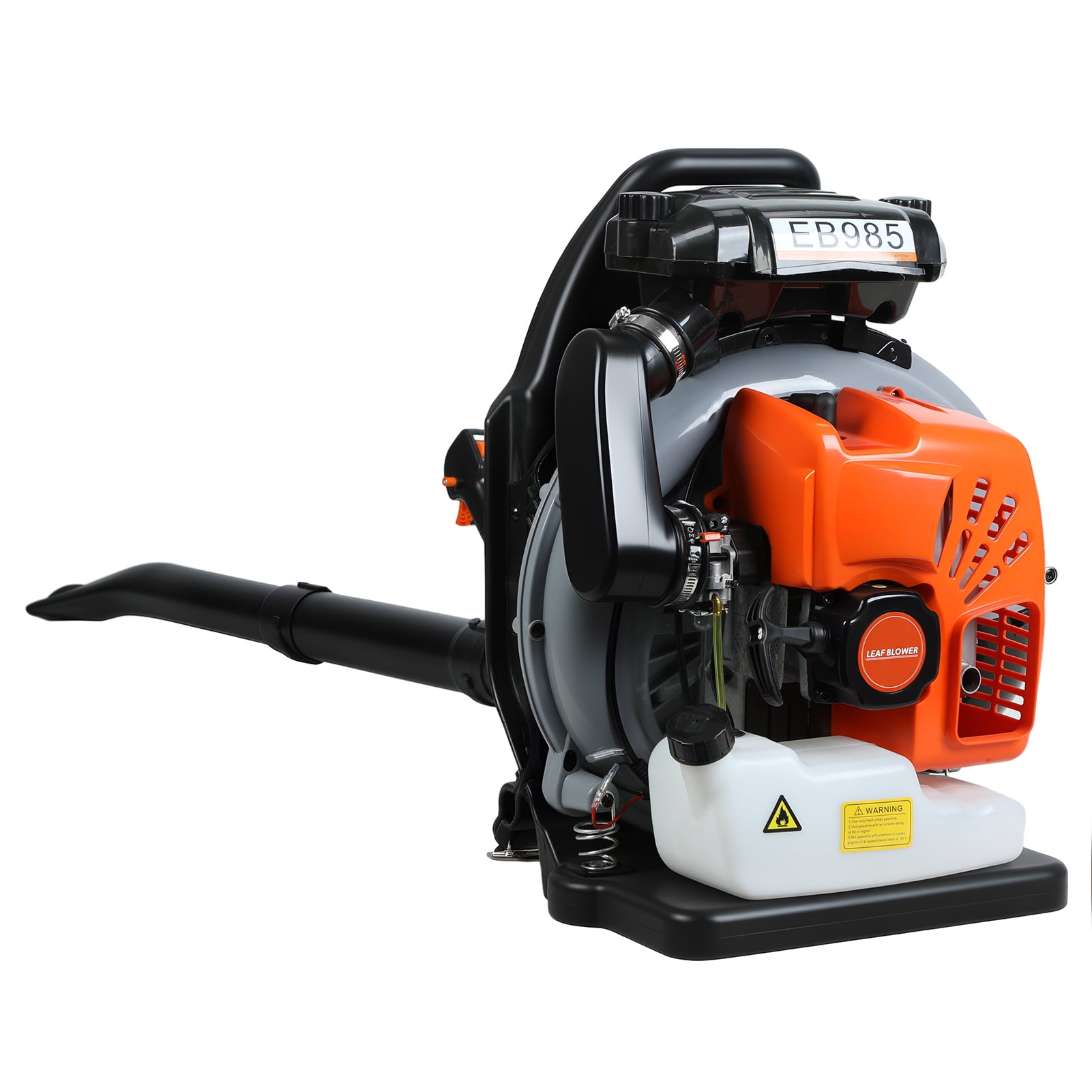
What is a 2-stroke leaf blower?
A 2-stroke leaf blower uses a small gasoline engine that completes its combustion cycle in two piston movements. The engine burns gasoline mixed with special 2-stroke oil.
The oil lubricates internal engine parts as the fuel mixture passes through the engine. That is why a 2-stroke engine does not normally use a separate oil reservoir like a car engine.
In the United States, people may use the terms 2-stroke and 2-cycle to mean the same engine type. A label that says “2-cycle fuel” normally refers to gasoline mixed with air-cooled 2-cycle engine oil.
Why 2-stroke engines are common
A 2-stroke engine has fewer moving parts than a comparable 4-stroke engine. It also does not need a separate oil pan, oil pump, or valve train.
This helps make the blower smaller and lighter. The trade-off is that the engine burns oil with the fuel. It may produce more exhaust odor and noise than an electric model or some 4-stroke designs.
A 2-stroke blower is often useful when you need:
- High power in a light tool
- Long operation without recharging a battery
- A blower for a large yard
- A model that is easy to carry and store
Does every gas blower need mixed fuel?
No. Only use mixed fuel when the owner’s manual requires it.
A 2-stroke blower commonly needs a specific gas-to-oil ratio, such as 40:1 or 50:1. These ratios are not interchangeable unless the manufacturer allows them. Adding too much oil can cause smoke, fouled spark plugs, and poor performance. Adding too little oil can cause severe engine damage.
Always follow the ratio printed in the manual or on the manufacturer’s fuel label.

What is a 4-stroke leaf blower?
A 4-stroke leaf blower uses a combustion cycle with four piston movements. It stores engine oil in a separate crankcase, much like a lawn mower or car engine.
Most 4-stroke blowers use gasoline in the fuel tank without 2-stroke oil mixed into it. The engine still needs oil, but you add that oil to a separate fill port.
This design can reduce the need to measure fuel mixtures. It may also use less fuel under some operating conditions. However, a 4-stroke engine may be heavier and more complex than a similar 2-stroke engine.
Before adding fuel, check the caps and labels. Putting straight gasoline into a 2-stroke blower can damage the engine. Putting mixed fuel into a 4-stroke engine can also cause smoke, poor operation, or other problems.
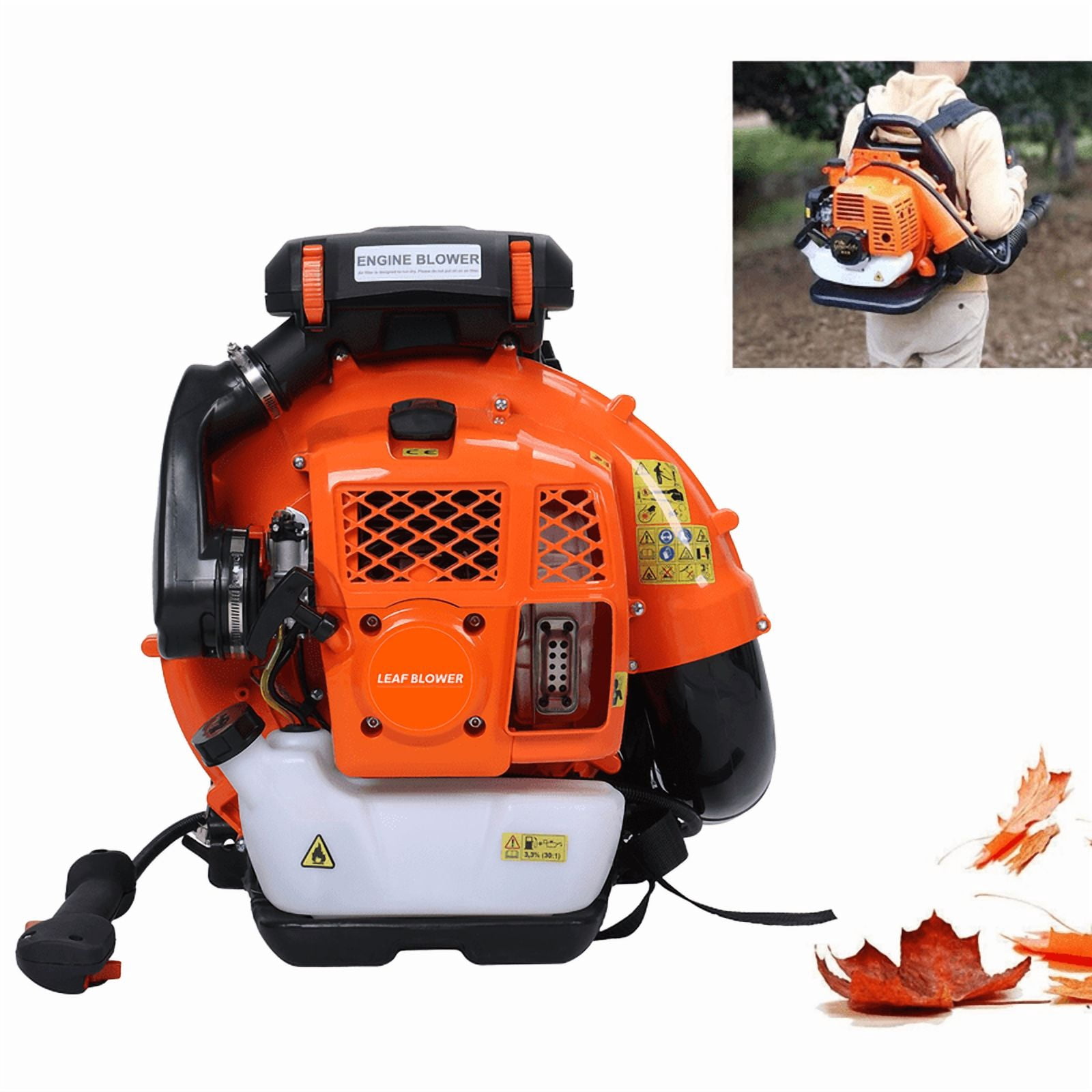
Are electric leaf blowers 2-stroke?
No. Battery and corded leaf blowers do not use combustion engines, so they are neither 2-stroke nor 4-stroke.
A battery blower uses an electric motor powered by a rechargeable battery pack. A corded blower uses electricity from a household outlet. Neither type needs gasoline, engine oil, spark plugs, or fuel mixing.
Electric models often suit homeowners who want:
- Push-button starting
- Less routine engine maintenance
- No gasoline storage
- No exhaust from the tool itself
- Lower noise than many gas models
- Easier use for small and medium yards
Battery runtime depends on the battery size, blower speed, tube design, temperature, and the type of leaves or debris. Wet leaves and heavy debris usually require more power and can reduce runtime.
A corded model can run as long as it has electrical power. Its main limits are the length of the extension cord and the need to stay near an outdoor outlet.

How to tell whether your leaf blower is 2-stroke
You can identify the engine type by checking the machine in this order.
1. Read the fuel label
Look near the fuel cap. A label may say:
- “Mix fuel and oil”
- “2-cycle fuel”
- “Gasoline only”
- “Unleaded gasoline”
- “Engine oil”
A “mix fuel and oil” warning strongly indicates a 2-stroke engine. A “gasoline only” label may indicate a 4-stroke engine, but confirm this in the manual.
2. Check the owner’s manual
The manual is the best source because some models have unusual fuel systems. Look for sections titled:
- Fuel
- Fuel mixture
- Engine oil
- Lubrication
- Specifications
- Starting and operating
The manual should identify the fuel type, oil type, and mixing ratio.
3. Look for a separate oil fill cap
A separate oil fill cap and dipstick often indicate a 4-stroke engine. A 2-stroke blower usually has no crankcase oil dipstick.
This is only a useful clue. Use the manual as the final check.
4. Find the model number
Search the model number on the manufacturer’s U.S. support page. Use the manual for the exact model, not a similar-looking blower from the same brand.
Different versions can use different engines. A manual for a related model may give the wrong fuel instructions.
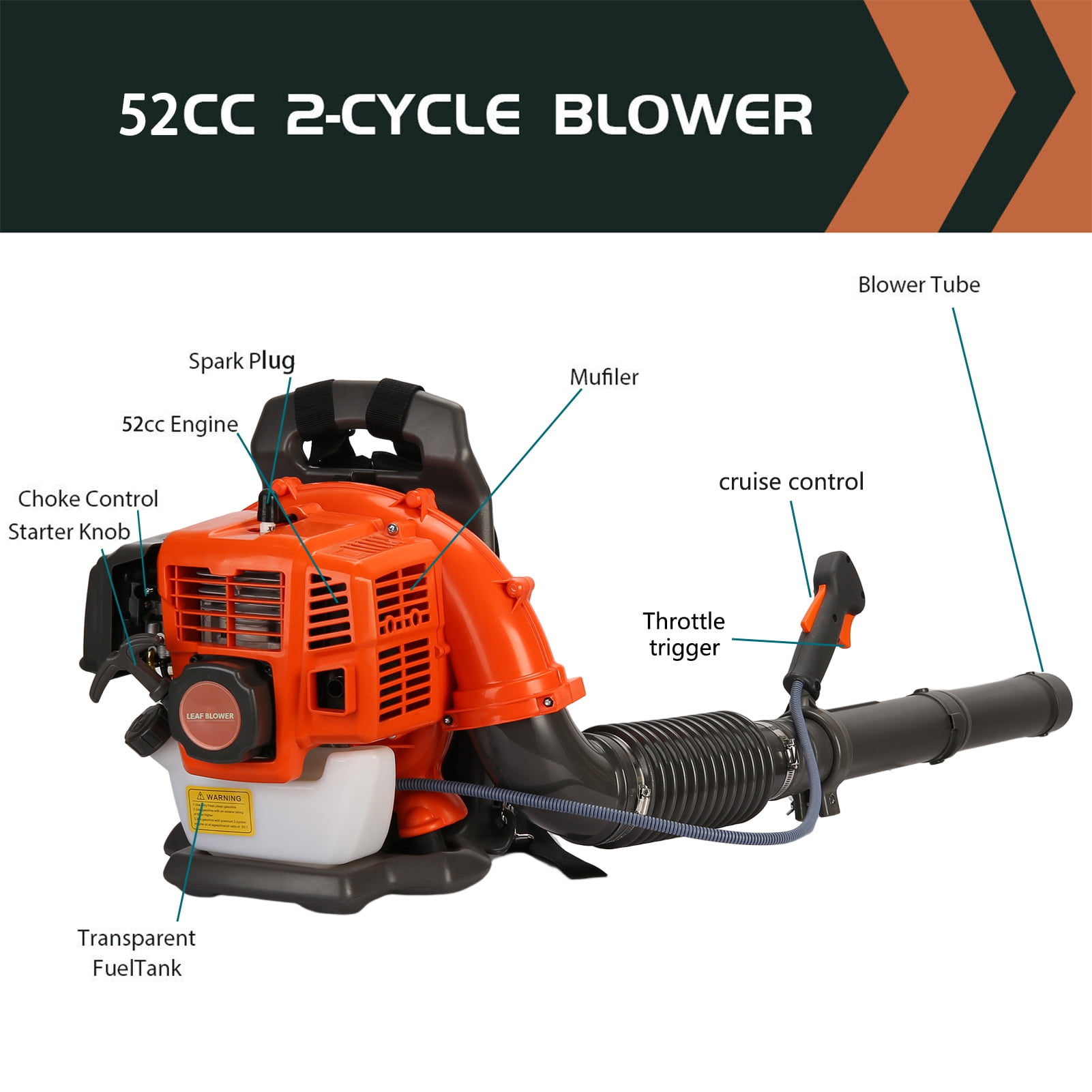
2-stroke vs. 4-stroke vs. electric leaf blowers
The right type depends on your yard, storage space, noise limits, and tolerance for maintenance.
| Feature | 2-stroke gas | 4-stroke gas | Battery electric | Corded electric |
|---|---|---|---|---|
| Starting | Pull start on many models | Pull start on many models | Button or trigger | Button or trigger |
| Fuel mixing | Usually required | Usually not required | Not required | Not required |
| Exhaust | Yes | Yes | No tool exhaust | No tool exhaust |
| Runtime | Long with more fuel | Long with more fuel | Limited by battery | Continuous near outlet |
| Weight | Often light | Often heavier | Varies by battery | Often light |
| Maintenance | Fuel, spark plug, air filter | Fuel, oil, spark plug, air filter | Battery care and cleaning | Cleaning and cord care |
| Noise | Often high | Often high | Often lower than gas | Often lower than gas |
| Best fit | Large areas and long use | Users who prefer gas without fuel mixing | Most small and medium home yards | Small yards near an outlet |
Which type is best for a small U.S. yard?
A battery or corded electric blower is often the simplest choice for a small yard. It avoids gasoline storage and usually needs less routine maintenance.
A corded model works well when the yard is close to an outdoor outlet. A battery model offers more freedom of movement but may need a spare battery for long jobs.
Which type is best for a large property?
A gas blower may be more practical for long work away from an outlet. A battery blower can also work well if you have enough charged batteries and a suitable charging system.
Do not judge power only by miles per hour. Air speed describes how fast air leaves the tube. Air volume, measured in cubic feet per minute, affects how much material the blower can move. A useful comparison considers both values and the manufacturer’s stated test conditions.
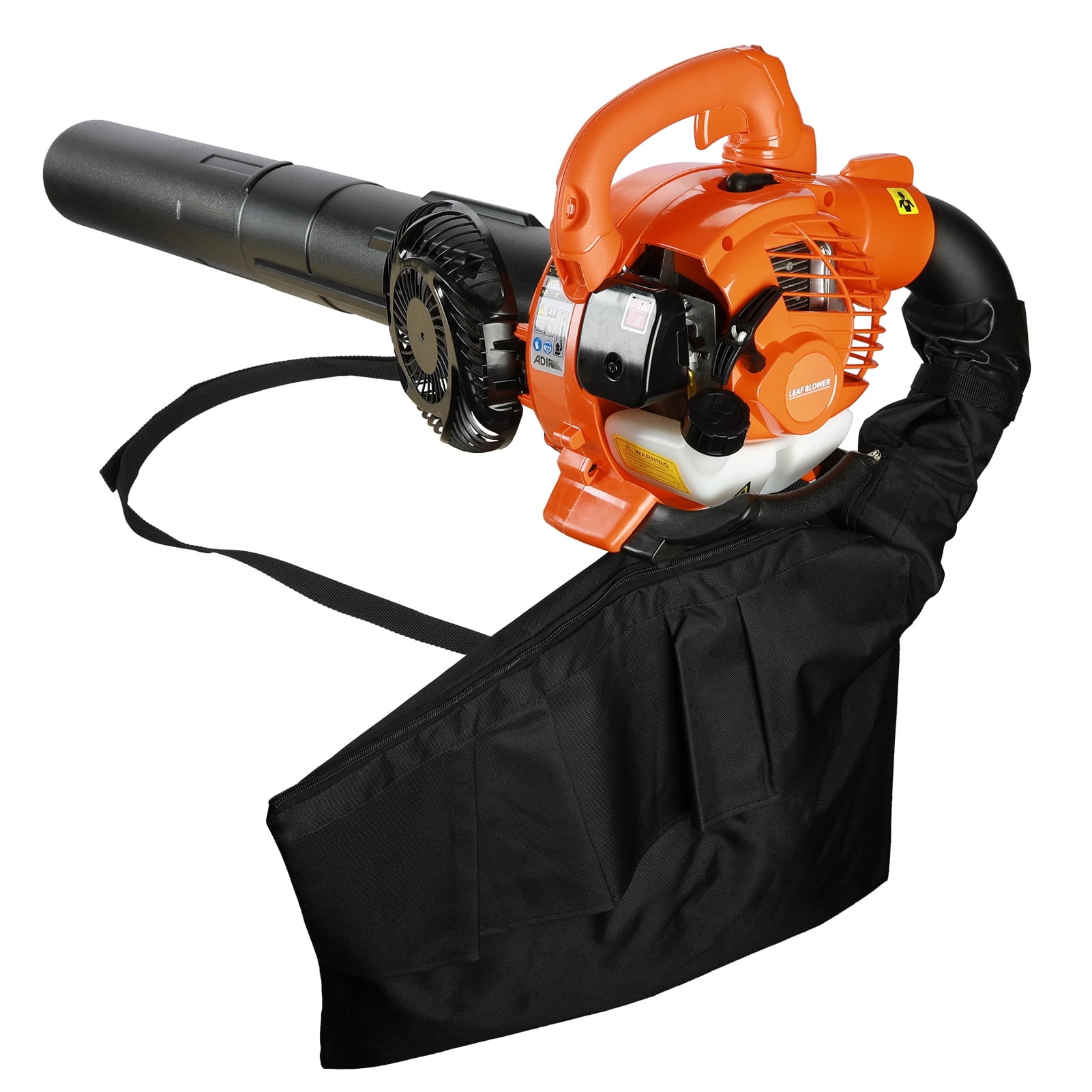
Do 2-stroke leaf blowers need special gas?
Yes. A 2-stroke blower needs the fuel mixture specified by its manufacturer.
Use fresh, clean gasoline and the correct air-cooled 2-stroke oil. Do not use motor oil, marine 2-stroke oil, or random oil from the garage unless the manual specifically approves it.
Many outdoor power tools allow gasoline with a limited amount of ethanol, but the exact fuel guidance varies by manufacturer. Check the manual before using fuel with ethanol or storing fuel for a long period.
A safe fuel-mixing method
If the manual requires mixed fuel:
- Confirm the required gas-to-oil ratio.
- Use a clean, approved fuel container.
- Measure the gasoline and oil accurately.
- Add both to the container.
- Close the container and mix it gently.
- Mark the container as 2-stroke fuel.
- Pour the mixture into the blower only when the engine is cool.
Never mix fuel inside the blower’s tank. Never smoke or work near flames while handling gasoline. Use fuel outdoors or in a well-ventilated area.
Example calculation
Suppose a manual requires a 50:1 ratio. That means 50 equal parts gasoline to one equal part oil.
For a hypothetical 1-gallon mixture:
- 1 U.S. gallon of gasoline is 128 fluid ounces.
- At a 50:1 ratio, the oil amount is about 2.6 fluid ounces.
This example is only a calculation. Use the ratio and fuel quantity stated in your own manual.

Common mistakes with 2-stroke and 4-stroke blowers
Fuel errors are among the most costly mistakes because the wrong mixture can damage the engine.
Mistake 1: Using straight gasoline in a 2-stroke blower
A 2-stroke engine depends on oil in the fuel for lubrication. Straight gasoline may allow the engine to start, but it can cause rapid wear or seizure.
If you may have used the wrong fuel, stop the engine. Do not keep running it. Check the manual and contact the manufacturer or a qualified small-engine repair shop.
Mistake 2: Adding 2-stroke oil to a 4-stroke fuel tank
A 4-stroke engine normally uses gasoline in the fuel tank and separate oil in the crankcase. Mixed fuel may cause smoke, fouling, or poor operation.
Do not drain or repair a fuel system while the engine is hot. Gasoline is highly flammable.
Mistake 3: Guessing the mixture ratio
Ratios can differ between brands and models. A 40:1 ratio is not the same as a 50:1 ratio.
Read the manual each time you use a new blower. Do not rely only on memory from another tool.
Mistake 4: Storing old fuel
Old gasoline can cause hard starting, rough running, and blocked fuel passages. Follow the manufacturer’s storage instructions and local rules for fuel disposal.
Never pour gasoline onto soil, into a storm drain, or into household trash. Contact your local household hazardous-waste program for disposal guidance.
Mistake 5: Ignoring local rules
Some U.S. cities, counties, and states limit gas-powered leaf blower use because of noise and air pollution. Rules may restrict operating hours, engine types, or seasonal use.
Check your local government website before buying or using a gas blower. California buyers should also check current California Air Resources Board requirements and local restrictions.

Leaf blower safety for U.S. homeowners
Use a leaf blower outdoors and keep the air outlet away from people, pets, windows, and doors.
Wear eye protection because small stones and debris can become airborne. Hearing protection is also wise when using a noisy gas blower. Keep loose clothing, hair, and hands away from the intake area.
Never use a gasoline blower in a garage, shed, basement, vehicle, or other enclosed space. Gasoline engines produce carbon monoxide, an odorless gas that can cause serious injury or death.
Before starting work:
- Remove children and pets from the area.
- Check for stones, glass, and small metal objects.
- Close windows and doors near the work area.
- Keep the blower pointed away from people.
- Avoid blowing dust toward roads or neighboring property.
- Follow the manual’s starting procedure.
- Stop the engine before clearing a blockage.
Do not use a leaf blower to move asbestos, mold, animal waste, or other hazardous material. Blowing these substances can spread harmful particles.
The U.S. Consumer Product Safety Commission and the Occupational Safety and Health Administration provide general safety information for consumer products, outdoor equipment, and workplace hazards. The product manual remains the controlling source for operation of a particular blower.

How to choose the right leaf blower type
Start with the work, not the engine label.
Choose a 2-stroke gas blower when you need long runtime, high portability, and strong performance from a compact tool. Accept the extra work of fuel mixing, exhaust, engine maintenance, and local noise rules.
Choose a 4-stroke gas blower when you want a gas engine without mixing oil into the fuel. Expect a potentially heavier design and the need to check and change crankcase oil.
Choose a battery blower when easy starting, low maintenance, and freedom from gasoline matter most. Check battery runtime, charging time, replacement battery cost, and the tool’s air volume.
Choose a corded blower when you have a small area and a safe outdoor outlet nearby. Use only an outdoor-rated extension cord that matches the manufacturer’s instructions. Keep the cord away from water, heat, cutting edges, and moving vehicles.
A good buying checklist includes:
- Engine or motor type
- Air speed and air volume
- Weight with fuel or battery installed
- Noise rating, if listed
- Runtime or fuel capacity
- Warranty terms
- Replacement battery cost
- Local operating restrictions
- Availability of parts and service
- Whether a vacuum or mulching function is included

Frequently asked questions
Are most gas leaf blowers 2-stroke?
Many gas-powered handheld leaf blowers use 2-stroke engines because they are compact and light. However, 4-stroke gas models also exist. Confirm the type with the label and manual.
Can I use regular gasoline in a 2-stroke leaf blower?
Only if it has been mixed with the correct 2-stroke oil at the ratio listed in the manual. Regular gasoline by itself is not enough for a typical 2-stroke blower.
Is a 4-stroke leaf blower better than a 2-stroke model?
Neither is always better. A 4-stroke model may simplify fueling, while a 2-stroke model may provide a lighter package. The best choice depends on weight, runtime, noise, maintenance, and local rules.
Do battery leaf blowers have engines?
Battery blowers have electric motors, not gasoline engines. They do not use 2-stroke or 4-stroke cycles.
Can I leave mixed fuel in a 2-stroke blower?
Follow the manufacturer’s storage instructions. For longer storage, many manuals recommend preparing the fuel system to prevent stale fuel and deposits. Do not assume fuel can remain in the tank indefinitely.
What should I do if I cannot identify my blower?
Stop before adding fuel. Find the model and serial numbers, download the exact manual from the manufacturer, or ask an authorized service center. Guessing can cause engine damage or create a fire risk.
Research basis and practical limits
This guide distinguishes engine design from fuel instructions. The general differences between 2-stroke, 4-stroke, battery, and corded systems are established engineering facts. Fuel ratios, approved gasoline types, storage steps, and maintenance intervals are model-specific.
For a final check, use the owner’s manual for your exact blower. Useful U.S. sources include the U.S. Environmental Protection Agency’s small nonroad engine information, California Air Resources Board, and the U.S. Consumer Product Safety Commission.

Conclusion
Not all leaf blowers are 2-stroke. A blower may use a 2-stroke gas engine, a 4-stroke gas engine, a battery motor, or a corded electric motor.
If the blower requires fuel mixed with oil, it is likely a 2-stroke model. If it has a separate engine-oil fill point, it may be a 4-stroke model. If it has no fuel tank, it is electric.
Before operating the tool, verify the model and read the manual. Use the correct fuel, protect your hearing and eyes, and check local U.S. rules for gas-powered leaf blowers.