
In the United States, most gas-powered handheld leaf blowers use a two-stroke engine. These engines need a precise mix of fresh gasoline and two-stroke oil because the fuel also lubricates the engine. The most common mix is 50 parts gasoline to 1 part oil, but some blowers require 40:1, 32:1, or another ratio.
Always check the fuel label or the owner’s manual for your exact leaf blower before mixing. Using the wrong ratio can cause hard starting, smoke, poor performance, piston damage, or engine failure.

Check the Required Fuel Ratio First
The correct gas-to-oil ratio is the ratio printed in your leaf blower’s owner’s manual. Do not guess based on the brand alone. Different models from the same brand may use different engines and fuel requirements.
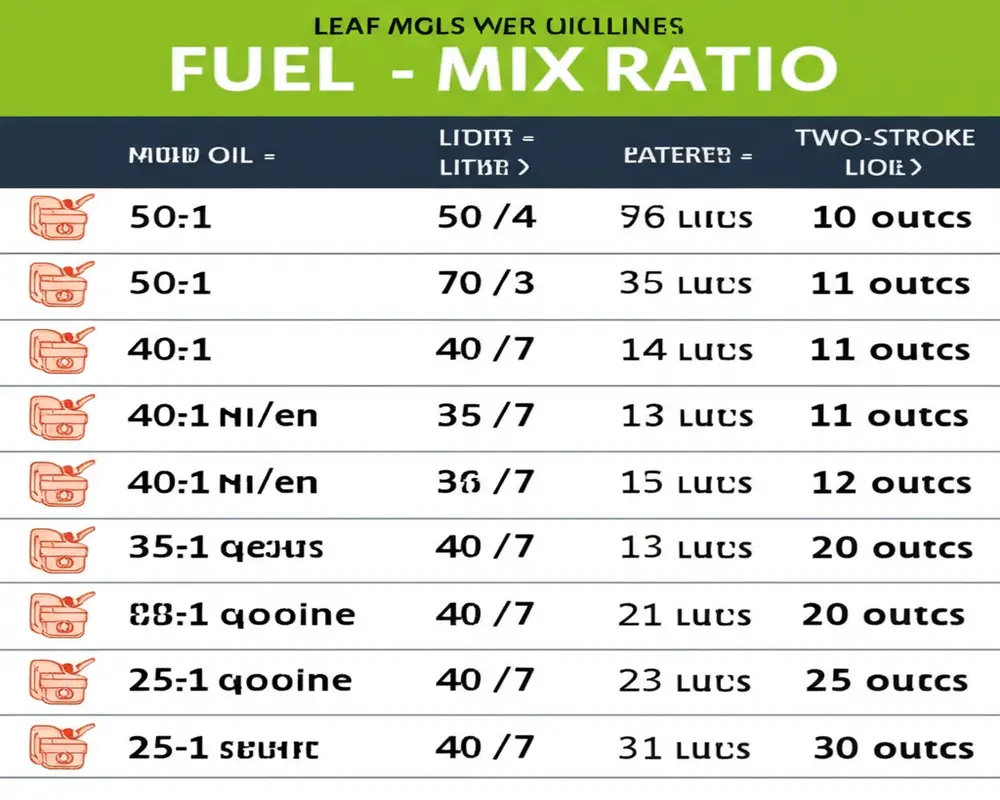
Common two-stroke fuel ratios include:
| Fuel ratio | Two-stroke oil per 1 US gallon of gasoline | Oil per 1 liter of gasoline |
|---|---|---|
| 50:1 | 2.6 US fluid ounces | 20 milliliters |
| 40:1 | 3.2 US fluid ounces | 25 milliliters |
| 32:1 | 4.0 US fluid ounces | 31 milliliters |
| 25:1 | 5.1 US fluid ounces | 40 milliliters |
These amounts are based on the stated ratio. For example, a 50:1 mix contains 50 parts gasoline and 1 part oil.
Why the ratio matters
Too little oil can reduce lubrication. This may cause excess heat, scoring inside the cylinder, or a seized engine.
Too much oil can create heavy smoke, carbon buildup, fouled spark plugs, poor acceleration, and a dirty muffler. More oil does not always mean better protection.
If the label on the blower conflicts with an old fuel container, use the blower’s current manual. If the manual is unavailable, look up the exact model number on the manufacturer’s US support site rather than relying on a general chart.
What You Need Before Mixing
Gather the correct supplies before you start:
- Fresh unleaded gasoline
- Air-cooled two-stroke engine oil
- An approved gasoline container
- A clean measuring cup made for small-engine fuel
- Safety glasses and fuel-resistant gloves
- A funnel, if needed
- The leaf blower’s owner’s manual
Use oil labeled for air-cooled two-stroke engines. Do not substitute automotive motor oil, four-stroke engine oil, transmission fluid, or chain lubricant.
Use a fuel container approved for gasoline. Never mix fuel in a drinking bottle, food container, glass jar, or an unmarked container.
Choosing gasoline in the United States
Follow the fuel grade and ethanol limits in the manual. Many small engines allow fresh regular unleaded gasoline, but the exact octane requirement can vary.
The US Environmental Protection Agency states that gasoline containing more than 10% ethanol, such as E15, is not approved for use in many small gasoline engines, including lawn and garden equipment. Unless your manual specifically allows it, avoid E15 and E85.
Gasoline with up to 10% ethanol, often sold as E10, is commonly used in outdoor power equipment. Ethanol fuel can absorb moisture, so avoid storing mixed fuel for long periods.
How to Mix Gas and Oil for a Leaf Blower
Follow this process each time you prepare fuel.
1. Read the manual and confirm the ratio
find the fuel section in the manual. Confirm:
- The required gas-to-oil ratio
- The approved gasoline type
- The approved two-stroke oil
- Any fuel age or storage limits
- Whether a fuel stabilizer is recommended
If the manual says 50:1, use 2.6 fluid ounces of two-stroke oil for 1 US gallon of gasoline.
2. Work outdoors
Mix fuel outside or in a very well-ventilated area. Keep the container away from:
- Cigarettes and open flames
- Gas furnaces and water heaters
- Pilot lights
- Sparks
- Hot engines
- Electrical equipment that may create a spark
Do not mix fuel inside a home, basement, garage, or vehicle.
3. Pour gasoline into an approved container
Start with a clean fuel container. Add part of the gasoline first. Leaving room in the container makes mixing easier and reduces the risk of spills.
For a 1-gallon batch, adding about half of the gasoline first is practical. The amount does not need to be exact at this stage.
4. Measure the two-stroke oil accurately
Measure the oil according to the ratio. For a 50:1 mix, use:
- 2.6 US fluid ounces of oil for 1 gallon of gasoline
- 1.3 US fluid ounces of oil for ½ gallon of gasoline
- 0.65 US fluid ounces of oil for ¼ gallon of gasoline
Use a marked measuring tool. Do not estimate by sight or pour oil directly from a large bottle.
5. Add the oil to the gasoline
Pour the measured two-stroke oil into the fuel container. Then add the rest of the gasoline.
This order helps the oil mix with the fuel. If the container already holds gasoline, pour the oil in slowly and avoid splashing.
6. Seal and gently mix the fuel
Close the container tightly. Gently tilt or shake it for several seconds.
Do not shake violently. A gentle mix is enough, and it creates less pressure inside the container.
7. Label the container
Mark the container with:
- “Two-stroke mix”
- The ratio, such as “50:1”
- The date mixed
- The fuel type, if useful
This prevents someone from putting mixed fuel into a four-stroke engine or using the wrong ratio later.
8. Fill the leaf blower safely
Turn off the blower and let the engine cool before refueling. Place the blower on a stable surface.
Remove the fuel cap slowly. This can release pressure. Add fuel with a funnel if needed, but do not overfill the tank. Wipe up any spill before starting the engine.
Move at least several feet away from the fuel container before starting the blower.

Gas and Oil Mixing Calculations
The easiest method is to use a premixed-fuel chart. You can also calculate the amount yourself.
For a ratio written as R:1:
Oil needed = gasoline volume ÷ R
For example, for a 50:1 mix:
128 fluid ounces of gasoline ÷ 50 = 2.56 fluid ounces of oil
A US gallon contains 128 US fluid ounces, so 2.56 fluid ounces is normally rounded to 2.6 fluid ounces.
Common 50:1 measurements
| Gasoline | Two-stroke oil |
|---|---|
| 1 US gallon | 2.6 US fl oz |
| ½ US gallon | 1.3 US fl oz |
| ¼ US gallon | 0.65 US fl oz |
| 1 US quart | 0.64 US fl oz |
| 1 US liter | 20 mL |
Common 40:1 measurements
| Gasoline | Two-stroke oil |
|---|---|
| 1 US gallon | 3.2 US fl oz |
| ½ US gallon | 1.6 US fl oz |
| ¼ US gallon | 0.8 US fl oz |
| 1 US liter | 25 mL |
Use the chart that matches your blower. Do not use the 50:1 chart just because it is more common.
How to Tell If the Fuel Mix Is Correct
Correctly mixed fuel usually has a uniform appearance after gentle shaking. The blower should start and run without unusual smoke, sputtering, or fuel leakage.
Normal signs include:
- The engine starts according to the manual’s procedure.
- The blower holds a steady idle.
- The engine accelerates when you press the throttle.
- Exhaust smoke is light or limited.
- The spark plug does not quickly become wet or heavily coated.
These signs do not prove that the ratio is perfect. They only show that the fuel is not causing an obvious problem.
Signs of too much oil
Too much oil may cause:
- Thick blue or white exhaust smoke
- A wet or oily spark plug
- Slow acceleration
- Engine hesitation
- Carbon buildup
- A muffler that becomes clogged over time
Signs of too little oil
Too little oil may cause:
- Excessive engine heat
- A sharp metallic sound
- Loss of power
- Increasing friction or rough running
- Piston or cylinder damage
Stop using the blower if it becomes unusually hot, makes a scraping or knocking sound, or loses power suddenly. Continuing to run an engine with inadequate lubrication can turn a small fuel mistake into a major repair.

What to Do If You Used the Wrong Ratio
If you have not started the blower, do not use the fuel. Empty it into an approved container and dispose of it according to local hazardous-waste rules.
If you used a mix with too much oil, do not simply add gasoline until the ratio “looks right.” That can lead to inaccurate measurements and contaminated fuel. Calculate the final volume carefully, or discard the batch and make a new one.
If you used too little oil and ran the blower, stop the engine. Allow it to cool, then inspect the fuel and spark plug. If the engine made unusual noise, overheated, or lost power, have a qualified small-engine technician inspect it before further use.
Never pour gasoline or oil onto soil, into a storm drain, down a sink, or into household trash. Contact your local waste authority or household hazardous-waste program for disposal instructions.

Fuel Storage and Maintenance Tips
Fresh fuel helps a two-stroke blower start and run well. Gasoline can degrade during storage, and ethanol fuel can attract moisture.
Use these practices:
- Mix only as much fuel as you expect to use within the period stated in the manual.
- Keep the container tightly sealed.
- Store it in a cool, dry, well-ventilated place approved for gasoline storage.
- Keep fuel away from children, pets, flames, and ignition sources.
- Add fuel stabilizer only if the product and blower instructions allow it.
- Label the fuel with the mix ratio and date.
- Do not store fuel in the blower for longer than the manual permits.
At the end of the season, follow the manufacturer’s storage procedure. Some manuals advise draining the tank and running the engine until it stops. Others allow stabilized fuel to remain in the system. The correct method depends on the blower’s design.
Two-stroke versus four-stroke blowers
Not every gas-powered leaf blower uses mixed fuel.
A two-stroke blower needs gasoline mixed with two-stroke oil. A four-stroke blower uses gasoline in the fuel tank and separate engine oil in an oil crankcase.
Never put premixed two-stroke fuel into a four-stroke engine unless the manual expressly says to do so. Never pour straight gasoline into a two-stroke engine that requires a gas-and-oil mix.

Common Mistakes to Avoid
Using the wrong oil
Automotive motor oil is not a substitute for air-cooled two-stroke oil. It may not burn correctly and may not provide the protection the engine needs.
Adding oil by guesswork
A small measuring error can change the ratio in a small fuel batch. Use a marked container, especially when mixing less than one gallon.
Mixing fuel in the blower’s tank
Mixing directly in the tank makes accurate measurement harder. It also increases the risk of spilling gasoline on the machine or nearby surfaces.
Using old or contaminated fuel
Cloudy fuel, water at the bottom of the container, sediment, or a sour smell can indicate a problem. Do not put questionable fuel into the blower.
Assuming more oil is safer
Extra oil can reduce combustion quality and cause deposits. Use the amount listed by the manufacturer.
Refueling a hot blower
Gasoline vapors can ignite when they contact hot surfaces. Let the blower cool before refueling.
Storing fuel in an unapproved container
A proper gasoline container is designed to reduce leaks, vapor release, and static-related risks. Use one that is approved for fuel storage in the United States.

Frequently Asked Questions
Can I use regular gasoline in a two-stroke leaf blower?
Often, yes, if the owner’s manual allows regular unleaded gasoline and the fuel meets its octane and ethanol requirements. The gasoline must still be mixed with the correct two-stroke oil ratio.
Is 50:1 the same for every leaf blower?
No. Many newer blowers use 50:1, but some models require 40:1, 32:1, or another ratio. Use the ratio listed for your exact model.
Can I mix a small amount of fuel?
Yes. Smaller batches can reduce waste, but accurate measurement becomes more important. For a 50:1 mix, use about 0.65 fluid ounces of oil for ¼ gallon of gasoline.
Can I use premixed fuel?
Premixed fuel can be suitable when its ratio, fuel type, and age meet the leaf blower manufacturer’s instructions. Check the label before use. Do not assume every premixed can uses the same ratio.
How long does mixed leaf blower fuel last?
The safe storage period varies with the gasoline, oil, stabilizer, container, and manufacturer’s instructions. For the best starting and running performance, mix only what you plan to use soon and follow the storage guidance in the manual.
What if I cannot find the fuel ratio?
Find the model and serial number on the blower and use the manufacturer’s official US manual or support page. A qualified small-engine repair shop can also help identify the correct ratio.
Conclusion
To mix gas and oil for a leaf blower, first confirm the exact fuel ratio in the owner’s manual. Measure the correct amount of air-cooled two-stroke oil, combine it with fresh approved gasoline in a proper fuel container, mix gently, label the container, and refuel only after the blower has cooled.
The most common ratio is 50:1, which equals 2.6 US fluid ounces of oil per 1 US gallon of gasoline. However, the manual for your specific blower takes priority over any general chart.
For additional guidance, consult the US Environmental Protection Agency’s gasoline information and the leaf blower manufacturer’s official owner’s manual.