
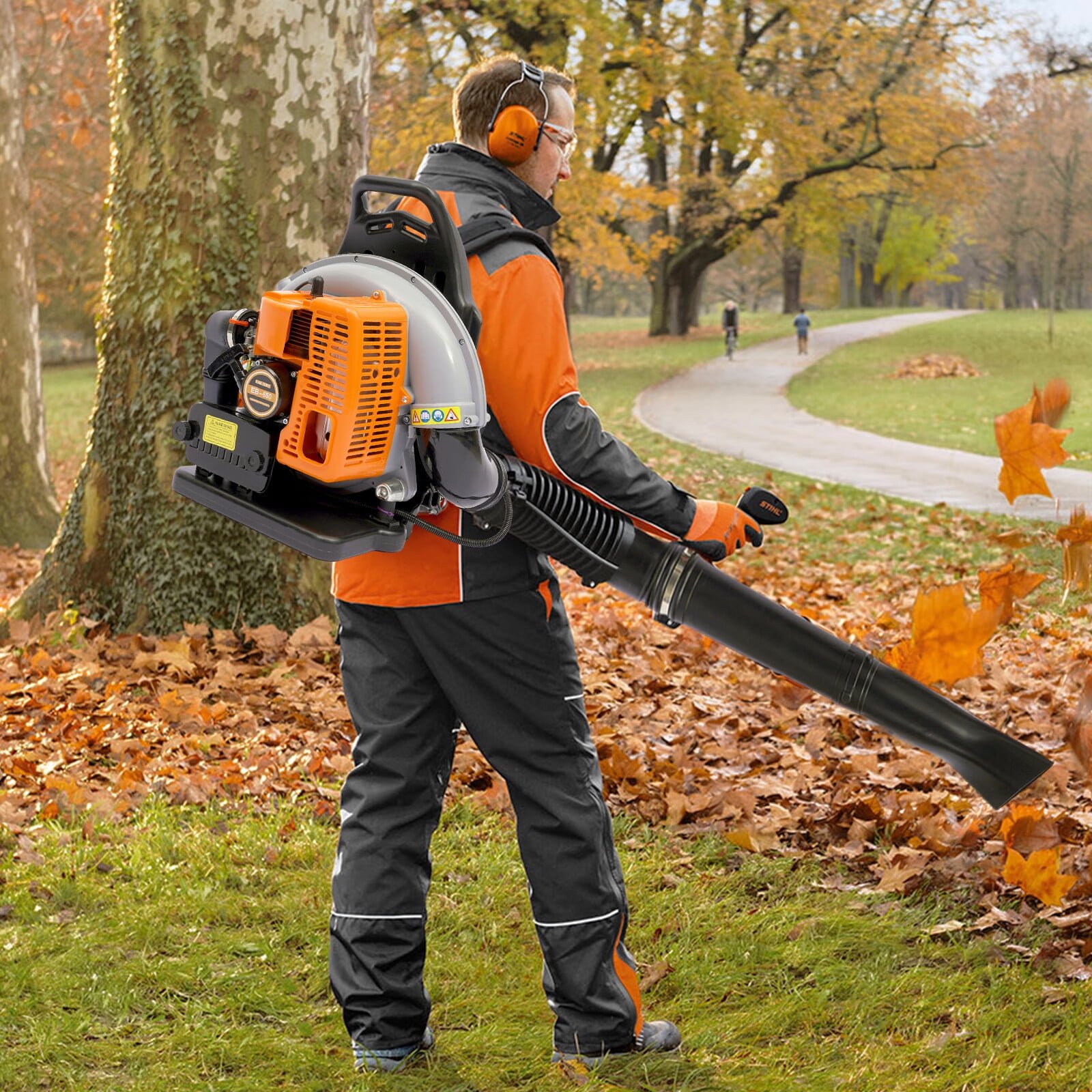
The best way to store a gas leaf blower for winter is to clean it, protect the engine, manage the fuel, and keep it in a dry, safe place. For most U.S. homeowners, the key choice is simple: use stabilized fuel for short storage, or drain the fuel system for longer storage. Always follow the storage steps in your blower’s owner’s manual because fuel and engine instructions can vary by model.
A gas leaf blower can sit unused for several months. Without proper care, old gasoline may clog the carburetor, moisture may cause corrosion, and dust can block the air filter. A short fall service can help the blower start more easily when spring arrives.

What to Do Before Storing a Gas Leaf Blower
Before storage, gather the owner’s manual, fresh fuel or fuel stabilizer, clean rags, a soft brush, basic hand tools, and an approved gasoline container. Wear safety glasses and work gloves. Perform all fuel-related work outdoors, away from smoking, flames, pilot lights, heaters, and other ignition sources.
Let the blower cool fully before cleaning or handling fuel. A hot muffler, spark plug, or engine can ignite gasoline vapors.
Check the Owner’s Manual First
The manual is the final authority for your model. Check it for:
- The correct fuel type and oil-to-gas ratio
- Whether the engine uses a 2-cycle or 4-cycle design
- Fuel draining instructions
- Spark plug specifications
- Air filter cleaning or replacement steps
- Approved storage positions
- Lubrication points
- Instructions for running the carburetor dry
A 2-cycle blower uses gasoline mixed with 2-cycle oil. A 4-cycle blower has a separate engine oil system. Do not add straight gasoline to a 2-cycle engine or mix oil into the fuel tank of a 4-cycle engine unless the manual specifically says to do so.
Choose a Safe Storage Location
Store the blower in a dry, covered place such as a detached garage, shed, or approved storage area. The location should be:
- Protected from rain, snow, and direct sunlight
- Free from standing water and high humidity
- Away from furnaces, boilers, water heaters, and electrical sparks
- Out of reach of children
- Protected from rodents and insects
- Large enough to prevent damage to the tube, controls, and fuel tank
The U.S. Consumer Product Safety Commission warns that gasoline vapors can ignite and flash back to the fuel container. Keep fuel containers closed and store them only where local fire rules allow. Do not store a fuel-filled blower inside a home, basement, apartment, or enclosed living area.
If you also store gasoline, use a container made and labeled for fuel. Keep it upright, sealed, and away from heat. Do not use a food container, glass jar, or an unapproved plastic jug.

Step-by-Step: How to Prepare a Gas Leaf Blower for Winter
Complete the following steps after the blower has cooled. The process usually takes less than an hour, not counting time for the engine to cool.
1. Remove Dirt and Debris
Brush leaves, grass, and dust from the blower housing, intake screen, cooling fins, tube, and controls. Use a dry brush or cloth first.
Do not spray water into the carburetor, air filter housing, starter, ignition switch, or other electrical parts. If the blower needs more cleaning, use a slightly damp cloth and dry the machine at once.
Debris around the cooling fins can trap heat during the next season. Dirt around the air intake can also restrict airflow and make the engine run poorly.
2. Inspect the Blower for Damage
Look over the blower before putting it away. Check:
- The blower tube and nozzle
- Plastic housing and handles
- Throttle trigger and stop switch
- Fuel lines and primer bulb
- Fuel tank and cap
- Recoil starter cord
- Screws, clamps, and guards
- Vibration isolators
- Muffler and spark arrestor screen
Replace cracked fuel lines, a damaged fuel cap, or a leaking tank before the next use. Do not operate a blower that leaks fuel. Fuel leaks near a hot muffler create a serious fire risk.
3. Decide Whether to Drain or Stabilize the Fuel
Fuel is often the most important part of winter storage. Gasoline can degrade during storage, especially when it contains ethanol and is exposed to air, heat, or moisture. Old fuel may leave deposits in the carburetor and fuel passages.
Use one of these two methods:
| Storage situation | Preferred method |
|---|---|
| A few weeks to about two months | Add the correct amount of fuel stabilizer to fresh fuel |
| Several months, or an unknown storage period | Drain the fuel system if the manual permits |
| Fuel is already old, cloudy, or smells sour | Dispose of it safely and use fresh fuel |
| Blower has a carburetor drain screw | Use the drain procedure in the manual |
| Manual gives a specific method | Follow the manual over general advice |
Option A: Store With Stabilized Fuel
Use this method when the manufacturer allows fuel storage and you expect to use the blower within the stabilizer’s stated time.
- Add the correct amount of stabilizer to fresh gasoline.
- Mix the fuel in an approved container.
- Pour the treated fuel into the blower.
- Run the engine for several minutes.
- Use the primer or normal operating controls as directed by the manual so treated fuel reaches the carburetor.
Fuel stabilizer helps slow fuel breakdown. It does not make old or contaminated gasoline fresh again. The product label controls the mixing ratio and storage period.
Do not guess at the amount. Too much stabilizer is not a substitute for proper fuel care.
Option B: Drain the Fuel System
Draining is often the safer choice for long-term storage, but the correct procedure depends on the engine.
- Move the blower outdoors.
- Turn the engine off and let it cool.
- Place an approved fuel container below the fuel tank or drain point.
- Drain the tank according to the manual.
- If the manual directs you to do so, run the engine until it stops from lack of fuel.
- If the blower has a carburetor drain screw, drain the carburetor into the approved container.
- Close the drain screw and fuel cap.
Never drain gasoline onto soil, pavement, a floor drain, or a storm drain. Contact your local household hazardous waste program or fuel recycling service for disposal instructions. Rules differ by state and municipality.
Some manuals recommend running the engine dry. Others recommend draining the tank but leaving a specific amount of treated fuel in the system. Because these instructions can differ, do not assume that one method fits every gas blower.
4. Service the Engine Oil on a 4-Cycle Blower
If your blower has a 4-cycle engine, check the oil before storage. If the oil is dirty or the manual calls for a seasonal change, replace it while the engine is warm but not hot.
Use the oil grade and amount listed in the manual. Drain the oil into a suitable container and recycle it through a participating auto parts store, service center, or local collection program.
Do not add engine oil to a 2-cycle fuel tank. A 2-cycle blower uses oil mixed with fuel, while a 4-cycle blower keeps engine oil in a separate crankcase.
5. Check the Air Filter
Remove and inspect the air filter. A dirty filter can reduce airflow and cause hard starting or poor engine performance.
- Washable foam filters may be cleaned and dried as directed.
- Paper filters generally should not be washed.
- Torn, crushed, oil-soaked, or badly dirty filters should be replaced.
- Do not reinstall a wet filter.
Some foam filters require a small amount of clean filter oil after washing. Use only the method stated in the owner’s manual.
6. Inspect the Spark Plug
Remove the spark plug only after the engine is cool and the ignition lead is disconnected. Look for a cracked insulator, damaged electrode, heavy carbon deposits, or signs of oil fouling.
Replace the plug if the manual’s service schedule calls for it or if the plug is damaged. If you reinstall it, use the specified gap and tightening method. Do not overtighten it, as this can damage the cylinder head.
For basic winter storage, removing the spark plug is not always necessary. It is most useful when the manual includes a cylinder-preservation step or when you are performing scheduled maintenance.
7. Protect the Cylinder Only if the Manual Allows It
Some gas engines use a small amount of fogging oil or engine oil in the cylinder during long storage. This step is not universal.
If the manual directs you to use storage oil:
- Disconnect the spark plug wire.
- Remove the spark plug.
- Add only the specified amount of oil.
- Pull the starter slowly a few times to spread the oil.
- Reinstall or loosely fit the spark plug as directed.
- Reconnect the wire only when the manual says to do so.
Do not pour a large amount of oil into the cylinder. Excess oil can cause hydraulic lock or make starting difficult.
8. Lubricate and Protect Moving Parts
Apply the lubricant named in the manual to approved points such as:
- Throttle linkage
- Starter mechanism
- Tube connection points
- Control pivots
- Cable ends
Wipe away excess lubricant so it does not collect dust. Do not spray lubricant into the carburetor, muffler, air filter, or ignition parts unless the manual specifically requires it.
9. Store the Blower Upright and Covered
Keep the blower in the position recommended by the manufacturer. Many handheld blowers should remain upright so fuel and oil do not move into areas where they can leak.
Use a breathable cover or clean cloth to keep off dust. Do not wrap a recently used blower in plastic. Trapped moisture can encourage rust and corrosion.
Keep the cover away from the muffler until the machine is completely cool.

Should You Drain the Gas From a Leaf Blower for Winter?
Drain the gas when the blower will sit for a long time, when the fuel is old, or when the manual recommends an empty fuel system. For shorter storage, fresh fuel treated with the correct stabilizer may be suitable.
The decision depends on three factors:
- Storage length: Longer storage gives fuel more time to degrade.
- Fuel condition: Old, cloudy, or sour-smelling fuel should not remain in the machine.
- Manufacturer instructions: The manual may require a particular drain or stabilizer process.
Ethanol-blended gasoline is common in the United States. Ethanol can attract water under some storage conditions. Water contamination may contribute to corrosion, poor starting, and fuel separation. This does not mean every ethanol blend will damage a blower, but it does make fresh fuel, a sealed container, and proper storage more important.
Do not use fuel stabilizer as a way to rescue fuel that is already stale. Empty the old fuel through an approved disposal route, then start with fresh fuel.

How to Keep a Stored Gas Leaf Blower Safe
Safe storage means controlling both gasoline vapors and ignition sources. A blower may be turned off but still contain flammable fuel and vapors.
Follow these rules:
- Work outdoors when draining or filling the tank.
- Keep cigarettes, candles, welders, heaters, and open flames away.
- Do not fill a hot engine.
- Wipe up fuel spills at once.
- Let spilled fuel evaporate fully before starting the engine.
- Keep gasoline containers closed.
- Do not store gasoline in a living space.
- Keep the blower away from heat-producing appliances.
- Do not test-start the blower indoors.
- Keep children and pets away during maintenance.
- Never bypass the stop switch or safety controls.
The National Fire Protection Association and CPSC both emphasize safe handling and storage of gasoline. Local fire codes may set additional limits for fuel quantity and storage location. Check your city, county, or state rules if you plan to store extra fuel.

Winter Storage Checklist
Use this checklist before leaving the blower unused:
- Read the model’s owner’s manual.
- Let the engine cool completely.
- Clean leaves and dirt from the housing and cooling fins.
- Inspect the tube, fuel tank, fuel lines, cap, and controls.
- Drain the fuel or add the correct stabilizer to fresh fuel.
- Run treated fuel through the carburetor if the manual directs it.
- Change 4-cycle engine oil when due.
- Clean or replace the air filter.
- Inspect the spark plug.
- Lubricate only approved moving parts.
- Store the blower upright in a dry, ventilated location.
- Keep gasoline away from ignition sources.
- Cover the cooled blower with a breathable cover.
Signs that the preparation worked include a clean, dry machine; no fuel smell or leaks; a clear air filter; and fuel stored according to the manual.

Common Winter Storage Mistakes
Leaving old fuel in the carburetor
Fuel left in a small carburetor can evaporate and leave deposits. This may cause hard starting in spring. Drain the carburetor when the manual provides a drain procedure, or run treated fuel through it as directed.
Using the wrong fuel mixture
A 2-cycle blower needs the correct gasoline-to-oil ratio. Too little oil can cause severe engine wear. Too much oil can cause smoke, fouled plugs, and poor running.
Use the ratio printed in the manual or on the manufacturer’s fuel instructions. Do not rely on memory.
Storing the blower while it is still hot
A hot muffler can ignite nearby material or fuel vapor. Let the engine cool before covering or moving the blower into storage.
Washing the blower with a hose
Water can enter the air filter, starter, switch, or fuel system. Use a brush and cloth instead unless the manual gives a specific cleaning method.
Sealing the blower in plastic
Plastic can trap condensation. A breathable cover is usually better for a dry indoor storage area.
Forgetting the fuel container
If you drain the blower, the old fuel still needs safe handling. Label the container, keep it closed, and follow local disposal instructions. Never pour it into a drain or onto the ground.
Starting the blower indoors in spring
Even a few seconds of operation can produce dangerous carbon monoxide. Start and run a gas blower outdoors, well away from doors, windows, and vents.
What to Do if the Blower Will Not Start After Winter
If the blower does not start, begin with the safest and simplest checks.
- Confirm that the stop switch is in the run position.
- Check that the fuel tank contains the correct fresh fuel.
- Verify the fuel mixture for a 2-cycle engine.
- Check the fuel cap vent if the manual lists one.
- Inspect the spark plug and plug wire.
- Check the air filter.
- Look for cracked fuel lines or a damaged primer bulb.
- Follow the exact cold-start procedure in the manual.
Do not keep pulling the starter if you smell strong gasoline or see a fuel leak. Move the blower outdoors, shut off the fuel if possible, and allow vapors to clear. A flooded engine may need the manual’s clear-flood procedure.
If fresh fuel, a sound spark plug, and a clean filter do not solve the problem, the carburetor may be dirty or the ignition system may need service. Have a qualified small-engine technician inspect it if you are not trained to work on fuel systems.

Frequently Asked Questions
Can I leave gas in my leaf blower over winter?
You can leave fuel in some blowers if the manufacturer allows it and the fuel is fresh and properly stabilized. For long storage, draining the tank and carburetor may reduce the chance of fuel deposits. Follow the model-specific manual.
Is it better to use fuel stabilizer or drain the tank?
Neither method is always best for every blower. Stabilizer suits shorter storage when fresh fuel can remain in the system. Draining often suits longer storage or a blower that will not be used for many months. The manual’s instructions take priority.
Should I remove the spark plug for winter?
Not always. Spark plug removal is usually part of a deeper storage or maintenance procedure, not a required step for every blower. Remove it only if the manual calls for cylinder oil, inspection, or replacement.
Can I store a gas leaf blower in a shed?
A dry, well-ventilated shed may be suitable if local rules allow it and the shed is away from heat, flames, and ignition sources. Keep gasoline containers sealed and store the blower out of reach of children.
How long can gasoline sit in a leaf blower?
There is no single safe period for every fuel and engine. Storage life depends on fuel age, ethanol content, temperature, container condition, and whether stabilizer was used. Fresh fuel and the stabilizer label provide a better guide than a fixed calendar number.
What should I do with leftover gas?
Keep it in an approved, closed fuel container and contact your local household hazardous waste program, fuel recycling site, or municipal waste department. Disposal rules vary across the United States.
Conclusion
To store a gas leaf blower for winter, clean the machine, inspect it for damage, manage the fuel correctly, service the air filter and oil as needed, and keep it upright in a dry area away from ignition sources. Use stabilized fresh fuel for approved shorter storage, or drain the fuel system when the manual recommends it or the blower will sit for an extended period.
Before spring use, inspect the blower again, add the correct fresh fuel, and start it outdoors. If you find a fuel leak, damaged line, or persistent starting problem, repair it before operation rather than forcing the engine to run.