

A leaf blower may overheat because its air intake, cooling vents, filter, fuel system, or motor is blocked or working under too much load. In the United States, this can happen with gas, corded electric, and battery-powered blowers. Stop the blower first, let it cool, then inspect the airflow path and follow the troubleshooting steps below.
Some heat is normal. A hot engine housing, warm battery, or mild plastic smell during early use does not always mean failure. However, smoke, melting plastic, a burning electrical smell, sudden power loss, repeated shutdowns, or an engine that will not restart after cooling signals a problem that needs attention.

What overheating looks like
Overheating means the blower produces more heat than it can safely release. The cause differs by power type, but the warning signs are often similar:
- The motor or engine becomes unusually hot.
- The blower loses power while running.
- A battery or thermal protection system shuts the blower off.
- The engine surges, stalls, or refuses to restart.
- The housing, cord, plug, or battery smells hot.
- Plastic parts soften, discolor, or deform.
- Smoke appears.
- The blower makes a new grinding, whining, or rattling sound.
A gas blower can also show signs of engine overheating, such as a sharp exhaust smell, knocking, hard starting, or repeated stalling. An electric blower may stop with little warning because its electronic control system cuts power to protect the motor or battery.
Turn the blower off immediately if you see smoke, melted parts, sparks, or flames. Move away from dry leaves, fuel, and other flammable materials. Do not restart it until the cause has been found.
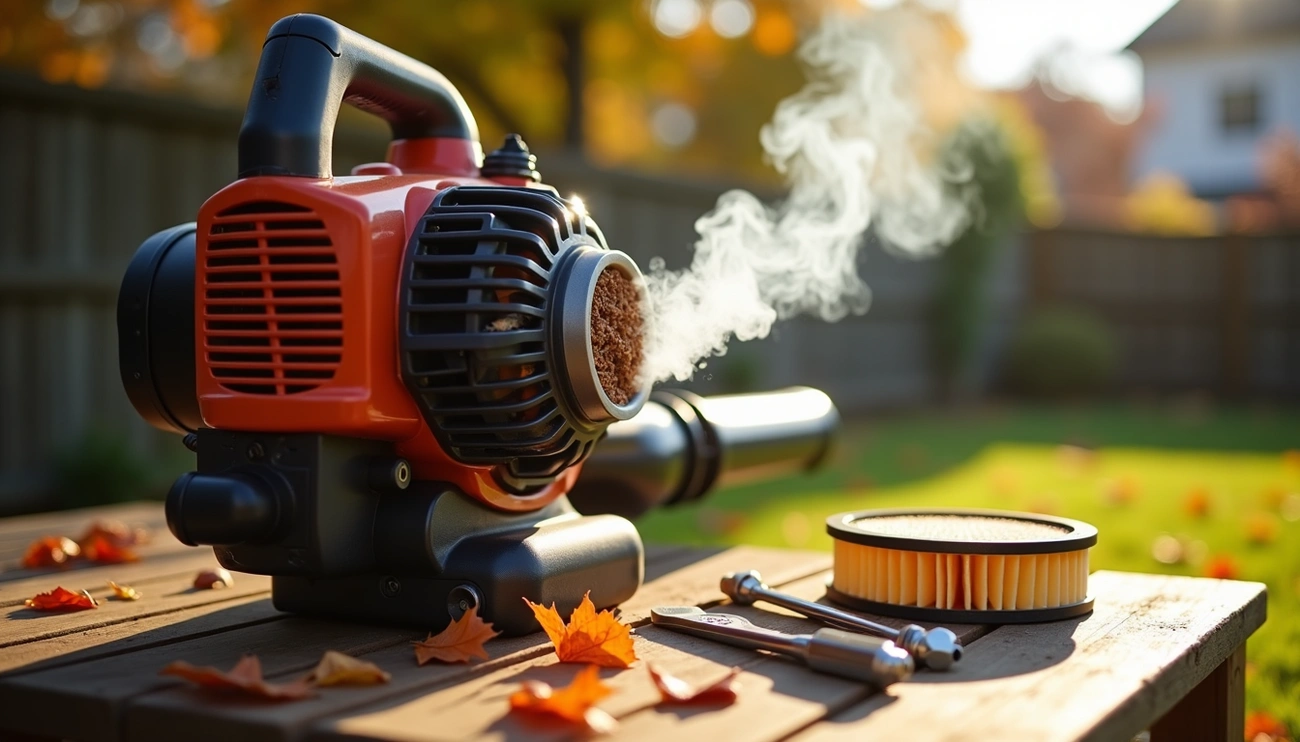
The most common causes of an overheating leaf blower
The usual cause is poor cooling. A blower needs a steady flow of air through its intake and around its motor or engine. Dust, leaves, grass, and debris can block that flow.
1. Blocked air intake or cooling vents
The intake grille draws air into the blower. If leaves or dust cover the grille, the motor cannot shed heat well. The same problem occurs when the blower is placed on mulch, grass, or loose debris while it runs.
Check the entire housing for:
- Packed leaves
- Grass clippings
- Spider webs
- Fine dust
- Mud
- A damaged or loose grille
- A clogged foam or paper filter
Turn off the blower, disconnect the battery or power cord, and wait for hot parts to cool. Brush debris away with a soft brush. Do not push debris deeper into the housing with a screwdriver.
2. A dirty engine air filter
Gas-powered blowers use an engine air filter. A dirty filter reduces the air entering the engine. The engine may then run poorly, lose power, use more fuel, and produce excess heat.
Remove and inspect the filter as described in the owner’s manual. Some foam filters can be cleaned and lightly oiled. Some paper filters must be replaced. Do not wash a paper filter unless the manual specifically allows it.
A filter that looks only slightly dirty may still restrict airflow. If the blower has been used in dry, dusty conditions, inspect it more often.
3. A clogged spark arrestor or muffler
Many gas blowers use a spark-arrestor screen in the muffler. Carbon can build up on this screen and restrict exhaust flow. A blocked muffler makes the engine work harder and can cause low power, stalling, and high heat.
Because the muffler and spark-arrestor area become very hot, let the machine cool fully before inspection. Follow the manual for removal and cleaning. Replace a damaged screen rather than operating without one.
Do not remove or modify an emissions or safety part simply to gain power. The U.S. Environmental Protection Agency regulates emissions from many nonroad engines, and model-specific emissions parts may be required for legal operation.
4. A fuel or carburetor problem
A gas blower can overheat when it runs too lean. “Lean” means the engine receives too much air or too little fuel. A restricted fuel filter, blocked fuel line, dirty carburetor, stale fuel, or incorrect adjustment can cause this condition.
Possible clues include:
- The engine surges at full throttle.
- It runs better with partial choke.
- It stalls when the trigger is released.
- It loses power under load.
- The engine runs hot after several minutes.
Use the fuel type and fuel mix listed in the manual. For two-cycle engines, the oil-to-gas ratio must be correct. Too little oil can damage the engine, while too much oil can cause smoke and poor running.
Carburetor adjustment is model-specific. If the manual does not provide a safe adjustment procedure, use a qualified small-engine repair shop.
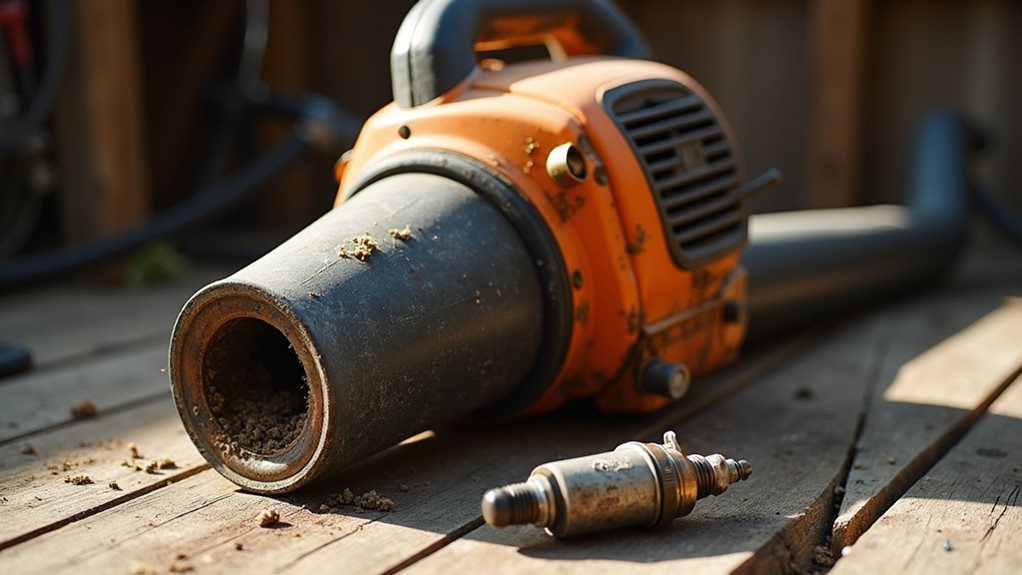
5. A blocked or damaged blower tube
A tube packed with leaves, a crushed nozzle, or an accessory that does not fit the model can restrict airflow. The motor must then work harder.
Remove the battery, unplug the cord, or shut off the gas engine before clearing a tube. Never reach into the tube while the blower is connected to power. Check that each tube section clicks into place and that the outlet is not damaged.
6. Excessive load or long continuous use
Wet leaves, heavy debris, gravel, and dense piles can make the blower work harder. Holding the nozzle too close to a pile may also reduce airflow and increase motor load.
Use a wider nozzle when suitable, keep the outlet clear, and work in short passes. A blower is not designed to grind or vacuum material unless it has a specific vacuum mode and approved attachment.
7. A failing motor, bearing, or fan
A worn bearing can create friction and heat. A damaged fan can become unbalanced or rub against the housing. These failures often cause a new noise along with overheating.
Stop using the blower if you hear:
- Grinding
- Scraping
- Repeated clicking
- A high-pitched whine
- Strong vibration
Do not keep running the tool to “see if it clears up.” Mechanical damage can spread and may create a fire or shock risk.
8. Electrical or battery problems
Corded blowers can overheat because of:
- An undersized or damaged extension cord
- A loose plug
- A hot receptacle
- A poor connection
- A blocked motor
- A failing switch or motor
Use the cord type and length allowed by the manual. A long, light-gauge cord can cause voltage drop and heat. Stop if the plug, cord, or outlet feels hot.
Battery blowers may overheat because of:
- A blocked cooling inlet
- A damaged battery
- Charging or using the battery outside its allowed temperature range
- A non-approved battery or charger
- A worn motor
- Heavy work in hot weather
Use only the battery and charger approved for that tool system. Do not use a battery that is swollen, cracked, leaking, or unusually hot.

How to troubleshoot an overheating leaf blower
Use this sequence from the safest and simplest checks to the more technical ones.
Step 1: Shut it down safely
Release the trigger and switch off the blower. Then:
- Unplug a corded model.
- Remove the battery from a cordless model.
- Stop the engine and let a gas model cool.
- Move the blower away from dry leaves and fuel.
- Do not spray water on a hot engine, motor, battery, or electrical part.
If there is smoke or fire, leave the area and call 911. Do not risk burns while trying to save the tool.
Step 2: Record what happened
Before taking anything apart, note the conditions:
- Did it overheat at startup or after several minutes?
- Was the blower at full throttle?
- Were the leaves wet or packed?
- Was the battery already hot?
- Did power drop suddenly?
- Did the problem begin after storage, fueling, or a repair?
This information can help separate an airflow problem from a fuel, motor, or battery fault.
Step 3: Inspect the airflow path
Check the intake grille, filter, fan area, tube, and nozzle. Clear only loose debris that you can reach safely. Never use your fingers near a fan that could move.
Look for a bent grille, cracked housing, melted plastic, or a fan that appears off-center. These signs point to a mechanical problem rather than simple dirt.
Step 4: Check the power source
For a gas blower, inspect the fuel age, fuel type, fuel mix, fuel filter, and fuel line. Do not open the fuel system near a flame, spark, cigarette, or hot muffler.
For a corded blower, inspect the cord and plug. Replace damaged cords. Do not tape over cuts and continue using the tool.
For a battery blower, allow the battery to cool before charging. Inspect the case and contacts. Do not charge a damaged or swollen battery.
Step 5: Clean or replace service parts
Replace filters, spark plugs, fuel filters, and other service parts at the intervals listed in the manual. Use the correct part for the exact model.
Avoid compressed air inside sealed motor or electronic areas. High-pressure air can force dirt deeper into bearings and controls.
Step 6: Test it briefly
After the blower is cool and clear, test it outdoors in a safe, open area. Run it at low power first, then increase power for a short period.
Stop at once if it heats rapidly, loses power, smells electrical, vibrates, or makes a new noise. A successful test means the blower runs normally without unusual heat, smell, noise, or shutdown—not merely that it starts.
Step 7: Get service when the basic checks fail
A repair shop should inspect the blower if it still overheats after cleaning and correct setup. Service is especially appropriate for:
- Carburetor problems
- Internal motor faults
- Damaged wiring
- Bearing noise
- Fan damage
- Repeated thermal shutdown
- Battery or charger faults
- Melted housing or electrical parts
Do not bypass a thermal switch or electronic protection system. That feature may prevent a motor, battery, or circuit from reaching a dangerous temperature.
Quick cause-and-fix table
The table below links common symptoms to likely causes. It is a starting point, not a replacement for the exact owner’s manual.
| Symptom | Likely causes | First safe check |
|---|---|---|
| Overheats within a few minutes | Blocked intake, dirty filter, damaged fan, failed motor | Clean the intake and inspect for noise or vibration |
| Loses power at full throttle | Dirty filter, blocked exhaust, fuel restriction, overload | Check the filter, tube, fuel, and debris load |
| Runs better with choke partly closed | Lean fuel mixture, dirty carburetor, air leak | Stop extended use and have the fuel system checked |
| Battery shuts off | Hot battery, blocked vents, high load, battery fault | Remove battery, cool it, inspect it, and follow the manual |
| Cord or plug feels hot | Damaged cord, long/light extension cord, bad outlet | Stop use and replace or inspect the power path |
| Burning plastic smell | Overheated motor, rubbing fan, melted housing, electrical fault | Disconnect power and inspect after cooling |
| Grinding or scraping noise | Bad bearing, damaged fan, loose part | Stop use; do not continue testing |
| Starts but quickly stalls | Fuel issue, blocked filter, overheating protection, exhaust restriction | Check fuel and filter; seek service if it repeats |

How to prevent a leaf blower from overheating
Prevention begins with airflow and proper use. Before each job, check that the intake and outlet are clear. Clean dusty areas of the housing after use and follow the maintenance schedule in the manual.
Use the correct fuel, oil mixture, battery, charger, and extension cord. Store fuel in an approved container and follow local fire rules. Keep fuel away from hot equipment and never refuel a hot gas blower.
Avoid running a blower at full throttle against wet, heavy piles for long periods. Work in short passes and give the machine time to cool when the manual recommends it. Keep the motor housing and battery vents out of direct contact with leaves and soil.
Wear eye and hearing protection. Leaf blowers can throw stones and other debris, and many models produce sound levels that can harm hearing. The Consumer Product Safety Commission advises safe practices for outdoor power equipment, including keeping people away from flying debris and using protective gear.

Should you keep using a leaf blower that overheats?
No. Repeated overheating is not normal, even if the blower starts again after cooling. A thermal shutdown may protect the tool, but it does not fix the blocked airflow, fuel fault, electrical defect, or mechanical wear that caused the shutdown.
You may perform basic cleaning and inspection when the machine is disconnected and cool. Stop and seek professional service if the blower has smoke, melted parts, damaged wiring, fuel leaks, battery damage, repeated shutdowns, or internal mechanical noise.
A warranty claim may be appropriate when a newer blower overheats under normal conditions and correct maintenance. Keep the model number, purchase record, battery details, and a description of the conditions that cause the problem.

Gas vs. electric leaf blower overheating
Gas and electric blowers share some causes, such as blocked airflow and excessive load. Their most useful checks differ.
A gas blower needs clean intake air, correct fuel, proper lubrication, and an open exhaust path. It may continue running while damage develops, so high heat, hard starting, and power loss deserve attention.
A corded or battery blower depends on electrical connections, motor cooling, and electronic protection. A sudden shutoff may be a protective response, but a hot cord, plug, battery, or charger suggests a separate electrical problem.
Do not apply gas-engine fixes to an electric model. Do not use electrical troubleshooting steps on a gas model unless they are listed in the manual. Identify the power type first, then follow the correct service instructions.
Frequently asked questions
Why does my leaf blower get hot but not shut off?
A motor or engine can become warm during normal use. If the heat is mild and the blower keeps its normal power, smell, and sound, it may be operating normally. If the housing becomes too hot to handle, power drops, or a burning smell appears, stop it and inspect the cooling path.
Why does my battery leaf blower keep overheating?
The battery, motor, or electronic controls may be too hot. Blocked vents, heavy loads, hot weather, a damaged battery, or an incorrect charger can contribute. Remove the battery, let it cool, and inspect it. Replace a damaged battery; do not open or repair the battery pack yourself.
Can a dirty air filter make a leaf blower overheat?
Yes. A dirty filter restricts air entering a gas engine. The engine may lose power and run poorly while producing more heat. Clean or replace the filter according to the model’s manual.
Why does my leaf blower smell like burning plastic?
The smell may come from an overheated motor, rubbing fan, melting housing, hot cord, loose electrical connection, or damaged battery. Disconnect power and stop using the blower until the source is identified.
How long should I let an overheated leaf blower cool?
Let it cool until the housing, battery, engine, and nearby parts are no longer hot. There is no safe universal cooling time because outdoor temperature, load, and model design vary. Do not restart it while the cause remains unknown.
Key takeaways
- Blocked vents, dirty filters, heavy loads, and poor fuel flow are common causes.
- Smoke, melted plastic, sparks, fuel leaks, and damaged batteries require immediate shutdown.
- Disconnect the power source before clearing debris or inspecting the blower.
- Use only the approved fuel, oil mix, battery, charger, and extension cord.
- Repeated overheating needs professional service, even when the blower restarts.
- Never bypass a thermal switch or continue using a blower with electrical or mechanical damage.
Conclusion
A leaf blower overheats when its heat output exceeds its ability to cool. Start with the safe checks: shut it down, disconnect the power source, clear the intake and tube, inspect the filter, and check the fuel, cord, or battery. If the problem returns—or if you find smoke, melted parts, unusual noise, or damaged wiring—stop using the blower and arrange qualified repair.