
If you find your mower leaving dark puddles on your grass or garage floor, don’t panic. Most leaks are caused by overfilling the oil reservoir, tipped machines, or worn-out gaskets that are simple to fix. This guide will help you identify the source and restore your equipment to peak performance.
There is nothing quite as frustrating as stepping into your garage on a Saturday morning, ready to tackle the yard, only to see a dark, oily mess under your mower. You might look at the puddle and wonder, “Why is oil leaking from my lawn mower?”
It is a common problem, and in 2026, most modern machines are designed to be user-friendly enough that you can diagnose and solve this issue yourself without needing a degree in mechanical engineering.
Leaking oil is more than just an aesthetic issue for your driveway; it is a sign that your engine is not operating at its best. If left unaddressed, it can lead to overheating, low lubrication, and eventually, a seized engine that costs much more to replace than to fix. By understanding the basics of your mower’s anatomy, you can take charge of your equipment maintenance and keep your lawn looking pristine all season long.
Key Takeaways
- Check the Oil Level: Overfilling the engine is the most common reason why is oil leaking from my lawn mower.
- Mind the Tilt: Never tip your mower toward the air filter or carburetor, as this causes oil to flood the system.
- Inspect the Gaskets: Worn-out seals and gaskets are frequent culprits for older machines needing a quick repair.
- The Drain Plug Factor: A loose or stripped drain plug is a simple, low-cost fix that stops messy drips immediately.
- Air Filter Damage: Oil in the air filter is a major sign that your engine has been tilted or overfilled.
- Professional Maintenance: When in doubt, seek a service expert to avoid permanent engine damage in 2026.
1. The Common Culprit: Overfilling the Oil
The most frequent reason why is oil leaking from my lawn mower is also the easiest to prevent. Many homeowners assume that “more is better” when it comes to engine oil. Unfortunately, engines are precision machines that require a specific volume of oil to function correctly. When you overfill the crankcase, the excess oil has nowhere to go but out.
Understanding Oil Capacity
Every mower has a specific oil capacity, usually listed in your owner’s manual or stamped near the oil fill tube. If you pour in an entire bottle just because you have it, you might be adding a quart to an engine that only needs 18 ounces. This extra pressure forces oil past the seals and into areas where it does not belong, such as the air filter housing or the exhaust manifold.
Signs of Overfilling
If you see blue or white smoke puffing from the exhaust while you mow, you have likely overfilled the oil. This happens when the oil enters the combustion chamber. Check the dipstick immediately. If the level is way above the “full” mark, drain the excess until it hits the proper level. You will likely need to replace your air filter as well, as it will be soaked in oil.
2. The Hazards of Tipping Your Mower
How you handle your mower while cleaning it or changing the blade is crucial. Many people tip their mowers sideways to get a better look at the underside or to scrape away grass clippings. If you tip the mower in the wrong direction, you are practically inviting an oil leak.
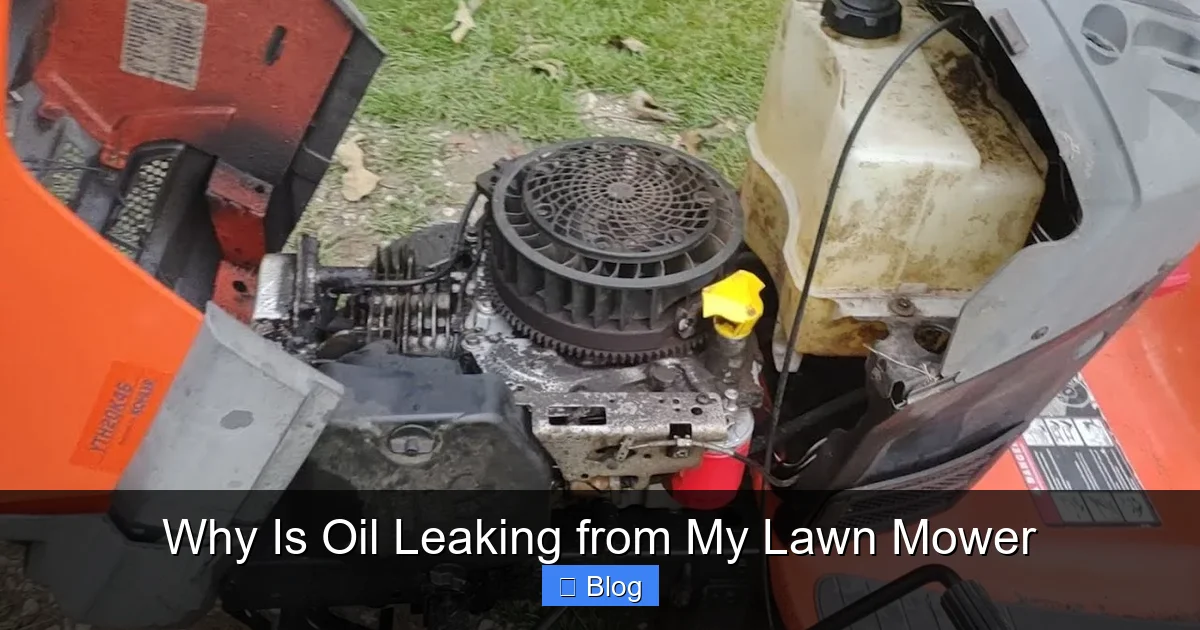
Visual guide about Why Is Oil Leaking from My Lawn Mower
Image source: i.ytimg.com
Which Side Should You Tilt?
Always check your manual, but the general rule is to keep the carburetor and air filter facing up. If you tilt the mower with the air filter side facing down, gravity pulls the oil directly into the carburetor and the air intake system. Once the oil gets inside the air filter, it will saturate the paper element, causing it to drip out the bottom of the casing.
Proper Cleaning Practices
In 2026, many newer mower models have a “washout port” where you can attach a garden hose to clean the deck. This is a much safer alternative to tipping. If you must tip the mower to change a blade, ensure you are tilting it backward onto its handles or lifting it with a specialized mower lift. This keeps the engine fluids exactly where they are supposed to be.
3. Worn-Out Gaskets and Seals
As your mower ages, the internal components that keep the oil trapped inside the crankcase begin to degrade. Gaskets and seals are made of rubber or composite materials that eventually dry out, crack, or shrink. When this happens, oil will slowly seep out, creating a persistent mess that seems to never go away.
Common Seal Locations
The two most common spots for leaks are the crankcase cover gasket and the crankshaft seal. The crankcase cover gasket seals the main body of the engine, while the crankshaft seal sits behind the blade. If you notice oil gathering around the base of the engine where it meets the deck, it is highly likely that one of these seals has failed.
When to Replace
You can often spot a bad gasket by looking for “weeping” oil around the bolts. If you see dirt and debris stuck in the oil, it is a clear sign that the leak has been active for some time. Replacing a gasket is a bit more involved than changing the oil, but it is a very rewarding DIY project for a rainy afternoon. You will need a torque wrench and a new gasket kit specific to your engine model.
4. The Simple Fix: Loose or Damaged Drain Plugs
Sometimes, the answer to “why is oil leaking from my lawn mower” is surprisingly simple. Your mower has an oil drain plug located at the bottom of the engine. Over time, vibrations from the engine can cause this plug to loosen. If the plug is not tightened correctly after your last oil change, or if the gasket on the plug itself is worn out, you will have a constant, slow leak.
Checking the Drain Plug
To check this, place a pan under the mower and slide your hand under the deck to locate the drain plug. If it feels oily or turns easily with a wrench, tighten it firmly—but be careful not to overtighten it. If you strip the threads, you will have a much bigger problem on your hands. If the plug is already tight but still leaking, look for a small washer or O-ring on the plug. Replacing this inexpensive part often solves the issue instantly.
Using Thread Sealant
If you find that your drain plug constantly vibrates loose, you can use a small amount of automotive thread sealant. Make sure the sealant is rated for high temperatures and oil exposure. This will keep the plug snug and prevent future vibrations from creating a mess in your garage.
5. Cracked or Damaged Oil Reservoirs
While rare, physical damage to the oil reservoir or the engine block itself can cause leaks. If you hit a large rock, a hidden stump, or a piece of debris while mowing, you could have cracked the plastic or aluminum housing that holds your oil.
Impact Assessment
If you recently had a “run-in” with an obstacle, inspect the underside of your mower carefully. Look for hairline cracks in the metal or plastic covers near the engine base. Even a tiny crack can allow oil to weep out slowly when the engine is warm and the oil is thin.
If the crack is in a plastic component, a specialized epoxy might hold it together, but if the crack is in the main engine block, you may need a professional welder or a new engine component.
Preventative Care
The best way to prevent this in the future is to walk your property before you mow. Removing rocks, sticks, and metal debris not only protects your oil reservoir but also extends the life of your blades and deck. In 2026, many mowers also come with skid plates or reinforced housings, so check if your model supports these upgrades if you have a particularly rough yard.
6. When to Consult a Professional
Sometimes, despite your best efforts, you might reach a point where you cannot determine the exact source of the leak. Perhaps the oil is coming from deep inside the engine, or you lack the specialized tools required for a major teardown. That is perfectly okay. Knowing when to call a professional is a mark of a wise equipment owner.
Signs of a Serious Issue
If your mower is losing a significant amount of oil in a short period, if the engine is making knocking noises, or if the smoke from the exhaust is thick and constant, stop using the machine immediately. These symptoms suggest internal mechanical failure that could lead to total engine destruction. A professional technician will have the equipment to perform a pressure test, which can pinpoint hidden leaks that are not visible to the naked eye.
The Value of Regular Service
Even if you are handy, taking your mower in for a professional service once every two years can save you money in the long run. They can check components you might ignore, like governor seals and breather tubes. Think of it as a wellness check for your lawn care partner. A well-maintained mower will serve you faithfully for decades, provided you give it the attention it deserves.
Ultimately, solving the mystery of “why is oil leaking from my lawn mower” is a manageable task if you break it down into these logical steps.
By checking the simple things first like your oil levels, the orientation of your mower, and the tightness of your drain plug you can resolve most leaks with minimal effort. Remember to always work safely, consult your owner’s manual when in doubt, and keep your machine clean and free of debris. Here is to a smooth, leak-free mowing season in 2026!
Frequently Asked Questions
Is it safe to mow if my lawn mower is leaking oil?
No, you should not mow with a leaking machine. Running an engine with low oil can lead to catastrophic internal damage, and leaking oil can also create a fire hazard if it touches the hot muffler.
Can I use any type of oil to top off my mower?
Always use the specific grade and type of oil recommended in your owner’s manual, such as SAE 30 or 10W-30. Using the wrong oil can cause improper lubrication and further increase the likelihood of leaks.
Why is there oil inside my air filter?
Oil usually ends up in the air filter because the mower was tipped incorrectly, causing oil to flow into the breather tube. You will need to clean or replace the air filter to ensure the engine gets proper airflow.
What does a “crankshaft seal” leak look like?
A leak from the crankshaft seal typically appears as a collection of oil and dirt right around the blade area or the shaft output. It is a common wear-and-tear issue for older mowers that have seen many hours of use.
How often should I change my mower oil?
Most manufacturers recommend changing the oil at least once per season or every 50 hours of operation, whichever comes first. Regular changes prevent sludge buildup that can wear out gaskets and lead to leaks.
Can overfilling the oil cause permanent engine damage?
Yes, significantly overfilling the oil can create too much pressure within the crankcase, which may blow out seals or damage internal components. Always check the dipstick regularly while filling the reservoir to stay within the recommended limit.