
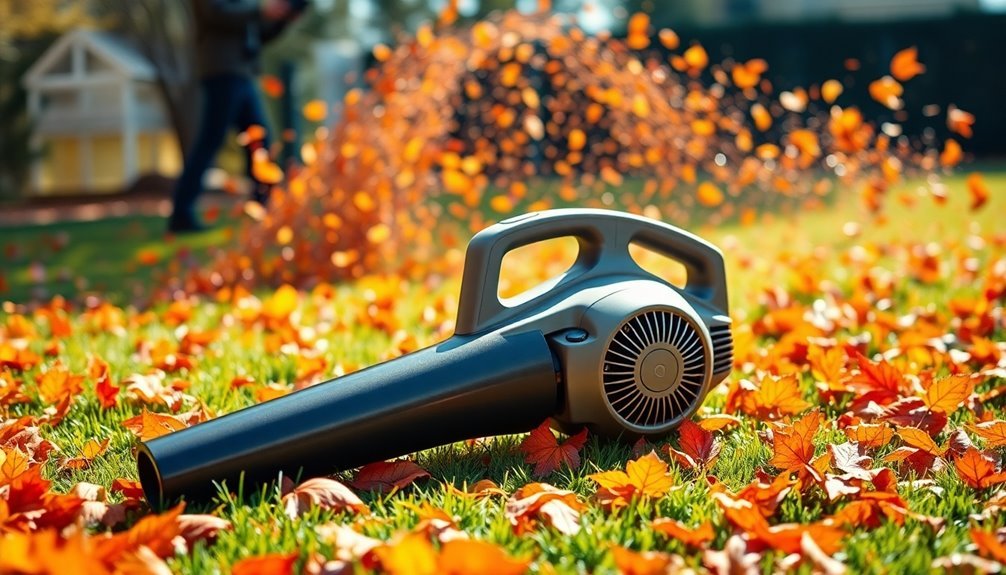
In the United States, you may be able to use a leaf blower at night, but the answer depends on your city, county, homeowners association, and the type of blower. Many local noise codes limit powered yard equipment during evening and early-morning quiet hours. Some communities ban gas-powered blowers at certain times or ban them altogether.
Check your local noise ordinance before starting the blower. If the rule is unclear, wait until daytime. A short cleanup is not worth a noise complaint, fine, or conflict with neighbors.

Is It Legal to Use a Leaf Blower at Night?
There is no single nationwide U.S. rule that sets one legal hour for leaf blower use. Noise control is usually handled by state and local governments. A city may regulate leaf blowers through its noise code, nuisance rules, landscaping rules, or outdoor power equipment ordinance.
Common local restrictions include:
- Quiet hours from the evening until the next morning
- Different rules for weekdays, weekends, and holidays
- Stricter limits for residential areas
- Separate rules for gas, electric, and battery-powered equipment
- Maximum sound levels measured in decibels
- Seasonal restrictions or full bans on gas-powered blowers
- Special rules near schools, hospitals, parks, or wildlife areas
- Fines for repeated or excessive noise
A local rule may not use the words “leaf blower.” It may refer to “powered landscaping equipment,” “lawn maintenance equipment,” “small engines,” or “unreasonable noise.”
Federal and state rules
Federal agencies do not generally set one nationwide quiet hour for residential leaf blower use. The U.S. Environmental Protection Agency provides information on noise pollution, but local governments usually decide when yard equipment may operate.
Some states have adopted broader rules. California, for example, has been moving toward zero-emission landscaping equipment requirements under state air-quality rules. Local restrictions may still control when electric equipment can be used.
The rule that matters most is the one for the property where you will operate the blower. A state law may allow the equipment while a city ordinance limits the time. An HOA rule may be stricter than both.
How to find the rule for your address
Use this process:
- Search your city or county website for “noise ordinance,” “leaf blower hours,” and “landscaping equipment.”
- Read the actual municipal code, not just a social media post or search snippet.
- Check whether the rule applies to your property type.
- Look for separate rules for gas and electric equipment.
- Confirm whether the rule covers weekends and holidays.
- If you live in an HOA, read its rules or contact the property manager.
- Call the local code-enforcement office if the language is unclear.
Search results can be out of date. Municipal codes also change, so check the official government site before relying on an old article.

What Time Is Usually Safe for Leaf Blower Use?
If you cannot confirm a local rule, use daytime hours as a practical safety margin. Late morning through the afternoon is usually less disruptive than early morning or late evening.
Many communities place quiet hours roughly between the evening and early morning. The exact period varies. A rule may start at 7 p.m., 8 p.m., or 10 p.m., and it may end at 6 a.m., 7 a.m., or 8 a.m.
The phrase “at night” also matters. Using a blower at 7 p.m. in summer daylight may still violate a local quiet-hour rule. Using one at 6 a.m. in winter darkness may be legal in one town and prohibited in another.
A practical time guide
| Situation | Practical choice |
|---|---|
| Local ordinance clearly allows it | Follow the stated hours and sound limits |
| Local ordinance is unclear | Wait until daytime |
| HOA has quiet hours | Follow the stricter HOA rule |
| Gas-powered blower near homes | Avoid evening use unless clearly allowed |
| Battery blower with low noise | Still check local rules |
| Emergency cleanup after a storm | Contact local officials if normal hours are unsafe |
| Commercial landscaping work | Check business, contractor, and noise rules |
A quieter blower reduces disturbance but does not cancel a time restriction. Noise rules often regulate when equipment may run, not only how loud it is.
Why electric does not always mean “allowed”
Battery and corded blowers often produce less engine noise than gas models. They also avoid exhaust fumes and may be easier to use near homes. But a low-noise machine can still disturb sleeping people, violate an HOA rule, or exceed a local decibel limit.
Treat equipment type as one factor, not a legal exemption.
Gas, Electric, and Battery Leaf Blowers at Night
The type of blower changes the practical risk, but it does not answer the legal question by itself.
Gas-powered blowers
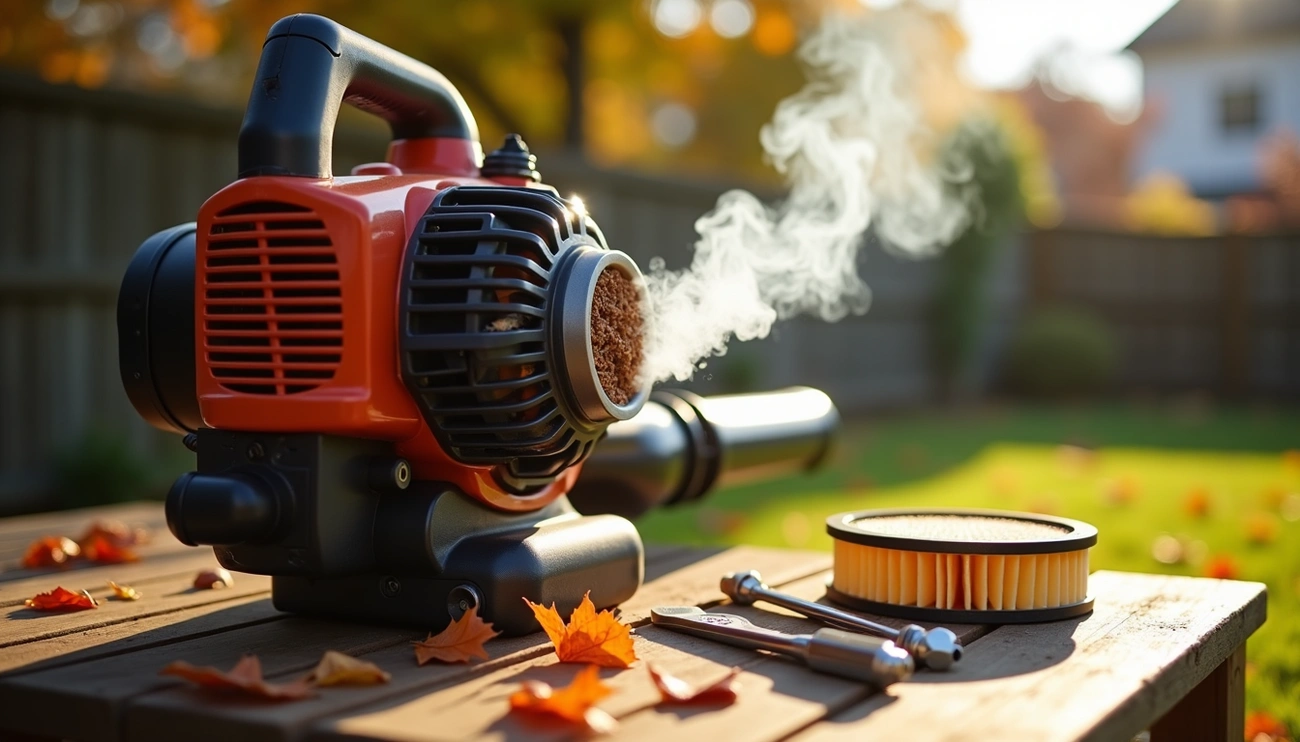
Gas models tend to create more sound and vibration than many electric models. They also produce exhaust and need fuel. At night, engine noise can travel across quiet yards and between homes.
Avoid using a gas blower:
- Near open windows
- In a garage, shed, or other enclosed space
- Near sleeping areas
- During quiet hours
- When wind may carry exhaust toward people
- When the muffler or engine is damaged
Never run a gas-powered leaf blower indoors or in a partly enclosed area. Carbon monoxide can build up quickly and has no reliable smell.
Corded electric blowers
Corded models remove fuel and engine exhaust from the task. However, the cord creates a trip and electrical hazard. Use only an outdoor-rated extension cord and equipment approved for outdoor use.
Keep the cord away from:
- Wet grass
- Puddles
- Sharp tools
- Driveways where vehicles may pass
- The blower intake and moving parts
Do not use a corded blower in rain or when water can reach the plug, connection, or motor.
Battery-powered blowers
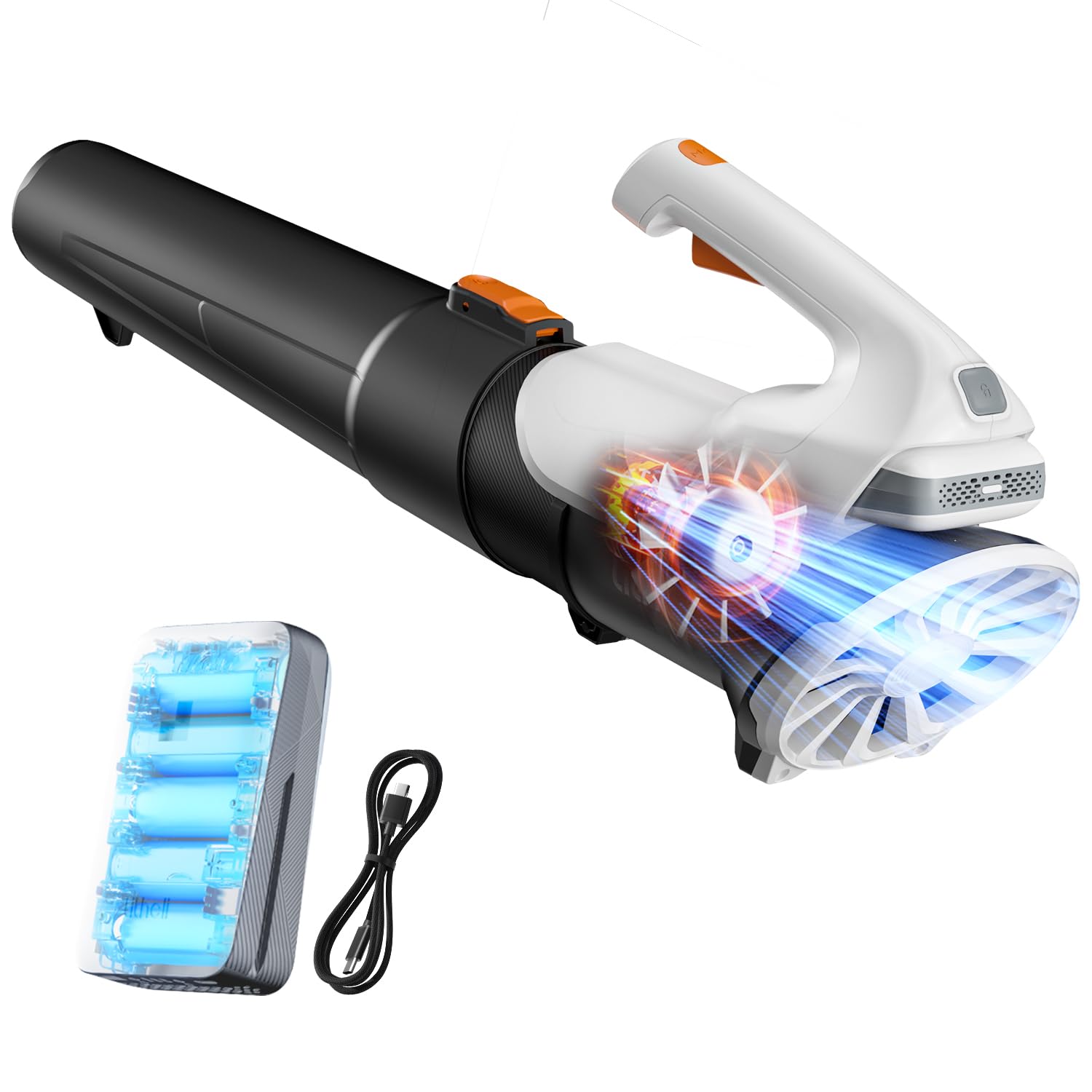
Battery blowers are often useful for small nighttime tasks because they start quickly and avoid fuel fumes. They can still make a sharp, high-pitched sound. The sound may be less powerful than a gas model but still noticeable through open windows.
Follow the manufacturer’s instructions for charging and storage. Stop using a battery that is swollen, cracked, hot, leaking, or damaged. Charge it with the approved charger in a dry, ventilated place.
How to Use a Leaf Blower at Night With Less Disturbance
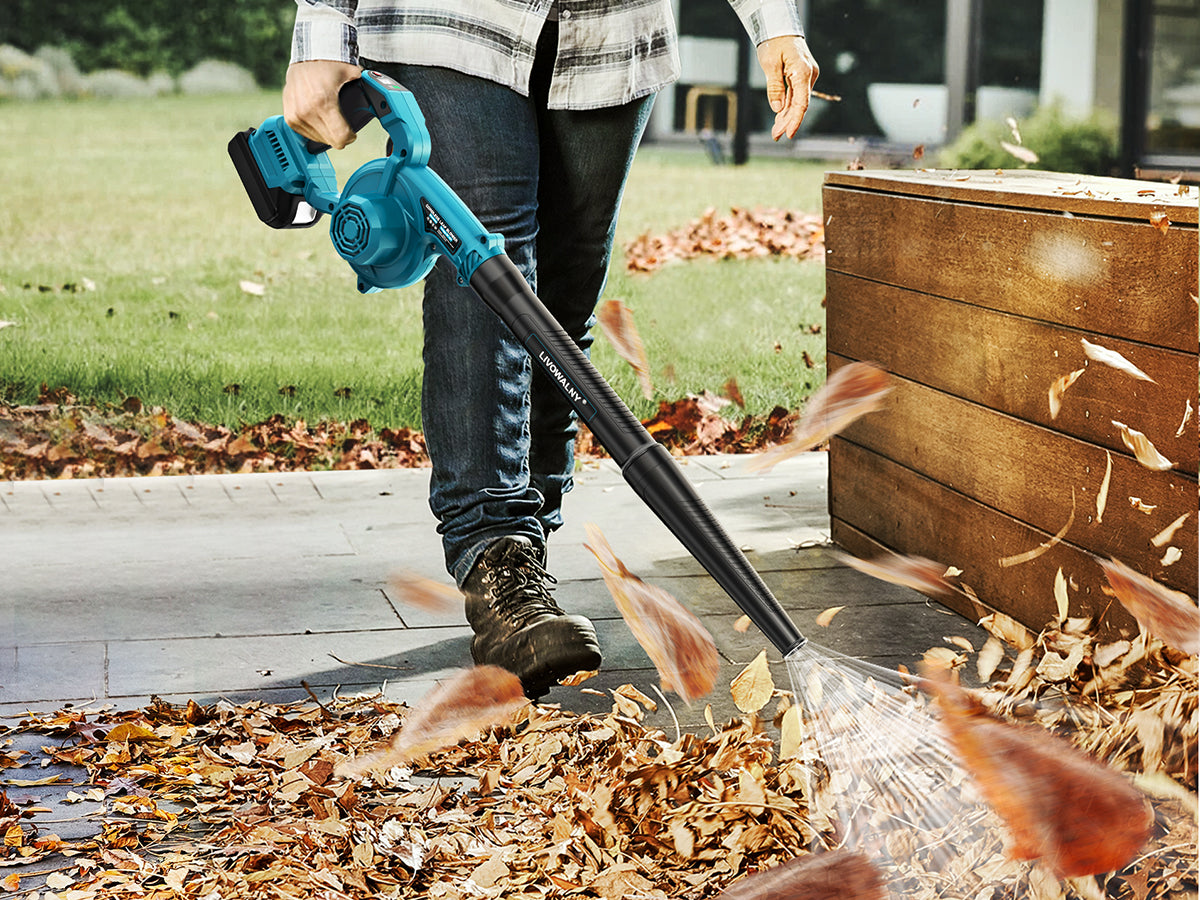
If local rules allow nighttime use, reduce the noise and keep the task short. Good technique can make a bigger difference than simply choosing a lower speed.
- Confirm the time rule first. Check city, county, and HOA requirements.
- Tell nearby household members if needed. This is especially useful in tightly packed neighborhoods.
- Choose the lowest useful power setting. High speed can throw debris farther and create more noise.
- Work away from bedrooms and property lines. Point the outlet toward open space when possible.
- Use short passes. Move leaves in small groups instead of running the blower continuously.
- Avoid hard surfaces when possible. Blowing across concrete, decks, and walls can make sound seem louder.
- Do not blow toward roads, people, pets, or neighboring property.
- Finish before quiet hours begin. Do not assume a few extra minutes will be acceptable.
- Clean the blower after use. Remove packed debris from the intake and check for damage.
A rake is often the better nighttime tool. It makes little noise, uses no fuel, and avoids disputes over local equipment rules.
When a rake or broom is the better choice
Use a manual tool when:
- You need to clear a small area
- The work will take only a few minutes
- You live close to neighbors
- Quiet hours have started
- You are clearing a porch, walkway, or small patio
- The blower would scatter dust or debris
A leaf blower is most useful for larger areas or light, dry leaves. It is less effective on wet leaves, gravel, mulch, and heavy debris. For those surfaces, a rake may also give you better control.
Nighttime Leaf Blower Safety
Night use adds visibility and awareness problems. Even if the work is legal, it may be unsafe if you cannot clearly see the ground or nearby people.
Wear safety glasses and hearing protection that fits the task. The U.S. Occupational Safety and Health Administration identifies leaf blowers as equipment that can create noise exposure concerns in work settings. Home users should also protect their hearing, especially during long or repeated use.
Use a headlamp or bright work light when clearing paths. Do not rely only on a phone flashlight. Look for:
- Rocks and sticks
- Holes and uneven ground
- Extension cords
- Pet waste
- Irrigation heads
- Glass or metal
- People and animals
- Wet or slippery areas
Keep children and pets away from the work zone. A blower can move small stones and other debris at high speed. Never aim the air stream at another person or animal.
Avoid these common mistakes
- Running a gas blower in a garage
- Using equipment with a missing or damaged guard
- Blowing dust toward a home or roadway
- Wearing loose clothing near the intake
- Clearing debris while standing on a ladder
- Using a corded blower near standing water
- Charging a battery on a bed, sofa, or other flammable surface
- Assuming an electric blower is exempt from quiet hours
- Continuing after a neighbor asks you to stop
- Using a blower when poor visibility makes hazards hard to see
Stop immediately if you smell fuel, see smoke, hear unusual rattling, feel excessive vibration, or notice a damaged cord or battery. Disconnect electric equipment safely and follow the owner’s manual for inspection or repair.

What to Do If a Neighbor Complains
First, stop the blower and check whether you may have violated a local rule. Do not argue about whether the blower is “really that loud.” Sound carries differently at night, and quiet surroundings can make brief equipment use seem much louder.
Ask what time would cause less trouble, if you need to complete the work later. Then check the municipal code and HOA rules. If the complaint involves a genuine safety issue, such as dust, flying gravel, or exhaust, correct that issue before using the equipment again.
If you believe a complaint is unreasonable, use the formal local process rather than escalating the dispute. Code enforcement, a property manager, or an HOA board can explain the applicable rule.

Can You Use a Leaf Blower on Sunday or a Holiday?
Maybe. Sunday and holiday rules vary by location. Some ordinances use the same hours every day. Others impose special limits on weekends or holidays because more residents are home.
Do not assume that a holiday creates an automatic ban or an automatic exception. Check the exact local wording.
Can You Use an Electric Leaf Blower at Night?
An electric leaf blower may be allowed at night if local rules permit it. Electric equipment is often quieter and produces no direct exhaust, but it can still violate a noise ordinance or HOA rule.
Use the lowest useful speed, keep the job brief, and avoid homes with open windows.
How Late Is Too Late to Use a Leaf Blower?
There is no universal U.S. cutoff. The legal cutoff may be set by a city, county, or HOA. As a practical rule, avoid leaf blower use during typical sleeping hours unless you have confirmed that it is allowed.
If you cannot find the rule, wait until the next daytime period.
Can a Neighbor Call the Police for a Leaf Blower?
A neighbor may contact local code enforcement or, depending on the situation, the police. Whether an officer takes action depends on the local law, the time, the noise level, and whether the noise is considered unreasonable or prohibited.
Code enforcement is often the proper contact for a recurring noise complaint.
Is It Safe to Use a Leaf Blower in the Dark?
It can be safe only when you have clear lighting, a visible work area, and proper control of people, pets, cords, and debris. Do not use a gas blower indoors or in a partly enclosed space, and do not work if you cannot see hazards clearly.
Key Takeaways
- You may use a leaf blower at night only if local rules allow it.
- The United States has no single nationwide nighttime leaf blower schedule.
- City, county, state, and HOA rules may all affect the answer.
- Electric and battery blowers are often quieter but are not automatically exempt.
- Use a rake for small jobs during quiet hours.
- Protect your hearing and eyes, improve lighting, and keep people and pets away.
- When the rule is unclear, wait until daytime.
Conclusion
Before using a leaf blower at night, check the official noise rules for your city or county and review any HOA restrictions. If the equipment is allowed, use the lowest setting, keep the job short, maintain good lighting, and direct debris away from people and property.
When no clear answer is available, choose a rake or wait until daylight. That approach protects your hearing, reduces safety risks, and helps keep good relations with neighbors.