
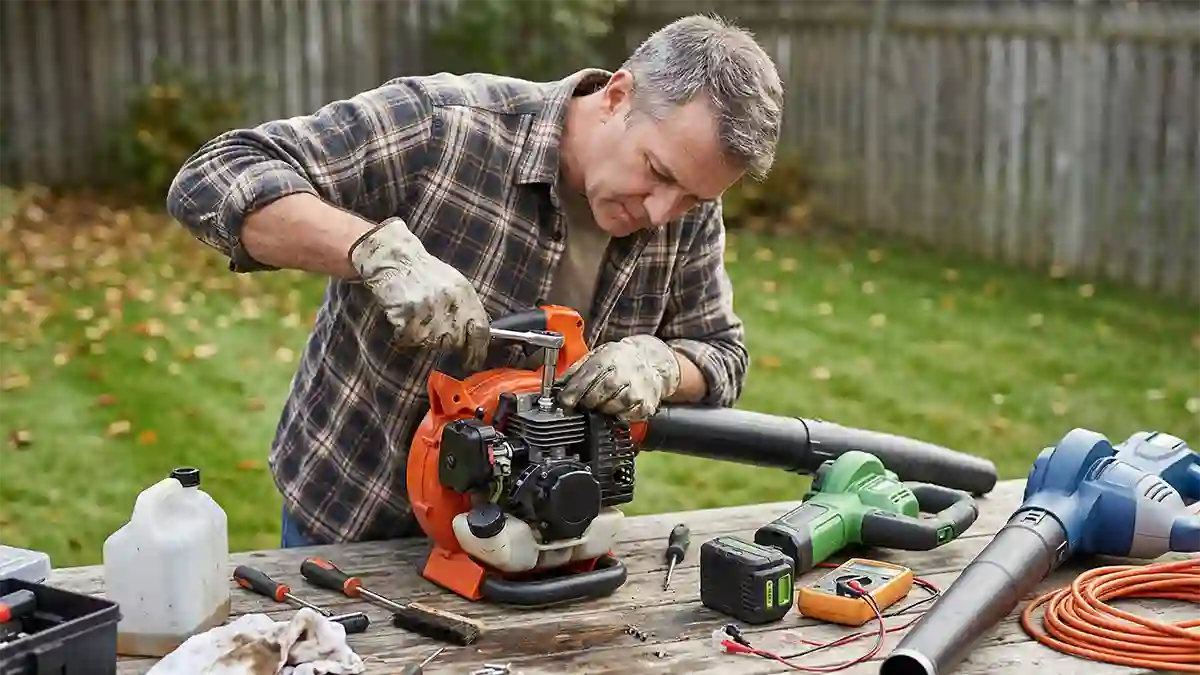
If your electric leaf blower will not turn on, the cause is usually simple: no power, a poor battery connection, a blocked safety switch, a damaged cord, or a motor problem. Start with the safest checks first. Do not open the motor housing until the blower is unplugged and the battery is removed.
This guide applies to electric leaf blowers used in the United States, including corded 120-volt models and cordless models with rechargeable battery packs. Always follow the owner’s manual for your exact brand and model.

First, identify what type of failure you have
The fastest way to find the problem is to note exactly what happens when you press the trigger.
| What happens | Most likely causes |
|---|---|
| Nothing happens at all | Dead battery, unplugged cord, tripped breaker, faulty switch, safety lock |
| The blower clicks but does not run | Weak battery, poor battery contact, jammed impeller, motor fault |
| The motor starts and stops | Low battery, overheating, blocked air path, loose connection |
| The blower hums | Jammed fan, motor fault, low voltage, damaged capacitor on some models |
| The motor runs but air is weak | Blocked tube, loose tube, clogged intake, damaged impeller |
| It worked, then stopped while hot | Thermal protection, overload, blocked intake, motor problem |
A blower that is completely silent needs a different check than one that runs but has low airflow. This distinction prevents wasted time and helps avoid unsafe disassembly.
Most electric leaf blowers fall into two groups:
- Corded blowers: Use a household outlet and an outdoor-rated extension cord.
- Cordless blowers: Use a removable rechargeable battery and charger.
The basic parts are similar. Both types have a trigger or switch, a motor, an impeller or fan, an air intake, and a blower tube. Cordless models also have a battery, charger, and battery contacts.

Check the power source first
Power is the most common reason an electric leaf blower will not start. Test the outlet, cord, battery, and charger before inspecting the motor.
For a corded leaf blower
- Unplug the blower.
- Inspect the power cord for cuts, crushed areas, melted insulation, or loose plugs.
- Plug another known-working device into the same outlet.
- If the outlet does not work, check the home’s circuit breaker.
- Reset a tripped ground-fault circuit interrupter, or GFCI, if the outlet has one.
- Try a different outdoor-rated outlet.
- Reconnect the blower firmly.
Outdoor outlets in the United States often have GFCI protection. A GFCI may trip when moisture enters a connection or when a tool or cord has a leakage fault. The Consumer Product Safety Commission recommends using GFCI protection for many outdoor electrical applications and keeping electrical connections away from water.
If the breaker trips again as soon as you start the blower, stop using it. Repeated trips can indicate a damaged cord, motor, plug, or extension cord.
Check the extension cord
An extension cord can prevent a blower from starting even when the outlet works. The cord may be too long, too small for the load, damaged, or not rated for outdoor use.
Check the following:
- Use a cord marked for outdoor use.
- Match the cord rating to the blower’s owner’s manual.
- Keep the cord as short as practical.
- Do not connect multiple extension cords together.
- Do not use a cord with exposed wires, crushed insulation, or damaged ends.
- Make sure the plug does not pull partly out of the outlet during use.
A long or undersized cord can cause voltage drop. That may make the motor start slowly, overheat, or fail to start. The correct wire size depends on the blower’s current draw and cord length, so use the chart in the manual rather than guessing.
For a cordless leaf blower
- Remove the battery.
- Press the battery’s fuel-gauge button, if it has one.
- Charge the battery with the correct charger.
- Check whether the charger shows a fault light.
- Reinstall the battery until it clicks or locks in place.
- Try the blower again.
A battery can show some charge and still lack enough power to start the motor under load. Cold temperatures can also reduce battery output. Let a cold battery warm to indoor temperature before charging or using it. Do not heat it with a heater, hair dryer, or other direct heat source.
Never use a battery or charger that is swollen, cracked, leaking, unusually hot, or smells burnt. Place it in a safe area away from flammable material and follow the manufacturer’s disposal or service guidance.

Check the safety lock, trigger, and battery connection
Many electric blowers have a lock-off button or safety switch. The motor will not run unless the switch is pressed in the correct sequence.
Try this sequence:
- Insert the battery or plug in the blower.
- Press and hold the lock-off button.
- Pull the trigger.
- Release the lock-off button while continuing to hold the trigger.
The exact order varies by model. Some blowers use a slider, two-stage trigger, or variable-speed dial. Read the label on the handle and check the manual.
If the trigger feels loose, stuck, or unusually soft, unplug the cord or remove the battery. Do not spray oil or cleaner into the switch. A failed switch needs repair or replacement.
For cordless models, inspect the battery terminals and tool contacts. Look for:
- Dirt or grass packed into the contact area
- Bent metal contacts
- Corrosion
- Signs of melting
- A battery that does not latch fully
Remove dry debris with a soft brush. Do not scrape contacts with a metal tool, bend them, or use water inside the battery compartment. If the contacts are burned or melted, stop using the blower.

Clear the tube, intake, and fan area
A blocked air path can stop a blower or cause its protection system to shut it down. Grass, leaves, pine needles, and small stones can enter through the intake or tube.
Before clearing a blockage:
- Unplug the blower or remove the battery.
- Wait for all moving parts to stop.
- Keep your fingers away from the impeller.
- Remove the blower tube if the manual permits it.
- Clear debris with a brush or a blunt plastic tool.
- Reassemble every part before testing.
Do not reach into the intake while the blower is connected to power. The fan can move unexpectedly if the trigger is pressed or if power is restored.
Check that the tube is fully attached. Some models have an interlock that prevents operation unless the tube is installed. A cracked or loose tube may not stop the motor, but it can reduce airflow and make the blower seem defective.
If the motor makes a hum but the fan does not turn, the impeller may be jammed. Do not force the fan by hand while the tool is connected. If the fan remains stuck after cleaning, the motor or fan assembly may need service.
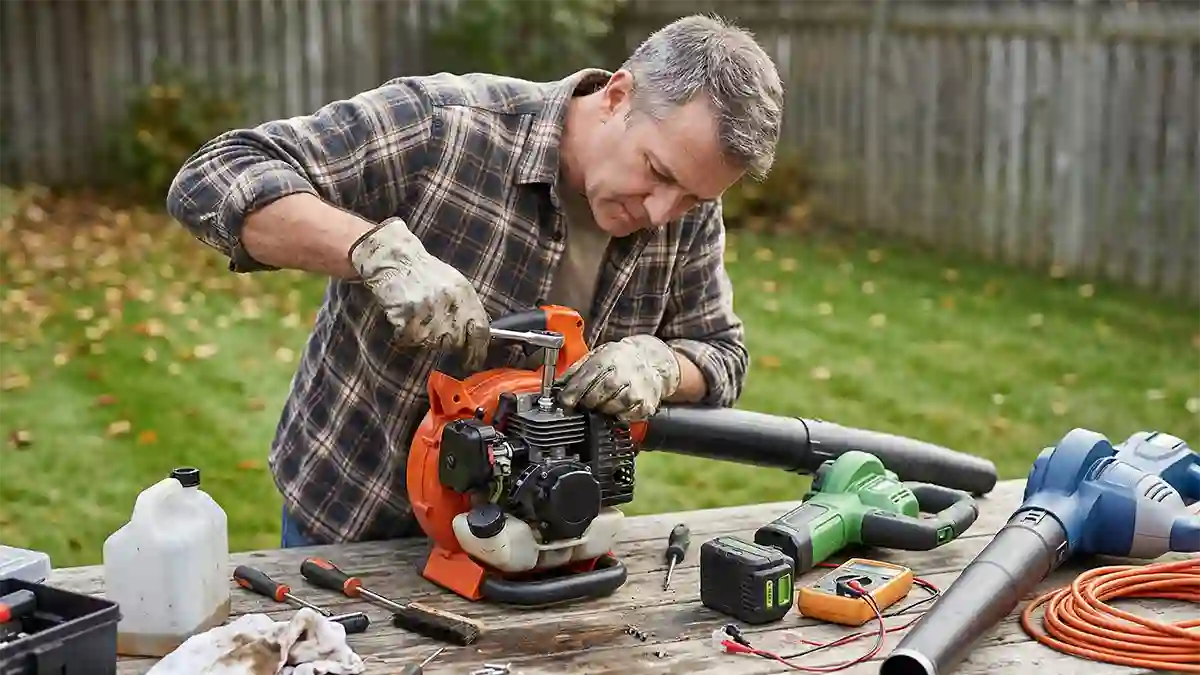
Let an overheated blower cool down
A blower that stops after several minutes may have overheated. Many power tools include thermal protection. This feature can shut off the motor when internal temperatures become too high.
Overheating can result from:
- A blocked air intake
- Debris around the motor
- A clogged tube
- An undersized extension cord
- A very long period of continuous use
- High outdoor temperatures
- A worn motor or bearing
Disconnect power and let the blower cool for at least 20 to 30 minutes. This is a practical cooling period, not a guarantee that every model will reset at the same time. Check the manual for model-specific instructions.
After cooling, inspect the intake, tube, cord, and battery. If the blower starts again but repeatedly shuts down, do not keep resetting it. Repeated overheating can damage the motor and may indicate a deeper fault.
A thermal reset is different from a tripped circuit breaker. The breaker protects the home’s electrical circuit. Thermal protection is inside the tool and protects the motor.
Inspect the cord, plug, and signs of electrical damage
A damaged cord or plug is both a starting problem and a safety hazard. Do not use electrical tape as a permanent repair for a cut or crushed power cord.
Replace the cord or have the blower serviced if you see:
- Exposed copper
- Cuts through the outer jacket
- Melted plastic
- Black marks near the plug
- A loose plug blade
- A plug that becomes hot
- Sparks, smoke, or a burning smell
A small spark when a motor starts can occur in some brushed motors, but visible arcing, smoke, or a strong electrical odor is not normal. Disconnect the tool and stop testing it.
For cordless blowers, inspect the battery casing. Do not open a lithium-ion battery pack. Internal cells can cause fire, even when the pack appears discharged. The U.S. Fire Administration and CPSC advise handling damaged lithium-ion batteries with care and following local disposal guidance.

Decide whether the blower needs professional repair
After the basic checks, the likely fault is inside the tool if:
- A known-good outlet and suitable cord do not work.
- A fully charged, compatible battery does not work.
- The safety switch and trigger do not respond.
- The fan is free but the motor only hums.
- The blower trips a breaker or GFCI repeatedly.
- The tool smells burnt or shows melted parts.
- The motor starts only when the cord or handle is moved.
- The blower stops again after a short cool-down.
Do not bypass a safety switch, remove a thermal protector, or connect wires directly to test the motor. These actions can cause electric shock, fire, unexpected startup, or permanent damage.
If the blower is under warranty, contact the manufacturer before opening it. Have the model number, serial number, purchase information, and a description of the symptom ready. For a corded 120-volt tool, a qualified repair technician should inspect internal wiring and switches. For a cordless tool, use the manufacturer or an authorized battery service center.
Repair or replace?
Repair may make sense when the problem is a switch, cord, tube, or loose external part. Replacement may be more practical when the motor, control board, or battery has failed and the repair cost is close to a new tool.
The decision depends on:
- The blower’s age
- Warranty status
- Availability of parts
- Battery replacement cost
- Condition of the charger
- Repair estimate
- Whether the tool has suffered water or heat damage
Do not discard a rechargeable battery in household trash. Contact your local waste authority or a recognized battery-recycling program for current disposal instructions.
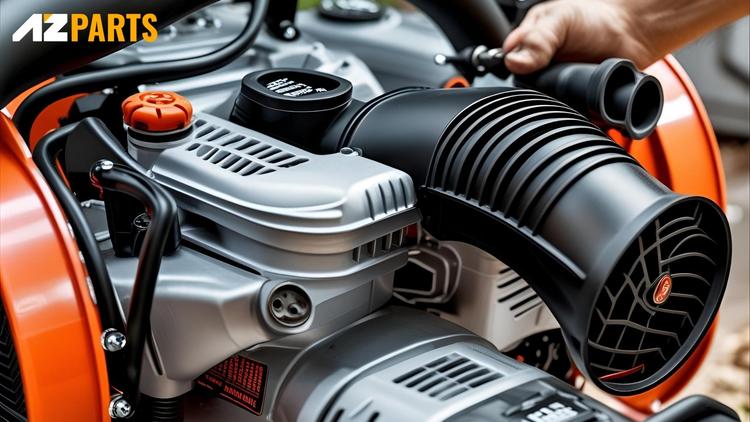
Common mistakes that can prevent a leaf blower from starting
Several simple mistakes appear often during troubleshooting.
Using the wrong battery
Batteries may look similar but use different voltage, contacts, or electronic controls. Use only the battery family approved for the blower. A battery from another brand or product line may not fit or may damage the tool.
Testing with a wet connection
Rain, wet grass, and damp extension-cord connections can trip GFCI protection and increase shock risk. Move the tool and connections to a dry location before testing.
Pulling the cord to disconnect it
Pulling on the cord can loosen the plug or damage the cord jacket. Grip the plug when disconnecting it.
Repeatedly resetting a breaker
A breaker that trips once may respond to a temporary overload. A breaker that trips repeatedly needs attention. Do not replace it with a larger breaker or keep resetting it while the fault remains.
Blocking the intake
Do not rest the blower on leaves or clothing while it runs. The intake must have clear airflow. A blocked intake can raise motor temperature and reduce performance.
Using a vacuum attachment incorrectly
Some blowers convert to vacuum mode with a separate tube or bag. A missing or poorly fitted part may activate an interlock or block airflow. Install accessories exactly as shown in the manual.
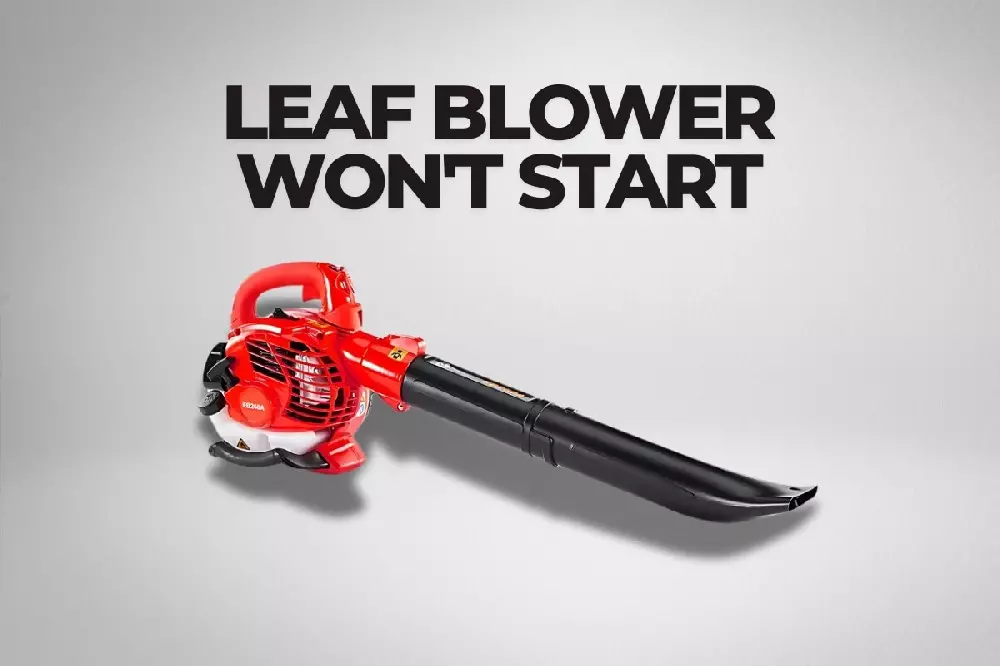
A quick troubleshooting decision path
Use this order to find the fault with the fewest risks:
- Is it corded or cordless?
- Does the outlet work, or is the battery charged?
- Is the cord, plug, charger, or battery damaged?
- Is the safety lock being used correctly?
- Is the battery fully seated?
- Is the tube and intake free of debris?
- Did the blower stop while hot?
- Does it trip a breaker or make a burning smell?
If the answer to the last question is yes, stop troubleshooting and arrange qualified service.

Frequently asked questions
Why does my leaf blower have power but not start?
The tool may have power at the outlet or battery, but the switch, lock-off button, battery contacts, motor, or internal control may have failed. Check the starting sequence and battery fit first. If the tool remains silent, service may be needed.
Why does my cordless leaf blower stop after a few seconds?
A low battery, poor battery contact, blocked intake, jammed fan, or overheating can cause this symptom. Let the tool cool, charge the battery, inspect the air path, and reinstall the battery. Repeated shutdowns indicate a fault that should not be ignored.
Can a bad extension cord stop a leaf blower from working?
Yes. A damaged, undersized, or excessively long extension cord can cause voltage drop, overheating, or a tripped protection device. Use an outdoor-rated cord that matches the blower manual’s length and wire-size guidance.
Why does my leaf blower trip the GFCI?
Moisture, a damaged cord, a defective blower, or a faulty extension cord can cause leakage that trips the GFCI. Dry the area and inspect the equipment. If the GFCI trips again, stop using the blower and have the equipment checked.
Is it safe to use a leaf blower after it gets wet?
Do not operate a wet electric blower unless the manufacturer specifically rates it for that condition. Disconnect it from power, remove the battery if possible, and let it dry fully in a safe place. Water inside the tool can create shock, corrosion, or fire risks.
Final answer: the safest next step
Start with the power source, then check the safety lock, battery connection, air path, and overheating. These checks solve many no-start problems without opening the tool. Stop immediately for smoke, burning odor, damaged wiring, repeated breaker trips, a swollen battery, or a motor that hums but will not turn.
If a known-good outlet or fully charged approved battery does not restore operation, the fault is likely in the switch, control system, motor, or internal wiring. Use the owner’s manual and warranty service, or have a qualified technician inspect the blower.
Sources and technical references
- U.S. Consumer Product Safety Commission: Electrical Safety
- Occupational Safety and Health Administration: Electrical Safety
- U.S. Fire Administration: Lithium-Ion Battery Safety
- The owner’s manual for the specific leaf blower, battery, charger, and extension cord in use
1 thought on “Why Won’t My Electric Leaf Blower Turn On: Quick Fixes”