
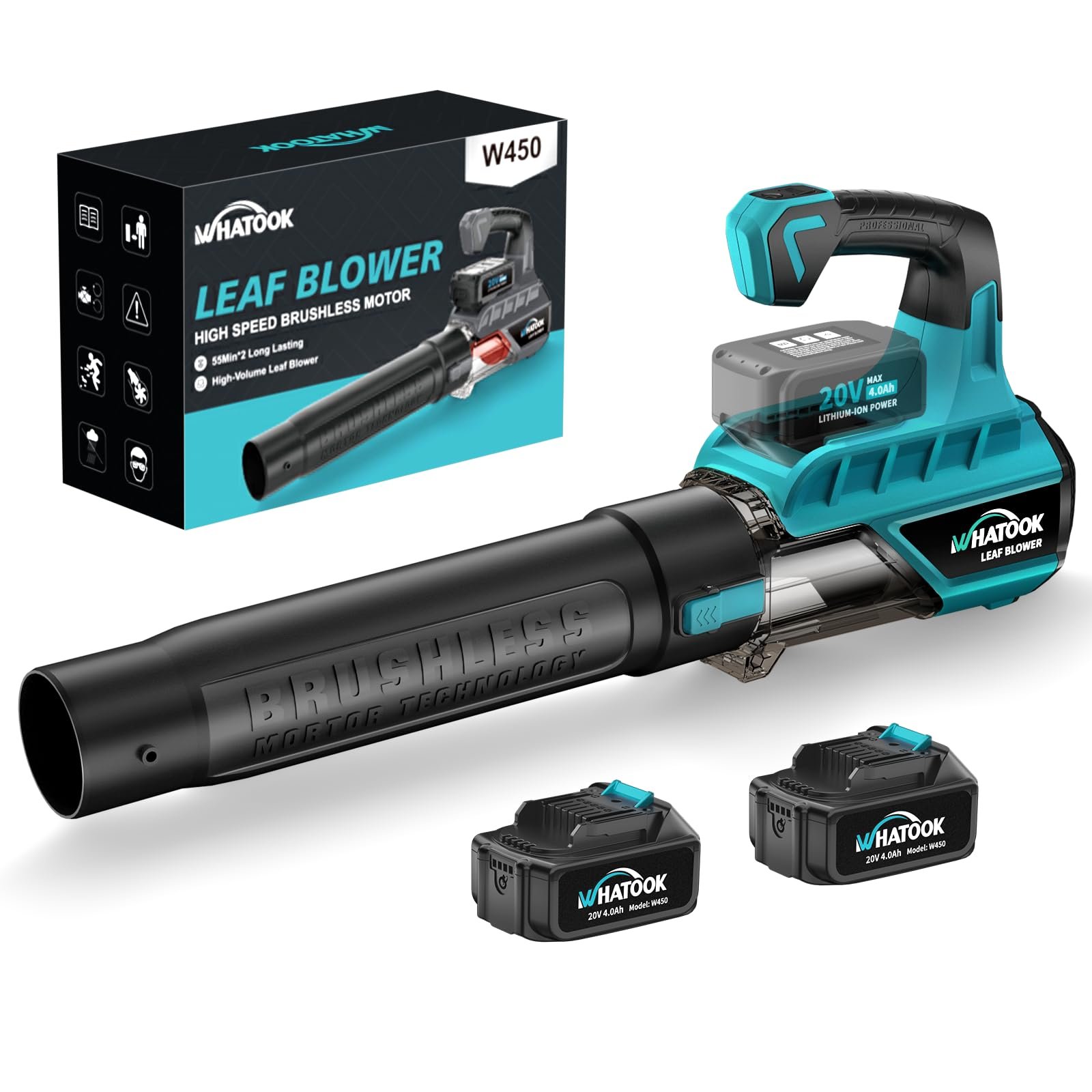
A leaf blower battery usually runs for 15 to 30 minutes on one charge. Light-duty use on a low setting may last 30 to 60 minutes, while turbo mode or a powerful backpack blower may use the battery in 10 to 20 minutes.
For U.S. homeowners, that often means one battery can clear a small driveway, patio, or suburban yard. Large lots, wet leaves, pine needles, and heavy debris may require a second battery or a larger battery pack.
The phrase “battery life” can mean two different things:
- Runtime: How long the battery operates before it needs charging.
- Service life: How long the battery remains useful before its capacity drops.
This guide explains both meanings, shows how to estimate runtime, and explains how to get more work from a cordless leaf blower battery.
Typical Leaf Blower Battery Runtime
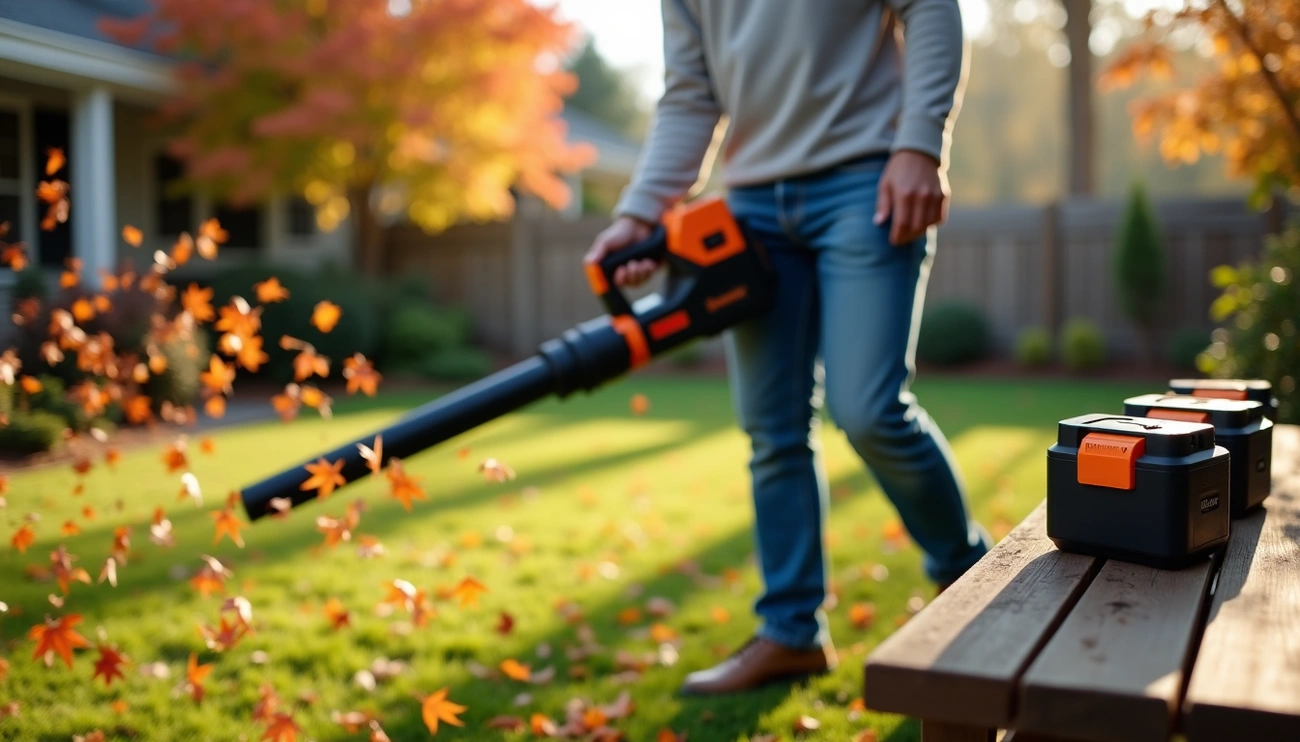
Most cordless leaf blowers run for 10 to 60 minutes per charge, depending on the battery, blower, and work setting.
Here is a practical guide:
| Leaf blower type | Typical runtime | Common use |
|---|---|---|
| Small handheld blower | 30–60 minutes on low | Patios, decks, and light dust |
| Mid-size handheld blower | 20–40 minutes | Driveways and small yards |
| High-power handheld blower | 10–25 minutes | Wet leaves and larger areas |
| Backpack battery blower | 30–90 minutes with a large battery | Large yards and long work sessions |
| Turbo mode on most models | 10–20 minutes | Dense leaves and stuck debris |
These are useful planning ranges, not guaranteed results. Manufacturers may measure runtime at low speed, with no load, or under controlled conditions. Real yard work usually takes more power.
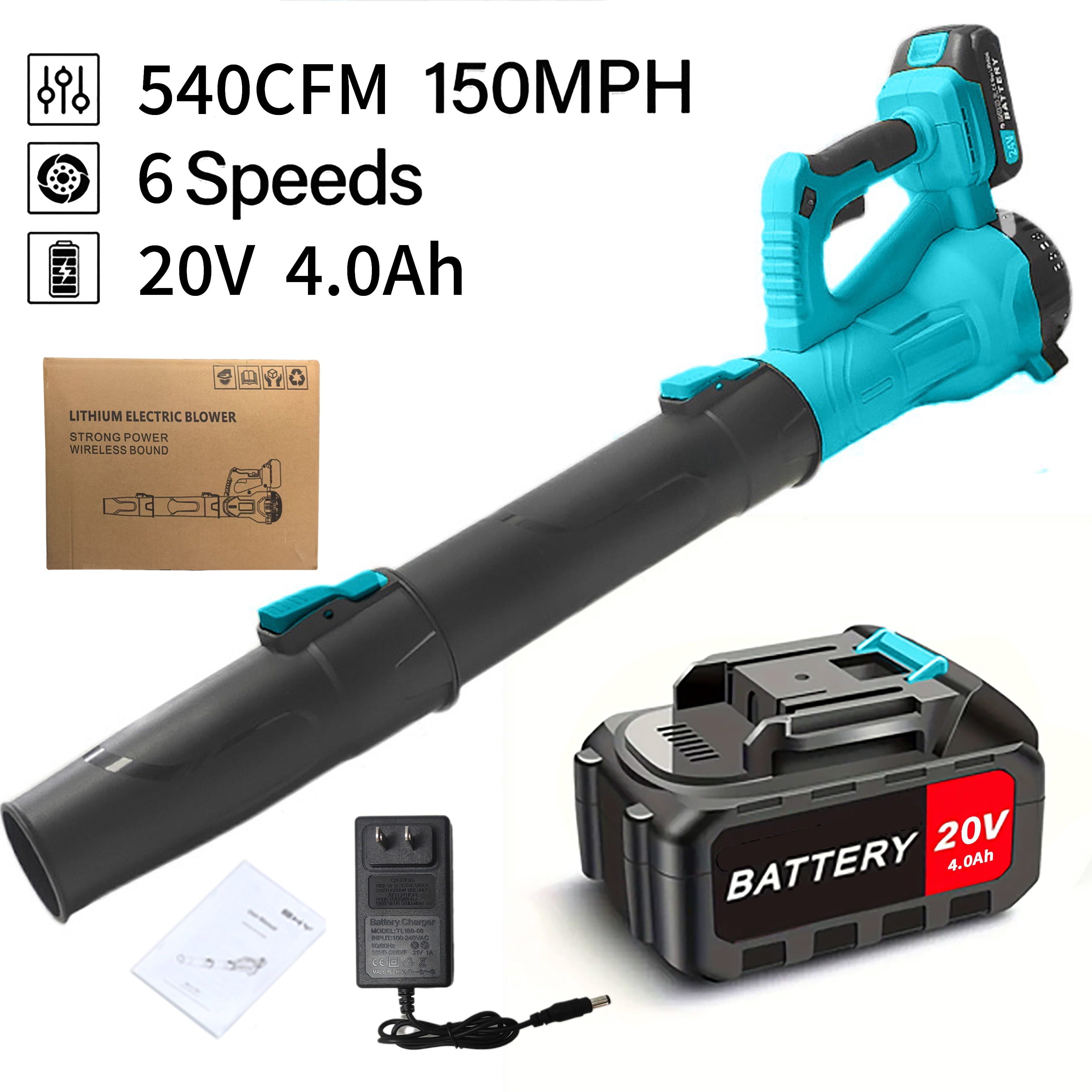
A 5.0 amp-hour battery may last much longer than a 2.0 amp-hour battery on the same blower. However, the exact runtime also depends on voltage, motor design, air speed, air volume, and how often you use full power.
Runtime by task
The same battery can last for different lengths of time based on the job:
- Dry grass clippings: Often uses less power.
- Dry leaves: Usually falls near the middle of the runtime range.
- Wet leaves: Requires more air force and often reduces runtime.
- Pine needles: May require repeated high-speed passes.
- Heavy debris: Can drain a battery quickly.
- Hard surfaces: Usually take less energy than thick grass.
A blower used in short bursts may clear a yard with less battery power than a blower held at full speed for one continuous session.
What Controls Battery Runtime?
Battery size, blower power, speed, and working conditions have the greatest effect on runtime.
Battery capacity
Battery capacity is often shown in amp-hours, or Ah. A higher Ah rating generally means more stored energy.
For example:
- A 2.0 Ah battery is small and light.
- A 4.0 Ah battery offers about twice the capacity of a 2.0 Ah battery if both use the same voltage.
- A 6.0 Ah battery can provide more runtime but may add weight and cost.
Amp-hours alone do not tell the full story. You also need voltage.
A simple estimate uses watt-hours:
Watt-hours = volts × amp-hours
For example, a 56-volt, 5.0 Ah battery has a nominal energy rating of about:
56 × 5 = 280 watt-hours
The usable energy will be lower than the label value because of heat, battery management limits, motor demand, and voltage changes during use.
Blower power
A more powerful blower moves more air or produces greater air speed. That power helps with wet leaves and large piles, but it can drain the battery faster.
A blower on its lowest setting may use a fraction of the energy required at full throttle. Variable-speed triggers can therefore extend runtime when you use only the power you need.
Battery age
Lithium-ion batteries slowly lose capacity with age and use. A battery that once ran for 30 minutes may later run for 20 minutes under the same conditions.
Heat can speed up battery wear. Storing or charging a battery in very hot conditions may reduce its long-term capacity. Cold weather can also reduce temporary runtime, although some capacity may return when the battery warms up.
Airflow and debris
The harder the blower works, the more energy it uses. Wet leaves cling to grass and pavement, so the motor must run harder and longer.
Wind also matters. Working against a strong breeze can increase the time needed to clear an area. A sheltered yard may take less battery power than an exposed lot.
How to Calculate Leaf Blower Runtime
You can estimate runtime by comparing battery energy with the blower’s average power draw.
The basic formula is:
Estimated runtime in hours = usable battery watt-hours ÷ average blower watts
Then multiply the result by 60 to estimate minutes.
Example calculation
Assume:
- Battery voltage: 40 volts
- Battery capacity: 4.0 Ah
- Nominal battery energy: 160 watt-hours
- Average blower demand: 400 watts
The simple estimate is:
160 ÷ 400 = 0.4 hours
0.4 × 60 = 24 minutes
The actual runtime may be shorter because the battery cannot deliver all rated energy under every condition. If the blower runs at a lower setting and draws 250 watts on average, the same battery could last much longer.
Why the calculation is only an estimate
The battery label does not show one fixed runtime. The blower may draw different amounts of power from moment to moment.
Runtime changes when you:
- Use turbo mode.
- Hold the trigger continuously.
- Clear wet or compacted leaves.
- Work in cold weather.
- Use an older battery.
- Operate a clogged or restricted blower.
- Use a battery that is not fully charged.
- Switch between low and high speed.
For a better estimate, use the runtime chart in the blower’s manual. The manufacturer may list separate times for low, medium, and high settings.
Comparing two batteries
To compare batteries from the same tool system, multiply voltage by amp-hours.
| Battery | Approximate nominal energy |
|---|---|
| 20 V, 2.0 Ah | 40 Wh |
| 20 V, 5.0 Ah | 100 Wh |
| 40 V, 2.5 Ah | 100 Wh |
| 56 V, 2.5 Ah | 140 Wh |
| 56 V, 5.0 Ah | 280 Wh |
This comparison works only when the voltage ratings use a similar measurement method. Some brands advertise nominal voltage, while others use maximum voltage. Always compare batteries within the same brand and tool platform when possible.
How Long Does a Leaf Blower Battery Take to Charge?
A leaf blower battery may take 30 minutes to several hours to charge.
Charge time depends on:
- Battery capacity.
- Charger speed.
- Battery temperature.
- Battery condition.
- Whether the charger is standard or rapid.
- The battery management system.
A small battery on a rapid charger may be ready in less than an hour. A large battery on a standard charger may need several hours.
The charger’s indicator light usually shows when charging is complete. Do not remove the battery early unless you need it. Partial charging is normal for lithium-ion batteries and is generally more practical than waiting for the pack to become fully empty.
Always use the charger approved for that battery system. Do not use a charger from another brand unless the manufacturer specifically confirms compatibility.
How to Make a Leaf Blower Battery Last Longer
The best way to extend runtime is to use the lowest speed that moves the debris.
Try these methods:
- Start with the lowest useful speed. Increase power only when leaves stop moving.
- Work in the direction of the wind. This reduces resistance.
- Clear dry leaves before rain. Wet debris needs more force.
- Use a nozzle when supplied. A narrow nozzle can focus airflow on stubborn areas.
- Move leaves in small groups. Large piles require more sustained power.
- Keep the air intake clear. Blocked airflow can reduce performance.
- Use short trigger bursts. Release the trigger while walking between areas.
- Keep the battery at a moderate temperature. Avoid using or charging an extremely hot or cold pack.
- Charge before storage if the manual requires it. Follow the battery maker’s storage instructions.
- Carry a spare battery for large properties. This is often more useful than running one battery at maximum speed.
Do not push leaves into storm drains, streets, or neighboring property. In many U.S. communities, local rules restrict leaf blowing, debris placement, or noise levels. Check your city, county, or homeowners association rules before clearing leaves near public areas.

How Long Does a Leaf Blower Battery Last Before Replacement?
A cordless leaf blower battery may remain useful for several years, but the exact service life depends on use, storage, heat, charging habits, and battery quality.
A battery does not usually fail all at once. Its capacity often declines gradually. You may notice that the blower runs for less time or loses power sooner under heavy work.
Common signs of an aging battery include:
- Much shorter runtime after a full charge.
- The battery shows full but loses power quickly.
- The blower stops under loads it once handled.
- The battery or charger reports a fault.
- The pack becomes unusually hot.
- The housing is cracked, swollen, or damaged.
A damaged or swollen lithium-ion battery should not be used or opened. Stop using it and follow the manufacturer’s disposal or replacement instructions. Do not place a damaged rechargeable battery in household trash or a regular recycling bin. In the United States, many retailers and local programs accept rechargeable batteries through approved collection systems.
Battery warranties vary by brand and product line. A warranty period does not guarantee a specific number of years or charge cycles. Review the warranty for the exact battery model.

Battery Versus Gas Leaf Blower Runtime
A battery blower offers a limited runtime per charge, while a gas blower can usually operate as long as fuel is available. The trade-off is that battery models need charging and may require a spare pack for long jobs.
Battery blower advantages
- Starts with a button or trigger.
- Produces no direct exhaust during use.
- Usually needs less routine maintenance.
- Makes less noise than many gas models.
- Works well for small and medium residential jobs.
Gas blower advantages
- Can run for long periods with refueling.
- Often suits large properties and commercial work.
- Does not require a charged battery.
- May maintain high output during long jobs.
Gas blowers create exhaust and require fuel handling, oil or engine maintenance, and safe storage. Battery blowers still require care, but their main limit is energy capacity rather than fuel supply.
For a typical U.S. homeowner, a battery blower is often practical when the yard can be cleared within one battery session. For a large property, frequent wet-leaf cleanup, or daily professional work, compare total runtime, spare battery cost, charging time, and tool output before choosing.

Common Leaf Blower Battery Problems
A battery that seems to drain too fast may not be defective. Check the simple causes first.
The battery lasts only a few minutes
Possible causes include:
- Turbo mode is active.
- The battery is not fully charged.
- The battery is old.
- The blower has a blocked intake.
- Leaves are wet or unusually heavy.
- The battery is too hot or too cold.
- The battery and blower are not fully compatible.
Let the battery return to a moderate temperature. Check the charge indicator and inspect the blower for blockage. If the problem continues with a different compatible battery, the blower may need service.
The battery will not charge
Check that:
- The charger is connected to a working outlet.
- The battery is seated correctly.
- The contacts are clean and dry.
- The battery is within the temperature range listed in the manual.
- The charger is made for that battery system.
- The battery is not visibly damaged.
Do not scrape, bend, wet, or modify battery contacts. If the charger shows a fault, follow the manufacturer’s instructions rather than repeatedly reconnecting the pack.
The blower loses power under load
This can happen when the battery cannot supply enough current, when its capacity has declined, or when the blower is working against heavy debris. Try a fully charged, compatible battery with a higher Ah rating. If the same issue occurs, arrange service.
The battery becomes very hot
Stop using the battery if it becomes unusually hot, smells strange, leaks, swells, smokes, or changes shape. Move away from the battery and contact the manufacturer or emergency services if there is smoke or fire. Never puncture, crush, or place a damaged lithium-ion battery in water.

How Many Batteries Do You Need?
Most homeowners need one battery for a small yard and two batteries for a large yard or extended cleanup.
Use this simple planning guide:
- Small patio or driveway: One 2.0–4.0 Ah battery may be enough.
- Small suburban yard: One 4.0–5.0 Ah battery may work.
- Large yard: A 5.0–8.0 Ah battery or a spare pack may help.
- Large property: Two or more batteries can reduce waiting time.
- Professional work: Several packs and a rapid charger may be needed.
The right setup depends on the blower’s energy demand. A high-voltage blower may deliver more power but can also use a large battery quickly at full speed.
Before buying a second battery, check whether the battery fits the blower, whether the charger supports its capacity, and whether the added weight affects comfort. A larger battery is not always the best choice if the blower is used for short jobs.

Key Takeaways
- A leaf blower battery commonly lasts 15 to 30 minutes on a normal setting.
- Low-speed use may reach 30 to 60 minutes.
- Turbo mode may reduce runtime to 10 to 20 minutes.
- Battery voltage and amp-hours both affect stored energy.
- Wet leaves, heavy debris, wind, and old batteries reduce runtime.
- Use the lowest speed that moves the debris.
- A spare battery can be more useful than running one battery at full power.
- Replace a battery when runtime drops sharply or the pack shows damage.
- Follow the manufacturer’s charging, storage, and disposal instructions.
Frequently Asked Questions
Does a higher Ah battery make a leaf blower more powerful?
Not by itself. A higher Ah battery mainly provides more stored energy and longer runtime. Power also depends on voltage, battery design, motor demand, and the blower’s electronic controls.
Can I use a larger battery on my leaf blower?
Only if the battery is approved for that exact tool platform. A battery with a higher Ah rating may work when it belongs to the same system, but voltage, connector design, electronics, and charger compatibility must match.
Is it bad to run a leaf blower battery until it is empty?
Modern battery systems include protection electronics, but repeatedly using a battery until the blower stops can add stress and leave no reserve for the job. Recharge it when practical and follow the manufacturer’s instructions.
Should I store a leaf blower battery fully charged?
Storage advice differs by manufacturer. Follow the instructions for the specific battery. In general, keep it in a dry place away from extreme heat, moisture, flames, and metal objects that could short the contacts.
Why does my leaf blower battery drain faster in cold weather?
Cold temperatures can reduce the battery’s short-term ability to deliver energy. The blower may also need more effort to move damp or frozen debris. Let the battery warm naturally before charging, unless the manual gives different instructions.
Are cordless leaf blowers strong enough for wet leaves?
Some are, especially high-voltage models with strong airflow. Wet leaves usually require more power and more passes, so runtime will be shorter than when clearing dry leaves. A rake may be more efficient for thick, wet piles.
Conclusion
A leaf blower battery typically provides 15 to 30 minutes of practical runtime, with smaller jobs sometimes lasting longer and turbo use ending much sooner. The most useful estimate comes from the blower’s manual, the battery’s watt-hour capacity, and the conditions in your yard.
For longer sessions, choose a higher-capacity compatible battery, use variable speed, clear dry debris when possible, and keep a spare pack available. Treat unusual heat, swelling, smoke, leaks, or physical damage as safety problems—not normal battery wear.