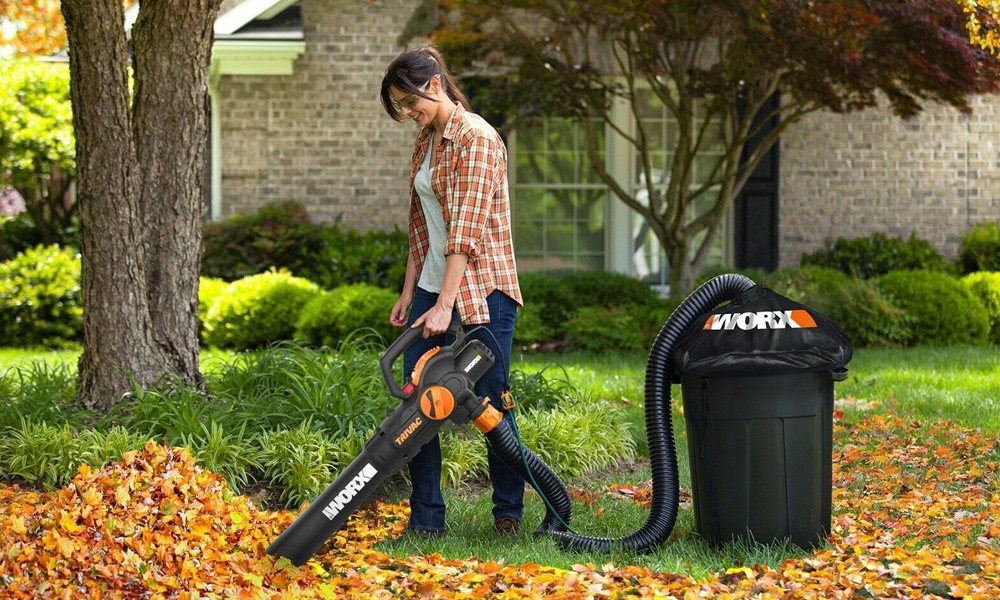
The best leaf blower for your U.S. home depends on your yard size, leaf load, power source, noise rules, and storage space. Look beyond the highest miles-per-hour number. A good choice balances air volume, air speed, run time, weight, noise, control, and service needs.
For most homeowners, a cordless battery leaf blower is the easiest fit for small and medium yards. A corded electric model works well near an outlet. A gas blower may suit large properties or long jobs, but it brings more noise, fuel, fumes, and maintenance.
This guide explains what to look for in a leaf blower and how to compare models without relying on marketing claims alone.

Match the Leaf Blower to Your Yard
Start with the size and layout of your property. A small blower can handle a patio, driveway, or compact suburban yard. A larger yard with many mature trees needs more air volume and longer run time.
Use this simple guide:
| Yard or task | Blower type to consider | Why |
|---|---|---|
| Small patio, deck, or driveway | Compact cordless or corded electric | Light, quiet, and easy to store |
| Small to medium yard | Mid-size cordless blower | Good balance of power and ease |
| Large yard with many trees | High-output cordless or gas blower | Better for deep leaf piles and long work |
| Wet leaves or heavy debris | High-CFM blower | Air volume helps move dense material |
| Commercial or frequent use | Durable professional cordless or gas model | Built for longer work cycles |
Also consider the surface. Leaves on smooth concrete move more easily than leaves in grass, gravel, or mulch. Wet leaves can stick together and may need a rake or mower with a collection system.
A powerful blower cannot solve every cleanup problem. If leaves are packed into wet piles, use a rake first. Then use the blower to finish edges, corners, and hard surfaces.

Understand CFM, MPH, and Newtons
The most useful leaf blower specifications are CFM, MPH, and blowing force. Each describes a different part of the blower’s performance.
CFM measures air volume
CFM means cubic feet per minute. It tells you how much air the blower moves.
Higher CFM usually helps when you need to:
- Move large piles of leaves
- Clear wet or dense debris
- Push leaves across grass
- Cover a wider area
Think of CFM as the size of the air stream. More air can move more material at once.
MPH measures air speed
MPH means miles per hour. It shows how fast the air leaves the nozzle.
Higher MPH can help with:
- Loose leaves
- Stuck leaves in cracks
- Light twigs
- Dirt on hard surfaces
- Precision cleaning
High MPH does not always mean more total power. A narrow nozzle can increase air speed while reducing the size of the air stream.
Newtons can show blowing force
Some manufacturers list blowing force in newtons. This figure can help compare the force produced by a blower, but only when the test method is similar.
Do not compare CFM, MPH, and newtons as if they were the same measurement. They are not. The best comparison uses the same type of rating, the same operating mode, and the same nozzle setup.
Which matters more: CFM or MPH?
For general yard cleanup, CFM often matters more than peak MPH. A blower with high air speed but low air volume may move a narrow stream of leaves. A blower with strong air volume can push a wider pile.
The ideal model has a useful balance:
- Moderate to high CFM for moving piles
- Enough MPH for corners and stuck debris
- A nozzle that focuses the air when needed
- Variable speed control for lighter work
Treat “maximum” figures with care. They may apply to a special nozzle or a short peak setting. Read the manual or product specification page to learn how the number was measured.
Choose Between Battery, Corded, and Gas Power
The power source changes the blower’s weight, noise, run time, maintenance, and cost.
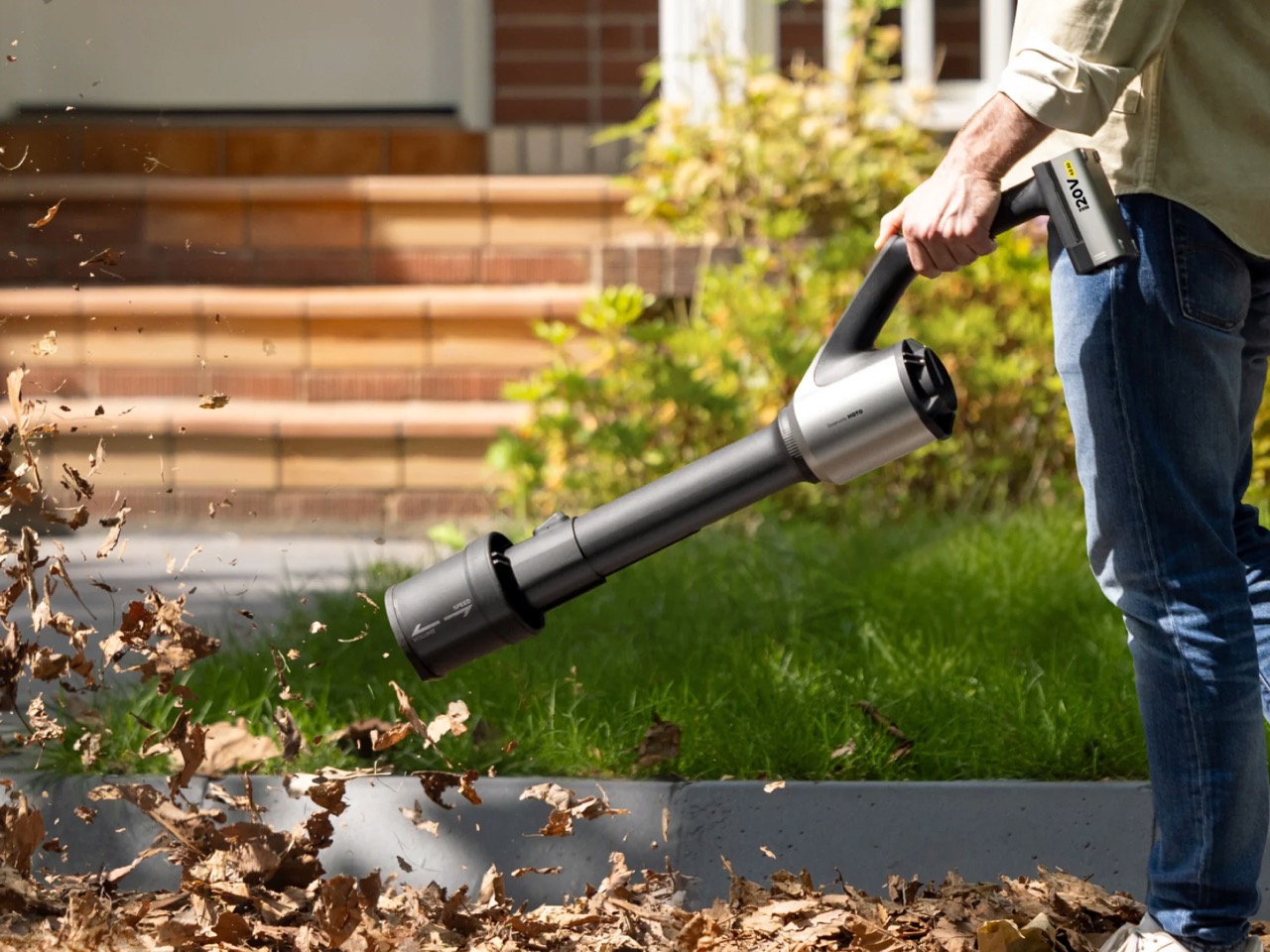
Cordless battery blowers
Cordless models offer easy movement. They do not need a fuel mix or an extension cord. They start with the press of a button.
They are often a good fit for:
- Small and medium yards
- Neighborhoods with noise limits
- Quick cleanup jobs
- Users who already own compatible batteries
The main limits are run time and battery cost. High-power modes can drain a battery quickly. A spare battery may cost nearly as much as the tool.
Check whether the listed battery and charger are included. Many tools are sold as “bare tools” without either one.
Corded electric blowers
Corded blowers provide steady power as long as they remain connected to a suitable outlet. They can work well for patios, driveways, and small yards.
Their limits include:
- The reach of the cord
- The need for outdoor-rated equipment
- Cord management
- Possible voltage drop with unsuitable cords
- No use during wet conditions
Follow the blower manual and the extension cord maker’s instructions. Use outdoor-rated cords and ground-fault protection where required by local electrical rules. Keep the cord away from the air intake, cutting edges, water, vehicles, and foot paths.
Gas leaf blowers
Gas blowers can provide long work periods and strong output. They may suit large properties, landscaping work, or areas far from electrical outlets.
They also require more care. Common needs include:
- Fresh fuel
- Correct fuel mix, when required
- Engine oil for four-stroke models
- Air-filter care
- Spark-plug service
- Winter storage
- Exhaust and fuel handling
Gas models can produce more noise and exhaust than electric models. The U.S. Environmental Protection Agency regulates small off-road engines, but local rules may further restrict gas-powered landscaping equipment. Check your city, county, or homeowners association rules before buying.

Compare Battery Run Time and Charging Needs
Battery capacity alone does not tell you how long a blower will run. Run time changes with speed, nozzle choice, battery age, temperature, and the type of debris.
A useful way to estimate work time is:
Available work time = battery run time × time spent at each power level
For example, a blower may last much longer on low speed than on turbo. If a product page gives only one run-time figure, find out which setting produced it.
Before buying, check:
- Battery voltage and capacity
- Claimed run time and test setting
- Charge time
- Battery replacement price
- Whether the battery fits other tools
- Whether the charger comes in the box
- Whether the battery has a warranty
Battery platforms can reduce long-term cost if you already own tools from the same system. However, do not choose a platform based only on the number of compatible products. Check the actual battery price, local support, and replacement availability.
For a large yard, two smaller batteries may be more useful than one large battery. They can reduce downtime if one battery charges while you use the other.

Check Weight, Balance, and Controls
A light blower is not always the best blower. A heavy model may move leaves faster, but it can cause arm, shoulder, or back strain.
Look for a design that:
- Keeps the motor close to your body
- Has a comfortable handle
- Does not twist your wrist
- Supports one-handed use when safe
- Places the battery where it does not upset balance
- Allows easy speed adjustment
A trigger with a lock or cruise-control feature can reduce hand fatigue. Variable speed is useful because full power is not needed for every task.
Use low power near flower beds, gravel, mulch, and open soil. High power can scatter mulch, disturb soil, or throw small stones. A power button, slider, or trigger should be easy to reach without changing your grip.
If possible, hold the assembled blower before buying. Online weight figures may exclude the battery. Compare the ready-to-use weight, not just the bare tool weight.

Consider Noise and Local Rules
Noise affects your comfort, your neighbors, and your ability to use the blower at certain times.
Manufacturer noise ratings can help compare models, but they do not predict every real-world sound level. Distance, power setting, nozzle design, nearby walls, and ground surfaces all affect the sound.
Before you buy, check:
- Local city or county noise rules
- Homeowners association rules
- Seasonal restrictions
- Rules for gas-powered outdoor equipment
- The blower’s sound rating and test conditions
A quieter model may be the better choice even if it takes a little longer. Avoid using any blower early in the morning, late at night, or near open windows unless local rules clearly allow it.
The Occupational Safety and Health Administration provides workplace guidance on noise exposure. Home users should still protect their hearing when using a loud blower. Earplugs or earmuffs can reduce risk, but they do not make a loud tool safe for unlimited use.

Look for Useful Nozzles and Accessories
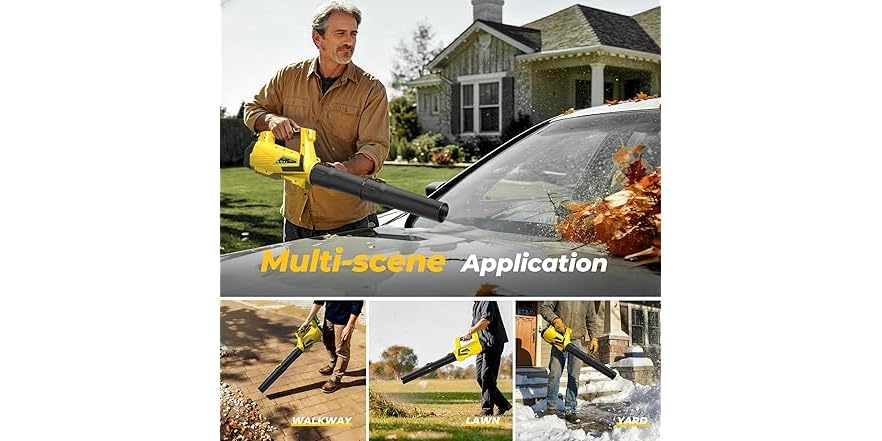
Nozzles change how the air moves. A narrow nozzle focuses the stream. A wider opening spreads it across a larger area.
Useful features may include:
- A round nozzle for general leaf work
- A flat nozzle for sweeping hard surfaces
- A concentrator nozzle for cracks and stuck debris
- A vacuum or mulching kit
- A shoulder strap
- A gutter-cleaning attachment
- A second battery
- A wall mount or storage hook
Do not assume an accessory fits every version of a tool. Confirm the exact model number and whether the attachment comes with the blower.
A vacuum function can help collect dry leaves, but it adds weight and may clog with wet material. A mulching function can reduce leaf volume, yet it may not replace a dedicated shredder or mower collection system for large amounts of debris.

Decide Whether You Need a Vacuum or Mulcher
A blower is best for moving debris. A blower-vac is designed to collect and sometimes shred it.
Choose a blower-only model when you mainly want to:
- Clear driveways
- Move leaves into a pile
- Clean decks and patios
- Remove light debris from outdoor areas
Consider a blower-vac when you want to:
- Collect leaves into a bag
- Reduce leaf volume
- Make compost material
- Limit the use of a rake
Read the conversion instructions before buying. Some models require tools to change from blower mode to vacuum mode. Others use separate tubes or covers.
Never vacuum stones, glass, metal, or other hard objects unless the manual specifically permits them. These items can damage the impeller and become dangerous projectiles.

Check Durability, Service, and Warranty
A leaf blower should match how often you plan to use it. Occasional homeowners may not need commercial construction. Frequent users should pay closer attention to parts and service.
Inspect these details:
- Warranty length and coverage
- Battery warranty
- Availability of replacement batteries
- Replacement tubes and impellers
- Local repair support
- Dust and moisture limits
- Storage instructions
- Brushless or brushed motor design
A brushless motor can improve efficiency and service life in some cordless tools, but the label alone does not prove that one model will last longer. Build quality, use, storage, and maintenance also matter.
Keep the air intake clear. A blocked intake can reduce output and raise motor temperature. Store batteries as directed by the manufacturer. Do not use a damaged battery, cracked housing, frayed cord, or loose tube.
For gas models, confirm that you can get the correct parts and fuel information. A low purchase price may not remain low if service parts are hard to find.

Use a Simple Leaf Blower Comparison Checklist
Use this checklist when comparing two or more models:
- What will you clear? Dry leaves, wet leaves, grass clippings, dust, or small twigs?
- How large is the area? A patio needs less output than a wooded property.
- What power source fits? Battery, corded electric, or gas?
- What is the usable CFM? Check the rating and test conditions.
- What is the usable air speed? Look for a practical range, not only the peak.
- How long will it run? Check the setting used for the claim.
- What does it weigh with the battery or fuel?
- Can you control the speed?
- How loud is it? Check local rules before purchase.
- What comes in the box? Include the battery, charger, tubes, and straps.
- What will replacement batteries or fuel cost?
- Can you get parts and service?
- Does the warranty cover the real components you need?
- Can you store it safely?
The best value is not always the lowest price. Add the cost of the battery, charger, extension cord, fuel, maintenance, and replacement parts.

Follow Safe Leaf Blower Practices
Use a leaf blower only when conditions are safe. The Consumer Product Safety Commission warns consumers to use care with outdoor power equipment and to prevent injuries from thrown objects.
Wear:
- Safety glasses or a face shield
- Hearing protection
- Long pants
- Closed-toe shoes
- Gloves when needed for grip or debris protection
Before starting:
- Move children and pets away
- Remove stones, toys, and other objects
- Check the blower, tube, battery, and cord
- Confirm that guards and covers are installed
- Review the owner’s manual
Point the air away from people, animals, vehicles, windows, and open doors. Do not blow dust toward roads or neighboring property. Avoid dry, dusty areas when the wind can carry debris.
Do not use a gas blower in a garage, shed, or other enclosed space. Carbon monoxide from fuel-burning engines can build up quickly. Never modify a muffler, guard, safety switch, battery, or power cord.
Do not use a blower in rain or on wet electrical equipment unless the manufacturer specifically allows it. Stop work if you notice overheating, smoke, unusual vibration, burning smells, or battery damage.

Avoid Common Leaf Blower Buying Mistakes
Many buyers focus on one number and miss the features that affect daily use.
Mistake 1: Choosing the highest MPH
Peak air speed does not show how much air the blower moves. Compare CFM, air speed, and blowing force together.
Mistake 2: Forgetting the battery
A cordless blower may look inexpensive until you add the battery and charger. Compare the complete kit price.
Mistake 3: Ignoring ready-to-use weight
A bare-tool weight can hide the weight of the battery. Check the assembled weight.
Mistake 4: Buying too much power
Excess power can scatter mulch, gravel, and soil. Variable speed gives you better control.
Mistake 5: Assuming every battery is interchangeable
Battery packs often work only within a specific brand platform or voltage system. Confirm compatibility by model.
Mistake 6: Overlooking local noise rules
Rules vary across U.S. cities, counties, and communities. Check before choosing a gas or high-noise model.
Mistake 7: Using a blower as a leaf disposal plan
A blower moves leaves. It does not remove them from your property unless you collect, bag, compost, or otherwise dispose of them.
Frequently Asked Questions
What is a good CFM for a home leaf blower?
There is no single CFM that fits every yard. A compact blower can handle light work on patios and driveways. A higher-CFM model is more useful for large yards, grass, wet leaves, and deep piles. Compare CFM with air speed, weight, and battery life.
Is a battery leaf blower better than a gas leaf blower?
A battery blower is often easier, quieter, and simpler to maintain. A gas blower may offer longer work time and strong output for large properties. The better choice depends on yard size, local rules, noise tolerance, and access to charging.
How many volts should a cordless leaf blower have?
Voltage alone does not show total performance. Motor design, battery capacity, CFM, air speed, and nozzle shape also matter. Compare complete tools under similar test conditions instead of using voltage as a quality score.
Can a leaf blower move wet leaves?
Yes, but wet leaves are heavier and tend to stick together. A high-air-volume blower may move them slowly, especially from grass. Rake or separate packed leaves first, then use the blower for final cleanup.
Can I use a leaf blower on gravel?
Use low power and keep the nozzle higher above the surface. Strong airflow can throw gravel and create a hazard. Wear eye protection and clear people, pets, and vehicles from the area.
Final Recommendation
When choosing a leaf blower, start with your yard and your work habits. Pick a cordless model for easy movement and low maintenance, a corded model for small areas near an outlet, or a gas model for long jobs on large properties.
Then compare the details that affect real use: CFM, practical air speed, run time, ready-to-use weight, noise, controls, accessories, warranty, and operating cost. Check local U.S. rules and follow the owner’s manual.
The best leaf blower is not the one with the biggest number on the box. It is the one that has enough force for your debris, runs long enough for your yard, feels manageable in your hand, and fits your local conditions.
Sources and further reading
- U.S. Consumer Product Safety Commission: Outdoor Power Equipment Safety
- U.S. Environmental Protection Agency: Small Off-Road Engines
- Occupational Safety and Health Administration: Occupational Noise Exposure
- Manufacturer owner’s manuals and product specification pages for the exact model, battery, charger, and attachments
3 thoughts on “What To Look For In A Leaf Blower: Buying Guide”