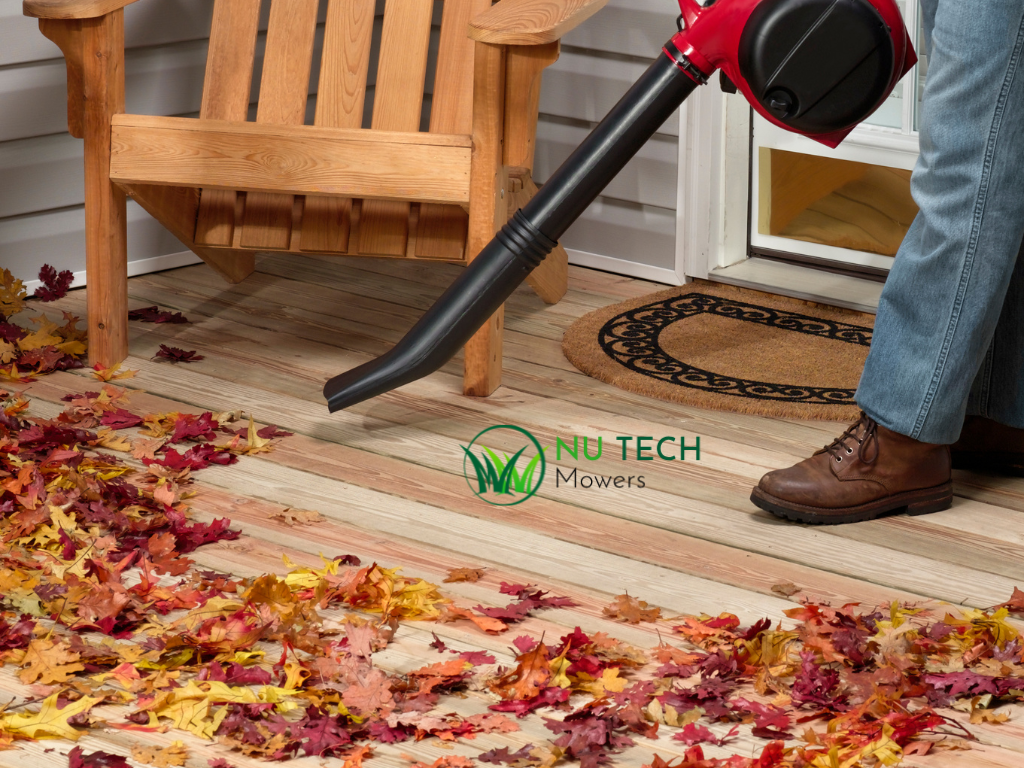
For most U.S. homeowners, a handheld leaf blower rated at about 300 to 500 CFM and 90 to 150 MPH is enough for a small or medium yard. Choose a battery-powered model for light work and lower noise, a corded electric model for a small yard near an outlet, or a backpack blower with about 500 to 700 CFM for large yards, wet leaves, pine needles, and long work sessions.
The right size depends more on air volume, leaf type, yard size, and blower design than on MPH alone. MPH measures air speed. CFM measures how much air the blower moves. In practice, CFM does most of the heavy work, while MPH helps loosen leaves from grass, cracks, gravel, and mulch.
Quick answer: leaf blower size by yard and job
Use this table as a starting point. Actual performance varies by nozzle, battery charge, engine, and the manufacturer’s test method.
| Yard or job | Recommended blower type | Useful starting range |
|---|---|---|
| Patio, porch, driveway, or small area | Compact cordless or corded electric | 100–300 CFM |
| Small yard with dry leaves | Handheld cordless or gas blower | 250–400 CFM |
| Medium suburban yard | Strong handheld cordless or gas blower | 350–500 CFM |
| Large yard or heavy seasonal cleanup | Backpack blower | 500–700+ CFM |
| Wet leaves, pine needles, and thick debris | High-output backpack or walk-behind blower | 600–1,000+ CFM |
| Large open property, sports field, or commercial work | Walk-behind or professional backpack blower | 1,000+ CFM |
These ranges are not legal or industry standards. They are practical buying guidelines. A well-designed 400-CFM blower may work better than a poorly matched model with a higher advertised number.

What do CFM and MPH mean on a leaf blower?
CFM tells you how much air the blower moves. MPH tells you how fast that air leaves the nozzle. You need both numbers, but they answer different questions.
CFM: moving a large amount of leaves
CFM means cubic feet per minute. A higher CFM creates a broader stream of air that can gather more leaves and move them across a lawn or driveway.
High CFM is useful when you need to:
- Move a large pile of leaves
- Clear a wide lawn
- Push damp leaves across grass
- Move pine needles and small twigs
- Reduce the number of passes across a yard
Think of CFM as the size of the broom. A larger air stream covers more ground.
MPH: breaking leaves loose
MPH means miles per hour. A high MPH rating gives the air more force at the nozzle. That can help remove leaves stuck in:
- Grass
- Gravel
- Deck gaps
- Shrub beds
- Driveway cracks
- Building corners
Think of MPH as the pressure at the end of the broom. It can help start a stubborn pile, but it does not always move a large volume of leaves efficiently.
Why the highest MPH is not always best
Manufacturers often list maximum MPH with a narrow nozzle. A narrow nozzle can produce a faster air stream while moving less total air. CFM may be measured with a different nozzle or test condition.
For a fair comparison, check:
- Whether CFM and MPH are measured with the same nozzle
- Whether the number is a maximum or operating rating
- Whether the blower has variable speed
- Whether the battery model reaches its rating only in a short boost mode
- Whether the model includes a wide or narrow nozzle
Do not try to convert MPH directly into CFM. They measure different things.
How to choose a leaf blower by yard size
Small yards, patios, and driveways
A blower in the 100 to 300 CFM range is usually enough for a porch, patio, short driveway, or small lawn. A compact cordless blower is often easier to carry and store than a larger model.
Choose a small blower when:
- Leaves are mostly dry
- The area is close to your home
- You clear leaves once a week
- You do not need to move large piles
- You also want to clear grass clippings or dust
A corded electric blower can work well for a small front yard. Its main limit is the extension cord. Use an outdoor-rated cord that matches the tool’s instructions, and keep the cord away from water, traffic, and the nozzle.
Medium suburban yards
For a typical U.S. suburban yard with several trees, look for roughly 350 to 500 CFM. This range gives you more control when leaves cover grass, garden beds, and a driveway.
A medium-size blower is a good fit if you need to:
- Clear leaves from a front and back yard
- Move leaves into several piles
- Work around shrubs and fences
- Handle a moderate fall leaf load
- Use the tool for more than a few minutes at a time
A variable-speed trigger is valuable here. Use low power near mulch and flower beds, then increase the speed for wet leaves or large piles.
Large yards and wooded properties
A large yard with many mature trees may justify a backpack blower in the 500 to 700 CFM range or higher. The backpack frame transfers much of the weight to your back and hips, so it can be more comfortable during long jobs than a heavy handheld model.
Consider a backpack blower when:
- You clear leaves for 30 minutes or more
- You have a long distance between the leaf pile and the work area
- Leaves collect under dense trees
- You deal with wet or compacted leaf layers
- You need steady output rather than short bursts
A larger blower can save time, but it also creates more noise, uses more fuel or battery power, and can disturb mulch or loose soil. More power is not automatically better in a small yard.

Which power source is the right size for you?
The power source changes how a blower performs, how long it runs, and where you can use it.
Cordless electric leaf blowers
Cordless blowers are a strong choice for many U.S. homeowners. They start quickly, produce no direct exhaust at the point of use, and usually require less routine maintenance than gas models.
They work best when:
- The yard is small or medium
- You already own compatible batteries
- Noise matters
- You want easy starting
- You can finish the job within the battery’s useful runtime
Battery voltage alone does not tell you how powerful a blower is. A 40-volt model is not automatically stronger than a 20-volt model. Compare CFM, MPH, battery capacity, runtime claims, and the included battery.
Also check whether the advertised runtime uses low speed. High-speed or turbo operation can reduce runtime sharply.
Corded electric leaf blowers
Corded models provide steady power as long as they remain connected to a suitable outlet. They can be practical for small properties and quick cleanup.
Their limits include:
- Restricted movement
- Extension-cord management
- Dependence on an outdoor outlet
- Greater risk of damage if the cord is cut or exposed to water
Never carry a corded blower by its cable. Inspect the cord before use and follow the tool manufacturer’s instructions for outdoor operation.
Gas leaf blowers
Gas blowers can provide long work periods and high output without waiting for a battery to recharge. They may suit large properties, thick leaf coverage, and users who already maintain gas-powered yard equipment.
They also require more care, such as:
- Correct fuel
- Engine maintenance
- Air-filter service
- Spark-plug checks
- Safe fuel storage
- Warm-up and cool-down time
Never operate a gas-powered blower in a garage, shed, basement, or other enclosed area. Gas engines produce carbon monoxide, an odorless gas that can build up quickly.
Local rules may restrict gas-powered leaf blowers or limit when you can use them. Check your city, county, homeowners association, or state requirements before buying one. For federal consumer safety information, review guidance from the U.S. Consumer Product Safety Commission.
How much power do wet leaves and pine needles require?
Wet leaves usually need more effort than dry leaves because they are heavier and can cling to grass. A blower that handles dry leaves well may struggle when the leaves are soaked or packed into a thick layer.
For wet leaves, choose:
- More CFM than you would use for light dry leaves
- A variable-speed control
- A comfortable grip or backpack frame
- A nozzle that provides focused airflow
- Enough battery capacity or fuel for slower progress
Pine needles often require a focused air stream because they settle into grass, mulch, and cracks. A narrow nozzle can help loosen them, but a wide airflow setting is better for moving the loosened debris into a pile.
Do not expect any blower to remove every wet leaf from dense grass. A rake, lawn mower with a collection system, or leaf vacuum may be more effective when debris is deeply embedded.

Handheld, backpack, or walk-behind: which size is best?
The physical design matters as much as the airflow rating.
Handheld blowers
Handheld models are best for:
- Small and medium yards
- Short cleanup sessions
- Steps, patios, and driveways
- Users who need easy storage
- Light to moderate leaf loads
They are usually less expensive and easier to control. The trade-off is arm fatigue during long jobs.
Backpack blowers
Backpack models are best for:
- Large yards
- Long cleanup sessions
- Heavy leaf coverage
- Sloped or wooded properties
- Users who need high output
They can reduce hand and wrist strain, but they are larger, louder, and often more expensive. A backpack blower may be excessive if you only clear a small patio.
Walk-behind blowers
Walk-behind blowers are designed for large open spaces. They can move a great deal of air but are less useful around tight garden beds, fences, steps, and small paths.
They may fit:
- Very large residential properties
- Acreage
- Commercial grounds
- Sports fields
- Parking areas
They are usually too large for routine cleanup on a small suburban lot.
A simple method for choosing your blower
Use this five-step process before comparing models.
1. Measure the real job
You do not need a precise survey. Ask:
- How large is the area?
- How many trees drop leaves there?
- Are the leaves dry, wet, or mixed?
- Do leaves sit on grass, gravel, mulch, or pavement?
- How far must you move the piles?
The number of trees and the depth of the leaf layer often matter more than the lot’s total square footage.
2. Select the blower class
Start with the smallest class likely to finish the work:
- Compact handheld: small surfaces and light debris
- Standard handheld: most small and medium yards
- High-output handheld: demanding medium-yard work
- Backpack: large yards and extended use
- Walk-behind: very large open areas
3. Compare CFM before maximum MPH
Use CFM as the main guide for moving leaves. Then check MPH to confirm that the blower has enough force for grass, cracks, and wet debris.
A model with balanced airflow and variable speed is often more useful than one advertised with an extreme maximum MPH.
4. Check comfort and runtime
A blower that is too heavy may slow you down more than a slightly smaller blower. Look at:
- Tool weight with the battery installed
- Handle shape
- Trigger position
- Vibration
- Battery runtime at the speed you will use
- Charger time
- Fuel-tank size for gas models
5. Confirm local noise and use rules
Noise limits vary by location. Some communities restrict gas blowers or set hours for outdoor equipment. Confirm local rules before purchase, especially if you live in a dense neighborhood.

Common leaf blower buying mistakes
Buying based only on MPH
Maximum MPH can look impressive but may not move a wide pile. Check CFM and nozzle conditions as well.
Choosing the largest blower for a small yard
Extra power can scatter leaves, mulch, and soil. It can also increase noise and reduce battery runtime. Variable speed is often more useful than maximum output.
Ignoring battery runtime
A cordless blower may meet its power rating but still fail to finish the job on one charge. Look for runtime information at medium and high speed, not only at the lowest setting.
Forgetting the battery and charger
Some cordless tools are sold without a battery or charger. Include those costs when comparing systems.
Using full power everywhere
High power can damage young plants, strip mulch from beds, and send dust toward windows or neighbors. Begin at a low setting and increase power only when needed.
Blowing leaves into the street
Leaves can create hazards for drivers, cyclists, and storm drains. Direct debris onto your property or into an approved collection area. Follow local yard-waste rules.
Leaf blower safety tips
Wear eye protection and hearing protection, particularly with gas or high-output blowers. Long pants and sturdy shoes can help protect your skin from dust, gravel, and small debris.
Before starting:
- Remove stones, toys, and loose objects from the area.
- Check the blower, nozzle, battery, fuel system, and cord.
- Keep children, pets, and bystanders away.
- Point the nozzle away from people, windows, vehicles, and open doors.
- Use the lowest setting that completes the task.
- Stop the blower before clearing a blockage or changing a nozzle.
Never use a leaf blower to move asbestos material, mold-contaminated debris, or unknown hazardous dust. Avoid blowing dust toward roads or neighboring properties. For gas models, refuel only when the engine is cool and outdoors.

Frequently asked questions
Is 200 CFM enough for a leaf blower?
A 200-CFM blower can be enough for patios, driveways, small lawns, dry leaves, and grass clippings. It may feel underpowered for wet leaves, thick piles, or large yards.
Is a 400-CFM leaf blower powerful enough?
For many medium-size residential yards, 400 CFM is a practical starting point. It should handle dry leaves and routine cleanup, but wet leaves and heavy pine needles may require more output or slower work.
Is higher CFM always better?
No. Higher CFM can move more debris, but it may be harder to control and can disturb mulch or soil. The best rating is the one that matches your yard, leaf type, and cleanup method.
What is better for leaves: MPH or CFM?
CFM is generally more important for moving piles and clearing broad areas. MPH helps loosen leaves from grass, cracks, and other surfaces. A useful blower needs a suitable balance of both.
How many volts should a cordless leaf blower have?
There is no single correct voltage. Compare the blower’s CFM, MPH, battery capacity, runtime, weight, and battery cost. Voltage by itself is not a reliable measure of performance.
Key takeaways
- Choose 100 to 300 CFM for patios, porches, and small areas.
- Choose 250 to 500 CFM for most small and medium residential yards.
- Choose 500 to 700+ CFM for large yards, wet leaves, and long work sessions.
- Use CFM to judge how much debris the blower can move.
- Use MPH to judge how well it can loosen stubborn leaves.
- Compare cordless models by runtime, battery cost, and weight—not voltage alone.
- Check local noise rules before buying a gas or high-output blower.
- Start with low power and wear eye and hearing protection.
Conclusion
For most U.S. homeowners, a 300- to 500-CFM handheld blower is the safest starting point for regular yard cleanup. Move up to a 500- to 700-CFM backpack blower when the property is large, the leaf layer is heavy, or the work takes a long time.
Before you buy, match the blower to the actual job: leaf volume, moisture, surface type, work time, noise limits, and available power. If your yard is small and leaves are dry, a compact cordless model may be all you need. If you manage a large wooded property, higher CFM and a backpack design can save time and reduce fatigue.