
Introduction
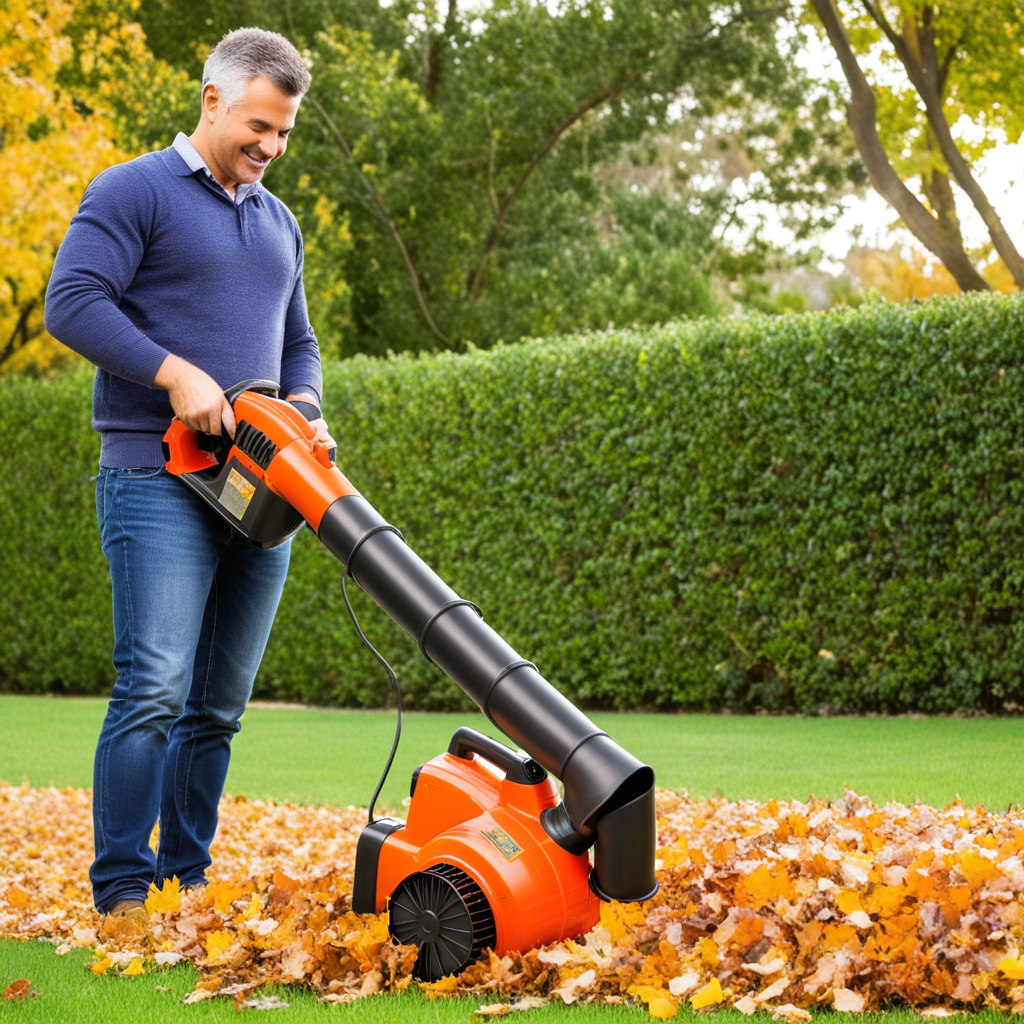
Leaf blowers are not necessary for every U.S. homeowner, but they can save time when you need to clear large lawns, long driveways, patios, or heavy leaf cover. For small yards, a rake, broom, or mower with a collection bag may work just as well.
The right choice depends on your yard size, leaf volume, surface type, local rules, noise tolerance, and budget. A leaf blower is a convenience tool—not a basic lawn-care requirement.
Key Takeaways
- Small yards: A rake, broom, or mower may be enough.
- Large yards: A blower can reduce cleanup time and physical effort.
- Wet leaves: Blowers work poorly when leaves are soaked or packed together.
- Garden beds: Use low power to avoid harming mulch, soil, and plants.
- Noise-sensitive areas: Electric models are often easier to use around homes, but they still make noise.
- Environmental concerns: Raking and sweeping create no direct operating emissions.
- Local rules: Some U.S. cities and counties limit gas-powered blowers by season, time of day, or equipment type.
What Does “Necessary” Mean for Lawn Care?
A leaf blower is necessary only when it solves a problem that other tools cannot solve as easily. Most homeowners can maintain a yard without one, but the tool may become highly useful when leaves collect faster than they can be raked.
A blower moves loose leaves and grass clippings by air. It does not cut grass, collect leaves by itself, remove deep thatch, or clean every type of debris. Its main job is to move material from one place to another.
A blower may be useful if you have:
- Several mature trees
- A large lawn
- A long driveway or sidewalk
- A deck, patio, or screened porch
- Pine needles that gather in cracks
- Grass clippings on hard surfaces
- Limited time for seasonal cleanup
- Physical limits that make raking difficult
A blower may be unnecessary if you have:
- A small, mostly open yard
- Few trees
- Little leaf buildup
- A lawn mower with a bagging system
- A compost area close to the lawn
- Neighbors who are sensitive to noise
- Local restrictions on gas-powered equipment
The key question is not, “Does every homeowner need a blower?” It is, “Will moving yard debris by air save enough time and effort to justify the cost, noise, maintenance, and storage?”
When Is a Leaf Blower Worth It?
A leaf blower is usually worth considering when cleanup takes more time than the tool’s cost and maintenance justify. Large properties and tree-filled lots gain the most value.
Small yards
For a small suburban yard, a rake may be the better choice. Rakes are quiet, inexpensive, easy to store, and useful for gathering leaves into piles. A push broom can clean sidewalks, patios, and driveways without disturbing loose soil or mulch.
A blower can still help with a small yard if you need to clean often or have mobility concerns. In that case, a compact electric model may provide convenience without the upkeep of a gas engine.
Medium and large yards
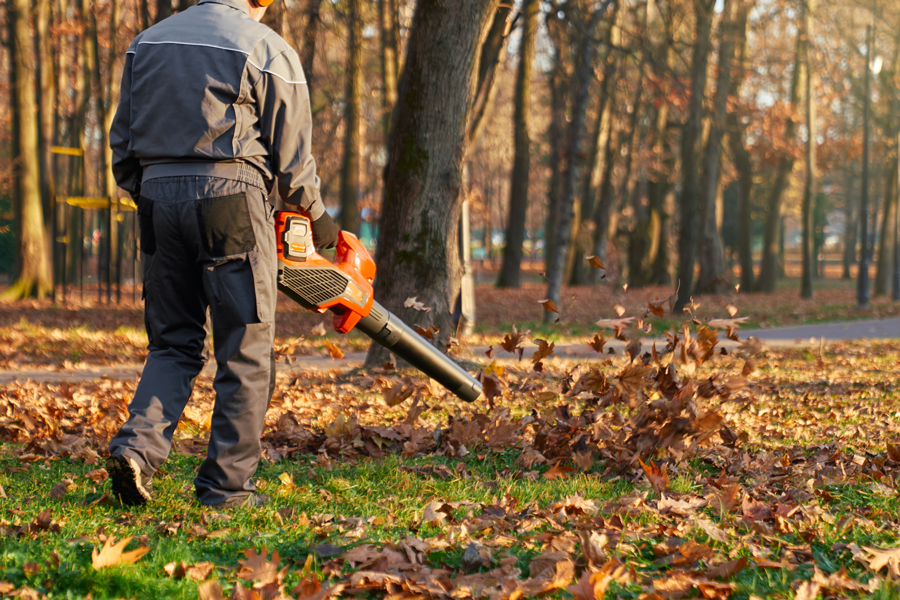
A blower becomes more useful as the distance between leaf piles and disposal areas grows. carrying leaves by hand or making many rake trips takes time. A blower can move loose leaves across a lawn or toward a collection point in one pass.
It works best when leaves are dry and spread in a shallow layer. Deep, wet piles may require a rake, lawn mower, or leaf vacuum before the blower can finish the job.
Driveways, patios, and decks
Blowers are especially useful on hard surfaces. They can move leaves, grass clippings, and small twigs from pavement without the repeated pulling motion required by a broom.
Use lower power near gravel, loose mulch, decorative stone, and garden beds. High airflow can scatter stones, expose roots, and push mulch into unwanted areas.
Pine needles and small debris
Pine needles often collect in corners, roof valleys, cracks, and around shrubs. A blower can move them from these areas, but thick mats may need a rake or specialized attachment.
A blower should not be treated as a general trash tool. Do not use it to move glass, sharp metal, animal waste, large stones, or other hazardous debris.

Leaf Blower vs. Rake, Broom, and Mower
No single yard tool is best for every cleanup task. The best choice depends on the surface, debris, and desired result.
| Tool | Best use | Main benefits | Main limits |
|---|---|---|---|
| Leaf blower | Dry leaves and clippings on lawns or hard surfaces | Fast and low physical effort | Noise, dust, power use, and limited wet-leaf performance |
| Leaf rake | Leaves on lawns and garden beds | Quiet, low cost, precise | Slower and more tiring over large areas |
| Push broom | Patios, sidewalks, and driveways | Quiet and simple | Less useful on grass or deep leaf piles |
| Lawn mower with bag | Leaves spread across grass | Chops and collects leaves | Not suited to patios, beds, or wet piles |
| Leaf vacuum | Collected leaves and small debris | Can collect rather than only move debris | More expensive and often slower to use |
| Composting or mulching mower | Thin leaf layers on lawn | Returns chopped leaves to soil | Cannot handle thick piles well |
A mower can reduce the need for a blower. If leaves are dry and spread across grass, mowing over them with a collection bag can gather or mulch them. Follow the mower maker’s instructions and avoid mowing when leaves hide obstacles.
A rake remains better for garden beds. It gives you more control and is less likely to blow mulch, soil, or plant material away.
A broom is often the best tool for a small paved area. It does not create airborne dust in the same way a high-speed blower can.

Gas, Corded Electric, or Battery Leaf Blower?
The power source affects cost, noise, upkeep, emissions, and working range. There is no universally best type.
Gas-powered blowers
Gas models can provide long run times and strong airflow. They may suit large properties or professional crews that work far from electrical outlets.
Their trade-offs include:
- Fuel storage and mixing requirements for some models
- Engine maintenance
- Exhaust emissions
- More noise and vibration
- Starting and seasonal storage tasks
- Possible local restrictions
The U.S. Environmental Protection Agency regulates emissions from nonroad engines, but federal emissions standards do not mean that every community permits every type of equipment. Check city, county, and homeowners association rules before buying or using a gas model.
Corded electric blowers
Corded models are often light and easy to maintain. They can work well for small yards close to an outdoor outlet.
Their main limits are the cord and outlet location. Use only outdoor-rated cords and equipment. Keep the cord away from water, blades, vehicles, and walk paths. Follow the manufacturer’s grounding and extension-cord instructions.
Battery-powered blowers
Battery models avoid gasoline storage and tailpipe emissions during use. They are often convenient for short jobs near a house or garage.
Their limits include:
- Limited runtime
- Battery charging time
- Replacement battery cost
- Reduced performance as the battery drains
- Added cost if the battery and charger are not included
Battery performance varies with airflow setting, temperature, battery size, and model. A model that works for a small patio may not suit a large, tree-covered lot.
A simple choice rule
- Choose manual tools for small, quiet jobs.
- Choose corded electric for short jobs near an outlet.
- Choose battery electric for moderate jobs and easy startup.
- Consider gas only when long runtime or heavy-duty use clearly outweighs its added noise, maintenance, and local restrictions.

Are Leaf Blowers Bad for the Environment?
Leaf blowers can affect air quality, noise levels, dust, and wildlife disturbance. The impact depends on the power source, run time, maintenance, and how the tool is used.
Gas engines burn fuel and release exhaust. Electric models have no direct exhaust at the work site, although electricity production and battery manufacturing have broader environmental impacts. A short electric cleanup does not have the same operating emissions as a gas-powered cleanup, but “zero emissions” would be too broad a claim.
Blowers can also lift fine dust, pollen, mold spores, and animal waste particles. The EPA explains that airborne particulate matter can affect health, especially for people with asthma, heart disease, lung disease, or other sensitivities.
Blowing leaves away can remove habitat and organic matter from a property. Leaves in natural areas may shelter insects and return nutrients to the soil. On lawns, however, thick leaf layers can block light and air. A practical compromise is to mulch or compost leaves where possible and blow only what must be moved from paths, drains, and building entrances.
Use a mower to mulch a thin layer of leaves on turf when conditions are dry and safe. Do not bury grass under a thick layer of whole leaves.
Noise, Health, and Safety Limits
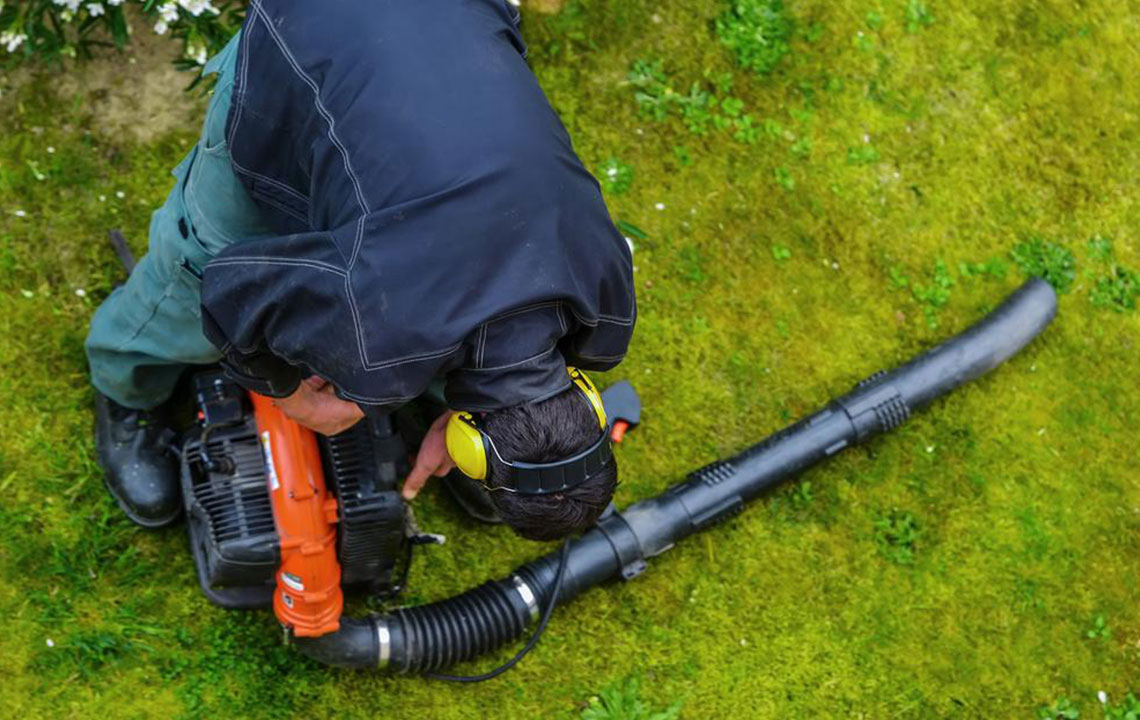
Leaf blowers can create enough noise and dust to require careful use. The National Institute for Occupational Safety and Health identifies 85 decibels over an eight-hour workday as the recommended exposure limit for occupational noise, with adjustments for shorter exposure periods and louder sound.
Home use is not the same as an industrial work shift, but the principle is useful: louder equipment and longer exposure increase risk. Sound also affects neighbors, pets, children, and wildlife.
Use these precautions:
- Read the owner’s manual before operation.
- Wear eye protection.
- Use hearing protection when the sound is loud or the job lasts more than a short time.
- Wear closed-toe shoes and long pants.
- Keep children and pets away from the work area.
- Check the ground for stones, glass, wire, and other objects.
- Point the nozzle away from people, cars, windows, and animals.
- Do not blow dust toward doors, air intakes, or nearby homes.
- Avoid using a gas blower in a garage, shed, or other enclosed space.
- Stop if you smell fuel, see damage, or notice unusual vibration.
Never use a blower to move hazardous waste. For animal droppings, contaminated soil, broken glass, or unknown debris, use a safer cleanup method and follow local disposal guidance.
How to Use a Leaf Blower Without Making a Bigger Mess
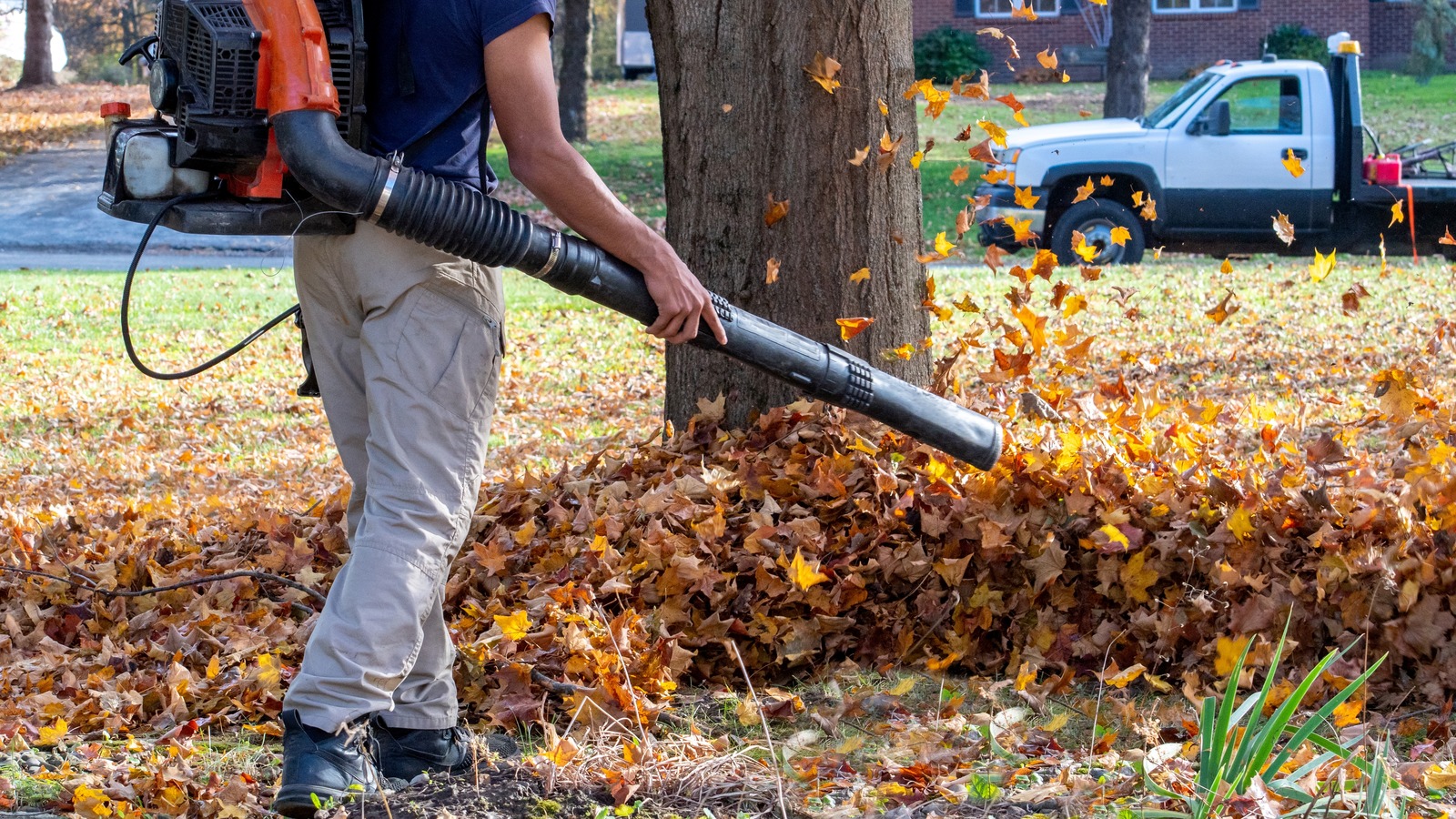
Good technique matters more than maximum power. Start with the lowest setting that moves the debris.
- Check the weather and surface. Dry leaves move more easily. Avoid dusty conditions when possible.
- Clear hazards first. Pick up stones, toys, wire, and sharp objects.
- Plan the destination. Choose a compost pile, lawn edge, collection area, or approved yard-waste container.
- Work with the wind. A light breeze can help, but do not blow material toward roads, people, buildings, or neighboring yards.
- Use a low angle. Aim the nozzle slightly above the ground rather than straight down.
- Make slow passes. Push leaves in small waves instead of scattering them across the property.
- Use lower power near beds. Protect mulch, soil, and plants.
- Collect or mulch the leaves. Do not leave piles where they block storm drains or create slippery walkways.
- Clean the tool. Remove debris from vents and inspect the cord, battery, tube, or fuel system.
- Store it safely. Let hot equipment cool before storage, and keep fuel and batteries according to the manufacturer’s instructions.
A successful cleanup leaves the intended surface clear without creating airborne dust, damaged plants, blocked drains, or scattered debris.

Local U.S. Rules Can Change the Answer
A leaf blower may be practical but still restricted where you live. Rules differ among states, counties, cities, and homeowners associations.
Common restrictions include:
- Bans on gas-powered blowers
- Seasonal limits
- Time-of-day limits
- Maximum noise levels
- Required distance from homes, schools, or hospitals
- Restrictions during poor air-quality conditions
- Rules for commercial landscaping crews
California has adopted rules affecting the sale of certain small off-road engines, while many local governments have separate rules for use. Other states and cities may have different requirements.
Before purchasing a blower, check:
- Your city or county code
- State environmental agency guidance
- Homeowners association rules
- Rental or lease terms
- Local seasonal notices
Do not assume that a product sold in a U.S. store is legal to use in every U.S. community. Sales rules and use rules are separate questions.

How Much Does a Leaf Blower Cost to Own?
The purchase price is only one part of the cost. Consider fuel, electricity, batteries, maintenance, storage, and replacement.
For a battery model, a simple operating estimate is:
Electricity cost = battery energy used in kilowatt-hours × local electricity price
For example, if a battery uses 0.5 kilowatt-hours during a job and electricity costs $0.20 per kilowatt-hour, the charging energy costs about $0.10. This estimate does not include battery replacement or charger losses.
For a gas model, ownership cost includes gasoline, oil where required, spark plugs, filters, fuel stabilizer, and possible repairs. The cost rises with run time and maintenance needs.
Manual tools have lower operating costs but require more physical work. A homeowner who uses a blower for only a few short cleanups each year may save money by borrowing or renting one instead of buying it.
Common Mistakes to Avoid
Using maximum power all the time
High power can scatter leaves, strip mulch, move gravel, and create dust. Start low and increase power only when needed.
Blowing leaves into the street
Leaves can block storm drains and create hazards for vehicles, cyclists, and pedestrians. Keep yard waste on your property or use the disposal method required by your local government.
Using a blower on wet piles
A blower may spread wet leaves without moving them effectively. Rake or mow first, then use the blower for final cleanup.
Ignoring hearing protection
A short job may feel harmless, but repeated exposure adds up. Protect your hearing when sound levels or work time are high.
Buying a tool that is too large
A heavy, powerful blower can be tiring and difficult to control. Match the tool to the property, not to the largest machine available.
Treating a blower as a leaf disposal tool
A blower only moves debris. You still need to collect, mulch, compost, or dispose of the leaves.

Frequently Asked Questions
Are leaf blowers worth it for a small yard?
Often, no. A rake and broom may handle a small yard at lower cost and with less noise. A compact electric blower can still be worthwhile if you clean often or need to reduce physical effort.
Is a leaf blower better than a rake?
Neither tool is always better. A blower is faster for loose leaves on lawns and pavement. A rake provides more control in garden beds and works without fuel, batteries, electricity, or motor noise.
Can I use a leaf blower on wet leaves?
You can try, but performance is usually poor. Wet leaves are heavier and stick together. A rake, mower, or leaf vacuum may work better for the main pile.
Are battery leaf blowers safer than gas models?
Battery models avoid fuel storage and direct exhaust during use, but they can still produce loud noise, dust, and flying debris. Use eye protection, hearing protection when needed, and safe operating practices with either type.
What should I do with leaves after blowing them?
Mulch them with a mower, add them to a compost system, place them in an approved yard-waste container, or follow your local collection rules. Keep leaves out of streets and storm drains.
Conclusion: Do You Really Need a Leaf Blower?
Most U.S. homeowners do not need a leaf blower to care for a yard. A rake, broom, mower, or compost system can handle many cleanup jobs with less noise and lower operating cost.
A blower becomes useful when you have a large property, heavy seasonal leaf fall, long paved areas, or physical limits that make raking difficult. If you buy one, choose the smallest suitable model, check local rules, use low power near plants, and plan where the leaves will go before you start.