
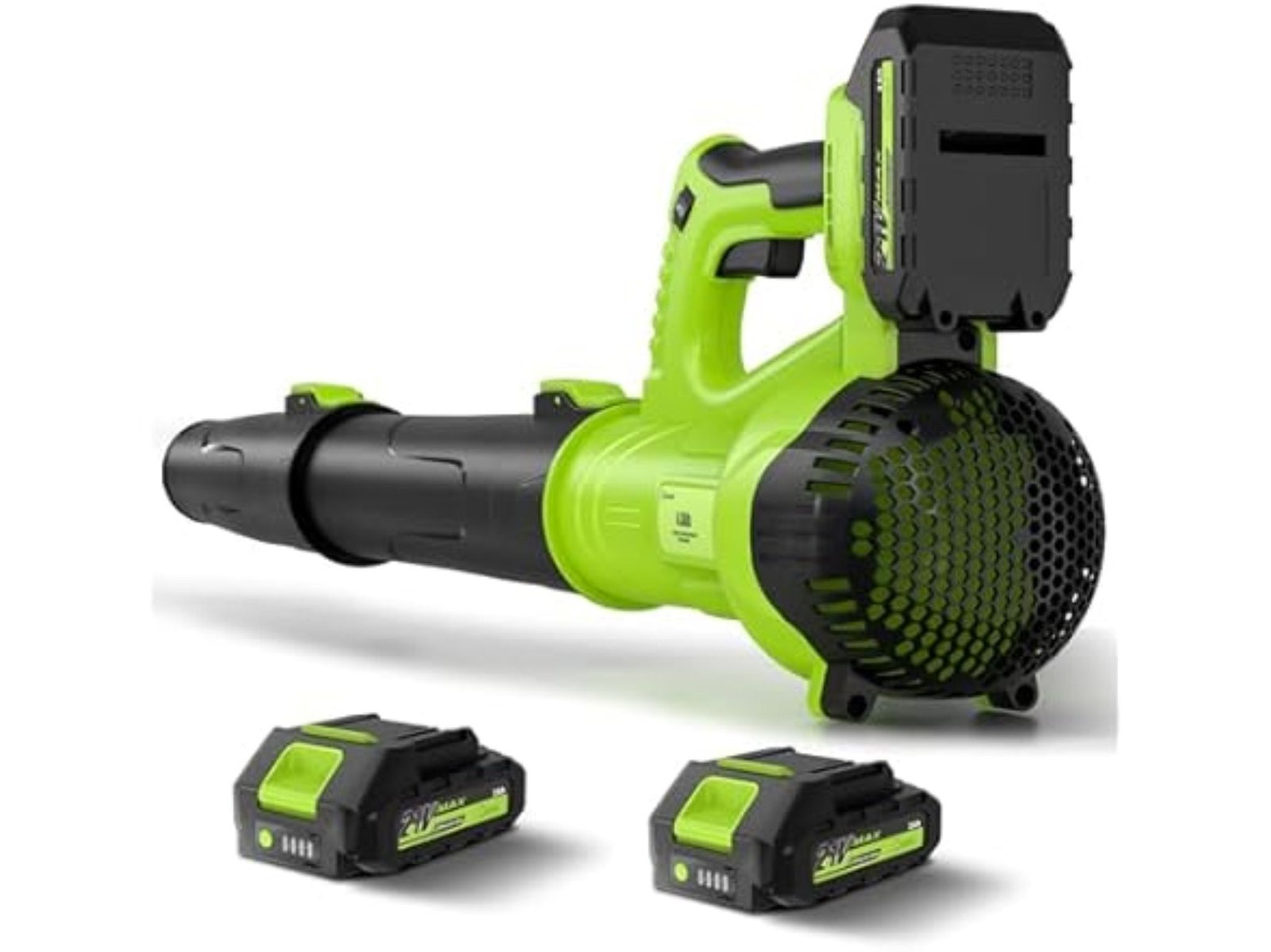
A cordless leaf blower needs simple care to stay safe, strong, and ready for yard work. In the United States, the best routine is to clear the blower after each use, inspect the tube and air intake, charge and store the battery as the manual says, and keep the tool dry. These steps help prevent weak airflow, battery damage, overheating, and early wear.
This guide explains how to maintain a cordless leaf blower, how often to service each part, and what to check when the blower will not start or has lost power.

Quick answer: The basic cordless leaf blower maintenance routine
After each use, remove the battery, clear leaves from the tube and air intake, and wipe the housing with a dry or slightly damp cloth. Check for cracks, loose parts, and blocked vents before storing the blower in a dry place.
For longer care:
- Inspect the battery and charger before every charge.
- Clean the air intake and cooling vents often.
- Do not spray water into the motor housing.
- Do not use gasoline, oil, or other fuel in a battery-powered blower.
- Charge and store the battery within the temperature range in the owner’s manual.
- Stop using the tool if the battery swells, leaks, smells unusual, or becomes very hot.
- Have damaged electrical parts repaired by an approved service center.
What you need before maintaining the blower
Gather these basic items before you start:
- The blower’s owner’s manual
- A clean, dry cloth
- A soft brush
- A small, nonmetal pick for packed leaves
- Safety glasses
- Work gloves
- A flashlight
- A battery charger approved for that battery system
Always remove the battery before cleaning, clearing a blockage, or inspecting the blower. Removing the battery prevents an accidental start while your hands are near the fan or air tube.
Do not use compressed air unless the manufacturer permits it. A strong air stream can push dirt deeper into the motor, damage seals, or spread dust into your eyes.
How to clean a cordless leaf blower after each use
Cleaning after each use is the most useful maintenance step. Dirt and plant matter can block airflow and trap moisture around the housing.
1. Remove the battery
Release the battery according to the instructions for your model. Set it on a clean, dry surface away from metal objects, heat, and water.
Do not clean the blower while the battery is installed. The trigger may engage if the tool is bumped or if debris enters the control area.
2. Clear the blower tube
Look through the tube for leaves, grass, stones, and other debris. Remove loose material by hand while wearing gloves.
If debris is stuck, use a soft brush or a nonmetal tool. Do not force a screwdriver or other sharp metal object into the tube. A damaged tube can change airflow and create a safety risk.
Check that the tube is fully attached. Some models use a locking tab, screw, or twist-fit joint. A loose tube may vibrate, reduce air output, or come off during use.
3. Clean the air intake
The air intake draws air into the blower. It may collect dust, dry grass, hair, and small leaves.
Brush the intake screen or opening from the outside. Keep fingers away from internal fan blades. If the screen is cracked or badly blocked, follow the manual’s instructions for removal or service.
A clean intake helps the motor receive enough air. A blocked intake can make the motor work harder and may cause thermal protection to shut the blower off.
4. Wipe the housing and controls
Use a dry cloth or a cloth dampened with mild soapy water. Wipe the handle, trigger area, battery slot, and outer housing.
Keep water away from:
- The battery contacts
- The charger
- The motor housing
- The trigger switch
- Open vents
- Electrical connectors
Never submerge the blower or rinse it with a hose unless the manufacturer clearly states that the model is designed for that use.
5. Dry the tool before storage
Let the blower dry fully before placing it in a cabinet, shed, or vehicle. Moisture left in the battery slot or vents may cause corrosion.
If the blower becomes wet during use, remove the battery and let both parts dry in a warm, ventilated place. Do not use a heater, hair dryer, open flame, or direct high heat to speed up drying.

How to maintain the battery and charger
The battery is often the most costly part of a cordless leaf blower. Careful charging and storage can reduce avoidable damage.
Inspect the battery before charging
Check the battery case for:
- Cracks
- Swelling
- Punctures
- Leaking fluid
- Burn marks
- Melted plastic
- Corroded contacts
- An unusual smell
Do not charge or use a damaged battery. Place it away from combustible items and contact the manufacturer or an authorized service center for instructions. The U.S. Consumer Product Safety Commission warns that damaged lithium-ion batteries can create fire and burn hazards.
A battery that feels slightly warm after use may be normal. A battery that becomes very hot, smokes, swells, or produces an unusual odor is not normal.
Use the correct charger
Use only the charger made for the battery platform or one specifically approved by the manufacturer. Do not mix chargers based only on similar voltage or connector shape.
A compatible charger manages the battery’s charge cycle. An unsuitable charger may damage the battery or create a fire risk.
Place the charger on a hard, dry, open surface while it operates. Do not cover it with clothing, leaves, or other material. Keep it away from water and heat sources.
Follow the manual for storage charge
Battery storage advice differs by battery system. Some manufacturers advise storing a lithium-ion battery with a partial charge rather than leaving it full for long periods. Others provide a specific storage mode or charge level.
The owner’s manual takes priority. In all cases:
- Store the battery in a cool, dry place.
- Avoid direct sun and freezing or extreme heat.
- Keep the battery away from loose metal objects.
- Do not leave it in a hot car.
- Do not store it where children or pets can reach it.
- Remove it from the blower if the tool will sit unused for a long time.
Do not store a lithium-ion battery in a refrigerator or freezer. Condensation and moisture can damage the battery and contacts.
Clean the battery contacts
If the contacts look dirty, wipe them with a clean, dry cloth. Do not scrape them with a knife or sandpaper.
Never apply oil, grease, water, or household cleaner to the electrical contacts unless the manual specifically allows it.

How to inspect the blower for wear or damage
Inspect the blower before the first use of the season and after any drop or impact. A short inspection can reveal problems before they become failures.
Check these parts:
| Part | What to check | What to do if damaged |
|---|---|---|
| Blower tube | Cracks, dents, loose fit, broken latch | Replace it or follow the manual |
| Air intake | Blockage, broken screen, loose cover | Clean or arrange service |
| Housing | Cracks, gaps, impact damage | Stop use if internal parts are exposed |
| Trigger and lockout | Smooth movement and full return | Stop use if either sticks |
| Battery slot | Dirt, moisture, bent contacts | Clean only as the manual permits |
| Handle | Loose screws or damage | Tighten approved fasteners or seek service |
| Charger cord | Cuts, exposed wires, bent plug | Replace the charger |
| Battery | Swelling, cracks, heat, leaks | Do not charge or use it |
The trigger should move smoothly and return when released. The lockout should prevent accidental operation when the trigger is not intentionally pressed.
Do not take apart the motor, battery, or charger unless the manufacturer specifically provides a safe service procedure. Opening a lithium-ion battery can expose you to electrical and chemical hazards.
How often should you maintain a cordless leaf blower?
Use a simple schedule based on use and storage conditions.
| Maintenance task | Suggested timing |
|---|---|
| Remove debris from tube and intake | After every use |
| Wipe the housing and handle | After dusty or wet use |
| Inspect battery and charger | Before every charge |
| Check tube, housing, and controls | Before each use |
| Clean battery contacts | When visibly dirty |
| Inspect for seasonal damage | Before the first major use |
| Check storage condition | Monthly during long storage |
| Professional or authorized service | When a fault remains after basic checks |
Heavy use, dry dust, sandy soil, and wet leaves call for more frequent cleaning. A blower used for a few short sessions each year may need less cleaning, but it still needs a safety inspection before operation.

How to store a cordless leaf blower safely
Store the blower indoors when possible. A dry garage, basement, or shed is better than an exposed porch.
Before storage:
- Remove the battery.
- Clear leaves and dirt from the tube and intake.
- Wipe the housing dry.
- Inspect the controls and power contacts.
- Store the blower where the tube will not bend or crack.
- Store the battery according to the manufacturer’s temperature and charge instructions.
- Keep the charger protected from moisture and pests.
Do not hang the blower by its trigger, battery, or power cord. If you use a wall hook, support the main body and make sure the tool cannot fall.
Keep the tool away from fertilizer, pool chemicals, gasoline, paint thinner, and other corrosive products. Vapors and spills can damage plastic, contacts, and seals.
For winter storage, do not leave the battery in an unheated space if temperatures may fall outside the range listed in the manual. Bring the battery into a dry indoor area when the manufacturer advises it.

What to do when a cordless leaf blower loses power
A loss of power does not always mean the motor has failed. Check the simplest and safest causes first.
| Symptom | Possible cause | First check |
|---|---|---|
| The blower will not start | Battery is not seated or charged | Remove and reinstall the battery |
| It starts, then stops | Thermal protection or blocked intake | Let it cool and clear the intake |
| Airflow is weak | Blocked tube or dirty intake | Remove debris and inspect the tube |
| Runtime is short | Cold battery, aging battery, or heavy load | Check temperature and battery condition |
| The blower vibrates | Damaged tube or fan area | Stop use and inspect for impact damage |
| The charger does not charge | Wrong charger, dirty contacts, or battery fault | Verify the charger and inspect contacts |
| The motor smells hot | Overload, blockage, or electrical fault | Stop use and disconnect the battery |
| The trigger sticks | Dirt or damaged control | Do not use until repaired |
If the blower stops while working, release the trigger and remove the battery. Let the tool cool. Then check for packed leaves, a blocked intake, or a damaged tube.
Do not keep restarting a hot blower. Repeated attempts can increase heat and may worsen an electrical fault.
If the battery is full and the tube is clear but the blower still will not run, use the troubleshooting section in the exact model manual. If the problem remains, contact the manufacturer or an authorized repair center.

Common cordless leaf blower maintenance mistakes
Avoid these habits:
Using water to wash the blower
Water can enter vents, switches, and battery contacts. A dry brush and cloth are safer for most models.
Leaving the battery in the tool
A battery left in the blower can slowly discharge and may be exposed to heat or moisture. Remove it during transport and long storage unless the manual says otherwise.
Charging a hot or cold battery
Let the battery return to the charging temperature listed in the manual. Charging outside that range can reduce battery life or cause the charger to stop.
Using a damaged battery
Do not test a swollen, cracked, leaking, or burned battery. Do not place it in household trash. Contact your local household hazardous waste program or the battery maker for disposal guidance. The EPA battery recycling guidance explains why batteries need proper handling.
Blocking the air intake
Do not hold the blower against clothing, mulch, or a pile of leaves. The intake must receive free air.
Using the blower in unsafe weather
Avoid operation in rain or standing water unless the manufacturer specifically rates the tool for those conditions. Wet surfaces can also increase slip risk.
Ignoring unusual sounds
Grinding, clicking, rattling, burning smells, or strong vibration can indicate internal damage. Stop the tool and remove the battery before inspection.
Safe operating habits that reduce maintenance
Good use helps prevent damage.
Wear eye protection when blowing leaves, gravel, or dust. Use hearing protection when the noise level or work time calls for it. Keep people, pets, and windows away from the air stream.
Before blowing, remove stones, sticks, and other hard objects from the work area. Point the nozzle away from people, vehicles, doors, and fragile plants.
Use the lowest power that completes the job. Lower power can reduce dust, noise, battery use, and strain on the motor. Work with the wind when possible, and avoid blowing dry leaves into roads or neighboring property.
Follow local rules for outdoor equipment noise and leaf disposal. Rules can differ by city, county, and state.

When should a cordless leaf blower be repaired or replaced?
Arrange service when basic cleaning does not solve the problem or when the tool shows electrical damage.
Seek qualified service for:
- A motor that sparks or smells burned
- A trigger that sticks
- A fan that rubs or grinds
- A cracked motor housing
- A damaged charger cord or plug
- A battery that swells, leaks, or overheats
- Repeated shutdowns with a clear intake
- A battery that will not charge with the correct charger
Replacement may make more sense when the battery no longer provides useful runtime, the repair cost approaches the cost of a new tool, or replacement parts are no longer available. Compare the cost of a battery, charger, tube, and labor rather than judging the blower by its original purchase price.
Do not modify the battery pack, bypass safety controls, or install an unapproved battery. Those changes can create risks that the original design does not control.
Key takeaways
- Remove the battery before cleaning or inspection.
- Clear the tube and intake after each use.
- Keep the blower, battery, and charger dry.
- Use only the correct charger and battery system.
- Store the battery as directed in the owner’s manual.
- Stop using any battery that is swollen, leaking, cracked, or unusually hot.
- Treat grinding, burning smells, vibration, and repeated shutdowns as service warnings.
- Use authorized service for battery, charger, motor, and control faults.
FAQs
Can I wash a cordless leaf blower with a hose?
Usually, no. Water can reach the motor, controls, vents, and battery contacts. Use a dry brush and cloth unless the manufacturer specifically states that the model is water-resistant or washable.
Should I leave the battery in a cordless leaf blower?
Remove it during cleaning, transport, and long storage. Removing the battery also helps prevent accidental starts. Follow the manual if it gives a different storage procedure for your model.
Why does my cordless leaf blower stop after a few minutes?
A blocked intake, packed tube, hot battery, heavy load, or battery fault can cause a shutdown. Remove the battery, let the tool cool, clear the airflow path, and check the battery. Continued shutdowns require manual-guided troubleshooting or service.
Can I use WD-40 or oil on a cordless leaf blower?
Do not spray oil or WD-40 into the motor, tube, vents, trigger, or battery contacts. Most cordless leaf blowers do not need routine motor oil. Use only a lubricant specifically listed in the owner’s manual.
How do I dispose of a dead leaf blower battery?
Do not put a rechargeable lithium-ion battery in household trash or curbside recycling unless your local program specifically accepts it. Tape exposed terminals if the battery maker advises it, keep the pack away from heat, and use a local household hazardous waste or battery recycling program.
How long should a cordless leaf blower battery last?
Runtime depends on battery capacity, power setting, temperature, debris, and battery age. A battery that suddenly loses most of its runtime, becomes unusually hot, or fails to charge may need professional testing or replacement.
Conclusion
Maintaining a cordless leaf blower is mostly a matter of clean airflow, safe battery care, and regular inspection. Clear the tube and intake after use, protect the battery from heat and moisture, and stop operating the tool when you notice damage or unusual heat.
For model-specific details, use the owner’s manual for charge limits, storage temperature, replacement parts, and approved service procedures. When a battery or charger appears damaged, do not repair it yourself; isolate it safely and contact the manufacturer or a qualified service provider.