
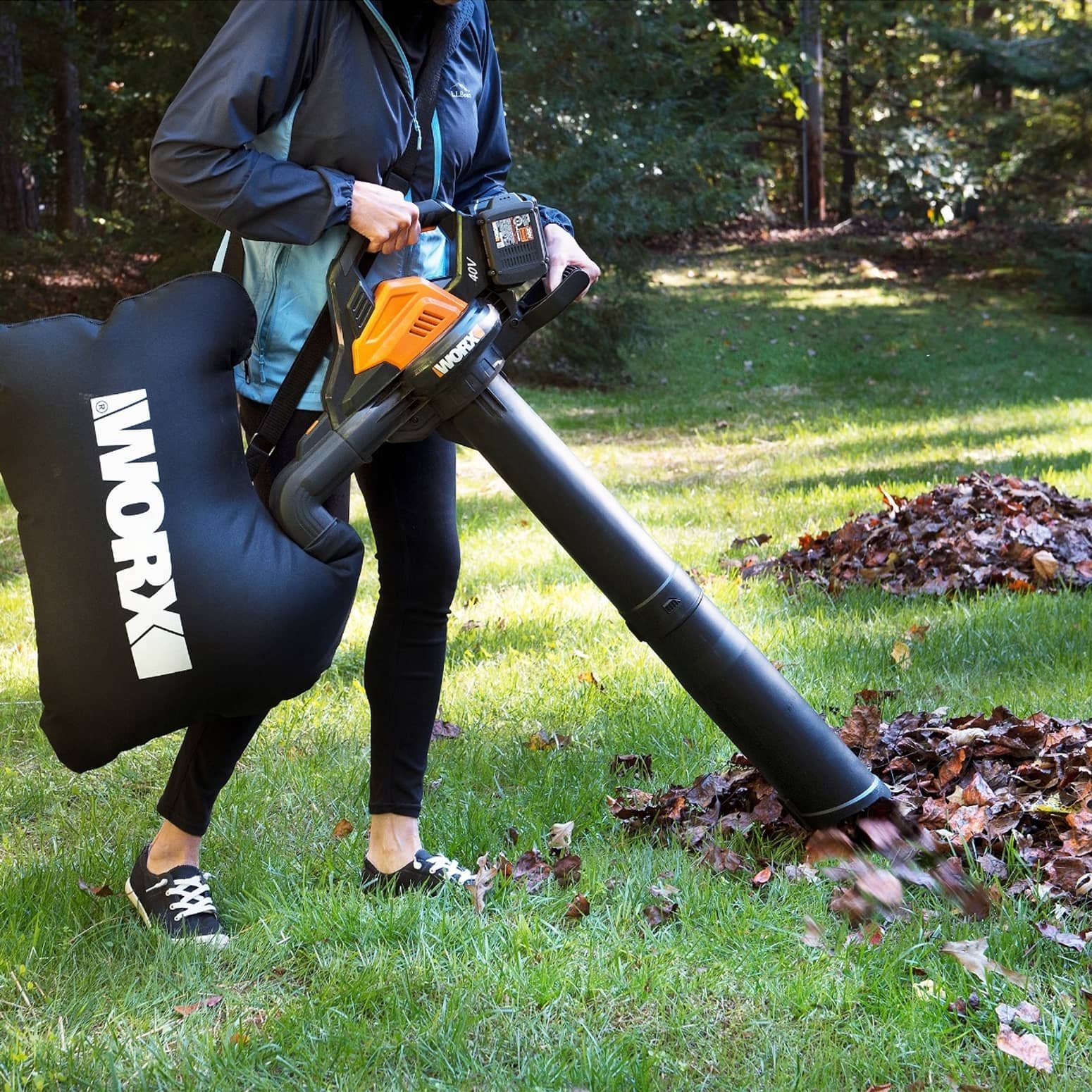
Introduction
A leaf blower moves air at high speed to push leaves, grass clippings, and light yard debris across a surface. In the United States, homeowners, landscapers, and public crews use handheld, backpack, walk-behind, corded electric, battery, and gas-powered blowers for yard cleanup.
The basic process is simple: a motor spins a fan called an impeller. The impeller draws air into the blower housing, speeds it up, and sends it through a narrow tube. The tube directs the moving air toward the ground, where it pushes debris into a pile.

Quick answer: How does a leaf blower work?
A leaf blower converts engine or motor power into a fast stream of air.
- The motor turns an impeller.
- The spinning impeller pulls air into the housing.
- Curved blades increase the air’s speed and pressure.
- The housing guides the air into the blower tube.
- The narrow nozzle focuses the air stream.
- The air pushes leaves and other loose debris.
A blower does not lift most leaves by suction. It creates a moving wall of air that transfers force to the leaves and makes them slide, roll, or scatter.
The main parts of a leaf blower
Every leaf blower has the same basic working parts, even when the power source and design differ.
Motor or engine
The motor supplies the power needed to spin the impeller.
- Battery blowers use a rechargeable electric motor.
- Corded blowers use an electric motor powered by an outlet.
- Gas blowers use a small gasoline engine.
- Walk-behind blowers often use a larger engine and impeller for wider areas.
An electric motor starts turning as soon as electricity reaches its windings. A gas engine burns a mixture of fuel and air to create power. The result is the same: rotational force reaches the impeller.
Impeller
The impeller is the rotating fan inside the blower housing. It has curved blades that move air from the center toward the outer edge.
This design is similar to a centrifugal fan. As the impeller spins, it creates lower pressure near its center. Air enters through the inlet, gains speed from the blades, and moves toward the outside of the housing.
The impeller does not work like a household ceiling fan. A ceiling fan spreads air across a room. A leaf blower collects and directs air through a small outlet.
Blower housing
The housing surrounds the impeller and guides the air. Its shape helps turn the impeller’s spinning motion into a steady flow toward the outlet.
Many blower housings widen around the impeller and then narrow toward the tube. This gradual change helps collect air and direct it forward.
The housing also protects the user from the rotating impeller. Never operate a blower with a missing, cracked, or loose housing.
Blower tube and nozzle
The tube carries air from the housing to the work area. The nozzle controls how the air leaves the machine.
A narrow nozzle usually creates a more focused air stream. A wider opening covers more area but spreads the air over a larger space. Some models include round, flat, or adjustable nozzles for different tasks.
A narrow nozzle may help move wet leaves from a small area. A wider nozzle may work better for dry leaves across a lawn or driveway.
throttle and speed control
The throttle controls motor speed and airflow. Many battery models use a trigger, slider, or electronic speed control. Gas models often use a throttle trigger and may include a cruise-control lever.
Lower speed can reduce noise, dust, battery use, and the risk of damaging mulch or plants. Full speed is useful when debris is heavy, packed, or wet, but it is not always the best setting.

How airflow moves leaves
A leaf blower moves debris because the air stream applies force to it. The effect depends on the air’s speed, volume, direction, and the condition of the debris.
Dry leaves are light and have a large surface area. Air can push them with little effort. Wet leaves are heavier and often stick to pavement or grass, so they need more airflow or a different method.
The air stream may make a leaf:
- Slide across pavement
- Roll along a driveway
- Lift briefly into the air
- Move into a pile
- Scatter in several directions
The goal is not always to use maximum power. Good technique directs the air at a low angle and moves debris in stages.
Air speed and air volume
Leaf blower specifications usually include two main airflow figures:
- Miles per hour (MPH): the speed of air at or near the nozzle
- Cubic feet per minute (CFM): the amount of air the blower moves
MPH helps describe how forcefully the air stream leaves the nozzle. CFM helps describe how much area the blower can affect.
Neither number tells the whole story. A blower with high MPH but low CFM may create a narrow jet that moves stubborn debris but covers less ground. A blower with high CFM may move a broad layer of leaves well but have less concentrated force at the tip.
Manufacturers may measure these figures under different conditions. For that reason, compare test methods and complete specifications rather than treating one number as a universal performance score.
Why nozzle shape matters
The nozzle changes how the air spreads.
A narrow round nozzle concentrates the stream. It can help separate stuck leaves or move damp material. A wider nozzle spreads air over a larger area and may reduce the number of passes needed for dry leaves.
Some nozzles have a curved or flattened shape. These designs can help keep the air close to the ground, where it can push leaves instead of sending them upward.
Why some leaves will not move
A blower may struggle when:
- Leaves are wet or frozen
- Debris is packed into grass
- The pile is too large
- Wind pushes against the air stream
- The nozzle is too far from the ground
- The intake screen is blocked
- The battery is nearly empty
- The engine is not reaching full speed
Start by reducing the pile size. Then work from the outer edge toward the center. A rake may be faster for damp, matted, or heavy debris.

How different types of leaf blowers work
The airflow process is similar across models, but the power source changes the machine’s weight, sound, runtime, and maintenance needs.
Battery-powered leaf blowers
A battery blower uses a rechargeable battery to power an electric motor. Pressing the trigger sends power through electronic controls to the motor, which spins the impeller.
Advantages include:
- No fuel mixing
- No exhaust from the blower during use
- Simple starting
- Low routine maintenance
- Easy storage compared with many gas models
Runtime depends on battery capacity, speed setting, temperature, debris, and battery age. Running at full power uses energy faster than low or medium speed.
A battery blower can lose power when the battery is cold, depleted, damaged, or incompatible with the tool. Use only the battery and charger approved by the manufacturer.
Corded electric leaf blowers
A corded model receives continuous power from an outdoor electrical outlet. It can run as long as the power supply remains available.
Its main limits are the extension cord, outlet location, and the need to keep the cord clear of water, traffic, and the blower path. Use an outdoor-rated extension cord and a ground-fault circuit interrupter, commonly called a GFCI, where required by local electrical practice and the manufacturer.
Never cut, repair, or bypass a damaged cord. Unplug the blower before clearing a blockage.
Gas-powered leaf blowers
A gas blower uses a small internal combustion engine. Fuel burns in the engine cylinder, and the resulting force turns the crankshaft and impeller.
Gas models can provide long work periods with refueling and may suit large properties or commercial work. They also require more maintenance, such as fuel-system care, air-filter checks, spark-plug service, and proper storage.
Gas engines produce exhaust and noise. The U.S. Environmental Protection Agency regulates emissions from many categories of nonroad engines, but local and state rules may limit when or where certain landscape equipment can operate. Check your city, county, or state requirements before use.
Backpack and walk-behind blowers
A backpack blower uses shoulder straps to carry the engine and fan assembly. This design can reduce hand and arm strain during long jobs, although it still creates noise, vibration, and exhaust on gas models.
A walk-behind blower uses wheels and a larger air outlet. It is designed for broad areas such as large lawns, parking lots, and commercial properties. It is less convenient around steps, garden beds, and tight spaces.

How to use a leaf blower effectively
Good technique often matters more than maximum rated power.
Before starting
Check the blower before each use.
- Inspect the housing, tube, nozzle, battery, cord, or fuel system.
- Make sure the air intake is clear.
- Remove stones, sticks, and other objects from the work area when practical.
- Put on eye protection and hearing protection.
- Keep children, pets, and bystanders away.
- Check local rules for noise, hours, emissions, and debris disposal.
The Consumer Product Safety Commission and manufacturers commonly emphasize keeping hands away from moving parts and using appropriate protective equipment. Follow the owner’s manual for the specific model.
The correct blowing pattern
Use a low angle. Aim the nozzle slightly behind the debris so the air moves it forward rather than lifting it straight up.
Work in sections:
- Choose the final collection spot.
- Blow leaves from the far edge toward that spot.
- Use short, controlled passes.
- Keep the nozzle close enough to move debris but not so close that it scatters.
- Reduce speed near flower beds, loose mulch, gravel, and soil.
- Finish the pile with a rake, bag, compost bin, or approved yard-waste container.
A useful method is to create a wide row first. Then narrow the row until it becomes a manageable pile. This prevents random blowing and reduces the amount of debris that returns to the cleaned area.
Blowing versus vacuuming
Some blowers convert into yard vacuums. In vacuum mode, the impeller draws leaves through an intake tube. The material may then pass through a mulching area before entering a collection bag.
Vacuum mode can help collect leaves from corners and garden beds. It can also clog more easily when leaves are wet, mixed with sticks, or too large for the intake. Use the manufacturer’s limits for material size and type.
Never vacuum stones, metal, glass, or other hard objects unless the manual specifically permits them.

Leaf blower safety in the United States
A leaf blower can throw stones, dust, and broken material at high speed. Treat it as powered equipment, not as a harmless household fan.
Wear:
- Safety glasses or a face shield
- Hearing protection
- Closed-toe shoes with a stable sole
- Work gloves when they improve grip
- A dust mask or respirator only when it is suitable for the specific dust hazard
Do not point the air stream at people, animals, vehicles, windows, or roads. Blowing dust can reduce visibility for drivers and may carry allergens, mold, animal waste, or other contaminants.
Avoid blowing near open doors and windows. Keep the intake away from loose clothing, hair, and hands. Stop the machine before clearing a clog, changing a nozzle, or inspecting the impeller.
Gas blowers should never run inside a home, garage, shed, vehicle, or other enclosed space. Carbon monoxide can build up quickly. Store fuel in an approved container and follow the product manual and local fire rules.
Noise exposure is another concern. The National Institute for Occupational Safety and Health provides information on occupational noise, while the Occupational Safety and Health Administration offers workplace guidance. Home users should still limit exposure and wear hearing protection, especially during long jobs.
Some communities restrict blower use by time, season, power source, or noise level. Local rules can change, so check your municipality before operating one.

Common leaf blower problems and fixes
Use this order when a blower does not work correctly. Disconnect power or stop the engine before inspecting internal parts.
| Symptom | Likely causes | Safe first checks |
|---|---|---|
| The blower will not start | Empty battery, bad outlet, low fuel, clogged filter, safety lock engaged | Charge the battery, test the outlet, check the manual’s start procedure, and inspect fuel and filters |
| Airflow is weak | Blocked intake, damaged tube, low battery, dirty air filter, restricted nozzle | Turn it off, clear external debris, inspect the tube, and check the battery or filter |
| The motor runs but leaves do not move | Wet leaves, low speed, poor angle, wind, heavy debris | Use a lower angle, reduce the pile, increase speed only as needed, or use a rake |
| The blower vibrates | Damaged impeller, stuck debris, cracked housing, loose tube | Stop at once and inspect for damage; do not keep using it if vibration continues |
| The blower overheats | Blocked vents, long full-power use, hot conditions, overloaded motor | Stop, let it cool, clear vents, and follow the duty-cycle instructions |
| The gas engine surges or stalls | Old fuel, blocked air filter, fuel problem, spark-plug issue | Stop using it and follow the manual’s maintenance steps or seek qualified service |
| Battery runtime is short | High speed, cold battery, aging battery, heavy debris | Use lower speed when possible, store batteries as directed, and check battery condition |
Do not defeat a safety switch or operate a damaged blower. If the problem involves wiring, fuel leaks, a damaged impeller, or repeated overheating, use an authorized repair service.

How to choose the right blower type
Choose based on the work area, debris, runtime, and local rules rather than one headline specification.
| Situation | Type that may fit | Main trade-off |
|---|---|---|
| Small yard near an outlet | Corded electric | Limited by cord length and outlet access |
| Small or medium yard | Battery electric | Quiet operation and easy starting, but runtime is limited |
| Large property or long work periods | Gas or high-capacity battery | More range or runtime, with greater weight, noise, cost, or maintenance |
| Large open lawn or commercial site | Backpack or walk-behind | Better coverage, but less convenient in tight spaces |
| Light dry leaves on pavement | Most handheld types | Technique and nozzle shape may matter more than maximum power |
| Wet or packed leaves | Higher-airflow blower, rake, or vacuum | No blower moves every wet pile efficiently |
Think about the complete system. A battery model may require a battery and charger. A gas model may require fuel, storage, maintenance, and seasonal preparation. A corded model may need a suitable outdoor extension cord and safe outlet access.
The best choice is the smallest tool that can complete the job without forcing you to run it at full power for the entire task.

Key takeaways
- A leaf blower uses a motor to spin an impeller.
- The impeller pulls in air, speeds it up, and sends it through a tube.
- Air speed affects focused force; CFM affects the amount of air moved.
- Dry leaves move more easily than wet or packed leaves.
- Good results come from a low nozzle angle, controlled passes, and a planned collection area.
- Battery, corded, gas, backpack, and walk-behind models use the same basic airflow principle.
- Eye and hearing protection are important, and local operating rules may apply.
- Stop using a blower if it vibrates, overheats, leaks fuel, or has damaged parts.
Frequently asked questions
Does a leaf blower suck air in or blow air out?
It does both inside the machine. The impeller draws air into the housing through the intake, then sends that air out through the blower tube at higher speed. In normal blower mode, the useful airflow is the stream leaving the nozzle.
Is higher MPH or higher CFM better?
Neither number is always better. Higher MPH can help with focused force on stubborn debris. Higher CFM can help move a larger layer of leaves across a wider area. Compare both numbers, the nozzle design, and the manufacturer’s test conditions.
Can a leaf blower move wet leaves?
Yes, but wet leaves are heavier and often stick to the ground. Use a low nozzle angle and work in small sections. If the leaves are matted, a rake or shovel may be faster and may reduce the risk of clogging the blower.
Can I use a leaf blower on gravel?
Use caution. Air can throw loose stones and damage surfaces or nearby property. Start at low speed, keep the nozzle farther away, and aim across the surface rather than directly into the gravel. Stop if stones begin to move.
Why is my leaf blower blowing weakly?
Common causes include a blocked intake, clogged nozzle, dirty air filter, low battery, damaged tube, or a motor that is not reaching full speed. Turn the blower off before checking it. If airflow remains weak after basic checks, consult the owner’s manual or a qualified repair service.
Can a leaf blower damage grass or plants?
High-speed air can disturb loose soil, mulch, seedlings, and delicate plants. Use a lower setting and keep the nozzle farther away from living plants. Do not use a blower to strip soil from roots or expose plant crowns.
Conclusion
A leaf blower works by turning motor power into directed airflow. Its impeller pulls in air, accelerates it, and sends it through a tube. Air speed, air volume, nozzle shape, debris condition, and user technique then determine how well the leaves move.
For the next cleanup, clear the intake, wear eye and hearing protection, check local rules, and plan where the leaves will go before starting. Use the lowest speed that moves the debris efficiently, and switch to a rake or vacuum when leaves are wet, packed, or mixed with hard objects.