
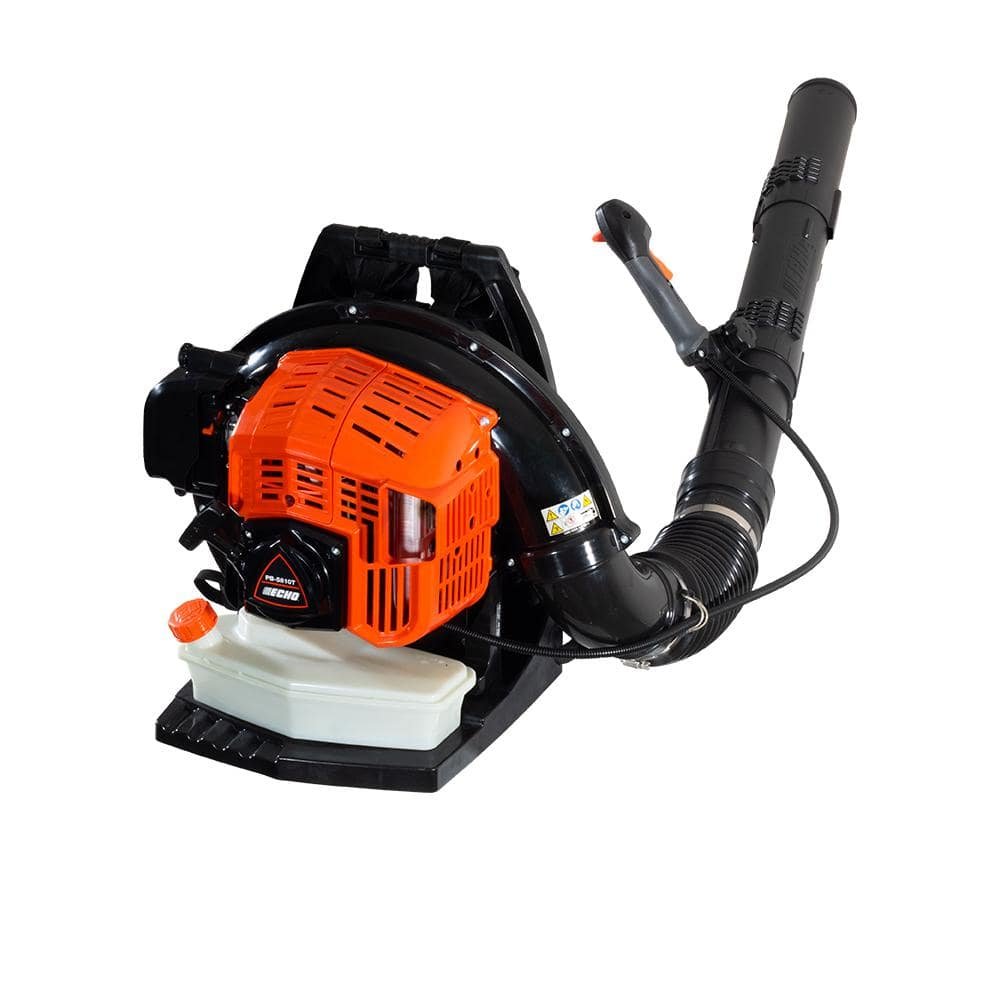
For most U.S. homeowners, the best leaf blower speed is 120 to 150 MPH, paired with about 400 to 600 CFM. This range handles dry leaves, grass clippings, pine needles, and light yard debris without paying for more power than the job needs.
Choose a blower with 150 to 200 MPH or more when you often move wet leaves, heavy debris, or leaves packed into grass. However, MPH is only half the story. CFM, or airflow volume, often matters more than top speed when you need to move a large pile.
The right choice depends on the debris, yard size, nozzle design, blower type, and local noise rules in the United States.

What Does MPH Mean on a Leaf Blower?
MPH means miles per hour, or the speed of the air leaving the blower nozzle. A higher MPH can help break up stuck leaves and move damp debris.
MPH does not tell you how much air the blower moves. That measurement is called CFM, or cubic feet per minute.
- MPH measures air speed.
- CFM measures air volume.
- Newton force measures blowing force, although manufacturers do not always list it.
- Nozzle shape affects the measured air speed.
A narrow nozzle can produce a high MPH number by focusing the air stream. A wider opening may produce a lower MPH number but move more air across a larger area.
Think of MPH as the speed of a garden hose stream. CFM is closer to how much water flows through the hose. A fast, thin stream can reach far, while a larger flow can move more material at once.
Why the highest MPH is not always best
A blower with a very high top speed may feel strong at the nozzle but still move a modest amount of air. This can make it good for loosening wet leaves but slower at clearing a large lawn.
For most routine work, look at both numbers. A blower rated at 130 MPH and 500 CFM may be more useful for leaves than one rated at 200 MPH and 250 CFM.
Manufacturer ratings also vary by test method. Some companies list maximum speed with a narrow nozzle. Others list airflow with a different attachment. Compare MPH and CFM only when the testing conditions and nozzle setup are similar.
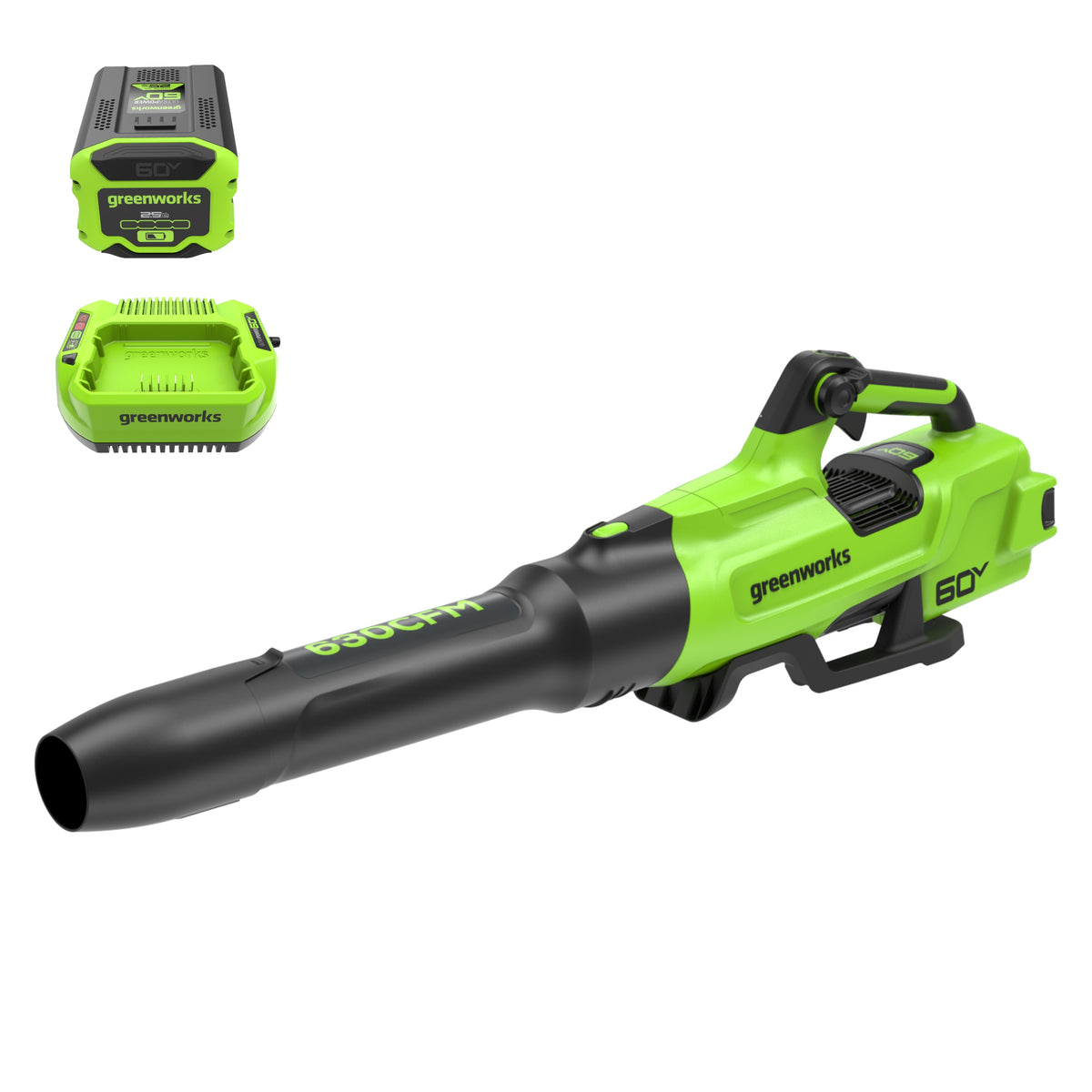
The Best MPH for Different Leaf-Blowing Jobs
The best MPH depends on the material you need to move. Dry leaves on pavement require less power than wet leaves trapped in thick grass.
| Yard task | Useful MPH range | Useful CFM range | What matters most |
|---|---|---|---|
| Light dust and grass clippings | 80–120 MPH | 200–400 CFM | Control and low noise |
| Dry leaves on a driveway | 100–140 MPH | 300–500 CFM | Balanced speed and airflow |
| Leaves on a lawn | 120–150 MPH | 400–600 CFM | Higher airflow |
| Pine needles and heavy dry leaves | 130–170 MPH | 450–700 CFM | Air volume and force |
| Wet or packed leaves | 150–200+ MPH | 500–800+ CFM | High force and airflow |
| Large piles or large properties | 150–200+ MPH | 600–900+ CFM | Sustained airflow |
These ranges are practical buying guidelines, not fixed performance standards. Yard conditions, nozzle design, battery charge, wind, and debris moisture can change the result.
Best MPH for dry leaves
For dry leaves on a driveway, sidewalk, patio, or deck, 100 to 140 MPH is usually enough. A blower in this range can move leaves without creating an unnecessarily strong blast.
If the leaves cover a large lawn, prioritize 400 CFM or more. Higher airflow helps gather scattered leaves into a pile.
Best MPH for wet leaves
Wet leaves are heavier and tend to cling to grass and pavement. A blower with 150 MPH or more can help separate them, but airflow still matters.
For regular wet-leaf work, look for approximately 500 CFM or more when possible. Use short bursts near the ground rather than holding the trigger wide open from far away.
Best MPH for pine needles
Pine needles can settle into grass, mulch, gravel, and gaps between pavers. A blower with 130 to 170 MPH and moderate-to-high CFM is usually a better fit than a low-power compact model.
A narrow nozzle may help loosen needles from corners. Once they are free, a wider nozzle can gather them more efficiently.
Best MPH for grass clippings
Grass clippings usually do not require maximum speed. 80 to 120 MPH is often enough for sidewalks, driveways, and patios.
Excessive speed can scatter clippings into flower beds, storm drains, or neighboring yards. Lower power gives you better control.
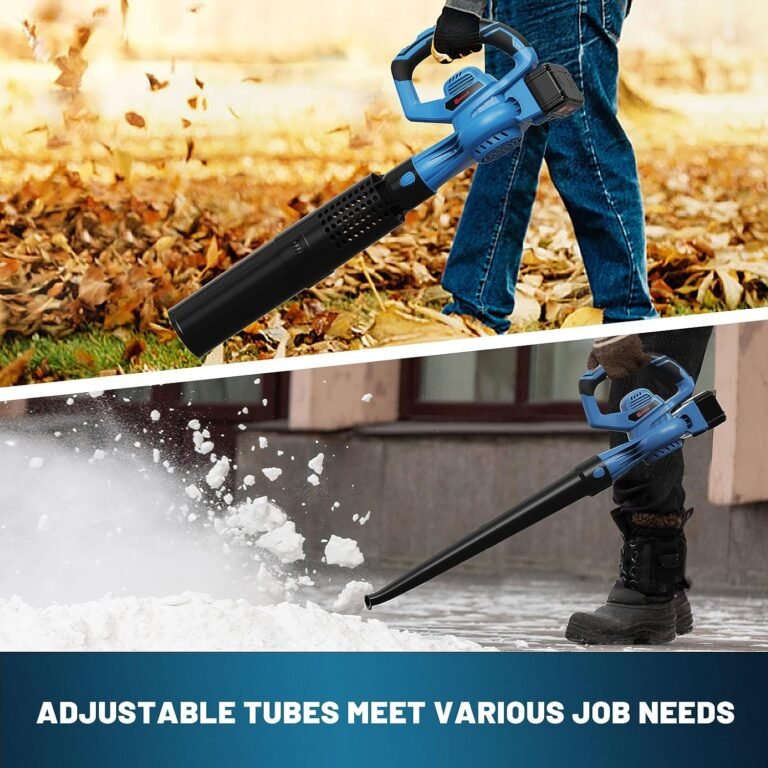
Why CFM Matters as Much as MPH
CFM often matters more than MPH when you need to clear a broad area. A high-CFM blower pushes a larger mass of air, which helps move a wide layer of leaves.
Use MPH to break loose stubborn debris. Use CFM to move the debris across the ground.
This is why a balanced blower can outperform a model with the highest advertised MPH. A powerful air stream that covers only a small spot may take longer to clear a whole driveway.
A simple way to compare blower ratings
When comparing two models, ask these questions:
- Are the MPH ratings measured with the same type of nozzle?
- Are the CFM ratings measured at the nozzle or inside the housing?
- Does the blower maintain its rated output under normal use?
- Is the number a maximum setting or a working setting?
- Does battery charge affect the output?
- Does the model include a variable-speed trigger?
Do not treat an advertised maximum as the speed you will use all the time. Maximum power can drain a battery quickly, increase noise, and make leaves harder to control.
Air speed and air volume work together
A useful blower needs both air speed and air volume. The balance changes by task:
- High MPH with low CFM: Good for loosening stuck debris.
- Moderate MPH with high CFM: Good for moving large piles.
- High MPH with high CFM: Useful for wet leaves and large properties, but often louder and heavier.
- Low MPH with low CFM: Suitable for light cleanup only.
For a typical U.S. suburban yard, a blower around 120 to 150 MPH and 400 to 600 CFM offers a practical balance.

How to Choose the Right Leaf Blower for Your Yard
Start with the job, not the largest number on the package. A small yard with dry leaves does not need the same blower as a large property with wet foliage.
1. Measure the type of debris
Identify what you usually clear:
- Dry leaves
- Wet leaves
- Pine needles
- Acorns
- Grass clippings
- Small twigs
- Dust or sand
- Light snow
Dry leaves and grass clippings need less power. Wet leaves, acorns, and packed debris need more force.
2. Consider your surface
Smooth surfaces are easier to clear than grass or gravel.
- Driveways and sidewalks: Moderate MPH and CFM work well.
- Grass: Higher CFM helps lift leaves from the blades.
- Mulch: Use lower power to avoid blowing mulch away.
- Gravel: Use controlled speed and keep the nozzle farther from the ground.
- Decks and patios: Variable speed improves control.
3. Match the blower type to the property
Cordless handheld blowers
Cordless blowers work well for small and medium residential yards. They are easy to start and produce no direct exhaust during use.
Look for:
- About 120–150 MPH for common cleanup
- Around 400–600 CFM for a typical yard
- A variable-speed trigger
- A battery large enough for the area
- A charger and battery system that fit your other tools
Battery output can fall as the charge drops. Cold weather may also reduce runtime.
Corded electric blowers
Corded models can provide steady power for small yards near an outdoor outlet. The cord limits movement and requires careful handling.
Use only outdoor-rated extension cords that match the tool manual. Keep the cord away from water, sharp edges, vehicles, and the blower nozzle.
Gas handheld blowers
Gas handheld blowers can provide long runtime and strong airflow. They need fuel, oil where required, seasonal care, and engine maintenance.
They also create exhaust and may be louder than electric models. Follow the manufacturer’s instructions for fuel storage, starting, and maintenance.
Backpack blowers
Backpack blowers make sense for large properties, long sessions, or heavy leaf fall. They can provide sustained airflow while placing the motor’s weight on your back.
They are often more power than a small residential yard needs. Their noise, fuel use, weight, and local restrictions deserve careful consideration.

Best MPH by Yard Size
Yard size gives you a starting point, but debris type still controls the final choice.
| Property or cleanup area | Suggested MPH | Suggested CFM | Recommended style |
|---|---|---|---|
| Small patio or driveway | 80–120 MPH | 200–400 CFM | Compact cordless or corded |
| Small suburban yard | 120–150 MPH | 400–600 CFM | Cordless handheld |
| Medium yard with many trees | 130–170 MPH | 500–700 CFM | Strong cordless, gas, or light backpack |
| Large property | 150–200+ MPH | 600–900+ CFM | Backpack or high-output handheld |
| Commercial-scale cleanup | 160–200+ MPH | 700–1,000+ CFM | Professional backpack or wheeled equipment |
These figures are starting points, not a guarantee of clearing speed. A yard with dry leaves may need less power than a smaller yard with wet leaves and dense grass.
A variable-speed control can make one blower more useful across several tasks. Run it low for grass clippings and mulch. Increase the output for wet leaves and packed debris.

How to Use a Leaf Blower Efficiently
The correct technique can matter as much as the blower’s MPH rating.
- Check the area first. Remove toys, stones, tools, and other loose objects.
- Choose a collection area. Work toward a compost bin, tarp, bag, or leaf pile.
- Start at a low setting. Increase power only when needed.
- Hold the nozzle at a shallow angle. Aim across the ground rather than straight down.
- Work with the wind when possible. This reduces effort and improves control.
- Use sweeping motions. Move the air in a wide arc to gather leaves.
- Make smaller piles. Very large piles can require more power and time to move.
- Finish with a lower setting. This helps collect stragglers without scattering the pile.
For leaves trapped in grass, aim the air stream along the grass rather than directly into the soil. For gravel, raise the nozzle and reduce speed to avoid moving stones.
Stop if the blower overheats, loses power, vibrates heavily, or produces an unusual smell. Check the manual before clearing a blockage or inspecting the fan.

Common Mistakes When Choosing Leaf Blower MPH
Choosing the highest MPH without checking CFM
A high MPH number can look impressive, but it may not indicate strong area coverage. Check both ratings before buying.
Comparing maximum ratings as if they were normal output
Maximum speed is often measured under ideal conditions. Battery level, nozzle choice, air filter condition, and load can affect real use.
Ignoring the nozzle
A narrow nozzle concentrates air and may raise MPH. A wide nozzle spreads airflow and can move more leaves at once. Use the nozzle that fits the task.
Buying more power than you can comfortably control
A very strong blower can scatter leaves, strip mulch, move gravel, and create more noise. More power is not always more productive.
Forgetting battery runtime
A cordless blower may have enough MPH but not enough operating time for the whole yard. Check the battery capacity, stated runtime, charge time, and cost of extra batteries.
Using a leaf blower near people or pets
High-speed air can move stones and other objects. Keep people and animals away from the work area.
Blowing debris into streets or storm drains
Leaves can create traffic hazards and may block drainage systems. Gather yard waste according to your city, county, or homeowners association rules.

Leaf Blower Safety and Local U.S. Rules
Wear eye protection, hearing protection, sturdy shoes, and long pants when using a leaf blower. The U.S. Consumer Product Safety Commission recommends following the equipment manual and keeping children away from operating lawn and garden equipment.
Leaf blowers can produce harmful noise levels, especially at close range. The Occupational Safety and Health Administration provides general information about occupational noise exposure, but homeowners should also follow the blower manufacturer’s hearing-protection guidance.
Gas-powered models should be used outdoors, away from doors, windows, and building openings. Never run a gas engine in a garage, shed, basement, or other enclosed space because carbon monoxide can build up.
Local rules vary across the United States. Some cities and counties restrict gas-powered blowers, limit operating hours, or set noise standards. Check your local government website before buying or using a gas model.

Frequently Asked Questions
Is 200 MPH too much for a leaf blower?
Not always. Around 200 MPH can help with wet, packed, or heavy debris. It may be excessive for dry leaves on a small driveway, where lower power gives better control and creates less noise.
Is 100 MPH enough for leaves?
It can be enough for dry leaves on smooth surfaces, especially when the blower has good CFM. It may struggle with wet leaves, leaves in thick grass, or large piles.
Is CFM more important than MPH?
CFM is often more important for moving large amounts of leaves. MPH helps loosen stubborn debris. For general yard work, choose a balanced combination rather than focusing on one rating.
What is a good MPH for a cordless leaf blower?
A cordless blower rated at 120 to 150 MPH is a strong general-purpose choice for many U.S. residential yards. Also look for approximately 400 to 600 CFM and enough battery runtime for the property.
Can a leaf blower move wet leaves?
Yes, but wet leaves need more force and airflow. A model with about 150 MPH or more and 500 CFM or more may work better. Technique matters: loosen the edges first and work in short passes.
Can I use a leaf blower on gravel?
Yes, if you use care. Start at a low setting, raise the nozzle, and test a small area. High airflow can throw stones and damage nearby property.

Key Takeaways
- The best general-purpose range is 120 to 150 MPH.
- For wet or packed leaves, consider 150 to 200+ MPH.
- CFM matters when moving large piles or clearing a wide lawn.
- A practical residential target is about 400 to 600 CFM.
- Compare ratings with the same nozzle and test conditions when possible.
- Variable-speed control improves safety, control, and battery life.
- Check local U.S. rules before using a gas-powered leaf blower.
Conclusion
For most homeowners, the best MPH for a leaf blower is 120 to 150 MPH, with 400 to 600 CFM for balanced everyday performance. Choose more power only when your yard regularly has wet leaves, pine needles, heavy debris, or large piles.
Before buying, compare MPH, CFM, nozzle design, runtime, noise, weight, and local restrictions. The best blower is not the one with the biggest number. It is the one that moves your usual debris with enough force, control, and runtime to finish the job safely.