
Introduction
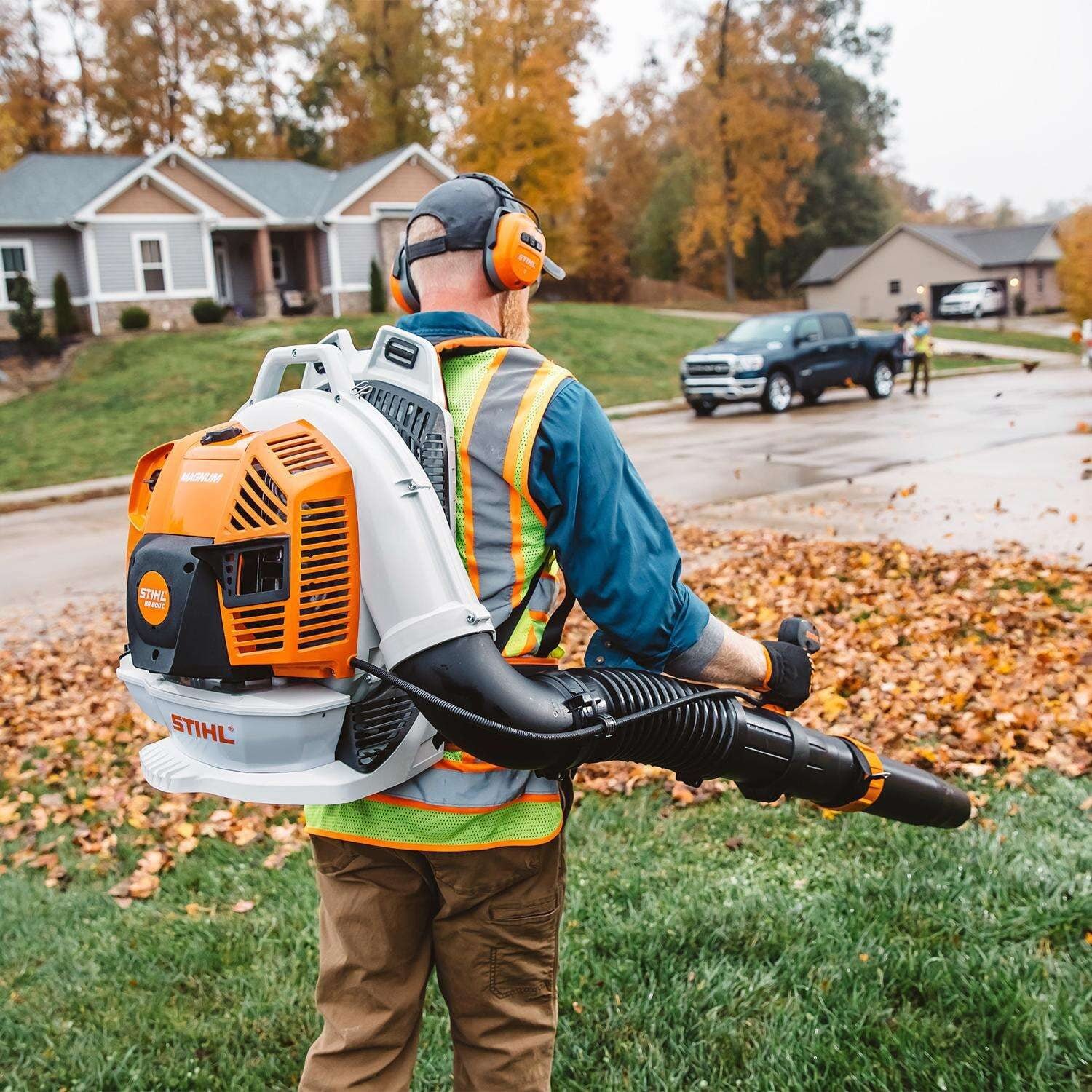
To start a gas leaf blower in the United States, use fresh fuel, place the blower outdoors, set the controls for a cold or warm engine, and pull the starter cord until the engine runs. Most two-stroke blowers use a fuel-and-oil mix, while some larger models use separate gasoline and engine oil. Always follow the starting steps in the owner’s manual for your exact model.
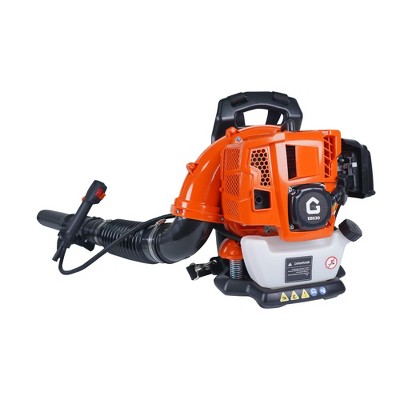
The controls may include a fuel bulb, choke lever, stop switch, throttle lock, and pull starter. Their layout differs by brand, so forcing a control or using the wrong fuel can damage the engine or create a fire risk.

What You Need Before Starting
Prepare the blower and work area before you pull the starter cord.
- The gas leaf blower
- The correct fuel for the model
- Fresh, clean gasoline
- Two-stroke oil, if the blower requires a fuel mix
- A clean fuel container approved for gasoline
- Safety glasses or goggles
- Hearing protection
- Work gloves
- Closed-toe shoes
- A clear outdoor starting area
Start the blower outside in an open area, not in a garage, shed, basement, vehicle, or other enclosed space. Gasoline engines produce carbon monoxide, an odorless gas that can build up quickly indoors. The U.S. Consumer Product Safety Commission warns that portable engine-powered tools should not be run in enclosed spaces because of carbon monoxide poisoning risks. See the CPSC carbon monoxide safety guidance for general engine safety information.
Check the blower before starting it:
- Make sure the fuel cap is tight.
- Look for fuel leaks or wet areas around the tank and fuel lines.
- Confirm that the blower tube is firmly attached.
- Check that the air intake is free of leaves and debris.
- Make sure the throttle and stop switch move freely.
- Keep people, pets, and loose items away from the air outlet.
Do not start the blower if you smell a strong gasoline odor, see leaking fuel, or find a damaged fuel line. Move the tool away from ignition sources and allow spilled fuel to evaporate outdoors before investigating the problem.
Use the Correct Fuel
The correct fuel depends on the engine design. Many handheld gas leaf blowers use a two-stroke engine, often called a two-cycle engine. This type usually needs gasoline mixed with two-stroke oil in the ratio listed in the manual.
Some models use a four-stroke engine. These normally take straight gasoline in the fuel tank and separate engine oil in an oil reservoir. Never guess the fuel type or oil ratio.
Two-stroke fuel mix
A common ratio is 50:1, but the required ratio can vary by model. A 50:1 mix means 50 parts gasoline to 1 part two-stroke oil.
For a hypothetical 1-gallon mix:
- 1 U.S. gallon of gasoline equals 128 fluid ounces.
- At 50:1, divide 128 by 50.
- The result is about 2.6 fluid ounces of two-stroke oil.
Use the ratio printed in the owner’s manual or on the oil package. Do not use motor oil, cooking oil, or four-stroke engine oil in a two-stroke fuel mix.
The U.S. Environmental Protection Agency states that E15 gasoline is not approved for use in many non-road engines, including lawn and garden equipment. Check the pump label and the blower manual. The [EPA fuel information page](https://www.epa.gov/gasoline-standards/ e15) provides current federal guidance, although local fuel rules and product instructions may also apply.
Fuel handling rules
- Use fresh fuel stored in an approved container.
- Mix two-stroke fuel in a separate fuel can, not inside the blower tank.
- Add fuel outdoors, with the engine cool.
- Do not smoke or use an open flame near gasoline.
- Wipe up spills before starting the engine.
- Do not overfill the tank.
- Avoid storing mixed fuel for long periods unless the fuel maker and blower maker allow it.

How to Start a Cold Gas Leaf Blower
A cold engine has not run recently or has cooled fully. It usually needs extra fuel during startup, which is why the choke is used.
Step-by-step cold start
-
Place the blower on firm ground.
Keep the blower away from dry leaves, grass, and other material that could enter the intake or catch fire. -
Press the stop switch into the run position.
Some blowers use a sliding switch marked “I,” “ON,” or “RUN.” Others use a red stop switch that must be released. -
Set the throttle control correctly.
Move the throttle lock or cruise control to the starting position if the manual calls for it. Some models start with the throttle released. -
Press the primer bulb.
Press it several times until fuel moves through the clear line or the bulb feels full. The exact number varies. Some manuals call for five presses; others use a different number. -
Move the choke to the closed or full-choke position.
The closed-choke symbol often looks like a solid circle or a line that blocks airflow. The manual may call this “full choke.” -
Hold the blower firmly.
Keep one hand on the handle and place a foot on the base if the design allows it. Do not wrap the starter cord around your hand. -
Pull the starter handle slowly until resistance begins.
Then pull the cord firmly and smoothly. Let the handle return under control. Do not allow it to snap back. -
Listen for the first ignition.
The engine may briefly fire, sputter, or “pop.” This means fuel has reached the cylinder. -
Move the choke to the half-choke or open position.
Do this as soon as the engine briefly fires, unless the manual gives a different sequence. -
Pull the starter again.
The engine should start and continue running. -
Let the engine warm briefly.
Keep the blower pointed away from people and objects. Move the choke fully open as the engine smooths out. -
Release the throttle lock if needed.
Use low or moderate speed for warm-up. Do not run the blower at full throttle without a reason.
A successful start sounds steady rather than uneven. The engine should respond when you squeeze the throttle, and the blower should produce a consistent stream of air.
Cold-start control guide
| Control | Typical cold-start setting | Purpose |
|---|---|---|
| Stop switch | Run or on | Allows ignition |
| Primer bulb | Pressed several times | Moves fuel toward the carburetor |
| Choke | Closed or full choke | Enriches the starting mixture |
| Throttle | Start position, if required | Holds a small opening |
| Starter cord | Firm, smooth pulls | Turns the engine |
Control symbols vary. If the engine starts and dies repeatedly, return to the manual rather than repeating the full-choke sequence over and over.

How to Start a Warm Gas Leaf Blower
A warm engine usually needs less fuel than a cold engine. Using full choke on a warm engine can flood it.
- Place the blower outdoors on firm ground.
- Check that the stop switch is in the run position.
- Leave the choke open or in the run position.
- Press the primer bulb only if the manual instructs you to do so.
- Pull the starter cord until the engine starts.
- Allow the engine to settle before using full throttle.
If the blower was stopped only a few minutes ago, do not automatically repeat the cold-start method. Start with the choke open. If the engine does not start after several pulls, use the warm-start procedure in the manual.

What to Do if the Gas Leaf Blower Will Not Start
Work from the simplest and safest checks. Stop pulling the cord if you smell raw fuel, see a leak, or suspect a damaged starter.
The engine does not respond at all
Check these items:
- The stop switch may still be in the stop position.
- The fuel tank may be empty.
- The fuel may be old or contaminated.
- The spark plug cap may be loose.
- The primer bulb may be damaged.
- The starter cord or recoil unit may be broken.
Make sure the fuel is correct before opening the fuel system. Do not pour more gasoline into a tank that is already full.
The engine fires but then stops
This often points to an incorrect choke setting, restricted fuel flow, or a blocked air filter.
Try the following:
- Move the choke toward the open position after the first ignition.
- Check whether the fuel tank contains the correct fuel.
- Inspect the air filter and clean or replace it as the manual directs.
- Check the fuel cap vent for blockage if the engine runs briefly and then dies.
- Inspect the fuel line for cracks or collapse.
A dirty carburetor can also prevent a steady fuel supply. Carburetor cleaning and adjustment may require small-engine tools and model-specific settings.
The engine smells strongly of gasoline
The engine may be flooded. A flooded engine has too much fuel and not enough air in the cylinder.
Use the model’s clear-flood procedure if it has one. A common procedure is to:
- Move the choke to the open position.
- Do not press the primer bulb again.
- Hold the throttle fully open only if the manual permits it.
- Pull the starter several times in a safe outdoor area.
- Stop if fuel leaks or the gasoline smell becomes stronger.
Do not remove the spark plug or drain fuel while the engine is hot. If the blower remains flooded, have a qualified small-engine technician inspect it.
The starter cord is hard to pull
A hard or locked starter can indicate a jammed fan, damaged recoil system, or internal engine problem.
- Set the stop switch to off.
- Disconnect the spark plug wire if the manual shows how to do so safely.
- Check the blower tube and fan area for debris.
- Do not put your fingers near the impeller.
- Do not force the starter cord.
If the cord remains locked, stop using the blower and arrange for service.
The engine runs but lacks power
Reduced airflow or engine power may result from:
- A clogged blower tube
- A dirty air filter
- A blocked spark arrestor screen
- Incorrect fuel
- An incorrect choke position
- A worn spark plug
- A dirty carburetor
Turn the blower off and let it cool before inspection. Never remove a spark arrestor or alter an emissions-control part unless the manual specifically allows service and local rules permit it.
Common Starting Mistakes to Avoid
Several mistakes make a gas leaf blower harder to start or less safe to use.
Using the wrong fuel mixture
Too much oil can cause smoke, fouling, and poor performance. Too little oil can damage a two-stroke engine. Straight gasoline can damage a two-stroke engine if the model requires mixed fuel.
Pumping the primer bulb too many times
A primer bulb does not work like a car accelerator. Excessive priming can flood the engine, especially when it is already warm.
Leaving the choke closed
A closed choke helps a cold engine start. Once the engine fires, it usually needs more air. Leaving the choke closed can cause stalling, heavy smoke, or poor throttle response.
Pulling the cord too hard
Hard, jerking pulls can damage the recoil starter. A steady pull that uses the full cord length is usually more effective.
Starting on dry leaves
The exhaust and engine can become hot. Starting on dry leaves can also send debris into the intake. Use a clear surface.
Running indoors
A garage door that is partly open may not provide enough ventilation. Start and operate the blower outdoors.
Ignoring local restrictions
Some U.S. cities and counties limit or prohibit gas-powered leaf blower use because of noise, emissions, or seasonal air-quality rules. Check your local government or air-quality agency before operating the blower.

Gas Leaf Blower Starting Checklist
Use this short checklist when you need a quick reminder:
- Read the model manual.
- Move outdoors to a clear area.
- Check for fuel leaks.
- Confirm the fuel type and mix.
- Set the stop switch to run.
- Use the primer bulb as directed.
- Use full choke only for a cold engine.
- Pull the starter smoothly.
- Open the choke after the engine fires.
- Let the engine run steadily before clearing leaves.
If the blower will not start after the correct procedure and basic checks, stop repeated attempts. Continued pulling can flood the engine or damage the starter.

Frequently Asked Questions
How many times should I press the primer bulb?
The correct number depends on the blower. Many models use several presses, but some use a different procedure. Stop when fuel is visible in the line or the manual’s stated number is reached. Do not keep pressing the bulb if the engine is already flooded.
Should the choke be open or closed when starting?
Use the closed or full-choke position for a cold engine, then move the choke open after the engine briefly fires. Use the open position for a warm engine unless the owner’s manual says otherwise.
Can I start a gas leaf blower without the primer bulb?
Some models can start without a primer bulb, but many need it to move fuel into the carburetor. Do not bypass a damaged bulb by guessing. Replace it or follow the manufacturer’s repair instructions.
Why does my leaf blower start and then die?
The most common possibilities include the wrong choke setting, stale fuel, a blocked air filter, restricted fuel flow, or a carburetor problem. Check the choke and fuel first, then inspect the air filter and fuel system as described in the manual.
Can I use regular gasoline in a gas leaf blower?
Use only the fuel grade and ethanol limit listed in the manual. A two-stroke blower usually needs gasoline mixed with two-stroke oil. A four-stroke blower usually uses gasoline in the fuel tank and separate engine oil.
How long should I let a gas leaf blower warm up?
Let it run only long enough to reach a steady idle and accept throttle without stalling. Avoid long periods of idling. The exact warm-up procedure depends on the model and weather.
When should I take the blower to a repair shop?
Seek qualified service if the blower leaks fuel, the starter locks, the engine will not start after correct fuel and control checks, or the engine runs dangerously fast. Emissions components and carburetor adjustments may require model-specific service.
Conclusion
Starting a gas leaf blower is mainly a matter of using the right fuel, setting the controls for engine temperature, and following a safe sequence. For a cold engine, prime it, use the choke, pull the starter, and open the choke after the first ignition. For a warm engine, skip full choke and use a simpler restart procedure.
If the blower does not start, check the stop switch, fuel, choke, primer, air filter, and spark plug area in that order. Stop working if you find a fuel leak, a locked starter, or a strong gasoline odor. The next best step is to locate the exact owner’s manual and use its model-specific starting and service instructions.