
Introduction
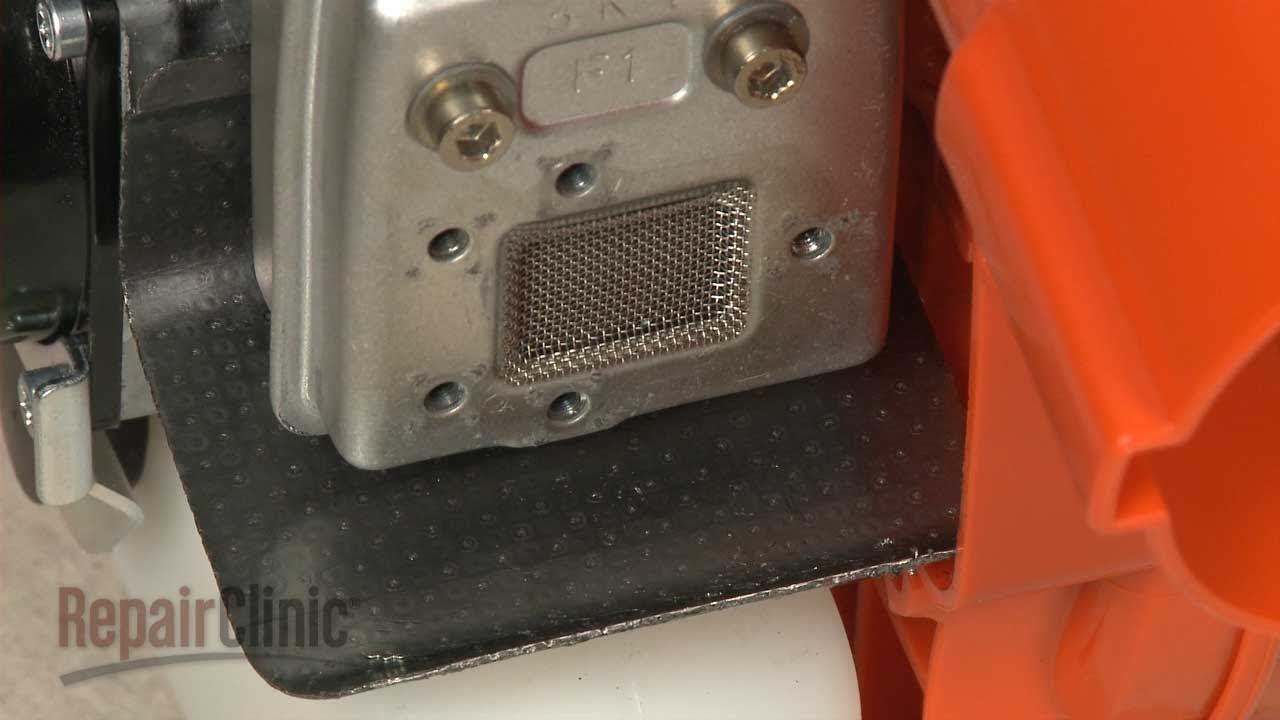
A leaf blower spark arrestor is a small metal screen inside or near the muffler. It helps stop hot carbon particles from leaving the exhaust. When the screen fills with carbon, the blower may lose power, run poorly, or refuse to start.
To clean it, let the engine cool, remove the spark arrestor screen, brush away the carbon, inspect the screen for damage, and reinstall it correctly. Always follow the service steps in your leaf blower’s owner’s manual. Muffler layouts and fasteners vary by model in the United States.

What Is a Spark Arrestor?
A spark arrestor is a fine metal screen fitted in the exhaust system of many gasoline-powered leaf blowers. The screen is often located at the muffler outlet, behind a small cover, or under a heat shield.
Its main job is to reduce the chance that burning carbon or hot particles will leave the muffler. This matters when using outdoor power equipment near dry grass, leaves, brush, or forest land.
A spark arrestor is not the same as the air filter. The air filter cleans air entering the engine. The spark arrestor filters particles leaving the engine.
What a clogged spark arrestor does
A dirty screen restricts exhaust flow. This creates back pressure and can affect how the engine breathes. Common symptoms include:
- Low engine power
- Poor acceleration
- An engine that will not reach full speed
- Hard starting
- Stalling after the engine warms up
- Uneven engine speed
- Excessive muffler heat
- Dark exhaust smoke in some cases
These symptoms can also come from a dirty air filter, old fuel, a blocked fuel filter, a worn spark plug, or carburetor trouble. Cleaning the screen is useful, but it may not solve every performance problem.

What You Need Before Cleaning
Gather the correct tools before you begin. Most leaf blower spark arrestors need only simple hand tools.
Tools and supplies
- Owner’s manual
- Safety glasses
- Work gloves
- Flat-head or Phillips screwdriver
- Small socket set, if required
- Wire brush
- Stiff nylon brush
- Clean rag
- Approved small-engine cleaner or solvent
- Replacement spark arrestor screen, if damaged
- Container for small screws
Use a wire brush made for light metal cleaning. Do not use a brush so aggressive that it tears or enlarges the screen openings.
Safety steps
Work outdoors or in a well-ventilated area. Keep the blower away from gasoline, dry leaves, grass, buildings, and other flammable materials.
Before touching the muffler:
- Turn the engine off.
- Let the blower cool fully.
- Disconnect the spark plug wire on a gasoline model.
- Keep the disconnected wire away from the spark plug.
- Remove the battery from a battery-powered blower if the model has a removable battery.
- Close the fuel shutoff valve, if fitted.
- Clean dirt from around the muffler and fasteners.
The muffler can stay hot long after the engine stops. Touching it too soon can cause a serious burn.
Do not run the blower with the spark arrestor removed unless the owner’s manual specifically permits a brief service check. Never operate the machine without a required spark arrestor.
How to Clean a Leaf Blower Spark Arrestor
The exact location and removal method depend on the model. The process below applies to many gasoline leaf blowers, but the owner’s manual controls if its instructions differ.
1. Find the spark arrestor
Look for a small metal mesh screen near the muffler outlet. It may be held in place by:
- One retaining screw
- Two small screws
- A metal clip
- A muffler cover
- A heat shield or exhaust guard
Some blowers have the screen inside the muffler. If you cannot see it, check the parts diagram or service section of the manual.
Do not remove the whole muffler unless the manual requires it. Removing extra parts increases the chance of losing a gasket or damaging a fastener.
2. Remove the cover or heat shield
Use the correct screwdriver or socket. Press the tool firmly into the fastener to avoid stripping the screw head.
Place each screw in a small container. Note the order of the parts as you remove them. Take a quick photo before disassembly if the shield or bracket has several layers.
Some muffler shields become brittle from heat. Do not bend one sharply or force it away from the engine.
3. Remove the screen
Lift out the screen with pliers or the tip of a screwdriver if the manual allows it. Do not poke through the mesh.
If the screen will not come out, stop and check for another retaining screw or clip. A stuck screen may be bonded by carbon. Excessive force can damage the muffler or the screen seat.
4. Brush off loose carbon
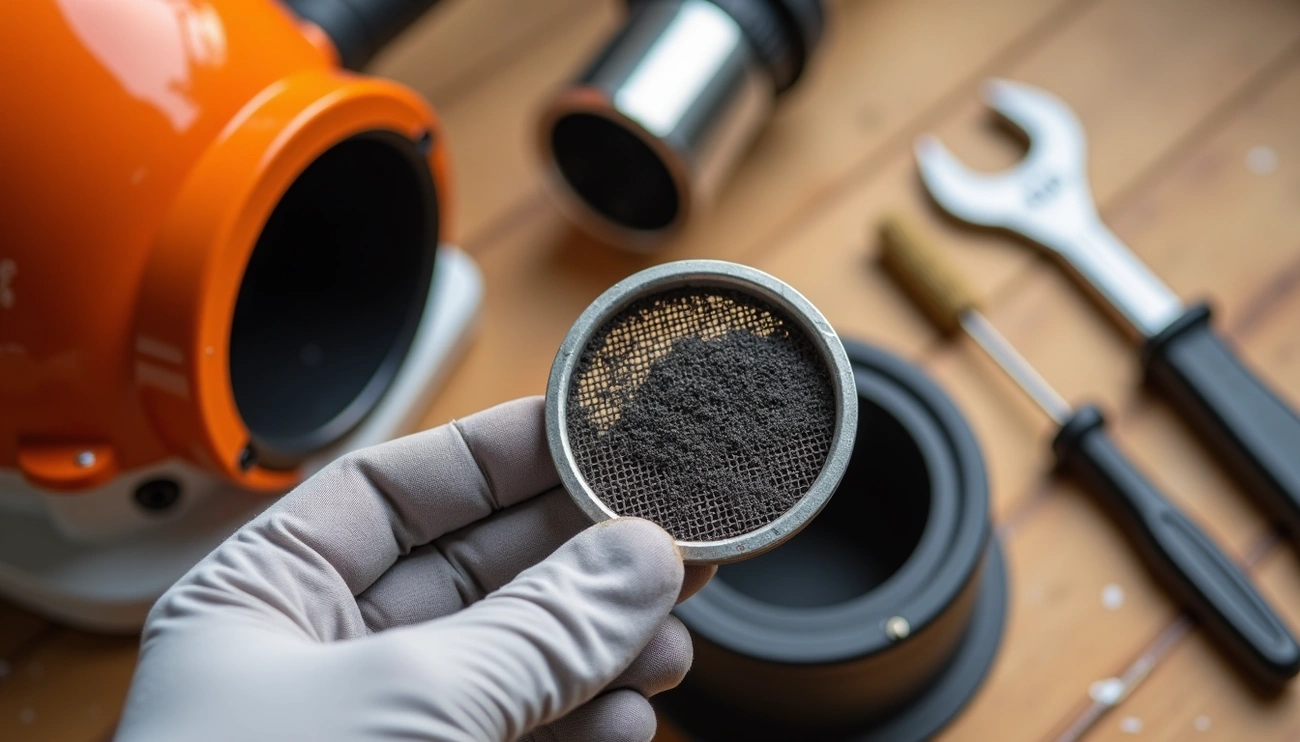
Hold the screen over a work surface and brush both sides. Use a wire brush for hard carbon and a nylon brush for lighter deposits.
Brush in one direction when possible. Avoid pressing hard enough to stretch the mesh. The openings must remain even and clear.
Do not scrape the screen with a sharp blade. A knife can cut the mesh and leave a weak spot that may fail during operation.
5. Use cleaner for stubborn deposits
If carbon remains, apply a small amount of an engine-safe solvent or approved carburetor cleaner. Follow the product label.
Let the cleaner soften the deposit, then brush the screen again. Allow the screen to dry completely before reinstalling it.
Never use gasoline as a cleaning solvent. Gasoline gives off flammable vapors and creates an avoidable fire risk.
6. Inspect the screen and gasket
Hold the screen up to a light. Replace it if you find:
- Holes
- Tears
- Severe rust
- A bent frame
- Missing mesh
- A screen that no longer fits tightly
- Carbon that cannot be removed without damaging the mesh
Inspect the muffler gasket as well. Replace a crushed, torn, or missing gasket when the manual specifies one.
A damaged spark arrestor should not be repaired with household wire, foil, or loose metal mesh. The replacement must match the blower’s design.
7. Reinstall the screen
Place the clean, dry screen in its original position. Refit the cover, shield, clips, and screws in the correct order.
Tighten fasteners firmly, but do not overtighten small screws. If the manual gives a torque value, use it. A loose shield can rattle or fall off. An overtightened fastener can strip the muffler housing.
8. Reconnect and test the blower
Reconnect the spark plug wire after the work is complete. Reinstall the battery if applicable.
Start the blower outdoors and let it idle. Check for:
- Normal idle speed
- Smooth acceleration
- No exhaust leak around the muffler
- No rattling from the shield
- No loose screws
- No unusual smell or smoke
Stop the engine if you see flames, hear a sharp exhaust leak, or notice a loose part.

How to Remove Carbon Without Damaging the Screen
Light brushing is the safest first method. Heavy carbon may need more care, but aggressive heat treatment can damage the screen or create a fire hazard.
Can you burn carbon off the spark arrestor?
Some repair instructions permit heating a removable metal screen to burn off carbon. This method is not suitable for every screen or every work area.
Do not use a torch unless the manufacturer specifically allows it and you can control the fire risk. Avoid burning carbon near homes, dry vegetation, fuel, plastic parts, or wood structures. Carbon deposits can produce smoke and hot particles.
A safer general approach is:
- Remove the screen.
- Brush away loose carbon.
- Apply an approved cleaner if needed.
- Brush again.
- Replace the screen if it remains blocked.
If the screen is badly plugged, rusty, or difficult to clean, replacement is often safer than trying to restore it with high heat.
Can you use compressed air?
You can use low-pressure compressed air outdoors while wearing eye protection. Aim the air away from your face and other people.
Compressed air may move carbon into the air, so do not blow directly toward the engine, fuel tank, or nearby electrical parts. Air alone may not remove baked-on deposits.

Signs the Cleaning Worked
A clean spark arrestor should allow the blower to exhaust normally. After reassembly, the engine should start and respond to the throttle without obvious restriction.
Successful cleaning may result in:
- Better throttle response
- More stable engine speed
- Improved airflow from the tube
- Less stalling under load
- Easier starting, if the screen was the main problem
Cleaning the screen does not restore worn engine parts or fix bad fuel. If performance does not improve, continue with a basic diagnosis rather than repeatedly cleaning the arrestor.
Quick symptom guide
| Symptom after cleaning | Possible cause | Next check |
|---|---|---|
| Still lacks power | Dirty air filter or fuel problem | Inspect the air filter and fuel |
| Will not start | Spark plug, ignition, or stale fuel | Check the manual’s starting procedure |
| Runs briefly, then stops | Fuel flow or vent problem | Check fuel quality and the fuel cap vent |
| Loud exhaust leak | Missing gasket or loose shield | Inspect the muffler and fasteners |
| Rattling sound | Loose screen or heat shield | Stop the engine and inspect the assembly |
| Screen clogs again quickly | Excess carbon or engine issue | Check oil mix, fuel, air filter, and service needs |

How Often Should You Clean the Spark Arrestor?
Clean the spark arrestor when symptoms suggest restriction or when the owner’s manual lists it as routine maintenance. There is no single interval that fits every leaf blower.
Cleaning frequency depends on:
- Hours of use
- Fuel quality
- Correct fuel-to-oil ratio on two-stroke engines
- Air filter condition
- Engine tuning
- Oil consumption
- Dust and debris in the work area
- Storage conditions
A blower used for a few short jobs each year may need less frequent cleaning than one used daily by a landscaping crew.
Inspect the screen during regular maintenance. A quick visual check can find heavy carbon, rust, or damage before the screen becomes a major restriction.
Two-stroke fuel matters
Many gas leaf blowers use two-stroke engines. These engines burn a gasoline-and-oil mixture. The ratio must match the owner’s manual.
Too much oil can increase smoke and carbon deposits. Too little oil can cause severe engine damage. Do not change the fuel ratio to solve a dirty spark arrestor.
Use fresh fuel stored in an approved container. Old fuel can create starting and running problems that resemble exhaust restriction.

Common Mistakes to Avoid
The most common cleaning errors involve heat, force, and incorrect reassembly.
Cleaning while the muffler is hot
A hot muffler can burn skin and ignite solvent or dry debris. Wait until all exhaust parts are cool.
Running the blower without the screen
Removing the screen may change exhaust behavior and can allow hot particles to escape. It may also violate local rules or the equipment’s design requirements.
Using a damaged screen
A screen with holes cannot provide the same protection as an intact screen. Replace it with the correct part.
Blocking the screen with paint or oil
Do not coat the mesh with paint, grease, or oil. These materials can restrict exhaust flow and may create smoke or fire risk.
Losing a gasket
A muffler gasket helps seal the exhaust joint. A missing or damaged gasket can cause noise, heat, and exhaust leakage.
Ignoring repeated carbon buildup
A screen that clogs again soon may point to another problem. Possible causes include an incorrect fuel mixture, a dirty air filter, poor engine tuning, worn piston rings, or an engine that burns oil.
Forcing stuck screws
Heat and corrosion can lock small muffler screws in place. If a fastener begins to strip, stop and use the correct repair method. A repair shop may be needed to remove it without damaging the muffler.

When to Replace the Spark Arrestor or Get Professional Help
Replace the screen when it is torn, burned through, badly rusted, or permanently blocked. Use the exact replacement specified for the blower model.
Professional service is the better choice when:
- The screen is inside a sealed muffler
- The muffler must be removed
- Fasteners are stripped or seized
- The blower has low compression
- The engine overheats
- Carbon returns quickly
- The blower produces heavy smoke
- Fuel leaks near the muffler
- You are unsure whether the replacement is correct
Stop using the blower if fuel reaches the hot muffler, the muffler glows red, or flames come from the exhaust. Let the machine cool and arrange qualified service.
Local fire rules may also require spark arrestors on equipment used in dry areas or near wildland. Check the rules that apply where you operate the blower, especially on public or federally managed land.

Frequently Asked Questions
Does every leaf blower have a spark arrestor?
No. Many gasoline leaf blowers have one, but the design varies by model and market. Check the owner’s manual or parts diagram before removing the muffler cover.
Can I clean the spark arrestor without removing it?
You may brush the outside of an accessible screen, but this usually does not clean the inner surface well. Removing the screen allows a proper inspection. Follow the model-specific service instructions.
Why does my leaf blower still have low power after cleaning?
A dirty air filter, stale fuel, blocked fuel filter, worn spark plug, damaged exhaust gasket, or engine problem can cause the same symptom. Check these items in the order listed in the owner’s manual.
Can I wash the spark arrestor with water?
Water may cause rust if the screen is not dried fully. A dry brush and an approved solvent are usually better. If you use any liquid, let the screen dry completely before installation.
How do I know which replacement spark arrestor to buy?
Use the blower’s exact model and serial information. A screen that looks similar may have a different size, mesh, mounting method, or heat rating. The manufacturer’s parts list is the best reference.
Conclusion
Cleaning a leaf blower spark arrestor is usually a short maintenance task. Cool the machine, disconnect the spark plug wire or battery, remove the screen carefully, brush away carbon, inspect it, and reinstall every part correctly.
If the screen is damaged or the blower still loses power, do not keep forcing the repair. Replace the correct part or have the blower inspected by a qualified technician.
2 thoughts on “How To Clean A Leaf Blower Spark Arrestor: Easy Guide”