
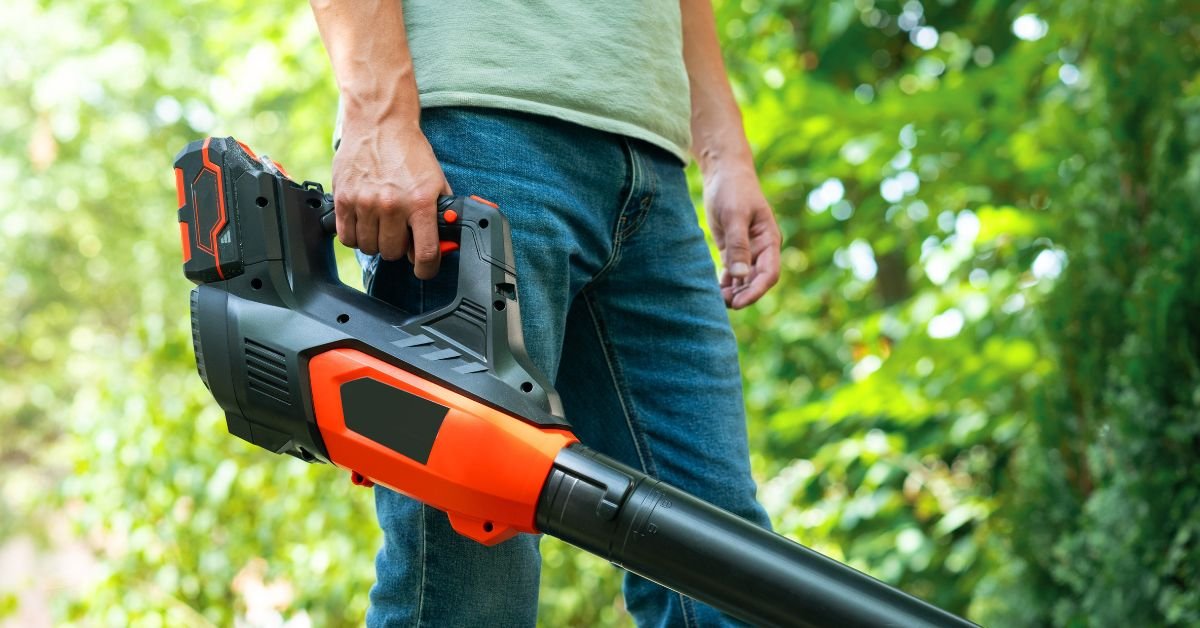
If your leaf blower starts normally but shuts off after it warms up, the most likely causes are restricted airflow, a blocked fuel vent, a dirty carburetor, a failing ignition coil, or heat protection in the motor or battery. Gas models often develop fuel or ignition faults when hot. Cordless and electric models may shut down because of overload or thermal protection.
Stop using the blower until it cools. Then check the simple items first: the air filter, cooling vents, fuel cap vent, spark plug, battery, and extension cord. Never remove a safety guard or work on a hot engine.

Common Reasons a Leaf Blower Stops When Hot
A leaf blower needs three things to keep running: air, fuel or electrical power, and ignition or motor control. Heat can expose a weak part in any of these systems.
The symptom often gives a useful clue:
| Symptom | More likely causes |
|---|---|
| The engine dies slowly after several minutes | Blocked fuel vent, dirty filter, fuel starvation, overheating |
| The engine stops suddenly like a switch was flipped | Ignition coil, low-oil sensor, safety switch, battery protection |
| It restarts only after 10–30 minutes | Failing ignition coil, vapor lock, overheating |
| It loses power before stopping | Dirty air filter, clogged spark arrestor, restricted exhaust, overload |
| A cordless blower stops and a warning light appears | Hot battery, overloaded motor, blocked intake, battery fault |
| A corded blower stops when using a long cord | Voltage drop, undersized extension cord, overloaded circuit |
| The blower runs with the choke partly on | Dirty carburetor, restricted fuel flow, air leak, lean fuel mix |
A hot engine does not always mean the blower is overheating. Some parts fail only after their temperature rises. For example, an ignition coil may work when cold and lose spark when hot. A blocked tank vent may also allow the blower to run briefly, then create a vacuum inside the fuel tank.
Gas-powered leaf blowers
Gas blowers commonly shut off when hot because of:
- A clogged or damaged fuel cap vent
- Old gasoline or fuel with water contamination
- A dirty carburetor
- A clogged fuel filter or fuel line
- A dirty air filter
- A blocked spark-arrestor screen
- A failing spark plug or ignition coil
- Low engine oil on models with an oil-level safety switch
- An overly hot engine caused by blocked cooling fins or heavy loads
Many small engines use a two-stroke fuel mixture. Others use a four-stroke engine with a separate oil reservoir. Use only the fuel type and mix listed in the owner’s manual.
Cordless and electric leaf blowers
Battery and corded blowers have different failure points. A battery may shut down to protect itself from excess heat, high current, or a low charge. The blower may work again after the battery cools.
A corded blower can stop because of a tripped circuit breaker, a damaged cord, a loose plug, or an extension cord that is too long or too small for the tool. Electric motors can also overheat when leaves block the intake or when the blower is run under heavy load.

How to troubleshoot a Gas Leaf Blower That Shuts Off
Troubleshoot a gas leaf blower from the safest and simplest checks to the more technical ones. Work outdoors, let the machine cool fully, and keep fuel away from flames, cigarettes, grills, and other ignition sources.
1. Check whether the fuel tank is creating a vacuum
A blocked fuel-tank vent is one of the fastest checks.
- Start the blower and let it run until it stops.
- Turn the blower off and wait for the engine and muffler to cool.
- Slowly loosen the fuel cap.
- Listen for a strong hiss.
A small sound may be normal. A strong inrush of air, followed by a blower that runs again with the cap loosened, points to a blocked vent. Do not operate the machine with the cap loose. Replace the fuel cap with the correct part listed for your model.
2. Inspect the fuel
Fuel can degrade during storage. The U.S. Environmental Protection Agency advises careful gasoline storage because fuel can deteriorate and may create performance problems over time.
Drain questionable fuel into an approved container. Follow local rules for disposal. Refill with fresh fuel that matches the manufacturer’s instructions. For a two-stroke blower, use the exact oil-to-gas ratio in the manual. Too much oil can cause smoke and deposits. Too little oil can cause severe engine damage.
Do not guess the mixture. A fuel mix that is correct for one model may be wrong for another.
3. Check the air filter
A dirty air filter limits air entering the engine. The blower may start, run poorly, lose power, and stop as the engine warms.
Remove the filter according to the owner’s manual. Replace a paper filter if it is dirty. Wash a foam filter only when the manual allows it, then dry it fully and apply the specified filter oil if required.
Do not run the blower without its air filter. Dirt can enter the engine and damage internal parts.
4. Inspect the cooling system
Small engines shed heat through cooling fins around the cylinder and through vents in the blower housing. Grass, dust, and leaves can block these paths.
With the engine cold:
- Brush away debris from cooling openings.
- Check that the blower intake is not covered.
- Clean dirt from the cylinder fins if accessible.
- Make sure the protective housing is not cracked or packed with debris.
Do not spray water onto a hot engine. Avoid compressed air near your eyes, fuel, or delicate engine parts unless you use proper protection and the manual permits it.
5. Check the spark plug
A worn, fouled, or incorrectly gapped spark plug can cause hard starting and stalling. Remove and inspect the plug only when the engine is cold.
Look for:
- Heavy black soot
- A wet fuel coating
- A cracked ceramic insulator
- A damaged electrode
- A loose plug
- An incorrect gap
Replace the plug if the manual lists it as a replacement item or if it shows damage. Use the exact plug type and gap specified by the manufacturer.
A spark plug that looks normal does not prove that the ignition system is healthy. The ignition coil may still fail after it heats up.
6. Inspect the spark-arrestor screen
Many gasoline outdoor power tools sold for use in the United States include a spark-arrestor screen in the muffler. A carbon-filled screen restricts exhaust flow. The engine may lose power, run hot, and stop.
Clean or replace the screen only as the manual permits. The screen and muffler can remain hot long after the engine stops. Do not remove the screen permanently. It helps reduce the risk of hot sparks leaving the exhaust.
7. Consider the ignition coil
An ignition coil, also called an ignition module, creates the high voltage needed for the spark plug. A weak coil may work while cold and stop producing a strong spark when hot.
This cause becomes more likely when:
- The engine stops suddenly.
- The blower restarts after cooling.
- The fuel system checks out.
- There is no spark immediately after the hot stall.
- The problem returns under the same temperature conditions.
Testing ignition spark near a hot engine can cause burns or electric shock. Use the procedure and tester recommended by the manufacturer, or have a small-engine technician test it.
8. Check for a low-oil shutdown
Some four-stroke engines have a low-oil sensor that stops the engine when oil is too low. Check the oil level on a level surface after the engine cools.
Use the oil grade and fill level stated in the manual. Do not overfill. Two-stroke engines normally do not have a separate crankcase oil reservoir, so do not add oil to a separate tank unless the model specifically requires it.

How to Troubleshoot a Cordless Leaf Blower That Gets Hot
A cordless blower that stops after heavy use may be protecting its battery or motor. Let both the blower and battery cool at room temperature before testing again.
Follow these steps:
- Remove the battery.
- Check the battery contacts for dirt, moisture, corrosion, or damage.
- Inspect the intake and discharge openings for leaves or dust.
- Confirm that the battery is fully seated.
- Use a battery approved for that blower.
- Charge the battery with the correct charger.
- Test the blower with a cool battery, if you have a second approved battery.
Do not put a hot lithium-ion battery in a refrigerator or freezer. Rapid temperature changes can cause condensation and damage. Do not use a battery that is swollen, cracked, leaking, unusually hot, or damaged. Place a damaged battery away from flammable materials and contact the manufacturer or your local hazardous-waste program for disposal advice.
A battery that repeatedly shuts down while cool may have an internal fault. Do not open the battery pack. Battery repairs require specialized equipment and can create a fire hazard.

How to Troubleshoot a Corded Electric Leaf Blower
A corded blower may stop because it is not receiving stable power or because its motor protection has activated.
Start with the power supply:
- Reset the circuit breaker or ground-fault circuit interrupter if it has tripped.
- Inspect the power cord for cuts, crushed sections, exposed wires, or hot spots.
- Check the plug and extension-cord connections.
- Use an outdoor-rated extension cord.
- Match the cord size and maximum length to the owner’s manual.
- Do not connect several high-power tools to one overloaded circuit.
A long or undersized extension cord can cause voltage drop. The motor may draw more current, lose power, and heat up. The cord or plug may also become warm. Stop using the setup if you smell burning insulation, see discoloration, or feel excessive heat.
Unplug the blower before clearing a blockage or inspecting the intake. If the blower shuts off with a properly sized cord and a clear intake, the motor, switch, or thermal protector may need service.

What to Do When the Blower Restarts After Cooling
A restart after cooling is a strong clue, but it does not identify one exact part. Heat-related behavior usually falls into one of four groups:
- Fuel vent problem: The engine runs again after opening the fuel cap.
- Ignition problem: The engine has no spark while hot but sparks after cooling.
- Overheating: The blower loses power, smells hot, or has blocked cooling paths.
- Electrical protection: A battery or motor stops and later works after its temperature drops.
Write down how long the blower runs, whether it loses power first, and whether it restarts with the same fuel, battery, or cord. This simple record can save time during repair.
If a gas blower stops without warning, do not repeatedly pull the starter while it is hot. Let it cool and check for fuel leaks, smoke, melted plastic, or a burning smell before trying again.

Quick Diagnosis Table
Use this table as a starting point, not as a replacement for the model’s service manual.
| What you notice | First check | Likely next step |
|---|---|---|
| Runs for five to 15 minutes, then stops | Fuel-cap vent | Replace a blocked or incorrect cap |
| Runs better with choke partly closed | Air filter and carburetor | Clean or service the fuel system |
| Loses power before stopping | Air intake and muffler screen | Clean restricted airflow paths |
| Stops instantly when hot | Spark after the stall | Test the ignition coil or safety switch |
| Starts again after the battery cools | Battery temperature and intake | Use a cool, approved battery; seek service if repeated |
| Cord or plug becomes hot | Cord rating and circuit load | Stop use and correct the power setup |
| Four-stroke engine stops on a slope or after oil loss | Oil level | Correct the oil level and inspect for leaks |

Common Mistakes That Can Make the Problem Worse
Do not keep operating a blower that repeatedly overheats. Repeated heat can damage seals, ignition parts, wiring, battery cells, or the engine.
Avoid these mistakes:
- Running a gas blower with the fuel cap loose
- Using fuel with an unverified oil ratio
- Mixing fuel in an unapproved container
- Cleaning a hot muffler or cylinder
- Removing the spark-arrestor screen
- Using a damaged extension cord
- Charging a hot or damaged battery
- Spraying carburetor cleaner into a running engine
- Testing for spark near spilled fuel
- Replacing parts before checking vents, filters, and power connections
Always follow the exact owner’s manual for the model. Manuals may specify different fuel blends, filter cleaning methods, spark-plug gaps, battery temperatures, and service procedures. Manufacturer manuals are available through support pages from brands such as STIHL, Husqvarna, and Toro.
When to Stop Troubleshooting and Get Repair Help
Have the blower inspected when basic checks do not solve the problem or when the machine shows a safety risk.
Professional service is the safer choice if:
- The blower leaks fuel.
- The muffler glows red or shows severe heat damage.
- The engine locks, knocks, or makes a sharp mechanical noise.
- Wiring is melted or exposed.
- The battery is swollen, cracked, or smoking.
- The ignition system fails only when hot.
- The carburetor needs internal cleaning or adjustment.
- The blower stops even with clean airflow and correct power.
- You are unsure how to test spark, voltage, or fuel pressure.
For gasoline equipment, use a repair shop familiar with small engines. For cordless equipment, contact the tool manufacturer or an authorized service center. Do not open a lithium-ion battery pack or bypass a thermal safety device.
Frequently Asked Questions
Why does my leaf blower start and then die?
The most common causes are stale fuel, a blocked fuel-cap vent, a dirty air filter, a dirty carburetor, or an ignition fault. If the engine dies after warming up and restarts after cooling, check the vent and ignition system first.
Why does my leaf blower only run with the choke on?
That usually means the engine is not receiving the correct fuel mixture. A clogged carburetor passage, restricted fuel line, dirty filter, or air leak may be responsible. Do not use the choke as a permanent fix because it can create an overly rich mixture and carbon deposits.
Can a dirty air filter make a leaf blower overheat?
Yes. A restricted air filter can reduce engine airflow and cause poor combustion. The blower may lose power, run unevenly, and stop when hot. Replace or clean the filter according to the manual.
Why does my battery leaf blower stop after a few minutes?
The battery or motor may be too hot, the intake may be blocked, or the battery may be worn or damaged. Allow the equipment to cool naturally, clear the intake, and test it with an approved battery. Repeated shutdowns need manufacturer service.
How long should I wait before restarting a hot leaf blower?
Wait until the engine, battery, and housing are cool enough to handle safely. The exact time varies with the model and weather. Do not restart a blower that has smoke, a fuel leak, melted parts, or a burning smell.
Conclusion
A leaf blower that shuts off when hot is often reacting to restricted fuel flow, poor airflow, a weak ignition part, or thermal protection. Start with safe checks: let it cool, inspect the intake and filter, verify the fuel or battery, check the fuel-cap vent, and examine the power cord or battery contacts.
If the blower still stops, note whether it loses power first or shuts off instantly. That detail helps separate an airflow or fuel problem from an ignition, motor, or battery fault. Stop using the equipment when you find heat damage, fuel leakage, damaged wiring, or a compromised battery, and arrange qualified service.
4 thoughts on “Why Does My Leaf Blower Shut Off When Hot: Fixes”