

Cleaning gutters with a leaf blower is a fast way to remove dry leaves, pine needles, and loose roof debris from many American homes. The safest method is to work from the ground with a gutter-cleaning extension kit, wear eye and hearing protection, and use low power near shingles, screens, downspouts, windows, and neighbors’ property.
A leaf blower does not replace hand removal in every case. Wet sludge, packed debris, moss, and clogged downspouts often need a scoop, hose, or plumber’s snake. Use the steps below to clean your gutters with less mess and lower fall risk.
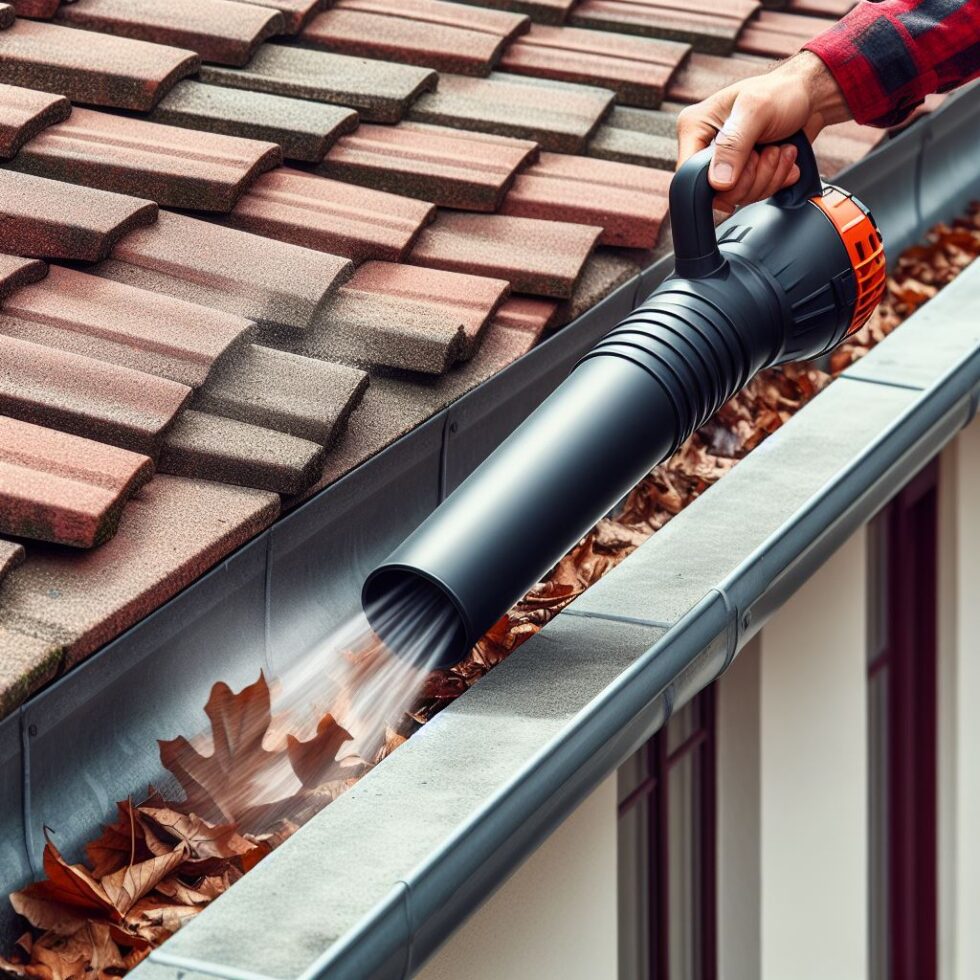
What You Need Before You Start
Gather the right tools before you begin. A short setup makes the job safer and helps prevent repeated trips up and down a ladder.
You will usually need:
- A leaf blower with a narrow nozzle
- A gutter-cleaning attachment or extension kit
- Safety glasses or sealed eye protection
- Hearing protection
- Work gloves
- Long pants and sturdy, slip-resistant shoes
- A dust mask if the gutters contain dry mold, bird waste, or heavy dust
- A garden hose with a spray nozzle
- A gutter scoop or small hand trowel
- A bucket or tarp for heavy debris
- A plumber’s snake or long hose nozzle for a blocked downspout
- A stable ladder, if ground-level cleaning is not possible
Choose the Right Blower
Most electric, battery-powered, and gas leaf blowers can move dry gutter debris. The best choice depends on the height of the house, the moisture in the debris, and the length of the extension.
- Cordless blowers: Quiet and easy to start. They work well for small and medium homes, but battery life may limit long jobs.
- Corded electric blowers: Light and consistent, but the cord can create a trip hazard and may not reach all sides of a home.
- Gas blowers: Useful for large properties and long sessions. They are louder, heavier, and produce exhaust, so never use one in an enclosed area.
- Backpack blowers: Helpful for large homes, but their power can scatter debris widely. Use a low setting near windows, vehicles, gardens, and neighbors.
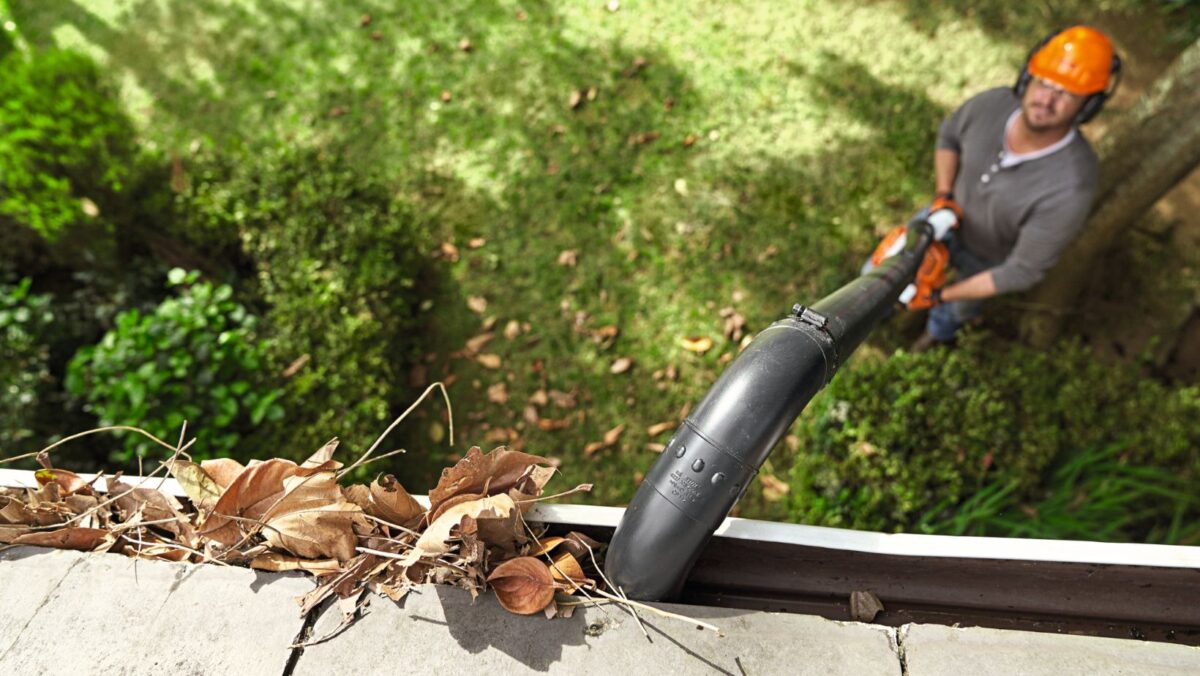
A gutter attachment is more useful than maximum blower power. It normally includes curved tubes that let you direct air into the gutter while standing on the ground.
Check the Weather
Choose a dry, calm day. Dry leaves move well, while wet leaves often form heavy clumps that a blower cannot lift.
Avoid cleaning during:
- Rain or recent heavy rain
- Strong wind
- Lightning or thunderstorms
- Ice or snow
- Very hot conditions that may cause heat stress
- Conditions that make the roof, ladder, or ground slippery
For electrical safety, keep corded blowers and extension cords away from standing water. Use outdoor-rated equipment and follow the blower manufacturer’s instructions.
How to Clean Gutters With a Leaf Blower
The most effective process is to clear loose material first, remove stubborn clumps by hand, and flush the system with water afterward.
1. Inspect the Gutter System From the Ground
Walk around the house and look for sagging gutters, loose fasteners, cracks, separated joints, and blocked downspouts.
Do not use a blower to force debris through a gutter that is pulling away from the fascia board. Air pressure may spread the damage. Repair or support the gutter first, or call a qualified gutter contractor.
Also look for:
- Power lines near the roof or ladder position
- Fragile gutter screens
- Skylights and roof vents
- Windows and doors below the work area
- Cars, outdoor furniture, and delicate plants
- People and pets who could be struck by flying debris
If you see a damaged roof edge, unstable ladder location, or electrical hazard, stop and address that problem before cleaning.
2. Protect People and Property
Move vehicles away from the house if possible. Close windows and doors. Cover delicate plants or outdoor equipment with a tarp.
Tell everyone nearby that you are starting the job. A leaf blower can launch stones, twigs, screws, and dried animal waste. Never point the nozzle at a person, animal, open window, or vehicle.
Put on eye and hearing protection before starting the blower. The U.S. Consumer Product Safety Commission advises using care with ladders and keeping them on stable, level surfaces. Follow the instructions for your specific ladder and blower.
3. Fit the Gutter Attachment
Turn the blower off before attaching tubes or changing the nozzle. Secure each tube so it cannot separate while you work.
A typical gutter-cleaning attachment has:
- A blower connection tube
- Several extension tubes
- One or more curved tubes
- A discharge opening that points into the gutter
Check the reach from the ground. Do not stretch, twist, or lean far to one side while holding the attachment. If the tube cannot reach safely, move the ladder or use a different method.
4. Start at the Downspout End
Begin near the end of the gutter farthest from the downspout. Work toward the downspout rather than blowing debris into it.
This approach helps keep leaves from packing into the vertical pipe. It also lets you move the debris toward one collection point.
Set the blower to low or medium power. Place the curved tube just above the gutter opening. Do not press the tube hard against the gutter, mesh guard, or shingles.
5. Move the Nozzle Slowly
Use short passes of air. Move the tube along the gutter at a steady pace.
A useful pattern is:
- Clear about 2 to 3 feet of gutter.
- Stop and inspect the section.
- Move forward after the debris lifts.
- Reduce power near corners, seams, screens, and downspouts.
- Repeat until you reach the downspout.
High power is not always better. Strong air can blow debris over the roof edge, damage a loose gutter guard, or force material under shingles.
If debris falls onto the ground, collect it after the gutter work is complete. Do not blow leaves into storm drains, streets, neighboring yards, or natural waterways. Local rules may restrict where yard waste can be blown or left.
6. Remove Wet or Packed Debris by Hand
Turn off the blower before reaching into the gutter. Use gloves and a gutter scoop to remove compacted material.
Wet leaves often become dense enough to resist air flow. Mud may also stick to the bottom of the gutter. Removing a few clumps by hand is usually faster than repeatedly increasing blower power.
Place heavy debris in a bucket or on a tarp. Avoid throwing it from a ladder, where it can strike people or damage property.
7. Flush the Gutters and Downspouts
After the loose debris is gone, use a garden hose to rinse the gutter. Start at the end farthest from the downspout and watch the water flow.
Good water flow should:
- Move steadily toward the downspout
- Exit the downspout without backing up
- Leave no deep pools in the gutter
- Run away from the foundation through a working outlet or extension
If water backs up, the downspout may be blocked. Try flushing from the bottom upward with a hose. If that does not work, use a plumber’s snake or contact a professional.
Do not use extreme water pressure on old, cracked, or poorly attached gutters. A pressure washer can damage seams, paint, screens, and roof materials.
8. Inspect the Finished Work
Walk around the home again. Look for leaves left behind, leaking joints, loose hangers, and water spilling over the front edge.
Check the ground for:
- New puddles near the foundation
- Washed-out soil
- Debris in downspout outlets
- Blown leaves on roofs, decks, or neighboring property
- Broken gutter guard sections
A clean gutter should carry water to the downspout without overflowing during a normal hose test.
When a Leaf Blower Is the Wrong Tool
A leaf blower works best on loose, dry debris. It is less effective when the gutter contains material that is wet, heavy, compacted, or stuck to the gutter floor.
Use another method when:
| Gutter condition | Better method |
|---|---|
| Dry leaves and pine needles | Leaf blower |
| Wet leaves | Hand scoop, then hose |
| Thick mud or roof grit | Hand removal and gentle rinsing |
| Clogged downspout | Hose from below or plumber’s snake |
| Dense moss or plant growth | Hand removal and professional inspection |
| Fragile mesh guard | Carefully lift or use the guard maker’s method |
| Ice or snow | Wait for safe thawing or hire a professional |
| Gutter damage or sagging | Repair before cleaning |
A blower also may not work well with tightly fitted gutter guards. Some covers allow air to pass over the surface without removing debris beneath the guard. Check the guard manufacturer’s care instructions before lifting, brushing, or blowing it.
Do not use a blower to clean gutters from the roof unless you have proper fall protection, safe footing, and the training to work there. For most homeowners, ground-based tools or a professional service are safer.

Ladder and Electrical Safety
Falls are the main hazard in gutter cleaning. Working from the ground reduces risk, but some homes still require a ladder for inspection or hand removal.
If you use a ladder:
- Place it on firm, level ground.
- Keep the ladder away from power lines.
- Face the ladder while climbing.
- Keep both hands available when possible.
- Do not stand on the top step or top cap.
- Do not overreach. Climb down and move the ladder.
- Keep the ladder clear of doors, gates, and vehicle paths.
- Have another adult stabilize the ladder when appropriate.
- Stop if wind makes the ladder or gutter attachment hard to control.
The Occupational Safety and Health Administration provides ladder guidance for workplace settings. Homeowners should also follow the safety labels and instructions supplied with their ladder.
For a corded blower, inspect the cord before use. Do not use damaged cords, indoor-only extension cords, or connections exposed to wet ground. Use a ground-fault circuit interrupter-protected outdoor outlet where required by the equipment instructions and local electrical practice.
Gas blowers must be used outdoors. Carbon monoxide can build up quickly in garages, sheds, porches, and other partly enclosed spaces.

How Often Should You Clean Gutters?
Most U.S. homes need gutter inspection at least twice a year: once in spring and once in fall. The right schedule depends on trees, roof type, weather, and gutter guards.
You may need more frequent cleaning if the home has:
- Large deciduous trees near the roof
- Pine trees that shed needles year-round
- Heavy storms or hurricanes
- A steep roof that sends debris into the gutter
- Many roof valleys
- No gutter guards
- A history of overflowing gutters
Inspect the gutters after major storms and during peak leaf drop. A simple check can prevent a small blockage from becoming an ice dam, foundation problem, or fascia repair.
Gutter guards reduce the amount of large debris that enters the channel, but they do not make the system maintenance-free. Leaves, seeds, roof grit, and moss can still collect on top or pass through openings.

Common Problems and Fixes
The Blower Will Not Move the Leaves
The debris may be wet or packed. Remove the worst clumps with a scoop, then try the blower again at a moderate setting.
A blocked or narrow attachment can also reduce air flow. Turn off the blower, disconnect the attachment, and check for obstructions.
Debris Keeps Falling Back Into the Gutter
You may be working in the wrong direction. Start at the end farthest from the downspout and move toward it.
Also reduce the angle of the tube. Air aimed straight down can push leaves into corners instead of lifting them out.
Water Backs Up During the Hose Test
The downspout is likely blocked, or the gutter may have too little slope. Try clearing the downspout from its lower outlet first.
If the pipe is clear but water still pools, the gutter may be sagging or incorrectly pitched. A gutter professional can assess and reset the hangers.
The Gutter Guard Moves or Makes Noise
Stop using the blower at that spot. The guard may be loose, damaged, or incompatible with high air flow.
Secure or remove the affected section only if the manufacturer permits it. Otherwise, use a soft brush or arrange a repair.
The Gutter Leaks After Cleaning
Cleaning may have exposed an existing crack or separated seam. Dry the area and inspect the joint. Small seams may be repairable with a product approved for the gutter material, but widespread leaks, rust, or loose sections call for professional repair.
Key Takeaways
- Use a leaf blower mainly for dry, loose gutter debris.
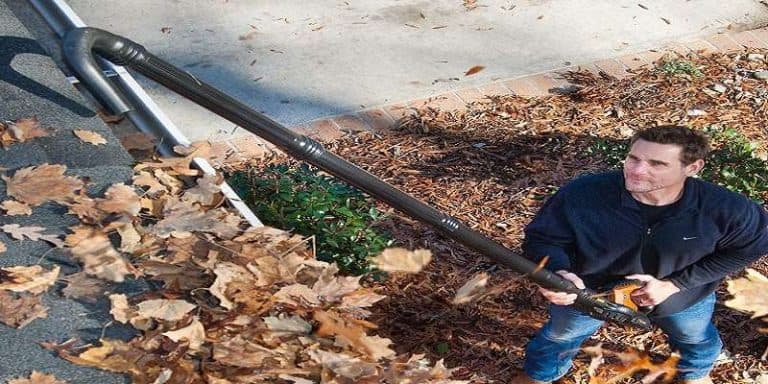
- Work from the ground with a gutter extension when possible.
- Start away from the downspout and move debris toward it.
- Use low or medium power near gutter guards, seams, shingles, windows, and people.
- Remove wet leaves and packed mud by hand.
- Flush the gutters and downspouts with a garden hose.
- Do not work near power lines, during storms, or from an unstable ladder.
- Hire a professional when the roof, ladder position, gutter damage, or electrical hazard makes the job unsafe.
Frequently Asked Questions
Can I clean gutters with a regular leaf blower?
Yes, if the blower can reach the gutter safely and the debris is dry. A curved gutter attachment makes the job easier from the ground. Without an attachment, you may need to use a ladder, which increases fall risk.
Should I blow leaves out of the gutter or into the downspout?
Blow leaves out of the gutter, not into the downspout. Start at the end farthest from the downspout and work toward it. This reduces the chance of packing debris into the vertical pipe.
Can I use a leaf blower on wet leaves in the gutter?
You can try, but wet leaves are heavy and often stick together. A gutter scoop is usually more effective. Remove the wet material first, then use the blower for the remaining dry debris.
Will a leaf blower damage gutter guards?
It can, especially if the guard is loose, brittle, or not designed for high air flow. Use low power and keep the nozzle slightly above the guard. Follow the guard manufacturer’s cleaning instructions.
Is it safe to clean gutters from the roof?
For most homeowners, no. Roof work adds fall hazards, especially on steep, wet, fragile, or moss-covered surfaces. Use a ground-based attachment or hire a trained professional with suitable fall-protection equipment.
How do I know if the downspout is clear?
Run water into the gutter and watch the downspout outlet. Water should flow steadily without backing up or spilling over the gutter. If the flow is weak, clear the downspout from the bottom with a hose or plumber’s snake.
Conclusion
A leaf blower can make gutter cleaning quicker when the debris is dry and loose. Use the right attachment, work from the ground, move from the far end toward the downspout, and finish with a hose test.
Do not force the blower through wet sludge, packed clogs, unstable gutter sections, or unsafe roof areas. When the system is damaged or the work requires risky ladder or roof access, professional gutter service is the safer choice.
1 thought on “How To Clean Gutters With A Leaf Blower: Easy Guide”