
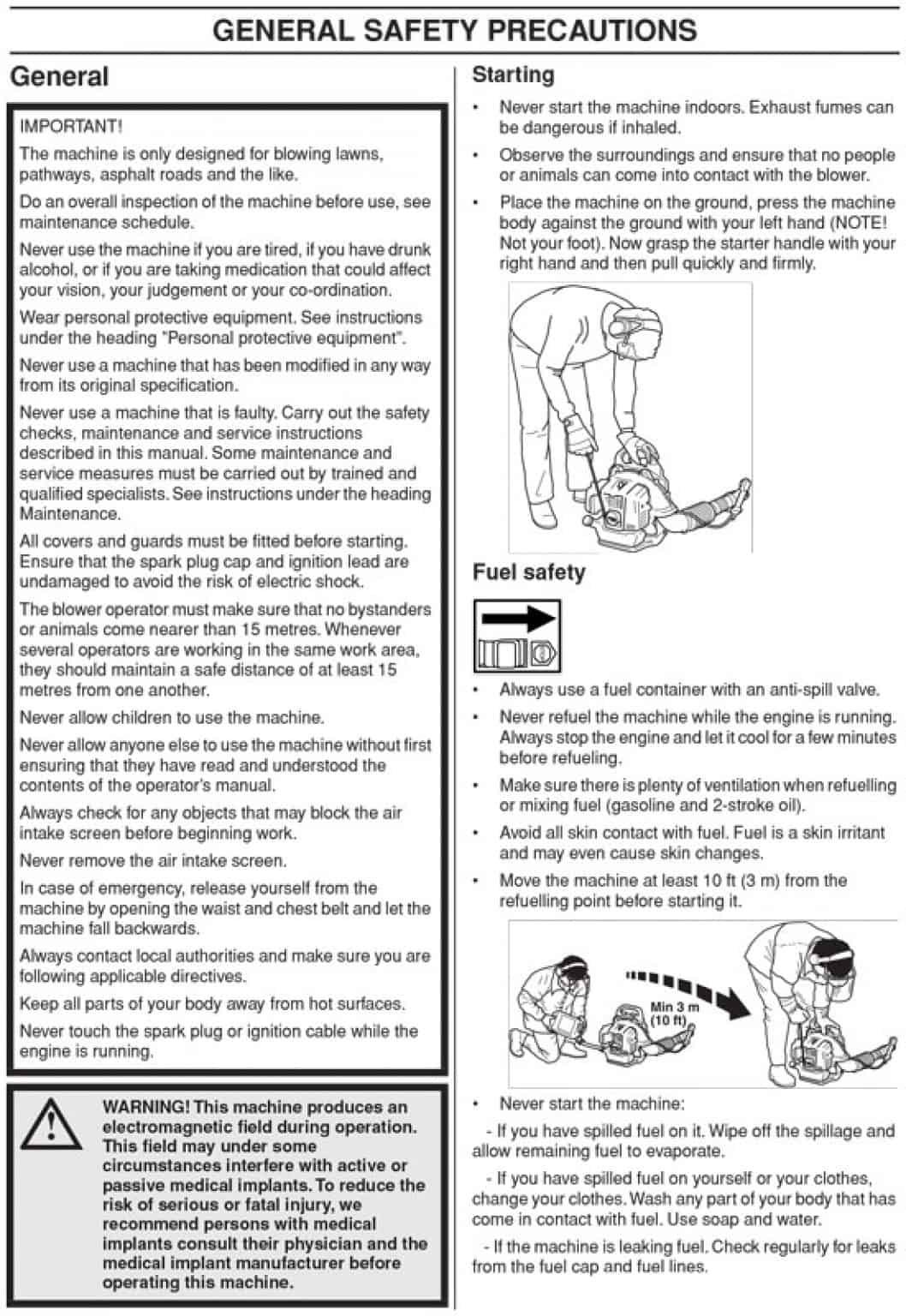
For most people in the United States, the basic safety gear for a leaf blower is eye protection, hearing protection, sturdy closed-toe shoes, work gloves, and long pants. Add a NIOSH-approved respirator when blowing fine dust, pollen, or other airborne particles. Use a hard hat, high-visibility clothing, or other job-site gear when the work area requires it.
A leaf blower can send stones, sticks, mulch, and dust into the air at high speed. It can also produce enough noise to harm hearing. The right gear depends on the blower, surface, weather, work site, and length of use. Always read the owner’s manual before operating a gas, battery, or corded electric model.
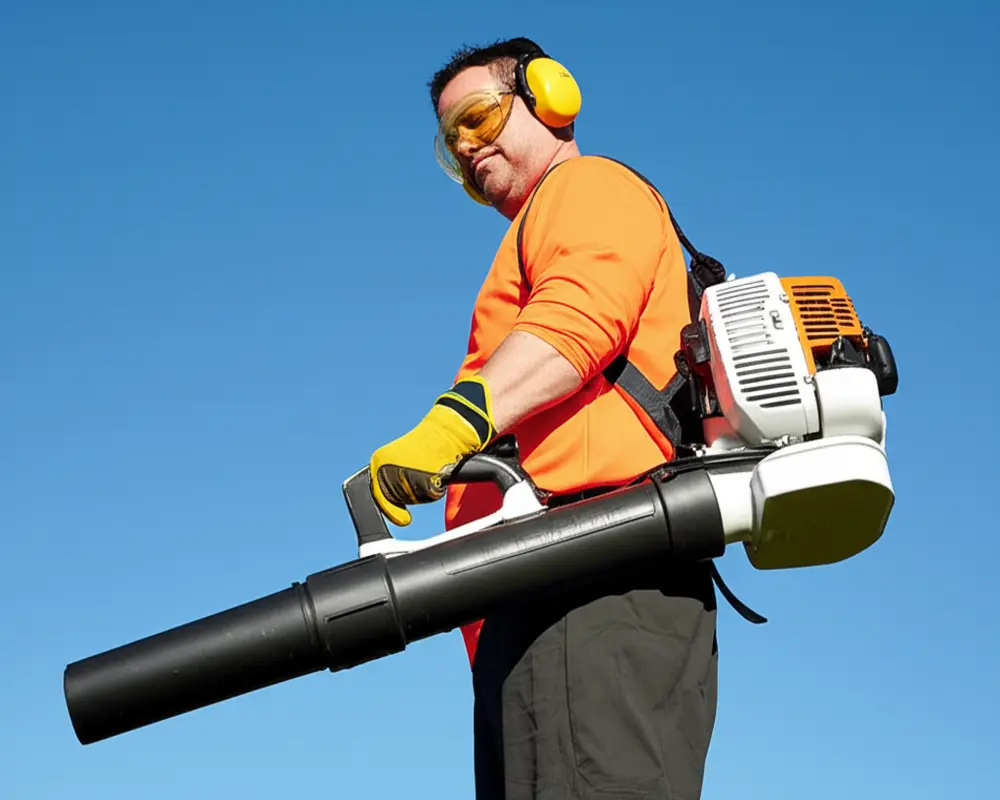
Quick Answer: The Safety Gear You Need
Use this checklist before starting:
- ANSI-rated safety glasses or goggles to protect against flying debris.
- Hearing protection, such as earplugs or earmuffs, for noisy blowers or long work periods.
- Sturdy, closed-toe, slip-resistant shoes or boots with good footing.
- Work gloves for grip and protection from sharp yard waste.
- Long pants and a close-fitting shirt to protect skin from debris.
- A NIOSH-approved respirator, such as an N95 filtering facepiece, when fine dust or allergens are present.
- High-visibility clothing near roads, driveways, parking lots, or active work areas.
- A hard hat when overhead branches, falling objects, or construction hazards exist.
Do not wear loose clothing, scarves, jewelry, or anything that could catch in the blower or nearby equipment. Personal protective equipment, or PPE, reduces risk but does not replace safe work practices.
Eye Protection Comes First
Wear safety glasses every time you use a leaf blower. Blown debris can strike your eyes even when the ground looks clear.
Choose glasses marked ANSI Z87.1 or a comparable impact rating. Basic sunglasses are not a reliable substitute. They may block sunlight, but they may not seal the sides or provide tested impact protection.
Safety glasses or goggles?
- Safety glasses with side shields: Best for normal leaf and grass cleanup.
- Sealed goggles: Better for very dusty work or when fine particles move around the sides of glasses.
- Prescription safety glasses: A good option if you need vision correction. Do not wear ordinary prescription glasses as a replacement for safety eyewear.
Keep your eyes protected when starting the blower, changing directions, and clearing areas near gravel, mulch, or hard pavement. Small stones may be hidden under leaves.
Never point the blower at people, pets, windows, vehicles, or nearby property. Turn the blower off before removing a blockage or inspecting the intake.

Protect Your Hearing From Blower Noise
Hearing protection is needed when a leaf blower is loud enough to make conversation difficult or when you use it for an extended period. Gas-powered blowers often produce more noise than many battery models, but a quieter model can still create harmful exposure close to the operator’s ears.
The National Institute for Occupational Safety and Health (NIOSH) uses 85 decibels measured over an eight-hour workday as a recommended exposure limit. Noise exposure can rise quickly as sound levels increase. The exact noise at your ear depends on the blower, nozzle, engine speed, distance, and surrounding surfaces.
Use one of these options:
- Foam earplugs: Light, low-cost, and useful when inserted correctly.
- Earmuffs: Easier to use correctly and helpful for intermittent work.
- Earplugs and earmuffs together: Suitable for very loud equipment or long exposure.
Do not rely only on a product’s advertised sound rating. Check the blower manual and wear hearing protection when in doubt. Hearing damage is often gradual and may not hurt while it occurs.
Keep enough awareness to hear vehicles, people, alarms, and other hazards. If hearing protection makes communication difficult, use hand signals or stop the blower before speaking.

Wear the Right Shoes and Clothing
Footwear helps prevent slips, trips, and foot injuries while you move across uneven ground. Wear sturdy shoes or boots with:
- Closed toes
- A firm sole
- Good traction
- A secure fit
- Support for the terrain
Avoid sandals, slippers, bare feet, and smooth-soled shoes. Wet grass, leaves, mud, and slopes can become slippery. Use extra care around steps, drainage areas, rocks, and hidden holes.
Long pants protect your legs from flying debris, insects, sharp plant material, and sun. A close-fitting long-sleeve shirt may add protection in brush or dusty areas. Choose breathable clothing in hot weather, but do not wear loose fabric that can catch on equipment.
Remove or secure:
- Scarves
- Neck cords
- Loose sleeves
- Dangling jewelry
- Untied shoelaces
- Loose hair
Do not use rain gear that restricts movement or blocks your view. Stop work if heat, cold, lightning, or poor visibility creates a greater hazard than the cleanup task is worth.

Are Work Gloves Necessary?
Work gloves are not required for every short blower task, but they are useful for most yard work. Gloves can improve grip and protect your hands when you move branches, rocks, thorny plants, or sharp debris before and after blowing.
Choose gloves that:
- Fit snugly
- Allow you to control the trigger and controls
- Provide a firm grip
- Do not have loose cuffs or hanging material
- Match the work, such as thorn-resistant gloves for brush
Gloves do not make it safe to touch a moving fan or clear a jam with the blower running. Turn the unit off, disconnect the battery or power source, and follow the manual before handling the intake or impeller area.
Anti-vibration gloves are not a complete solution for hand-arm vibration. For normal residential leaf blowing, the best controls are a comfortable machine, a relaxed grip, regular breaks, and proper maintenance.

Do You Need a Dust Mask or Respirator?
Use respiratory protection when a blower creates visible clouds of fine dust, pollen, soil, ash, or other airborne particles. A loose fabric mask or bandana offers limited protection and should not be treated as a certified respirator.
For ordinary dust, a properly fitted NIOSH-approved N95 filtering facepiece respirator may help reduce inhalation of airborne particles. Look for a NIOSH approval number or approval label. Disposable masks must seal well around the nose and mouth.
A respirator may not protect against:
- Toxic gases or vapors
- Unknown chemicals
- Mold hazards in heavily contaminated material
- Asbestos
- Lead dust
- Fire ash with unknown contaminants
Do not blow suspicious or contaminated material into the air. Contact a qualified professional when hazardous substances may be present.
A tight-fitting respirator may not seal over facial hair. Workplace users may also need a medical evaluation, fit testing, training, and a written respiratory protection program under OSHA requirements. Home users should follow the respirator instructions and stop if breathing becomes difficult.
The best dust control is often to avoid creating the cloud. Wait for damp conditions, reduce blower speed, use the lowest effective setting, and direct the nozzle close to the ground without scraping the surface.

Optional Gear for Special Work Areas
Some jobs require more than the basic PPE list. Match the gear to the hazard rather than wearing extra equipment without a reason.
| Work condition | Additional gear or control | Why it helps |
|---|---|---|
| Near roads or parking lots | High-visibility vest or shirt | Helps drivers and equipment operators see you |
| Falling branches or overhead work | Hard hat | Protects against overhead impact hazards |
| Dense brush or thorny plants | Safety glasses, gloves, long sleeves | Limits scratches and eye injuries |
| Wet or steep ground | Slip-resistant boots | Improves footing |
| Heavy dust or pollen | NIOSH-approved respirator and goggles | Reduces particle exposure |
| Cold weather | Warm layers that fit close to the body | Preserves comfort without loose fabric |
| Public or commercial work | Site-specific PPE and warning controls | Addresses traffic, bystanders, and employer rules |
A hard hat does not protect against every falling object, and a high-visibility vest does not make it safe to work in traffic. Use barriers, signs, spotters, and safe distances when the location calls for them.
Keep children, pets, and bystanders away from the work zone. Stop the blower if someone enters the area.

Safety Gear for Gas, Battery, and Electric Blowers
The core PPE is similar for all leaf blowers, but the power source adds different risks.
Gas-powered blowers
Use eye, hearing, foot, hand, and clothing protection. Also:
- Refuel only when the engine is off and cool.
- Refuel outdoors, away from flames and ignition sources.
- Never run a gas blower inside a garage, shed, vehicle, or other enclosed space.
- Allow the engine to cool before storing it.
- Follow the fuel and maintenance instructions in the manual.
A respirator does not make engine exhaust safe. Carbon monoxide can build up indoors and may cause serious injury or death.
Battery-powered blowers
Battery blowers remove fuel and exhaust hazards, but they still create noise and flying debris. Inspect the battery and charger for damage. Do not use swollen, cracked, wet, or overheated batteries. Follow the manufacturer’s charging instructions and keep batteries away from heat and metal objects that could cause a short circuit.
Corded electric blowers
Use a properly rated outdoor extension cord when the manual allows one. Inspect the cord before each use. Do not use a cord with cuts, exposed wires, damaged plugs, or loose connections.
A ground-fault circuit interrupter, or GFCI, can reduce electric shock risk in wet locations. GFCI protection does not make it safe to use a blower in rain or standing water. Follow the manual and local electrical safety rules.

A Safe Pre-Use Check
PPE works best when combined with a short inspection. Before turning on the blower:
- Inspect the blower. Check the tube, intake, trigger, battery, fuel system, cord, and controls.
- Clear the work area. Remove rocks, wire, glass, toys, and large branches when possible.
- Check people and pets. Keep them outside the debris zone.
- Put on PPE. Start with eye protection, hearing protection, shoes, gloves, and suitable clothing.
- Check the weather. Avoid lightning, heavy rain, extreme heat, and poor visibility.
- Choose the lowest useful speed. Higher speed creates more noise, dust, and flying debris.
- Aim safely. Direct air away from people, traffic, buildings, windows, and open doors.
- Stop before servicing. Turn off the blower and disconnect its power source before clearing debris or making adjustments.
Signs that you should stop include eye irritation, ringing in the ears, dizziness, breathing trouble, loss of control, excessive heat, or a damaged machine. Move to fresh air for breathing symptoms and seek medical care for severe or persistent problems.

Common Leaf Blower Safety Mistakes
Avoid these frequent errors:
Wearing sunglasses instead of safety glasses
Sunglasses may leave gaps and may not have impact protection. Use marked safety eyewear.
Using a cloth mask for heavy dust
Cloth can reduce some larger particles but is not a certified respirator. Control the dust at its source or use suitable NIOSH-approved respiratory protection.
Skipping hearing protection for a short job
Noise injury depends on sound level and exposure time. A short task can still be loud, especially near walls or hard surfaces.
Blowing dry leaves at full power
This creates more dust and can launch stones. Use the lowest speed that moves the material.
Clearing a jam with the trigger released
A blower may coast, restart, or hold stored energy. Follow the shutdown procedure in the manual and disconnect the power source.
Wearing loose gear
Loose clothing, cords, and hair can interfere with controls or catch on equipment. Secure them before starting.
Assuming PPE replaces distance
Protective gear cannot stop a rock from striking a window or protect a bystander who is too close. Keep people away and control the direction of airflow.

A Simple Leaf Blower PPE Checklist
Before each use, ask:
- Are my eyes protected by ANSI-rated safety glasses or goggles?
- Do I have hearing protection suited to the blower and work time?
- Am I wearing closed-toe, slip-resistant footwear?
- Do my clothes fit close enough to avoid catching?
- Do I need gloves for grip or sharp yard waste?
- Will the work create dust that calls for a NIOSH-approved respirator?
- Do I need high-visibility clothing or a hard hat?
- Are people, pets, windows, vehicles, and roads protected from debris?
- Is the blower, battery, fuel system, or cord in good condition?
- Can I stop safely if the machine jams or conditions change?
If the answer to a safety question is no, correct the problem before starting.

Frequently Asked Questions
What is the most important safety gear for a leaf blower?
Safety glasses are the most important basic item because leaf blowers can launch small stones and debris toward the eyes. Hearing protection is also essential when the blower is loud or used for a long period.
Should you wear earplugs or earmuffs with a leaf blower?
Either can work when used correctly. Earplugs are compact, while earmuffs are easier for many people to fit properly. Use both for especially loud equipment or extended exposure, while keeping enough awareness to detect nearby hazards.
Do you need an N95 mask when using a leaf blower?
Not for every job. Use a properly fitted NIOSH-approved N95 respirator when blowing fine, non-oily dust or pollen. Avoid disturbing material that may contain asbestos, lead, chemicals, or other hazardous contaminants.
Can you use a leaf blower without gloves?
Yes, for some short and controlled tasks. Gloves are useful for grip and for handling sharp yard waste, but they do not replace safe shutdown procedures or protect against contact with the moving fan.
Can you use a leaf blower in the rain?
Only if the manufacturer specifically permits it, and never in standing water or conditions that create an electrical or visibility hazard. Wet leaves can also make walking unsafe and may clog some machines.
What should you wear when using a leaf blower near traffic?
Wear high-visibility clothing, stay well away from moving vehicles, and use barriers or a spotter when needed. Eye and hearing protection, secure clothing, and sturdy footwear remain necessary.
Final Recommendation
For routine yard work in the United States, start with ANSI-rated eye protection, hearing protection, closed-toe slip-resistant shoes, gloves, and fitted clothing. Add a NIOSH-approved respirator for fine dust and use high-visibility clothing or a hard hat when the work site creates those hazards.
The safest approach is simple: inspect the blower, clear the area, use the lowest effective power, keep people away, and shut the machine down before touching a blockage. Check the owner’s manual and OSHA safety guidance when the work is commercial, unusually dusty, electrical, or near traffic.
1 thought on “What Safety Gear Do You Need For A Leaf Blower: Safe Guide”