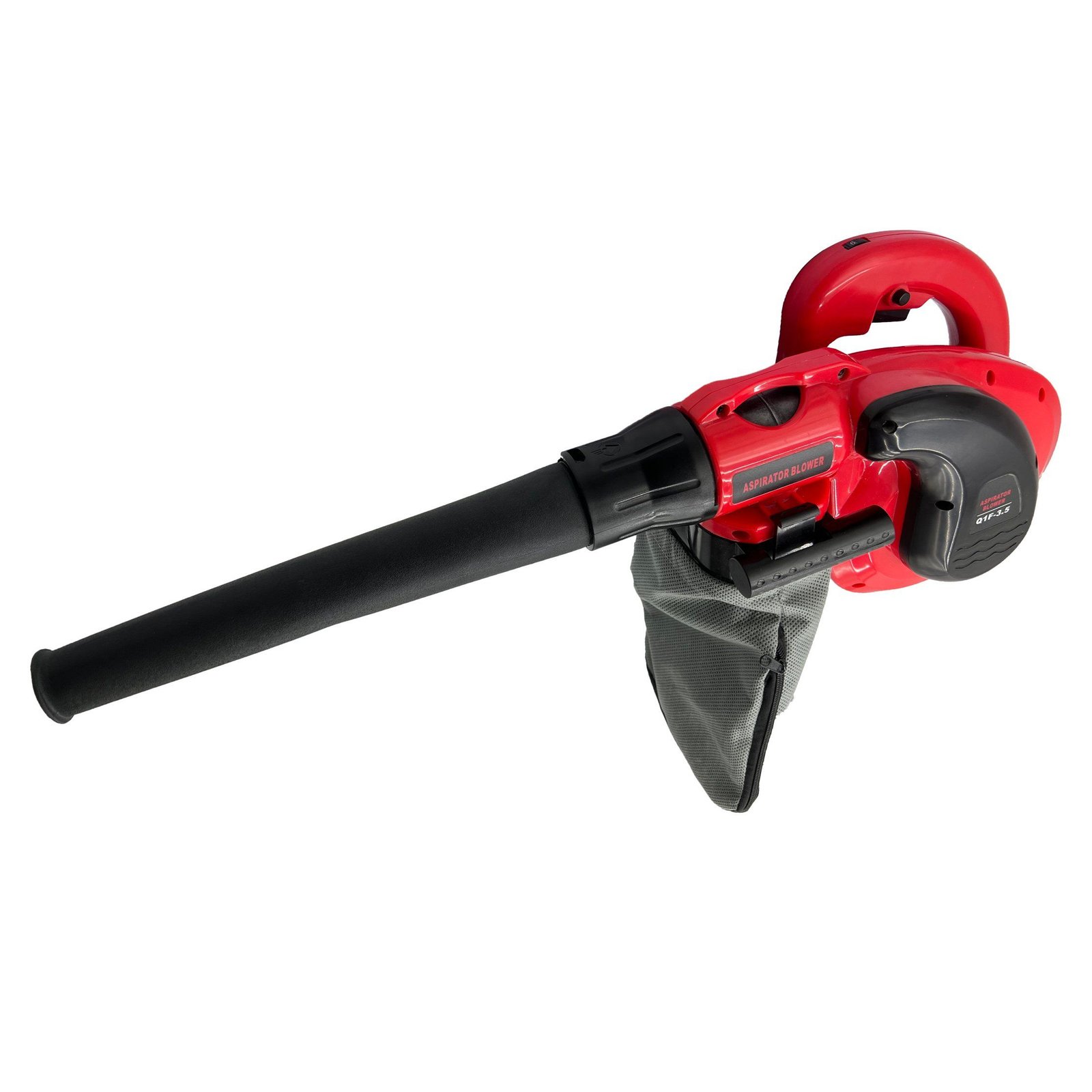
Yes. A leaf blower is a power tool because it uses an engine or electric motor to perform work that would otherwise require manual effort. In the United States, it is also commonly classified as outdoor power equipment, lawn and garden equipment, or a yard tool.
The label depends on context. A hardware store may place a leaf blower with lawn equipment, while a safety guide may group it with portable power tools. Both descriptions are accurate.

What Makes a Leaf Blower a Power Tool?
A power tool uses an external power source instead of human force alone. That source may be electricity, a rechargeable battery, gasoline, or another fuel.
A leaf blower fits this definition because its motor spins a fan or impeller. The fan pulls in air and pushes it through a narrow tube. The fast-moving air then moves leaves, grass clippings, dust, and light yard debris.
A manual rake depends on your muscles. A leaf blower depends on a motor. That difference makes the blower a powered tool.
Common types of leaf blowers
The three main types sold in the United States are:
- Corded electric leaf blowers: Plug into a standard household outlet.
- Battery-powered leaf blowers: Use a removable or built-in rechargeable battery.
- Gas-powered leaf blowers: Use a gasoline engine, often with two-cycle fuel.
All three are power tools. Their power source changes the tool’s noise, weight, maintenance, run time, and operating limits.
Why Some People Call It Outdoor Power Equipment
“Power tool” is a broad category. It includes drills, saws, sanders, grinders, pressure washers, and many yard tools.
“Outdoor power equipment” is a narrower retail and industry term. It usually includes machines designed for outdoor work, such as:
- Leaf blowers
- Lawn mowers
- String trimmers
- Hedge trimmers
- Chainsaws
- Edgers
- Snow blowers
- Wood chippers
A leaf blower can belong to both groups. The terms describe different aspects of the same machine:
| Term | What it describes | Examples |
|---|---|---|
| Power tool | A tool powered by a motor or engine | Drill, blower, circular saw |
| Outdoor power equipment | Motorized equipment made for outdoor tasks | Leaf blower, mower, trimmer |
| Yard tool | A tool used for lawn or landscape work | Rake, pruner, blower |
| Portable power tool | A powered tool designed to be moved by hand | Blower, drill, hedge trimmer |
The practical answer is simple: treat a leaf blower with the same care you would use for other powered equipment.
How a Leaf Blower Works
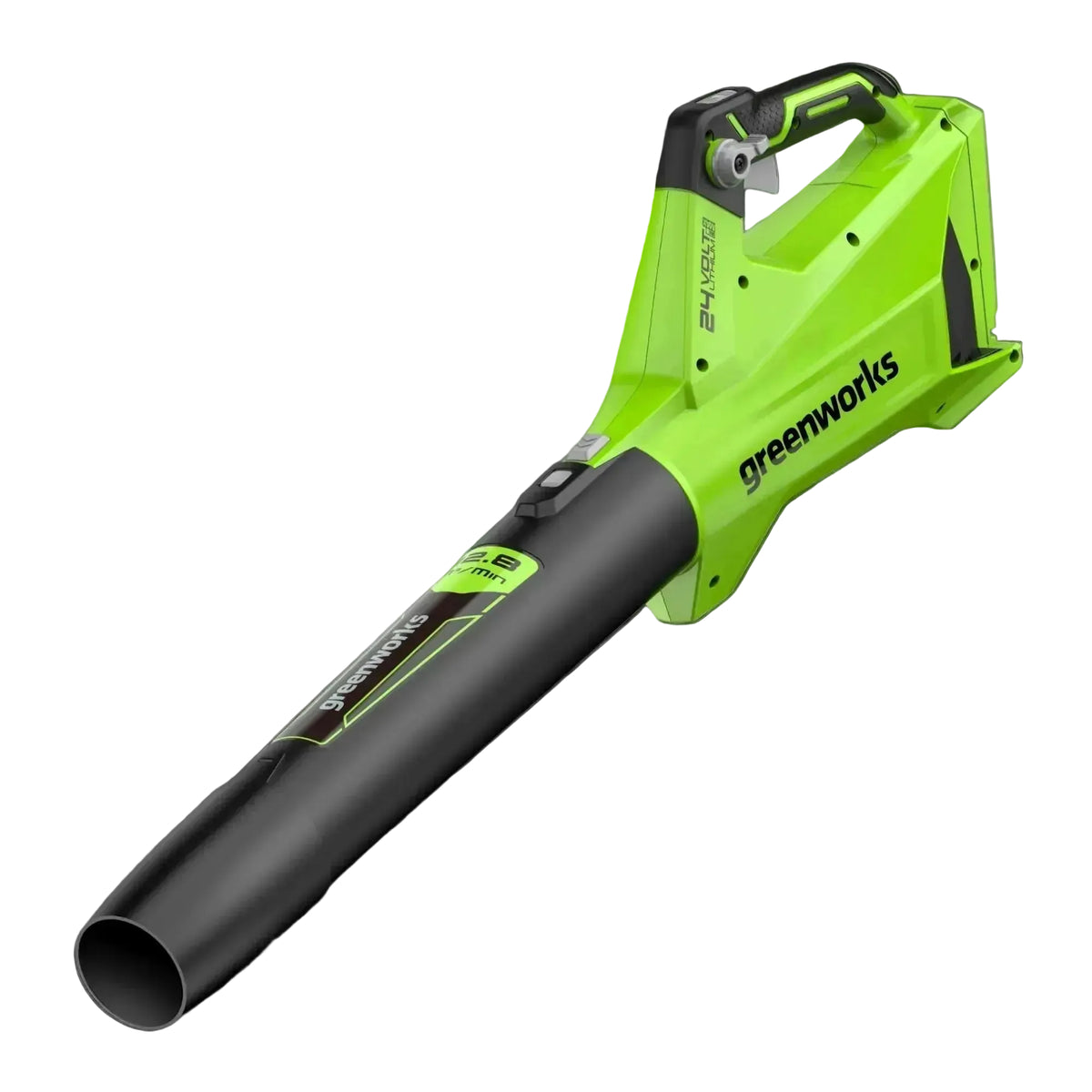
A leaf blower converts motor power into a stream of moving air.
The motor turns an impeller inside the housing. The impeller accelerates air and sends it through the blower tube. A smaller outlet can increase air speed, while a wider outlet can move more air volume.
Two specifications often appear in product descriptions:
- CFM, or cubic feet per minute: The volume of air the blower moves.
- MPH: The reported speed of the air leaving the tube.
CFM helps with moving large piles of leaves. MPH can help break loose wet leaves or debris stuck to a surface. Neither number alone proves that one blower will perform better in every yard.
Performance also depends on:
- Leaf moisture
– Debris type - Tube design
- Battery charge
- Motor condition
- Wind direction
- Surface type
- Distance between the tube and debris
For example, a blower may move dry leaves well on a driveway but struggle with wet leaves packed into grass. That is a performance limit, not a sign that the machine is not a power tool.

Are Electric and Gas Leaf Blowers Both Power Tools?
Yes. A leaf blower’s power source does not change its basic classification.
Electric leaf blowers
Corded and battery-powered blowers have electric motors. They often need less routine maintenance than gas models because they do not use engine oil, spark plugs, or fuel mixtures.
Corded models have a continuous power supply but limit movement to the reach of an outdoor-rated extension cord. Battery models provide more freedom but have limited run time and require proper battery charging.
Follow the owner’s manual for:
- Approved batteries
- Chargers
- Extension cords
- Outdoor use
- Storage
- Cleaning
- Wet-weather limits
Do not use a household extension cord outdoors unless it is rated for outdoor use and matches the manufacturer’s requirements.
Gas-powered leaf blowers
Gas blowers use a small internal combustion engine. They are also power tools, but they create additional risks from:
- Gasoline
- Exhaust fumes
- Hot engine parts
- Fuel spills
- Noise
- Maintenance errors
Use gasoline only as specified in the owner’s manual. Some two-cycle engines require a precise fuel-and-oil mixture. Using the wrong mixture can damage the engine or create unsafe operating conditions.
Never refuel a hot blower. Turn it off, let it cool, and refuel outdoors away from flames, sparks, and smoking materials. The U.S. Consumer Product Safety Commission provides general consumer safety information for fuel-powered products and outdoor equipment.

Is a Leaf Blower Considered a Power Tool for Workplace Safety?
In a workplace, a leaf blower should be treated as powered equipment with mechanical, noise, dust, and fuel hazards.
The Occupational Safety and Health Administration, or OSHA, publishes requirements and guidance for hand and power tools, machine hazards, personal protective equipment, and occupational noise. OSHA rules generally apply to workplaces, not ordinary private use at home. However, the same hazards can exist in a residential yard.
Employers may need to address:
- Training
- Equipment inspections
- Hearing protection
- Eye protection
- Dust exposure
- Fuel handling
- Safe work zones
- Maintenance procedures
For private homeowners, the legal requirements may differ, but safe operation still matters. A blower can throw stones, produce high noise levels, stir up dust, and injure people or animals nearby.
Read the equipment manual before use. It is the primary source for the exact operating limits of a specific model.

What Safety Gear Should You Use With a Leaf Blower?
At a minimum, use eye protection and sturdy footwear. Add hearing protection when the blower is loud or when you use it for more than a short period.
Useful protective equipment includes:
- Safety glasses or goggles
- Hearing protection, such as earmuffs or earplugs
- Closed-toe shoes with good traction
- Long pants
- Work gloves
- A dust mask or respirator when conditions call for it
A basic dust mask does not protect against every airborne hazard. If you are disturbing mold, animal waste, chemical residue, or other hazardous material, stop and identify the hazard before using a blower. Blowing contaminated material can spread it through the air.
Do not point the air stream at people, pets, vehicles, windows, or buildings. Keep children and bystanders away from the work area. Check the ground first and remove rocks, wire, glass, and other objects that the air stream could launch.
The Centers for Disease Control and Prevention and OSHA both recognize loud noise as a workplace hazard. A blower’s actual noise depends on the model, speed setting, distance, and surroundings. If you must raise your voice to speak to someone nearby, hearing protection is a sensible precaution.

Can You Use a Leaf Blower Like Other Power Tools?
Yes, but only within the task the manufacturer designed it to perform. A leaf blower is made to move loose, lightweight material. It is not a general-purpose vacuum, pressure washer, or tool for removing every kind of debris.
Appropriate uses
A leaf blower may be suitable for:
- Moving dry leaves
- Clearing grass clippings from pavement
- Cleaning a driveway or patio
- Removing light debris from a deck
- Clearing loose material from roof gutters when used safely from the ground
- Drying some outdoor surfaces when the manual allows it
Uses that may be unsafe or unsuitable
Avoid using a blower to:
- Move burning leaves or hot ashes
- Blow chemicals or pesticides
- Disperse mold or animal waste
- Clear asbestos-containing material
- Direct dust toward people or open windows
- Dry clothing or skin
- Operate in water or heavy rain unless the manual permits it
- Modify the housing, impeller, tube, or safety parts
A blower can turn small debris into a projectile. It can also make a minor dust problem much worse. When a rake, broom, or vacuum is safer, use that method instead.

Leaf Blower Rules in the United States
There is no single nationwide rule that allows or bans every leaf blower. Requirements can vary by state, county, city, homeowners association, park, or workplace.
Local rules may address:
- Operating hours
- Noise limits
- Gas-powered equipment
- Seasonal restrictions
- Emissions
- Use near schools, hospitals, or residences
- Blowing debris into streets or storm drains
California has separate air-quality rules for small off-road engines and outdoor power equipment. Other states and cities may have their own restrictions. The U.S. Environmental Protection Agency regulates emissions at the federal level, while state and local authorities may impose additional requirements.
Before using a leaf blower, check:
- Your city or county code.
- State environmental or air-quality rules.
- Homeowners association rules, if applicable.
- Park, school, or workplace policies.
- The blower manufacturer’s operating instructions.
A local noise rule does not determine whether the machine is a power tool. It only controls when, where, or how it may be used.

How to Choose the Right Leaf Blower
Choose based on the work area, debris, power source, and local limits rather than on one advertised number.
| Situation | Often suitable | Main trade-off |
|---|---|---|
| Small yard or patio | Battery or corded electric model | Battery run time or cord reach |
| Large property | Battery system with spare batteries or gas model | Higher cost, weight, noise, or maintenance |
| Frequent light cleanup | Lightweight battery model | May have less air volume |
| Wet or heavy leaves | Higher-output blower or rake-assisted cleanup | More noise, weight, and energy use |
| Noise-sensitive neighborhood | Lower-noise electric model, if allowed | May require slower work or more passes |
| Areas with fuel restrictions | Electric model | Requires charging or access to power |
Do not compare CFM and MPH as if they were the same measurement. CFM measures air volume. MPH measures air speed. Compare models within the same test method and check the manual or specification sheet for the conditions behind the numbers.
For battery models, also check:
- Battery voltage and capacity
- Included battery size
- Claimed run time and speed setting
- Charger type
- Replacement battery cost
- Whether the battery works with tools you already own
Manufacturers may report run time under different conditions. A low-speed estimate is not the same as full-power run time. Treat run-time claims as model-specific estimates, not guarantees.

Common Mistakes When Using a Leaf Blower
Many blower problems come from the wrong technique rather than a defective tool.
Blowing too fast
A high setting can scatter leaves in every direction. Start at a low or medium speed, keep the tube close to the ground, and guide debris toward one collection area.
Working against the wind
Wind can carry leaves back into the cleared space. Work with the wind when possible, and use walls, fences, or lawn edges to help contain the pile.
Blowing debris into the street
Leaves and grass clippings can create hazards for drivers, cyclists, and pedestrians. They can also enter storm drains. Keep debris on your property and dispose of it according to local rules.
Ignoring hidden objects
Inspect the area before starting. Stones, sticks, toys, and metal objects can become projectiles.
Using the wrong fuel or battery
Incorrect fuel mixtures, damaged batteries, and unapproved chargers can damage equipment or create fire hazards. Use only the power source listed in the manual.
Operating near open doors or windows
A gas blower produces exhaust. Never run it inside a garage, shed, basement, or other enclosed space. Keep exhaust away from doors, windows, and ventilation openings.

Frequently Asked Questions
Is a leaf blower a hand tool or a power tool?
A leaf blower is a power tool, not a hand tool in the strict sense. You hold and guide it by hand, but a motor or engine performs the main work.
Is a leaf blower considered lawn equipment?
Yes. It is commonly classified as lawn and garden equipment or outdoor power equipment. That classification does not conflict with calling it a power tool.
Is a battery leaf blower a power tool?
Yes. A battery-powered leaf blower uses an electric motor powered by a rechargeable battery, so it meets the ordinary definition of a power tool.
Is a leaf blower considered heavy equipment?
Usually, no. Most handheld and backpack leaf blowers are portable power equipment. Large commercial machines may be more substantial, but “heavy equipment” is not the normal category for a standard residential blower.
Does a leaf blower need special maintenance?
It depends on the type. Battery and corded models usually need inspection, cleaning, and battery or cord care. Gas models also need fuel-system, air-filter, spark-plug, and engine maintenance as listed in the manual.
Final Answer: A Leaf Blower Is a Power Tool
A leaf blower is a power tool because it uses a motor or engine to produce useful mechanical work. In the United States, it is also accurately described as outdoor power equipment or lawn and garden equipment.
The most important practical difference is not the label. It is the risk. Use eye and hearing protection, inspect the work area, control dust and projectiles, follow the manual, and check local operating rules before starting.
For a small yard, compare battery life, noise, weight, and charging needs. For a large property or heavy debris, compare air volume, run time, fuel needs, and maintenance. Use a rake or another method when blowing would spread hazardous or unwanted material.